The feeling of being overwhelmed is so common, isn't it? Our modern world often pushes us to the brink, and when we talk about stress, the conversation invariably turns to fight-or-flight, that primal survival mechanism. But what if that familiar framework, while helpful, is actually too narrow? What if there’s a much older, deeper wisdom that offers a more holistic path to nervous system harmony?
Consider the findings of a systematic review by Seth D. Norrholm et al. (2025), which highlighted significant reductions in PTSD symptom severity, depression, and pain after just 12 weeks of active acupuncture in combat veterans. This isn't just about managing symptoms; it points to a significant change, a shift in the body's fundamental response to deep-seated trauma. And it suggests we might be missing crucial pieces of the puzzle when we only look through a Western lens.
Traditional Chinese Medicine (TCM) has long offered a different perspective. At its heart lies the concept of Qi, often translated as 'vital energy' or 'life force.' This invisible current animates life and flows through specific pathways in the body known as Jing Luo Li Lun, or the Channel and Collateral Theory (Meridian System). In TCM, understanding and balancing Qi is key to cultivating lasting well-being, including a calm and resilient nervous system.
What Western 'Fight-or-Flight' Misses Entirely
When we hear fight-or-flight, we often think of the sympathetic nervous system kicking in – increased heart rate, shallow breathing, heightened alertness. It's a brilliant survival mechanism, absolutely. But our lives aren't typically a series of saber-toothed tiger encounters anymore. Instead, we face chronic deadlines, financial worries, and endless digital notifications. This constant low-level activation can leave us feeling wired and tired, a state that Western medicine might label as chronic stress or anxiety.
TCM, however, sees beyond this acute response. It's a more nuanced interplay within the body, acknowledging that sustained stress doesn't just rev up your system.
Instead, it can deplete vital resources and create imbalances in specific organ systems. These aren't anatomical organs in the Western sense, but energetic networks that govern particular functions and emotional states.
For example, prolonged anger or frustration might be viewed as Liver Qi Stagnation, leading to tension headaches, irritability, or digestive upset. That makes sense, doesn't it? The way our emotions get 'stuck' can manifest physically.
Or consider chronic worry: TCM often links this to the Spleen system, affecting digestion and leading to fatigue or overthinking. Fear and anxiety, particularly deep-seated ones, can tax the Kidney system, impacting our sense of vitality, resilience, and even sleep.
Before really digging into TCM, I thought 'stress' was just a feeling; now I understand it as a complex interplay of vital energies and organ systems, manifesting in very distinct patterns. It's about recognizing that feeling 'on edge' might be more than just a bad mood; it could be a cry for help from your Liver energy.
It might sound a little abstract, this idea of Qi and these energetic 'organ systems' — and certainly, Western science still has much to uncover about their physiological correlates. But the practical benefit of this framework lies in its ability to offer tailored approaches. Instead of a one-size-fits-all approach to stress, TCM helps us understand your particular pattern of imbalance.
TCM practitioners commonly observe that nervous system dysregulation isn't a standalone issue, but rather a symptom of deeper energetic disharmony within the body's interconnected systems. It's a way of looking at the whole picture.
Acupuncture's Silent Influence on Your Inner Calm
So, how do we begin to coax the nervous system back into balance? Acupuncture is one of TCM's most well-known modalities, and its effects on stress and anxiety are increasingly supported by modern research. The idea is that by gently stimulating specific points along the meridians, we can help redirect the flow of Qi and restore equilibrium.
Think of it like this: your nervous system can get stuck in a high gear, constantly anticipating threats. Acupuncture seems to act like a gentle hand, guiding your body to shift into a more relaxed, restorative state. A randomized-controlled pilot trial, the AkuRest Study (2020), found that verum acupuncture was effective in reducing stress levels in adults with increased stress.
This isn't just about feeling good in the moment, although many people do report a deep sense of calm during and after a session. It's about retraining your body's intrinsic stress response. A clinical heart rate variability (HRV) study published in PMC (2012) found that patients receiving consistent manual body acupuncture for hypertension showed an increase in HRV over weeks to months.
Increased HRV indicates a relative decrease in physiological stress and a shift towards parasympathetic nervous system dominance – exactly what we want for nervous system harmony.
A single acupuncture session can range from $75 to $150, making it an investment in long-term nervous system health for many. For some, it becomes a crucial part of their self-care toolkit, offering a tangible way to downshift after a demanding week. It makes me wonder what daily practices could offer similar subtle shifts.
Clinical literature describes that acupuncture appears to facilitate a physiological shift from sympathetic dominance to parasympathetic activity, as evidenced by improved HRV, contributing to reduced stress and anxiety over time.
Herbal Wisdom: Nature's Soothing Embrace
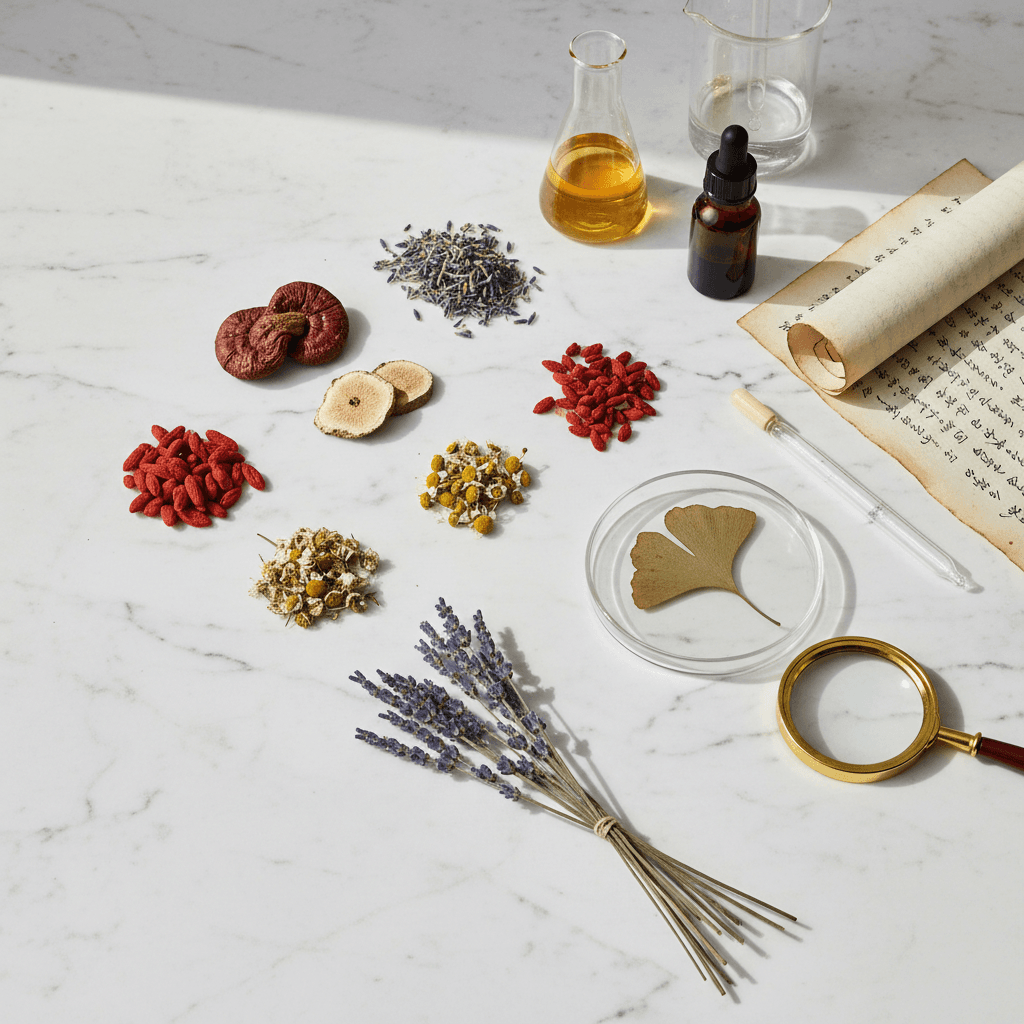
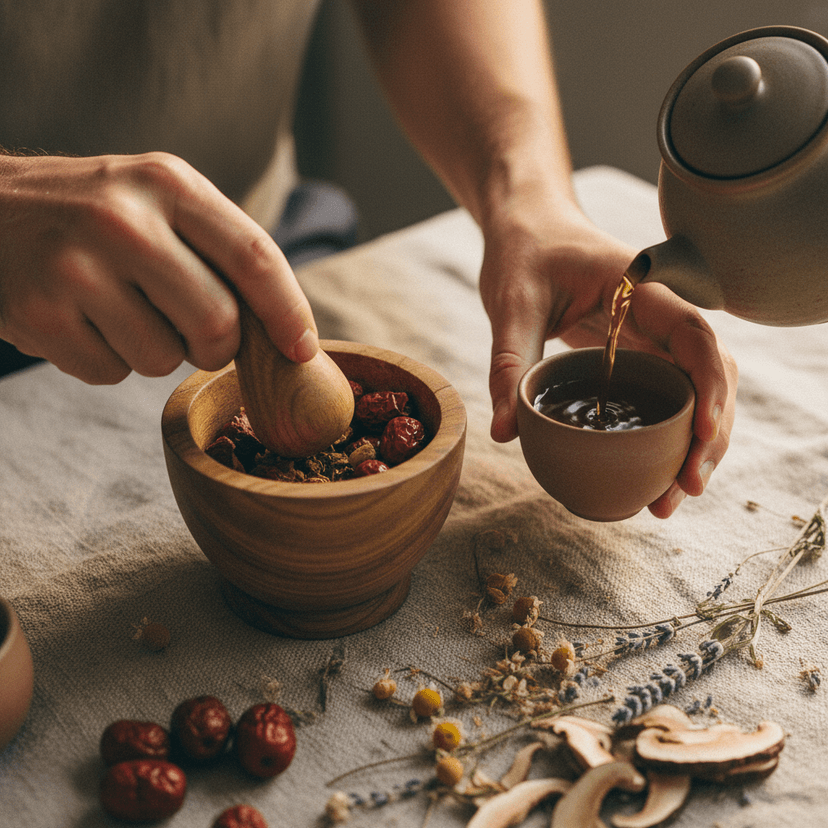
Beyond acupuncture, the world of herbal medicine offers a rich array of botanicals traditionally used to support nervous system health. My grandmother always had a pot of calming herbal tea brewing when anyone in the family was feeling particularly frazzled. These aren't magic bullets, but rather gentle allies that work to restore balance over time. Many of these herbs are classified as nervines (calming) or adaptogens (helping the body adapt to stress).
Consider chamomile, a common and beloved herb. A systematic review of 10 clinical trials by Saadatmand et al. (2024) found that 9 of them concluded oral chamomile is effective in reducing anxiety. Researchers suggest it may work by modulating the hypothalamic-pituitary-adrenocortical (HPA) axis, our central stress response system, and inhibiting cortisol, the 'stress hormone'.
Other herbs, like Valerian and Zizyphi Spinosi Semen (Suan Zao Ren in Chinese medicine), are also noted for their anxiolytic and sedative effects. A systematic review on herbal pharmacology in PMC (2013) identified these herbs as primarily acting through GABA-ergic mechanisms – essentially calming the brain by increasing the activity of GABA, a neurotransmitter that inhibits nerve activity. It's a fascinating overlap between ancient wisdom and modern neurobiology.
In the vast classical literature of TCM, formulas exist for almost every pattern. For instance, Bao He Wan, a traditional formula documented in Tanxi Xinfa, has a long history of use for improving digestion, which is often intimately linked to emotional well-being in TCM. An unsettled stomach can certainly contribute to feeling unsettled emotionally, and vice-versa. It makes me think about those times when my own digestion feels off, and how quickly my mood follows.
When considering any herbal approach, especially if you're taking medications, always speak with your healthcare provider. Traditional usage suggests that seeing results from herbal medicine for anxiety often takes weeks to months of consistent use, as these remedies work to gently rebalance the body's systems rather than mask symptoms.
Patience is key here.
Clinical literature describes that various herbal medicines, many with documented historical use, demonstrate anxiolytic properties through mechanisms like HPA axis modulation and GABA-ergic effects, offering a natural support for nervous system balance.
The Organ Systems and Your Emotional Experience
Think of it as nurturing a garden rather than just removing weeds.
One of the most impactful shifts in thinking that TCM offers is the deep connection between our emotions and our physical health, specifically through the lens of the Five Elements and their associated organ systems. This isn't just poetic; it's a practical framework for understanding why we feel the way we do.
For instance, persistent worry can weaken the Spleen and Stomach, leading to digestive issues and mental fogginess. Unresolved anger or resentment can stagnate Liver Qi, manifesting as irritability, tension in the shoulders, or even irregular periods. And chronic fear or anxiety can deplete Kidney Essence, leading to fatigue, burnout – what some might call 'adrenal fatigue' – and a diminished sense of inner strength. The emotional side of healing is rarely neat, is it?
We try to compartmentalize, but our bodies tend to tell a different story.
This holistic view reframes symptoms. That knot in your stomach isn't just indigestion; it might be your Spleen Qi reacting to excessive worry. Your pounding heart at night isn't solely anxiety; it could be your Heart Shen (spirit) restless due to an imbalance. It’s a powerful way to connect the dots between your inner world and your outer experience. We all experience emotions, of course, but it’s the chronic, unchecked ones that really start to wear on us.
TCM provides a comprehensive diagnostic framework that links specific emotional patterns to imbalances in associated organ systems, offering a deeper understanding of the root causes of nervous system disharmony. It's about seeing the whole person, not just the symptom.
Building Resilience: A Proactive Path to Calm
What does this all mean for you, right now? It means that true nervous system harmony isn't just about reacting to stress when it hits. It's about building resilience, proactively cultivating a state of balance within your body and mind. This is where TCM really shines, offering an expansive toolkit beyond just acupuncture and herbs.
Lifestyle factors are paramount. Simple shifts can make a huge difference. Are you prioritizing sleep? Is your diet nourishing your body or depleting it? Are you spending time in nature, allowing your senses to recalibrate? These aren't just 'wellness trends'; they are fundamental principles of TCM. Qigong, for example, combines gentle movement, breathwork, and meditation to cultivate and balance Qi, offering a powerful, accessible way to soothe the nervous system and build internal strength.
Even just a few minutes of mindful breathing can make a noticeable difference.
The journey to nervous system harmony is deeply personal. It’s about listening to your body's subtle cues, understanding your unique constitution, and making choices that support your overall balance. It’s a continuous conversation with yourself. And it’s about recognizing that wellness isn't a destination, but a way of living. What might your body be trying to tell you right now?
TCM practitioners commonly emphasize that proactive lifestyle interventions, rooted in TCM principles like Qigong, dietary adjustments, and nature exposure, are crucial for building sustained nervous system resilience and preventing chronic stress patterns.
Ultimately, the invitation from Traditional Chinese Medicine is to deeply change your relationship with stress. It challenges the assumption that our nervous system is a mere reactor, proposing instead that it's a dynamic, interconnected system we can actively cultivate. The real question, then, isn't just how to quiet the noise, but how to foster an enduring inner calm that resonates through every aspect of your being. This ancient wisdom, I believe, offers a deeply insightful answer.
References
- Saadatmand, N., et al. (2024). The Effect of Oral Chamomile on Anxiety: A Systematic Review of Clinical Trials.