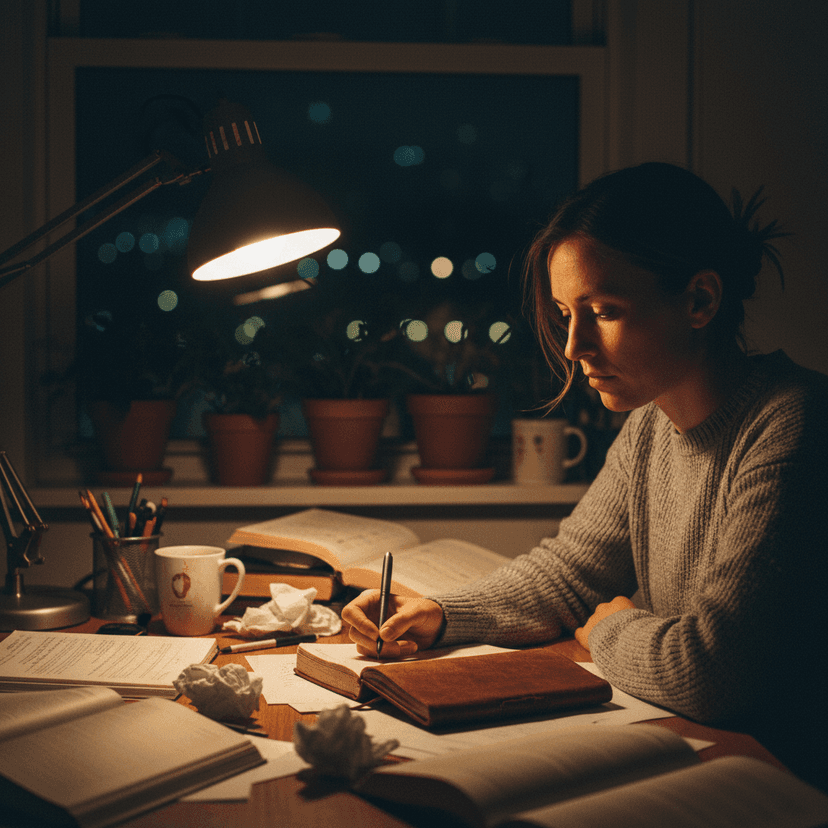
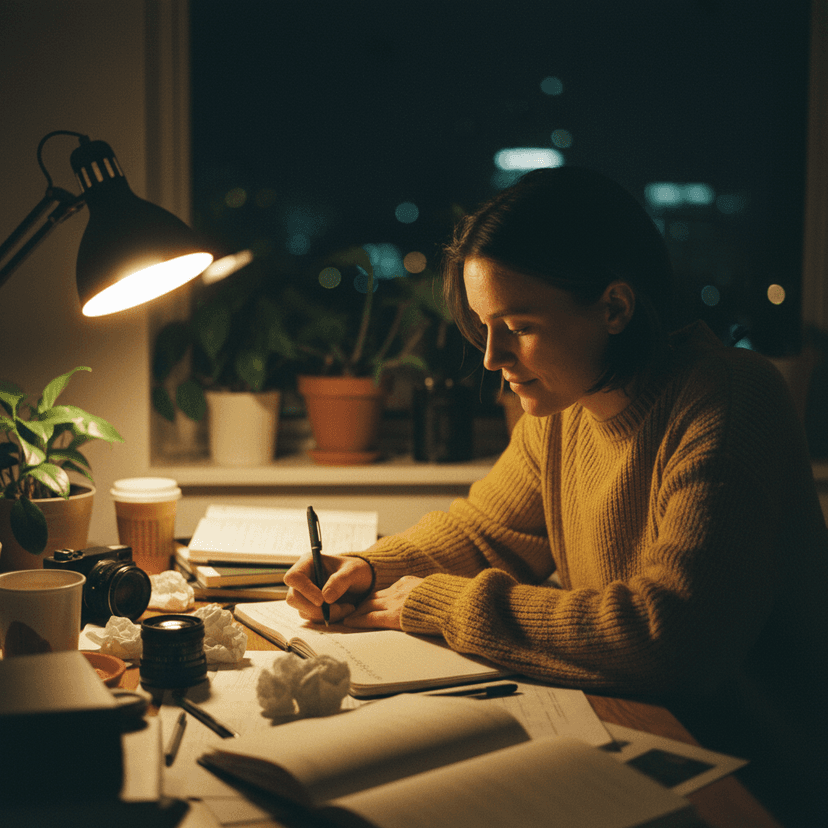
Last Tuesday , a tech executive, let's call her Amelia, looked me in the eye and said, 'I don't need another melatonin bottle. I don't need more apps. I need a solution. My brain won't shut off.' Her face was etched with a familiar exhaustion, a deep weariness I knew all too well. By Thursday, she was drinking a personalized blend of jujube and schisandra tea, and for the first time in months, she slept through the night.
My palms are sweating even as I recall that conversation, because Amelia's desperation resonated with a very raw, very personal part of my own journey. Yet, for years, despite all my training, my own sleep was a disaster. A true mess.
I remember staring at the ceiling at 3 AM, every single night, feeling a shame that burned— How could I, a doctor, not fix this? My mind raced, reviewing every sleep hygiene tip, every breathing exercise, every supplement. Nothing touched the relentless hum of anxiety that kept me wired. I felt like a fraud.
The Myth of 'Just Try Harder'
We've been fed this narrative, haven't we? That if you just follow the rules—dark room, no screens, consistent bedtime—you'll magically sleep. And if you don't? Well, you're just not trying hard enough. Or maybe there's something wrong with you. This cultural myth is a cruel one, because it ignores a fundamental truth: sleep isn't just about what you do before bed; it's about the deep, intricate balance within your entire body.
For me, the harder I tried, the more elusive sleep became.
It was a vicious cycle of trying, failing, then feeling the weight of that failure settle heavy in my chest.
So, I dove back into the clinical data. But this time, I saw it through the lens of my TCM training—a perspective that changed absolutely everything.
Beyond Counting Sheep: TCM's Sleep Code
In Western medicine, we often treat insomnia as a singular problem—a chemical imbalance, or poor habit. We throw sedatives at it, hoping to knock you out. But TCM asks a different, far more profound question: Why isn't your body resting? What underlying disharmony is keeping your spirit (Shen) from settling into its home, the Heart, at night?
This reframing was a revelation for me. My insomnia wasn't a personal failing; it was a symptom of my body crying out for balance. What we call insomnia may actually be the body’s inability to shift into a restorative parasympathetic state due to persistent underlying energetic imbalances. The real question isn't about forcing sleep. It's about figuring out how to build the conditions that allow your body to truly rest.
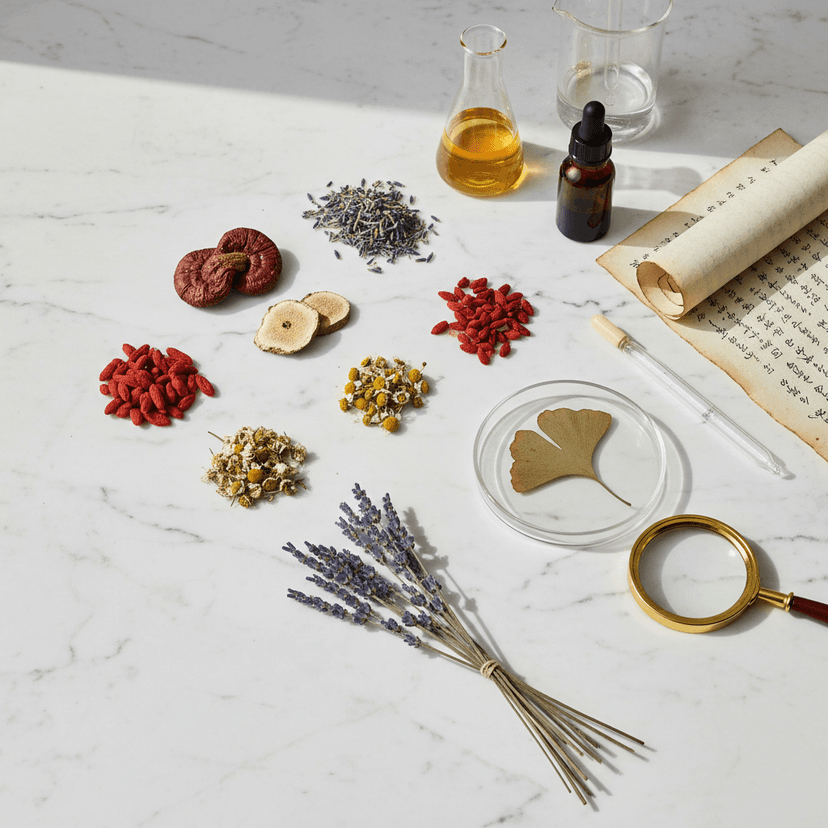
One of the most foundational herbs in my own journey, and for countless patients, is Suan Zao Ren (Ziziphus jujuba var. spinosa), also known as Sour Jujube Seed. It's a tonic herb used in Traditional Chinese Medicine primarily to nourish the Heart and Liver blood, calm the spirit, and improve sleep quality. Its key active compounds include jujubosides and flavonoids, which contribute to its sedative and anxiolytic effects.
Here's what makes it so powerful for sleep:
- Nourishes Heart Blood: A deficient Heart Blood means the Shen (spirit) has no anchor, leading to restlessness and difficulty falling asleep. Suan Zao Ren gently nourishes this foundation.
- Calms the Spirit: For those with racing thoughts or anxiety keeping them awake, this herb helps soothe the nervous system, allowing for mental quiet.
The classic formula featuring this herb is Suan Zao Ren Tang (Sour Jujube Seed Decoction), documented in Zhang Zhongjing’s 《金匮要略》 (Synopsis of the Golden Cabinet). It’s prescribed for deficiency insomnia characterized by vexation and inability to sleep.
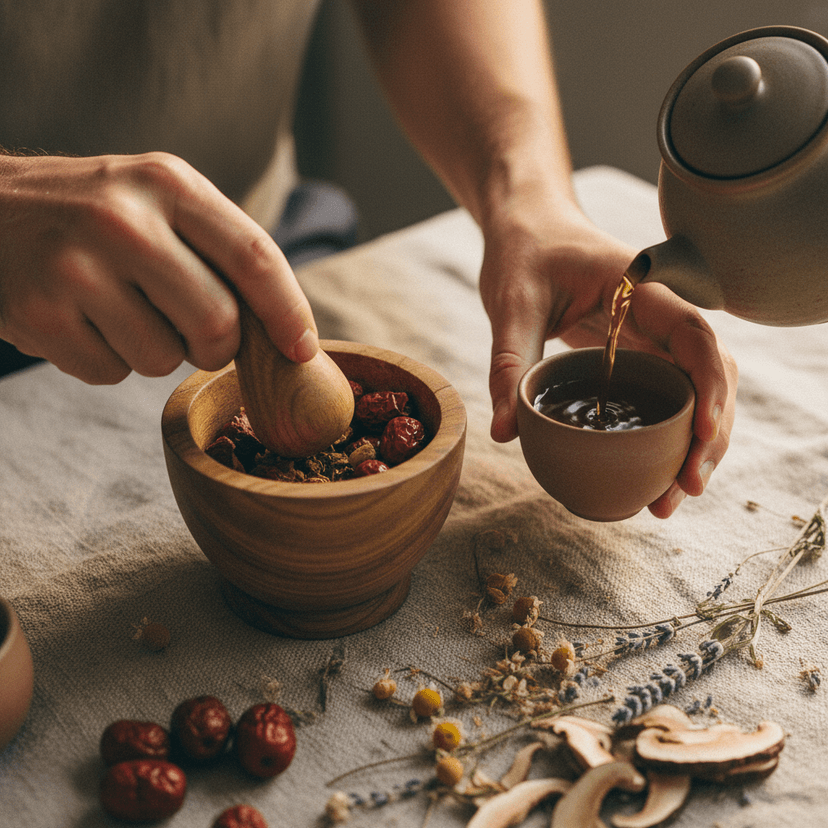
Dosage: Typically 9-18g in decoction, often crushed before cooking for better extraction.
Nature & Flavor: Neutral, sweet, sour.
Meridians: Heart, Liver, Gallbladder, Spleen.
Decoding Your Sleepless Nights
Look, TCM isn't about a universal cure for insomnia. It's about truly understanding your specific pattern of disharmony. Are you the type who can’t fall asleep because your mind races? That might be Liver Qi Stagnation turning into Heat, or Heart Blood deficiency. Do you wake up consistently at 3 AM? That often points to Liver imbalances, according to the TCM Organ Clock, when Liver energy is at its peak.
What about waking too early, unable to go back to sleep? That could be Kidney Yin deficiency with Empty Heat disturbing the Heart.
This personalized approach means your treatment plan is as unique as you are. It's about restoring harmony, not just suppressing a symptom. And sometimes, it's about shifting the very framework of how we perceive wellness.
Ancient Wisdom, Modern Proof
For the skeptics, and believe me, I've met many—I used to be one—the scientific backing for TCM’s sleep therapies is growing. A 2025 umbrella review by Wang, J., et al. (2025) synthesized findings from 36 systematic reviews. It concluded that high-quality evidence supports the effectiveness of acupuncture, Tuina massage, Chinese exercises (like Tai Chi and Qigong), and Chinese herbal medicine (CHM) for improving overall sleep quality in insomnia patients.
Acupuncture, Tuina, and exercises also showed benefits for anxiety and depression—those unwelcome bedfellows of sleeplessness.
Chinese herbal medicine, specifically, has shown remarkable promise. A meta-analysis of 79 trials (7886 participants) by Ye, Y., et al. (2015) found that CHM alone was more effective than placebo and even benzodiazepine drugs (BZDs) in reducing Pittsburgh Sleep Quality Index (PSQI) scores, a common measure of sleep quality. Importantly, it appeared safe, with no significant difference in adverse events compared to placebo.
This suggests that CHM can be a powerful option for those seeking effective, yet gentle, support for their sleep.
And it’s not just passive therapies. Traditional Chinese exercises are gaining recognition too. Li, Y., et al. (2023) conducted a systematic review and meta-analysis of 20 studies, finding that practices like Tai Chi and Qigong significantly improved sleep quality in various populations, including those with insomnia, with Tai Chi often showing greater effects than Qigong. These practices work by calming the mind, regulating breathing, and promoting the smooth flow of Qi, creating an internal environment conducive to rest.
Think of it this way: acupuncture works to improve sleep by directly influencing the body's nervous system, reducing sympathetic activity and promoting parasympathetic dominance, while also modulating neurotransmitters and hormones like melatonin and cortisol. Essentially, it helps your body remember how to relax. For chronic insomnia, a course of 6-12 sessions is often recommended, with some patients feeling initial changes within 2-3 sessions, but sustained improvement usually requires more.
A Hard Truth About Your Nighttime Routine
Here's the hard truth nobody wants to hear: there’s no magic pill—herbal or pharmaceutical—that can consistently override a lifestyle that’s constantly pushing your system into overdrive. We live in a society that glorifies busyness, that praises burning the candle at both ends. Then we wonder why we can't sleep. The biggest mistake I see people make with herbal supplements for sleep? They expect a quick fix, treating them like an emergency brake.
But these aren't about stopping a crisis; they're about steadily supporting deep healing. They expect a single dose to undo weeks, months, or even years of stress and imbalance.
It just doesn't work that way.
My own therapist just looked at me during my worst sleep phase and simply said, 'Sarah, you're a mess.' It stung. But it was true. I was trying to out-herb my own overcommitment. It was a wake-up call, literally.
Do This, Not That: Personalized Pathways to Peace
Forget the generic advice for a moment. Instead, we can look at practical, TCM-informed approaches that acknowledge your individuality.
Do This:
Personalized Herbal Support: If your insomnia is driven by anxiety and heat—think restless, irritable, vivid dreams—your practitioner might consider Huang Lian E Jiao Tang (Coptis and Ass-Hide Gelatin Decoction). Research by (Huang Lian E Jiao Tang治疗失眠的研究进展, 2024) indicates this formula can improve sleep by regulating the HPA axis and monoamine neurotransmitters, potentially activating BDNF signaling pathways.
For those waking due to fatigue or digestive upset, a formula like Gui Pi Wan might be suggested to nourish the Spleen and Heart.
Acupressure for Grounding: Before bed, gently massage acupressure points like Yongquan (KI1) on the sole of your foot, or Anmian (Peaceful Sleep), located behind the ear. These points help anchor the spirit and calm the mind. Another effective external method is Gua Sha. A 2024 study on 温通刮痧疗法联合中草药助眠香囊治疗慢性失眠 found a total effective rate of 93.
33% when combining warm Gua Sha with herbal sachets for chronic insomnia.
Mindful Movement: Engage in gentle Tai Chi or Qigong during the day. These practices are not just exercises; they’re moving meditations that harmonize Qi, reduce stress, and prepare your body for rest. Li, Y., et al. (2023) confirmed their effectiveness in improving sleep quality.
Not That:
Ignoring the Organ Clock: Waking repeatedly between 1-3 AM isn't just 'bad luck.' It's often related to the Liver time in the TCM organ clock. Instead of just trying to fall back asleep, consider if your Liver Qi is stagnant from unprocessed emotions or dietary choices earlier in the day.
Over-relying on Quick Fixes: Popping a pill—even a natural one—without addressing the root cause is like trying to put a band-aid on a gaping wound.
It might offer temporary relief, but the underlying imbalance will persist, and your sleep will likely revert to its troubled state. The Wei Qi Ying Xue theory, as exemplified by cases like the one presented in 国医大师薛伯寿调治失眠经验1则 (2024), shows how a staged approach to even stubborn insomnia, addressing different energetic levels, can lead to sustainable improvements—in that case, restoring sleep to 6-7 hours after 14 days for a 60-year-old patient.
The Unanswered Question
What if the real question isn't, 'How do I get more sleep?' but rather, 'What does my body need to feel safe enough, balanced enough, to simply allow itself to rest?' This subtle shift—from forceful pursuit to gentle cultivation—is where the magic of TCM truly lives in your body.
My own journey through sleepless nights and back into restorative slumber taught me that sometimes, the answers we seek aren't found in more effort, but in a deeper understanding of our own unique constitution. It's about listening to the quiet whispers of our bodies, rather than battling them into submission. If my story, or Amelia's, resonates with you—if you've been counting sheep and feeling that familiar dread creep in as night falls—maybe it's time to explore a different path.
A path that invites curiosity, not just compliance. Remember to consult a qualified TCM practitioner to ensure any treatment is appropriate and safe for your individual health needs, especially if you're on Western medications. This isn't a prescription; it's an invitation. An invitation to courage, to vulnerability, and to the possibility of finally finding your way back home to a truly restful night.
References
- Ye, Y., et al. (2015). Updated clinical evidence of Chinese herbal medicine for insomnia: a systematic review and meta-analysis of randomized controlled trials
- Li, Y., et al. (2023). Effects of traditional Chinese exercise on sleep quality: A systematic review and meta-analysis of randomized controlled trials
- 《金匮要略》 酸枣仁汤方
- 《伤寒论》 柴胡加龙骨牡蛎汤方
- google.com