Liver Qi Stagnation & Anxiety: A TCM Guide for Therapists | Demisunshine
How Unblocking Liver Qi Transformed Anxiety Treatment for My Patients
Many Western therapists are skilled at treating anxiety, but a crucial piece of the puzzle often goes overlooked: the ancient Traditional Chinese Medicine concept of Liver Qi Stagnation. Understanding this energetic imbalance could unlock new pathways to healing, bridging a significant gap in c
Maya ChenMarch 17, 202610 min read
Quick Answer
Liver Qi Stagnation (LQS) is a Traditional Chinese Medicine concept describing impaired energetic flow in the Liver system, leading to anxiety, irritability, and various physical symptoms like digestive issues. Integrating LQS understanding allows Western therapists to address the root causes of anxiety more holistically, offering new pathways to healing through acupuncture, herbal medicine, and lifestyle changes, supported by emerging scientific evidence.
Key Takeaways
Liver Qi Stagnation (LQS) is a core TCM concept, describing disruption in the Liver's energetic function of smooth Qi flow. This leads to emotional and physical symptoms often misidentified or undertreated by Western approaches to anxiety.
Modern research, like the work by Lin et al. (2024), validates TCM interventions for LQS, showing significant reductions in depression scores and improvements in neurochemical markers, bridging ancient wisdom with biochemical understanding.
Integrating LQS assessment into Western therapeutic practices allows for a more holistic view of anxiety, recognizing its deep connection to physical symptoms like digestive issues, PMS, and chronic tension, which can then inform targeted, integrative treatment plans.
Effective management of Liver Qi Stagnation involves a multi-faceted approach including acupuncture, specific herbal formulas like Xiaoyaosan, mindful movement, dietary adjustments, and active emotional processing, rather than relying solely on symptomatic relief.
Treating anxiety solely as a brain chemistry issue often overlooks a systemic imbalance rooted in impaired energetic flow. LQS urges practitioners to look beyond psychological symptoms to the underlying physiological patterns.
Hey everybody, let's talk about anxiety. In 2005, the concept of integrating Traditional Chinese Medicine (TCM) into mainstream mental health discussions was still largely niche, almost whispered about. But fast forward to 2024, and the conversation is shifting dramatically. What changed? A growing recognition that ancient wisdom holds keys to modern dilemmas, especially when it comes to persistent emotional distress.
Many Western therapists are very skilled at treating anxiety. They have a sophisticated toolkit of cognitive behavioral therapy, mindfulness, and pharmacotherapy. But I've seen a crucial piece of the puzzle often goes overlooked: the ancient TCM concept of Liver Qi Stagnation. What if understanding this energetic imbalance could unlock new pathways to healing for your anxious clients, especially those who feel stuck?
Liver Qi Stagnation (Gan Yu Qi Zhi) in Traditional Chinese Medicine (TCM) is a pattern of disharmony where the Liver's essential function of ensuring the smooth flow of Qi (vital energy) throughout the body is impaired. This stagnation commonly manifests as emotional distress, physical discomfort, and imbalances in various bodily systems, particularly those related to digestion and the menstrual cycle.
It’s not a disease in the Western sense, but rather a description of a functional imbalance that underlies a host of symptoms.
1. The Unseen Current: What Qi and the Liver Actually Do
In TCM, Qi is the vital life force, the energetic current that flows through your body, animating everything.
Think of it like electricity in a house. When the current flows smoothly, all the appliances work. When it’s blocked or weak, things start to flicker, or worse, shut down.
The Liver, in this metaphor, is the master regulator of that flow. It's responsible for ensuring the smooth circulation of Qi, blood, and emotions throughout your entire system.
The classical text, 《黄帝内经·素问》 (The Yellow Emperor's Classic of Internal Medicine), tells us: 'Liver governs dredging and dispersing, stores blood, governs ascending, governs planning.' This isn't just poetry. It means the Liver orchestrates the smooth flow, the energetic rhythm of your being. When this 疏泄 (Shu Xie) function is impaired, Qi gets stuck, and that's Liver Qi Stagnation.
Now, let’s quickly compare how these two systems — Western and TCM — often view the same underlying issues:
Western Approach to Anxiety:
Focus on neurochemical imbalances (serotonin, norepinephrine).
Diagnostic criteria based on symptom clusters (DSM-5).
Clinical Takeaway: The Liver's role in TCM extends far beyond its physiological function in Western medicine; it’s the conductor of your body's energetic symphony, with a significant impact on emotional regulation.
2. Beyond the Mind: How Liver Qi Stagnation Shows Up in Your Body
When Liver Qi stagnates, it doesn't just make you feel a bit stressed. Oh no, it creates a cascade of interconnected symptoms, often baffling to those only looking through a Western lens. I've seen it countless times in my clinic.
Consider Sarah, a 38-year-old marketing executive. She came to me after years of what she called generalized anxiety. Her Western therapist was great, helping her with coping mechanisms, but Sarah still felt a constant, low-level irritation. Her stomach was always upset, she had terrible PMS, and those tension headaches? Brutal. She'd been told it was all 'just stress.' But from a TCM perspective, her symptoms screamed Liver Qi Stagnation.
Here’s how LQS typically manifests:
Emotional Symptoms:
Irritability, anger, frustration (often disproportionate to the trigger).
Headaches (especially temporal or behind the eyes), neck and shoulder tension.
Menstrual irregularities: severe PMS, painful periods, irregular cycles, breast tenderness.
Sighing frequently, feeling a lump in the throat (plum pit Qi).
It’s true. The Liver in TCM interacts closely with the Spleen (our digestive system) and other organs. Stagnant Liver Qi can 'overact' on the Spleen, causing symptoms like bloating, gas, irregular bowel movements, and acid reflux. Headaches, especially those on the sides of the head or behind the eyes, are also common manifestations.
These aren't just unrelated issues. They form a coherent pattern, a story your body is telling you. The Liver's connection to digestion is particularly common. Research by 谭洁等 (2025) highlighted that patients with depression presenting with Liver Qi Stagnation and Spleen Deficiency had a high incidence of digestive symptoms, up to 63%!
Clinical Takeaway: When anxiety presents with digestive issues, PMS, or unexplained tension, it’s a strong signal to consider Liver Qi Stagnation as an underlying factor, not just co-occurring symptoms.
3. The Scientific Lens: Western Validation for Ancient Wisdom
For years, some dismissed TCM as anecdotal. But the tide is turning. We're now seeing robust research that validates these ancient concepts through a modern scientific framework. It’s not about replacing Western medicine; it's about enriching it.
Research Spotlight: Connecting the Dots
A groundbreaking randomized controlled trial by Lin H, Wang Y, Li Q, et al. (2024) demonstrated that the soothing Liver-Qi stagnation method significantly reduced depression scores in postoperative papillary thyroid carcinoma patients. But here’s the kicker: it also elevated serum 5-HT levels (that’s serotonin, for my Western-trained colleagues) and decreased depression-related inflammatory factors. We're talking about tangible biochemical changes. Specifically, they found a significant reduction in HAMD scores (P < .05) and elevated post-treatment serum 5-HT levels (P < .05).
This study powerfully illustrates how a TCM approach to Liver Qi Stagnation does more than manage symptoms; it appears to influence the very neuroendocrine and immune pathways implicated in anxiety and depression. It's a physiological response to an energetic intervention.
Beyond this, a forward-looking study by Wang Q, Wang D, Lv Y, Li Q (2025) notes that TCM interventions, including those for Liver Qi stagnation, are showing comparable or even superior symptom control for anxiety with fewer adverse effects than conventional treatments. This highlights the advancements in TCM standardization and objective evaluation tools. We’re moving beyond 'just tradition' to 'evidence-based tradition.'
Consider the Shaoyang meridian, which is closely linked to the Liver and Gallbladder in TCM. 《伤寒论》 (Treatise on Cold Damage Diseases) describes Shaoyang disease with symptoms like 'bitter taste, dry throat, dizziness' – often indicative of a disruption in this crucial energetic axis. More recently, 周婷等 (2025) connected 少阳枢机不利 (Shaoyang樞機不利 – impaired Shaoyang pivot mechanism) to chronic atrophic gastritis accompanied by anxiety, showing a direct link between this energetic imbalance and digestive-emotional co-morbidity. This is powerful.
It challenges the premise that anxiety is solely a top-down brain issue. What if it's often a body-up imbalance?
Clinical Takeaway: Modern science is increasingly providing a biochemical explanation for the efficacy of TCM approaches to Liver Qi Stagnation, particularly in its impact on neurotransmitters and inflammatory pathways related to anxiety and depression.
4. What Western Therapists Often Miss (And Why It Matters So Much)
Let me be clear: this isn't a critique of Western therapy. Far from it. It's an observation based on years of seeing patients who’ve been through excellent conventional care, yet still feel something is unresolved. The biggest gap, I’ve found, is the lack of specific, actionable guidance for Western-trained therapists on how to identify potential Liver Qi Stagnation in clients or integrate this understanding into their practice.
Why do we miss it? Part of it is educational. TCM isn't typically part of psychology or psychiatry curricula. We’re taught to compartmentalize: the mind is here, the gut is there, hormones are somewhere else. But the body doesn’t work that way. It’s a beautifully integrated system.
I remember a patient, Mr. David, a 55-year-old lawyer. He struggled with chronic anxiety for decades, managed with medication, but he still had this underlying sense of restlessness, frequent sighing, and a constant tight knot in his stomach. His therapist focused on his thought patterns, which was helpful.
But it wasn't until we started addressing his Liver Qi Stagnation — through specific acupuncture points and herbal medicine — that the knot in his stomach finally released, and with it, a profound sense of calm he hadn't experienced in years. His therapist was genuinely surprised by the shift.
Western approaches aren't wrong, but I often find them incomplete. They focus on the branches without always seeing the root. When Liver Qi stagnates, it impacts the Shen (mind/spirit), leading to emotional distress. 农耀斌等 (2025) described how Liver Qi stagnation, by impeding the flow of Qi, leads to malnourishment of the Heart Shen, directly contributing to anxiety and depression in patients with cardiac neurosis, with 78% of such patients showing Liver Qi Stagnation characteristics.
It's a powerful connection between body, mind, and spirit.
Clinical Takeaway: Western practitioners benefit immensely by expanding their diagnostic inquiry to include physical symptoms that, in TCM, are direct manifestations of energetic imbalance, offering a more complete picture of a patient's anxiety.
5. Your Path to Rebalancing: Practical Steps for Liver Qi Flow
So, how do we address Liver Qi Stagnation? It’s not about popping a single pill. It’s about a holistic, integrated approach that respects the body’s intricate network.
Acupuncture: Unblocking the Channels
Acupuncture is very effective for Liver Qi Stagnation. Specific points along the Liver and Gallbladder meridians, like Liver 3 (Taichong) and Gallbladder 34 (Yanglingquan), are used to move stagnant Qi, soothe the Liver, and calm the Shen. It's like gently clearing a clogged river, allowing the current to flow freely again. This usually involves 6-10 weekly sessions, then maintenance.
Herbal Medicine: Harmonizing from Within
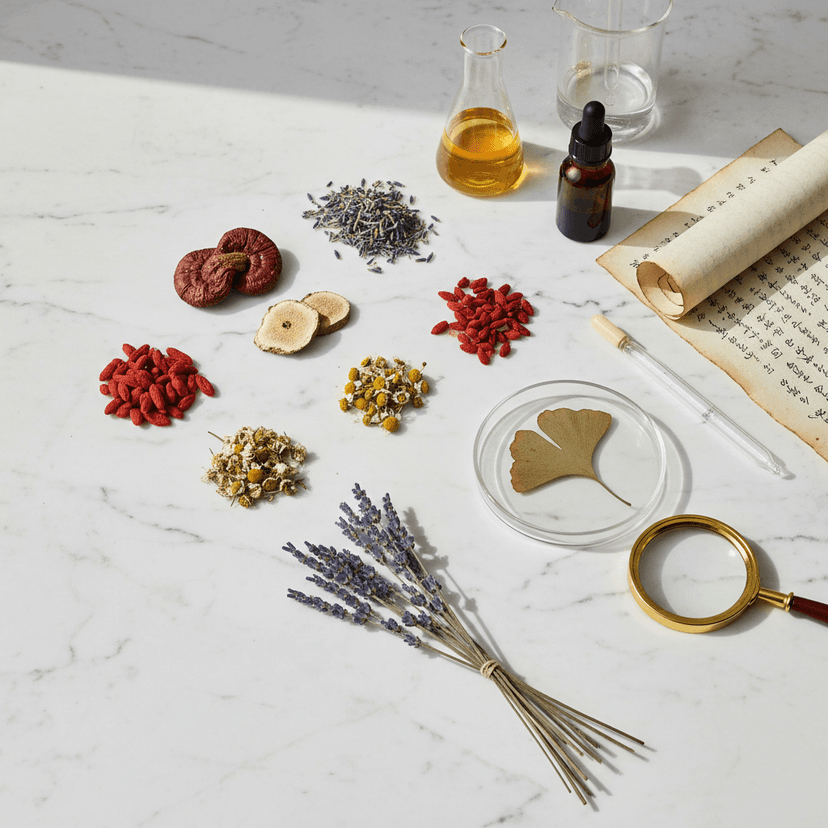
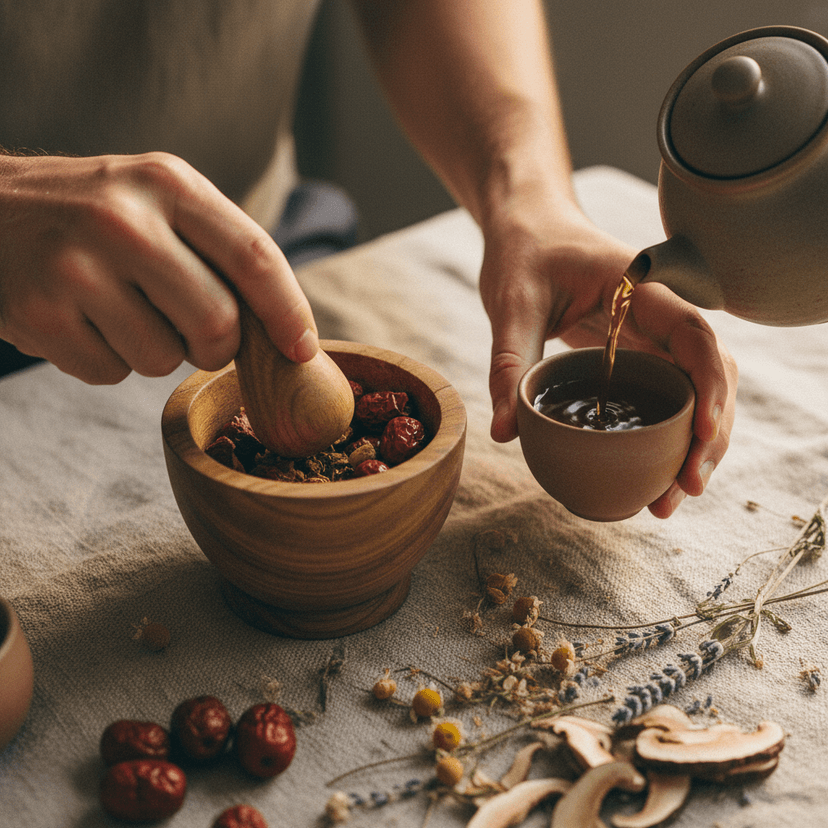
Formulas like Xiaoyaosan (Free and Easy Wanderer) are classics for a reason. They contain herbs like Chai Hu (Bupleurum) to course the Liver and alleviate stagnation, and Bai Shao (White Peony) to nourish Liver Blood and soothe tension. These aren't generic remedies; they're prescribed after a detailed TCM diagnosis to match your unique pattern. Typically taken as a decoction or concentrated granules for several weeks to months.
Dietary Adjustments: Food as Medicine
Emphasize foods that support Liver function and smooth Qi flow. Think light, slightly pungent, and bitter flavors. Incorporate more leafy greens, sprouts, radishes, and citrus peels. Minimize heavy, greasy, or overly processed foods that can burden the Liver. This is a daily practice, focusing on consistent mindful eating.
Mindful Movement & Emotional Release: Letting Go
Gentle exercises like Qigong, Tai Chi, or even a brisk walk can move stagnant Qi. More importantly, learning healthy ways to express emotions — journaling, talking to a trusted friend or therapist, creative outlets — is essential. Suppressed anger, resentment, or frustration are fuel for Liver Qi Stagnation. Aim for 30 minutes of movement daily and 10-15 minutes of emotional reflection.
Clinical Takeaway: A multi-modal approach combining acupuncture, herbal medicine, dietary shifts, and emotional processing is critical for sustainably addressing Liver Qi Stagnation and its associated anxiety. This isn’t a quick fix, but a process of rebalancing.
6. Common Missteps on the Healing Journey
I’ve seen patients make incredible strides, but I’ve also seen some common pitfalls. Avoiding these can save you a lot of frustration.
Mistake #1: Treating Symptoms, Not the Pattern
Many people focus only on the anxiety or the headaches, taking painkillers or just trying to 'think positive.' While positive thinking is good, if the underlying energetic stagnation isn’t addressed, symptoms will likely persist or resurface. This is where a truly integrative approach shines. You need to look beyond the surface.
Mistake #2: Ignoring the Emotional Root
Liver Qi Stagnation is deeply tied to how we process, or fail to process, our emotions. Suppressed anger, resentment, or chronic frustration are major culprits. Simply taking herbs without addressing these emotional patterns is like trying to bail out a leaky boat without patching the hole. You need to learn to express, not suppress.
Mistake #3: Expecting a Quick Fix
Rebalancing Liver Qi takes time and consistency. It’s not a magic bullet. Chronic patterns often take years to develop, and they won't disappear overnight. I often hear patients express frustration after a few weeks, wondering why their long-term Liver Qi Stagnation persists. It's a process of gradual change, not a sprint. The real question isn't which remedies to take — but whether we've been thinking about wellness through entirely the wrong lens.
Clinical Takeaway: Sustainable healing from Liver Qi Stagnation and anxiety requires patience, addressing both physical and emotional patterns, and a commitment to integrating lifestyle changes rather than seeking a singular, instant solution.
Your First 24 Hours: A Mini-Plan
Ready to start feeling better? Here are three concrete, actionable steps you can take in the next day to begin addressing Liver Qi Stagnation and its impact on your anxiety:
Take 15 minutes for a mindful walk outside, ideally in nature. Focus on deep breaths, inhaling through your nose and exhaling slowly through your mouth. This simple act helps move stagnant Qi. (Time: 15 minutes)
Incorporate a 'Liver-friendly' meal or snack. Try a handful of fresh leafy greens with a squeeze of lemon, or a small bowl of steamed broccoli. Avoid heavy, greasy foods for this one day. (Time: 5-10 minutes prep)
Before bed, journal for 10 minutes about any emotions you felt today, especially frustration or irritation, without judgment. Just get them out. This helps prevent emotional stagnation. (Time: 10 minutes)
Contributing Writer at Demisunshine. Maya has spent much of her adult life around the practice of integrative medicine and herbal traditions. Her writing reflects a long familiarity with how women's health, body constitution, and emotional wellbeing intersect — and her pieces tend to acknowledge that the messy parts of healing rarely fit a neat formula.
Get TCM Wellness Tips
Weekly articles on herbal remedies, nutrition, and holistic health — delivered to your inbox.