经络 · Jing Luo
Meridians are the invisible pathways in Traditional Chinese Medicine (TCM) that circulate vital energy (Qi) and blood throughout the body. This intricate network connects organs, tissues, and body parts, playing a crucial role in maintaining health and serving as the foundation for many TCM diagnostic and therapeutic practices.
Meridians, known as 'Jingluo' (经络) in Traditional Chinese Medicine (TCM), are an intricate network of invisible channels. They are fundamental to TCM theory, responsible for transporting Qi (vital energy) and Xue (blood) throughout the body. This intricate system connects the internal organs to the limbs and sensory organs.
The concept of meridians explains how different parts of the body are interconnected. They serve as pathways for communication, ensuring the harmonious flow of life force. Understanding meridians is crucial for diagnosing and treating imbalances in Traditional Chinese Medicine.
Meridians are the conduits through which Qi and Blood circulate. Qi is the animating force, while Blood nourishes the body. Their continuous and balanced flow is essential for maintaining physiological functions and overall health. Blockages or deficiencies in this flow can lead to illness.
Each meridian has a specific pathway and connects to particular organs or body parts. The Qi flows in a cyclical pattern through the twelve main meridians over a 24-hour period. This daily rhythm influences the optimal time for treating specific organ systems.
The meridian system is primarily composed of twelve principal meridians, each associated with a specific organ (e.g., Lung, Large Intestine, Stomach, Spleen, Heart, Small Intestine, Bladder, Kidney, Pericardium, Triple Warmer, Gallbladder, Liver). These are bilateral, running on both sides of the body.
In addition to the principal meridians, there are eight extraordinary meridians (e.g., Ren Mai, Du Mai). These act as reservoirs for Qi and Blood, regulating the flow in the principal meridians. There are also collateral vessels and smaller networks that branch out, forming a comprehensive system.
Along the meridian pathways are specific points known as acupoints or acupuncture points. These are locations where the Qi is more concentrated and accessible. Stimulating these points, through methods like acupuncture or acupressure, can influence the flow of Qi within the meridian.
Each acupoint has unique therapeutic properties and is used to address specific health concerns. By selecting and stimulating appropriate points, TCM practitioners aim to unblock stagnation, tonify deficiencies, or disperse excesses, thereby restoring balance and promoting healing.
Meridians are the theoretical foundation for many TCM practices. Acupuncture involves inserting fine needles into acupoints to regulate Qi and Blood flow. Acupressure uses manual pressure on these points. Both aim to restore harmony within the meridian system.
Herbal medicine also considers meridian theory, as herbs are often prescribed based on their affinity for specific meridians or organs. Cupping and moxibustion are other techniques that stimulate meridian points to promote circulation and alleviate pain or illness.
While meridians are not anatomical structures identifiable by Western medical imaging, their physiological effects are increasingly studied. Research explores correlations between meridian pathways and neural pathways, connective tissue planes, or bioelectrical phenomena.
Modern science continues to investigate the mechanisms behind acupuncture and other meridian-based therapies. Although the exact nature of meridians remains a subject of ongoing research, their clinical efficacy in treating various conditions is widely recognized and utilized globally.
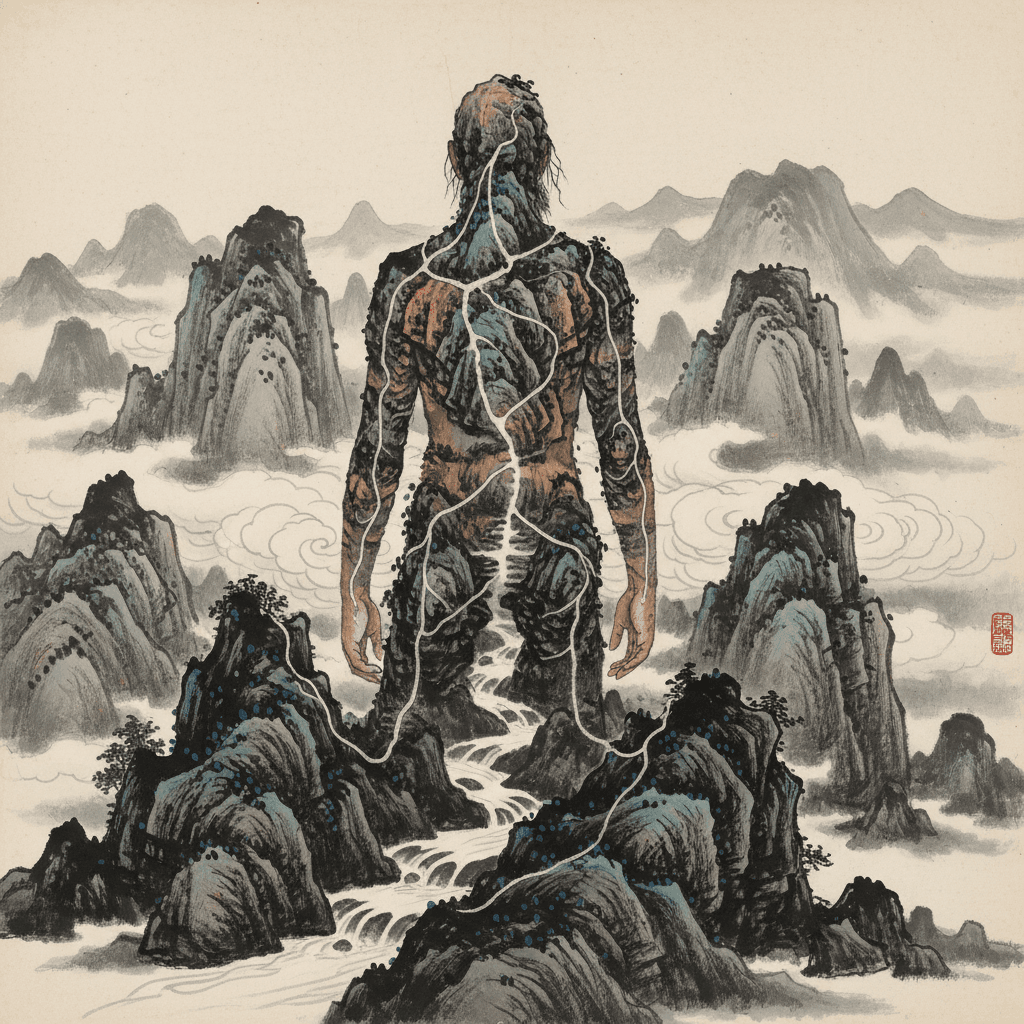
Meridians, known as 'Jingluo' (经络) in Traditional Chinese Medicine (TCM), are an intricate network of invisible channels. They are fundamental to TCM theory, responsible for transporting Qi (vital energy) and Xue (blood) throughout the body. This intricate system connects the internal organs to the limbs and sensory organs.
The concept of meridians explains how different parts of the body are interconnected. They serve as pathways for communication, ensuring the harmonious flow of life force. Understanding meridians is crucial for diagnosing and treating imbalances in Traditional Chinese Medicine.
Meridians are the conduits through which Qi and Blood circulate. Qi is the animating force, while Blood nourishes the body. Their continuous and balanced flow is essential for maintaining physiological functions and overall health. Blockages or deficiencies in this flow can lead to illness.
Each meridian has a specific pathway and connects to particular organs or body parts. The Qi flows in a cyclical pattern through the twelve main meridians over a 24-hour period. This daily rhythm influences the optimal time for treating specific organ systems.
The meridian system is primarily composed of twelve principal meridians, each associated with a specific organ (e.g., Lung, Large Intestine, Stomach, Spleen, Heart, Small Intestine, Bladder, Kidney, Pericardium, Triple Warmer, Gallbladder, Liver). These are bilateral, running on both sides of the body.
In addition to the principal meridians, there are eight extraordinary meridians (e.g., Ren Mai, Du Mai). These act as reservoirs for Qi and Blood, regulating the flow in the principal meridians. There are also collateral vessels and smaller networks that branch out, forming a comprehensive system.
Along the meridian pathways are specific points known as acupoints or acupuncture points. These are locations where the Qi is more concentrated and accessible. Stimulating these points, through methods like acupuncture or acupressure, can influence the flow of Qi within the meridian.
Each acupoint has unique therapeutic properties and is used to address specific health concerns. By selecting and stimulating appropriate points, TCM practitioners aim to unblock stagnation, tonify deficiencies, or disperse excesses, thereby restoring balance and promoting healing.
Meridians are the theoretical foundation for many TCM practices. Acupuncture involves inserting fine needles into acupoints to regulate Qi and Blood flow. Acupressure uses manual pressure on these points. Both aim to restore harmony within the meridian system.
Herbal medicine also considers meridian theory, as herbs are often prescribed based on their affinity for specific meridians or organs. Cupping and moxibustion are other techniques that stimulate meridian points to promote circulation and alleviate pain or illness.
While meridians are not anatomical structures identifiable by Western medical imaging, their physiological effects are increasingly studied. Research explores correlations between meridian pathways and neural pathways, connective tissue planes, or bioelectrical phenomena.
Modern science continues to investigate the mechanisms behind acupuncture and other meridian-based therapies. Although the exact nature of meridians remains a subject of ongoing research, their clinical efficacy in treating various conditions is widely recognized and utilized globally.
This information is for educational purposes only and is not intended as medical advice. Always consult a qualified healthcare practitioner before using any herbal remedy.