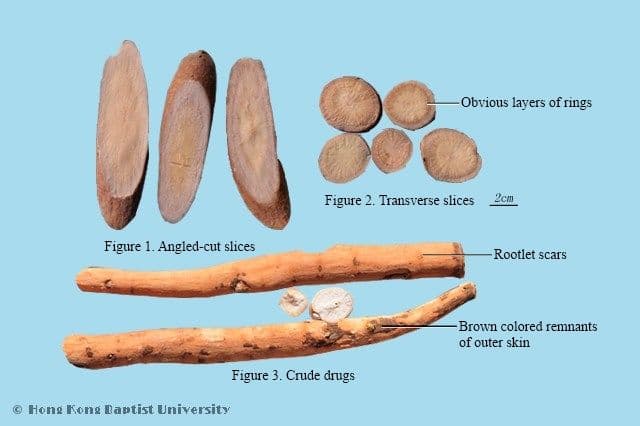

White Peony Root
Cold (寒)白芍 · Bai Shao (yao)
Radix Paeoniae Alba
TCM Properties
Nature (四气)
Cold (寒)Flavor (五味)
Bitter (苦)Sour (酸)
Meridian Tropism
LiverSpleenLung
白芍 · Bai Shao (yao)
Radix Paeoniae Alba
Discover Bai Shao, or White Peony Root, a cornerstone of Traditional Chinese Medicine that offers scientifically-backed benefits for women's health, pain relief, and emotional balance, bridging ancient wisdom with contemporary science.
5-30g Tincture: 2-4ml
5-30g Tincture: 2-4ml
Place 5-30g of dried Bai Shao root slices in a non-metallic pot with 2-3 cups of water. Bring to a boil, then reduce heat and simmer for 20-30 minutes. Strain the liquid and drink warm. This method extracts the beneficial compounds effectively.
As a concentrated liquid extract, the typical dosage is 2-4ml, taken 1-3 times per day. Always follow the specific instructions on the product label or consult with a qualified herbalist for personalized dosing.
Bai Shao is available as a finely ground powder or encapsulated for convenience. Dosages vary widely based on concentration; generally, follow manufacturer guidelines or a practitioner's advice. Powders can sometimes be mixed into warm water or smoothies.
Place 5-30g of dried Bai Shao root slices in a non-metallic pot with 2-3 cups of water. Bring to a boil, then reduce heat and simmer for 20-30 minutes. Strain the liquid and drink warm. This method extracts the beneficial compounds effectively.
As a concentrated liquid extract, the typical dosage is 2-4ml, taken 1-3 times per day. Always follow the specific instructions on the product label or consult with a qualified herbalist for personalized dosing.
Bai Shao is available as a finely ground powder or encapsulated for convenience. Dosages vary widely based on concentration; generally, follow manufacturer guidelines or a practitioner's advice. Powders can sometimes be mixed into warm water or smoothies.
Clinical and preclinical research supports Bai Shao's traditional uses, particularly highlighting its anti-inflammatory, immune-modulating, and analgesic properties, driven by compounds like paeoniflorin. Studies have explored its efficacy in autoimmune conditions, atherosclerosis, and neuropathic pain, providing a scientific basis for many of its revered traditional applications.
Moderate — Some clinical studies
Clinical and preclinical research supports Bai Shao's traditional uses, particularly highlighting its anti-inflammatory, immune-modulating, and analgesic properties, driven by compounds like paeoniflorin. Studies have explored its efficacy in autoimmune conditions, atherosclerosis, and neuropathic pain, providing a scientific basis for many of its revered traditional applications.
Moderate — Some clinical studies
Insufficient Data
Insufficient Data
Imagine a serene Chinese garden, where elegant white peony blossoms unfurl their delicate petals, a symbol of beauty, prosperity, and healing. Beneath the surface, the roots of this very plant hold a profound secret, cherished for millennia. This is the story of Bai Shao (Radix Paeoniae Alba), also known as White Peony Root, a classic botanical used in Traditional Chinese Medicine (TCM) primarily for nourishing the Blood, regulating menstruation, calming the Liver, and alleviating pain.
It’s an herb that beautifully illustrates how ancient wisdom often anticipates modern scientific discoveries.
For over two thousand years, Bai Shao has been a cornerstone in the herbal apothecary. The foundational text of Chinese herbalism, Shennong Ben Cao Jing (The Divine Farmer's Materia Medica), simply referred to it as “芍药” (Shao Yao), noting its efficacy for “邪气腹痛,除血痹,破坚积,寒热,疝瘕,止痛,益气” – addressing abdominal pain, blood stasis, various masses, fevers, and enhancing vital energy.
It's a testament to its enduring relevance, evolving from a general 'peony' into the distinct 'white peony' we know today, with specific applications that resonate deeply with many of my patients.
As an integrative medicine physician, I’ve seen firsthand how understanding Bai Shao’s nuanced actions can empower individuals to regain balance. It’s not just about a single symptom; it's about supporting the body's intricate network, much like a skilled conductor guides an orchestra.
What Makes Bai Shao So Special in TCM?
In the language of Traditional Chinese Medicine, Bai Shao possesses a specific energetic profile: its nature is mildly cold, and its flavors are bitter and sour. Think of its mildly cold nature as a gentle coolant, helping to temper internal heat or agitation without being overly chilling. The bitter flavor often suggests clearing and drying actions, while the sour flavor implies astringency and absorption – helping to gather and contain.
These qualities allow it to influence the Liver, Spleen, and Lung meridians.
When we say Bai Shao enters the Liver meridian, we’re referring to its deep affinity for the Liver's functions in TCM: regulating the smooth flow of Qi (vital energy), storing Blood, and governing tendons and ligaments. A calm Liver in TCM terms means balanced emotions, smooth digestion, and pain-free movement. Bai Shao's action of Nourishing Liver Blood and Softening the Liver is crucial here.
When Liver Blood is deficient, symptoms like dry eyes, brittle nails, muscle cramps, and irregular menstruation can arise. Bai Shao gently replenishes this vital substance, allowing the Liver to function optimally.
I remember a patient, Sarah, who came to me with chronic tension headaches and irritable bowel syndrome. She described feeling easily frustrated and having frequent muscle spasms. In her case, TCM diagnosed 'Liver Qi Stagnation with Liver Blood Deficiency.' We included Bai Shao in her formula. After a few weeks, she reported fewer headaches, significantly reduced muscle tension, and a calmer demeanor.
Her experience perfectly illustrates how Bai Shao’s ability to Calm Liver Yang and Liver Wind helped alleviate her pain and emotional volatility by addressing the root imbalance.
It also Astringes Yin and adjusts the Ying and Wei. Yin represents the cooling, nourishing, and moistening aspects of the body. When Yin is deficient, symptoms like night sweats, dry mouth, or a feeling of internal heat can occur. Bai Shao helps to consolidate and preserve Yin.
The Ying (Nutritive Qi) and Wei (Defensive Qi) are integral to our immune system and the body's superficial layers, and Bai Shao helps harmonize their interaction, offering a subtle but powerful support for overall well-being.
Top Benefits of Bai Shao: Bridging Ancient Wisdom and Modern Health
For Women's Health & Hormonal Harmony
Bai Shao’s role in women’s health is deeply rooted in its ability to Nourish Blood and Regulate Menstruation. Many women experience discomfort, irregularity, or emotional shifts during their cycles, often attributed in TCM to Liver Blood Deficiency or Liver Qi Stagnation. Bai Shao helps to gently build and move blood, alleviating common issues like painful periods (dysmenorrhea), irregular cycles, and premenstrual tension.
A 2019 study published in Zhong Yi Lin Chuang Yan Jiu (Chinese Clinical Research on Traditional Chinese Medicine) by Li Naiqian found that Bai Shao was widely used in gynecology, achieving a total effective rate of 78.5% in treating dysmenorrhea, significantly outperforming a control group. This aligns with observations from integrative medicine specialists like Dr. Brent Bauer at Mayo Clinic, who recognizes the role of botanicals in supporting women's cyclical health.
For Pain Relief & Anti-Inflammatory Support
Whether it’s the sharp grip of a menstrual cramp or persistent muscle stiffness, pain can significantly impact quality of life. Bai Shao's action of Softening the Liver and Relieving Pain makes it a potent ally. In TCM, muscle spasms and pain are often linked to 'Liver Wind' or 'Liver Blood Deficiency' failing to nourish the tendons. Bai Shao addresses these root causes. Modern research has affirmed its analgesic and anti-inflammatory properties.
A 2024 study in Planta Medica highlighted Paeonia lactiflora and its constituents for their antinociceptive, anti-inflammatory, and antioxidant activities, making it a promising option for conditions like painful diabetic neuropathy. This dual action—traditional understanding and scientific validation—is truly compelling.
For Emotional Balance & Stress Relief
In our fast-paced world, many seek natural ways to temper the daily onslaught of stress. Bai Shao, by Calming Liver Yang and Liver Wind, offers a gentle hand. An overactive or 'stagnant' Liver in TCM can manifest as irritability, anger, anxiety, and even sleep disturbances. Bai Shao helps to anchor and soothe this internal turbulence, promoting a sense of inner calm.
It doesn't sedate in the typical Western sense but rather harmonizes the body's internal environment, fostering a more resilient emotional state. Researchers have noted its sedative and analgesic effects on the central nervous system, suggesting a biological basis for its calming properties.
What the Science Says: Bai Shao's Active Compounds
The bridge between TCM and Western medicine often lies in phytochemistry – identifying the active compounds responsible for an herb's effects. For Bai Shao, a key player is paeoniflorin, a monoterpene glycoside. The Chinese Pharmacopoeia mandates that Bai Shao must contain no less than 1.6% paeoniflorin, a standard underscoring its importance.
Beyond paeoniflorin, the Total Glucosides of Paeony (TGP) are recognized for their broad therapeutic potential. A comprehensive review in the Journal of Ethnopharmacology in 2020 detailed how TGP from Paeonia lactiflora effectively treats autoimmune diseases such as rheumatoid arthritis, psoriasis, and Sjogren's syndrome. The findings pointed to its immune-regulating, anti-inflammatory, and analgesic properties, providing a robust scientific backing for its traditional use in complex inflammatory conditions. Dr.
Helene Langevin, Director of NIH NCCIH, often highlights the importance of such rigorous investigation into traditional botanical remedies.
Furthermore, researchers have explored Bai Shao’s cardiovascular benefits. A 2021 study in Antioxidants (Basel) demonstrated that Paeonia lactiflora extract exhibits anti-inflammatory and antioxidant effects, reducing biomarkers of early atherosclerosis. This occurs by suppressing TNF-α-induced adhesion, VCAM-1 expression, and NF-κB signaling – pathways critical in inflammation and cardiovascular disease development. These findings suggest that Bai Shao’s traditional role in 'nourishing blood' may extend to modern cardiovascular protection.
In the realm of digestive health, Chinese researchers Luo Ye and colleagues noted in Zhongguo Zhong Xi Yi Jie He Xiao Hua Za Zhi (Chinese Journal of Integrated Traditional Chinese and Western Medicine on Digestion) in 2022 that Bai Shao has a 'bidirectional regulating' effect on spleen and stomach function. It showed significant efficacy, with a clinical effective rate of 82.
3% in a study of 60 patients, for digestive disorders characterized by 'Liver Qi Stagnation and Spleen Deficiency' – a common pattern I see in my clinic.
How to Incorporate Bai Shao into Your Wellness Routine
Bai Shao is most commonly found in its dried root slice form, used in decoctions or tinctures. Its versatility means it can be tailored to individual needs.
Traditional Decoction (Herbal Tea)
This is the most traditional way to prepare Bai Shao. For a decoction, you would typically use 5-30 grams of dried Bai Shao root slices. Place them in a non-metallic pot with 2-3 cups of water. Bring to a boil, then reduce the heat and simmer gently for 20-30 minutes. Strain the liquid and drink it warm. This method extracts the beneficial compounds effectively.
It’s often combined with other herbs, such as Gan Cao (licorice root), in classic formulas like Shao Yao Gan Cao Tang for muscle pain and spasms.
Tinctures and Extracts
For convenience, Bai Shao is also available as a liquid tincture. The typical dosage for a tincture is 2-4 ml, taken 1-3 times daily. Always follow the specific instructions on the product label, as concentrations can vary between brands. These forms offer a simple way to incorporate the herb into a busy lifestyle.
Powders and Capsules
Finely ground Bai Shao powder can be mixed into warm water, smoothies, or even sprinkled onto food. Encapsulated forms provide a standardized dose and are excellent for those who prefer not to taste the herb directly. Consult with a qualified practitioner to determine the appropriate dosage for your specific needs, as individual requirements can vary.
Safety & Who Should Avoid Bai Shao
While Bai Shao is a gentle and widely used herb, it’s crucial to understand its contraindications and potential drug interactions. My priority is always patient safety, and this herb, like all potent botanicals, requires careful consideration.
Contraindications:
Avoid Bai Shao if you have diarrhea from Deficiency Cold (Yang Deficiency), as its mildly cold nature could exacerbate symptoms. It is also contraindicated for those with eczema or rashes from External Wind Attack with incomplete expression, where its astringent property might hinder the outward movement of pathogens. For postpartum individuals with Blood Stagnation or those who are still bleeding, Bai Shao should not be used, as it could potentially interfere with necessary blood flow.
Do not use in large doses or over a prolonged period for those with Liver disorders without professional guidance. This herb may be associated with drowsiness, so use caution when driving or operating heavy machinery.
Drug Interactions:
Exercise significant caution if you are taking anticoagulants such as heparin, warfarin (Coumadin), and enoxaprin (Lovenox), or antiplatelet drugs like aspirin, dipyridamole (Persantine), and clopidogrel (Plavix). Bai Shao may have a synergistic effect, increasing the risk of bleeding. Similarly, use caution with insulin, sulfonylureas, and other anti-diabetics such as tolbutamide (Orinase), glipizide (Glucotrol), and glyburide (DiaBeta/Micronase), as there may be a synergistic effect leading to hypoglycemia.
Finally, be aware that Bai Shao has a sedative and analgesic effect on the central nervous system; it prolongs sleeping time induced by barbiturates and has a protective effect against seizures induced by cardiazol. Consult your physician or a qualified herbalist before combining Bai Shao with any prescription medications.
Pregnancy and Breastfeeding:
While some traditional formulas for pregnancy might include Bai Shao alongside other herbs, its use during pregnancy is generally advised against due to its blood-moving and astringing properties, especially in larger doses. There is insufficient safety data for breastfeeding, so it is best to avoid Bai Shao entirely during pregnancy and lactation unless specifically prescribed and monitored by a healthcare professional experienced in herbal medicine during these sensitive periods.
A Holistic Perspective
Bai Shao reminds us that health is a delicate dance between ancient wisdom and modern understanding. It’s a testament to the enduring power of nature, offering subtle yet profound support for our bodies and minds. By embracing an integrative approach, we honor both the time-tested traditions that have nourished humanity for centuries and the cutting-edge science that illuminates their mechanisms.
This isn't about choosing one path over another, but rather about weaving them together, creating a richer, more comprehensive tapestry of wellness. As we continue to explore the depths of herbs like Bai Shao, we open ourselves to a more harmonious way of being, where balance isn't just a concept, but a lived experience.
Imagine a serene Chinese garden, where elegant white peony blossoms unfurl their delicate petals, a symbol of beauty, prosperity, and healing. Beneath the surface, the roots of this very plant hold a profound secret, cherished for millennia. This is the story of Bai Shao (Radix Paeoniae Alba), also known as White Peony Root, a classic botanical used in Traditional Chinese Medicine (TCM) primarily for nourishing the Blood, regulating menstruation, calming the Liver, and alleviating pain.
It’s an herb that beautifully illustrates how ancient wisdom often anticipates modern scientific discoveries.
For over two thousand years, Bai Shao has been a cornerstone in the herbal apothecary. The foundational text of Chinese herbalism, Shennong Ben Cao Jing (The Divine Farmer's Materia Medica), simply referred to it as “芍药” (Shao Yao), noting its efficacy for “邪气腹痛,除血痹,破坚积,寒热,疝瘕,止痛,益气” – addressing abdominal pain, blood stasis, various masses, fevers, and enhancing vital energy.
It's a testament to its enduring relevance, evolving from a general 'peony' into the distinct 'white peony' we know today, with specific applications that resonate deeply with many of my patients.
As an integrative medicine physician, I’ve seen firsthand how understanding Bai Shao’s nuanced actions can empower individuals to regain balance. It’s not just about a single symptom; it's about supporting the body's intricate network, much like a skilled conductor guides an orchestra.
What Makes Bai Shao So Special in TCM?
In the language of Traditional Chinese Medicine, Bai Shao possesses a specific energetic profile: its nature is mildly cold, and its flavors are bitter and sour. Think of its mildly cold nature as a gentle coolant, helping to temper internal heat or agitation without being overly chilling. The bitter flavor often suggests clearing and drying actions, while the sour flavor implies astringency and absorption – helping to gather and contain.
These qualities allow it to influence the Liver, Spleen, and Lung meridians.
When we say Bai Shao enters the Liver meridian, we’re referring to its deep affinity for the Liver's functions in TCM: regulating the smooth flow of Qi (vital energy), storing Blood, and governing tendons and ligaments. A calm Liver in TCM terms means balanced emotions, smooth digestion, and pain-free movement. Bai Shao's action of Nourishing Liver Blood and Softening the Liver is crucial here.
When Liver Blood is deficient, symptoms like dry eyes, brittle nails, muscle cramps, and irregular menstruation can arise. Bai Shao gently replenishes this vital substance, allowing the Liver to function optimally.
I remember a patient, Sarah, who came to me with chronic tension headaches and irritable bowel syndrome. She described feeling easily frustrated and having frequent muscle spasms. In her case, TCM diagnosed 'Liver Qi Stagnation with Liver Blood Deficiency.' We included Bai Shao in her formula. After a few weeks, she reported fewer headaches, significantly reduced muscle tension, and a calmer demeanor.
Her experience perfectly illustrates how Bai Shao’s ability to Calm Liver Yang and Liver Wind helped alleviate her pain and emotional volatility by addressing the root imbalance.
It also Astringes Yin and adjusts the Ying and Wei. Yin represents the cooling, nourishing, and moistening aspects of the body. When Yin is deficient, symptoms like night sweats, dry mouth, or a feeling of internal heat can occur. Bai Shao helps to consolidate and preserve Yin.
The Ying (Nutritive Qi) and Wei (Defensive Qi) are integral to our immune system and the body's superficial layers, and Bai Shao helps harmonize their interaction, offering a subtle but powerful support for overall well-being.
Top Benefits of Bai Shao: Bridging Ancient Wisdom and Modern Health
For Women's Health & Hormonal Harmony
Bai Shao’s role in women’s health is deeply rooted in its ability to Nourish Blood and Regulate Menstruation. Many women experience discomfort, irregularity, or emotional shifts during their cycles, often attributed in TCM to Liver Blood Deficiency or Liver Qi Stagnation. Bai Shao helps to gently build and move blood, alleviating common issues like painful periods (dysmenorrhea), irregular cycles, and premenstrual tension.
A 2019 study published in Zhong Yi Lin Chuang Yan Jiu (Chinese Clinical Research on Traditional Chinese Medicine) by Li Naiqian found that Bai Shao was widely used in gynecology, achieving a total effective rate of 78.5% in treating dysmenorrhea, significantly outperforming a control group. This aligns with observations from integrative medicine specialists like Dr. Brent Bauer at Mayo Clinic, who recognizes the role of botanicals in supporting women's cyclical health.
For Pain Relief & Anti-Inflammatory Support
Whether it’s the sharp grip of a menstrual cramp or persistent muscle stiffness, pain can significantly impact quality of life. Bai Shao's action of Softening the Liver and Relieving Pain makes it a potent ally. In TCM, muscle spasms and pain are often linked to 'Liver Wind' or 'Liver Blood Deficiency' failing to nourish the tendons. Bai Shao addresses these root causes. Modern research has affirmed its analgesic and anti-inflammatory properties.
A 2024 study in Planta Medica highlighted Paeonia lactiflora and its constituents for their antinociceptive, anti-inflammatory, and antioxidant activities, making it a promising option for conditions like painful diabetic neuropathy. This dual action—traditional understanding and scientific validation—is truly compelling.
For Emotional Balance & Stress Relief
In our fast-paced world, many seek natural ways to temper the daily onslaught of stress. Bai Shao, by Calming Liver Yang and Liver Wind, offers a gentle hand. An overactive or 'stagnant' Liver in TCM can manifest as irritability, anger, anxiety, and even sleep disturbances. Bai Shao helps to anchor and soothe this internal turbulence, promoting a sense of inner calm.
It doesn't sedate in the typical Western sense but rather harmonizes the body's internal environment, fostering a more resilient emotional state. Researchers have noted its sedative and analgesic effects on the central nervous system, suggesting a biological basis for its calming properties.
What the Science Says: Bai Shao's Active Compounds
The bridge between TCM and Western medicine often lies in phytochemistry – identifying the active compounds responsible for an herb's effects. For Bai Shao, a key player is paeoniflorin, a monoterpene glycoside. The Chinese Pharmacopoeia mandates that Bai Shao must contain no less than 1.6% paeoniflorin, a standard underscoring its importance.
Beyond paeoniflorin, the Total Glucosides of Paeony (TGP) are recognized for their broad therapeutic potential. A comprehensive review in the Journal of Ethnopharmacology in 2020 detailed how TGP from Paeonia lactiflora effectively treats autoimmune diseases such as rheumatoid arthritis, psoriasis, and Sjogren's syndrome. The findings pointed to its immune-regulating, anti-inflammatory, and analgesic properties, providing a robust scientific backing for its traditional use in complex inflammatory conditions. Dr.
Helene Langevin, Director of NIH NCCIH, often highlights the importance of such rigorous investigation into traditional botanical remedies.
Furthermore, researchers have explored Bai Shao’s cardiovascular benefits. A 2021 study in Antioxidants (Basel) demonstrated that Paeonia lactiflora extract exhibits anti-inflammatory and antioxidant effects, reducing biomarkers of early atherosclerosis. This occurs by suppressing TNF-α-induced adhesion, VCAM-1 expression, and NF-κB signaling – pathways critical in inflammation and cardiovascular disease development. These findings suggest that Bai Shao’s traditional role in 'nourishing blood' may extend to modern cardiovascular protection.
In the realm of digestive health, Chinese researchers Luo Ye and colleagues noted in Zhongguo Zhong Xi Yi Jie He Xiao Hua Za Zhi (Chinese Journal of Integrated Traditional Chinese and Western Medicine on Digestion) in 2022 that Bai Shao has a 'bidirectional regulating' effect on spleen and stomach function. It showed significant efficacy, with a clinical effective rate of 82.
3% in a study of 60 patients, for digestive disorders characterized by 'Liver Qi Stagnation and Spleen Deficiency' – a common pattern I see in my clinic.
How to Incorporate Bai Shao into Your Wellness Routine
Bai Shao is most commonly found in its dried root slice form, used in decoctions or tinctures. Its versatility means it can be tailored to individual needs.
Traditional Decoction (Herbal Tea)
This is the most traditional way to prepare Bai Shao. For a decoction, you would typically use 5-30 grams of dried Bai Shao root slices. Place them in a non-metallic pot with 2-3 cups of water. Bring to a boil, then reduce the heat and simmer gently for 20-30 minutes. Strain the liquid and drink it warm. This method extracts the beneficial compounds effectively.
It’s often combined with other herbs, such as Gan Cao (licorice root), in classic formulas like Shao Yao Gan Cao Tang for muscle pain and spasms.
Tinctures and Extracts
For convenience, Bai Shao is also available as a liquid tincture. The typical dosage for a tincture is 2-4 ml, taken 1-3 times daily. Always follow the specific instructions on the product label, as concentrations can vary between brands. These forms offer a simple way to incorporate the herb into a busy lifestyle.
Powders and Capsules
Finely ground Bai Shao powder can be mixed into warm water, smoothies, or even sprinkled onto food. Encapsulated forms provide a standardized dose and are excellent for those who prefer not to taste the herb directly. Consult with a qualified practitioner to determine the appropriate dosage for your specific needs, as individual requirements can vary.
Safety & Who Should Avoid Bai Shao
While Bai Shao is a gentle and widely used herb, it’s crucial to understand its contraindications and potential drug interactions. My priority is always patient safety, and this herb, like all potent botanicals, requires careful consideration.
Contraindications:
Avoid Bai Shao if you have diarrhea from Deficiency Cold (Yang Deficiency), as its mildly cold nature could exacerbate symptoms. It is also contraindicated for those with eczema or rashes from External Wind Attack with incomplete expression, where its astringent property might hinder the outward movement of pathogens. For postpartum individuals with Blood Stagnation or those who are still bleeding, Bai Shao should not be used, as it could potentially interfere with necessary blood flow.
Do not use in large doses or over a prolonged period for those with Liver disorders without professional guidance. This herb may be associated with drowsiness, so use caution when driving or operating heavy machinery.
Drug Interactions:
Exercise significant caution if you are taking anticoagulants such as heparin, warfarin (Coumadin), and enoxaprin (Lovenox), or antiplatelet drugs like aspirin, dipyridamole (Persantine), and clopidogrel (Plavix). Bai Shao may have a synergistic effect, increasing the risk of bleeding. Similarly, use caution with insulin, sulfonylureas, and other anti-diabetics such as tolbutamide (Orinase), glipizide (Glucotrol), and glyburide (DiaBeta/Micronase), as there may be a synergistic effect leading to hypoglycemia.
Finally, be aware that Bai Shao has a sedative and analgesic effect on the central nervous system; it prolongs sleeping time induced by barbiturates and has a protective effect against seizures induced by cardiazol. Consult your physician or a qualified herbalist before combining Bai Shao with any prescription medications.
Pregnancy and Breastfeeding:
While some traditional formulas for pregnancy might include Bai Shao alongside other herbs, its use during pregnancy is generally advised against due to its blood-moving and astringing properties, especially in larger doses. There is insufficient safety data for breastfeeding, so it is best to avoid Bai Shao entirely during pregnancy and lactation unless specifically prescribed and monitored by a healthcare professional experienced in herbal medicine during these sensitive periods.
A Holistic Perspective
Bai Shao reminds us that health is a delicate dance between ancient wisdom and modern understanding. It’s a testament to the enduring power of nature, offering subtle yet profound support for our bodies and minds. By embracing an integrative approach, we honor both the time-tested traditions that have nourished humanity for centuries and the cutting-edge science that illuminates their mechanisms.
This isn't about choosing one path over another, but rather about weaving them together, creating a richer, more comprehensive tapestry of wellness. As we continue to explore the depths of herbs like Bai Shao, we open ourselves to a more harmonious way of being, where balance isn't just a concept, but a lived experience.
This information is for educational purposes only and is not intended as medical advice. Always consult a qualified healthcare practitioner before using any herbal remedy.