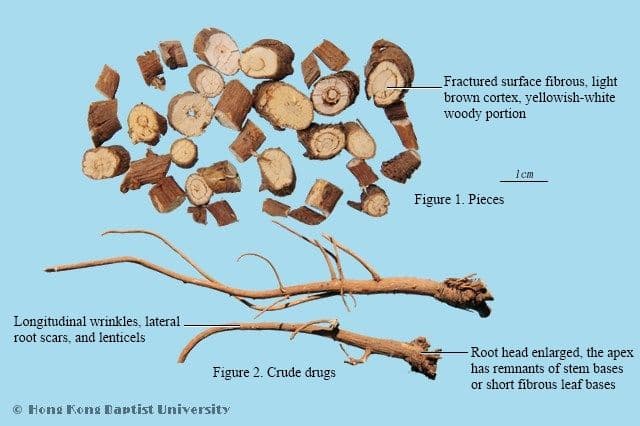
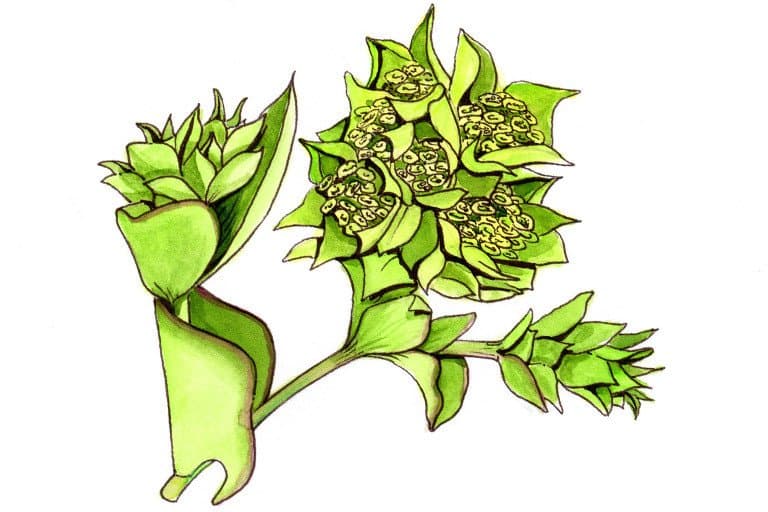
柴胡 · Chai Hu
Radix Bupleuri
Discover Chai Hu (Bupleurum Root), an ancient Chinese herb renowned for balancing emotions, supporting liver health, and harmonizing the body's response to stress and fever. Learn how this powerful root bridges traditional wisdom with modern science for holistic well-being.
3-12g Tincture: 1-3.5ml
Simmer 3-12 grams of dried Chai Hu root with other prescribed herbs in 3-4 cups of water for 20-30 minutes. Strain and drink. Dosage and specific combinations should be determined by a licensed TCM practitioner.
Take 1-3.5 ml of a liquid tincture, diluted in a small amount of water, two or three times daily. Follow product-specific instructions or your practitioner's guidance.
Chai Hu is often found in proprietary herbal formulas in capsule or tablet form. Adhere strictly to the dosage recommended by the manufacturer or your healthcare provider, as concentrations can vary.
Simmer 3-12 grams of dried Chai Hu root with other prescribed herbs in 3-4 cups of water for 20-30 minutes. Strain and drink. Dosage and specific combinations should be determined by a licensed TCM practitioner.
Take 1-3.5 ml of a liquid tincture, diluted in a small amount of water, two or three times daily. Follow product-specific instructions or your practitioner's guidance.
Chai Hu is often found in proprietary herbal formulas in capsule or tablet form. Adhere strictly to the dosage recommended by the manufacturer or your healthcare provider, as concentrations can vary.
Clinical and preclinical research supports many traditional uses of Chai Hu, particularly in areas of emotional regulation, anti-inflammatory effects, and fever reduction. Studies have identified numerous active compounds, such as triterpene saponins, demonstrating effects on neurotransmitter systems, immune response, and hepatoprotection.
Moderate — Some clinical studies
Clinical and preclinical research supports many traditional uses of Chai Hu, particularly in areas of emotional regulation, anti-inflammatory effects, and fever reduction. Studies have identified numerous active compounds, such as triterpene saponins, demonstrating effects on neurotransmitter systems, immune response, and hepatoprotection.
Moderate — Some clinical studies
In vitro, bupleurum extracts inhibit CYPC29 and might affect the intracellular concentration of drugs metabolized by this enzyme [20]. Clinical relevance has yet to be determined.
Animal studies suggest that bupleurum can induce CYP2E1, CYP2D6, and CYP3A4 enzymes, but that herb-drug interactions are more likely at higher doses [27]. Clinical relevance has yet to be determined.
Insufficient Data
In vitro, bupleurum extracts inhibit CYPC29 and might affect the intracellular concentration of drugs metabolized by this enzyme [20]. Clinical relevance has yet to be determined.
Animal studies suggest that bupleurum can induce CYP2E1, CYP2D6, and CYP3A4 enzymes, but that herb-drug interactions are more likely at higher doses [27]. Clinical relevance has yet to be determined.
Insufficient Data
Imagine a feeling, perhaps all too familiar, of tension coiling in your shoulders, a knot in your stomach, or an irritable edge to your mood that seems to appear from nowhere. For centuries, Traditional Chinese Medicine has recognized this state as 'Liver Qi stagnation,' a concept that beautifully captures the modern experience of stress, frustration, and even sluggish digestion. It’s in these moments that an ancient root, unassuming yet profound, truly shines.
Chai Hu (Radix Bupleuri), also known as Bupleurum Root, Hare’s Ear Root, or Thorowax Root, is a pivotal herb used in Traditional Chinese Medicine for harmonizing internal disharmonies, relieving stagnation, and addressing fevers. This esteemed botanical has been a cornerstone of healing for millennia, its wisdom etched into the earliest texts.
As recorded in the venerable 《神农本草经》 (Shennong Ben Cao Jing), China’s oldest pharmacopoeia, Chai Hu was noted for its ability to '主心腹,去肠胃中结热,饮食积聚,寒热邪气,推陈致新' – essentially, resolving internal heat and stagnation, dispelling pathogenic factors, and promoting renewal. It’s a testament to its enduring relevance that we still turn to it today, grounding its traditional uses in contemporary scientific understanding.
In the elegant language of TCM, Chai Hu is described as cool in nature, with bitter, acrid, and astringent flavors. This combination isn't just about taste; it tells us how the herb interacts with your body. Its 'cool' nature helps to clear heat and calm inflammation, much like how Western medicine might use an anti-inflammatory agent. The 'bitter' flavor encourages downward movement and detoxification, while 'acrid' helps to move energy and disperse blockages.
The 'astringent' quality can help consolidate and prevent leakage, though in Chai Hu, it's more subtle, working to harmonize.
Chai Hu primarily targets the Gallbladder, Liver, Pericardium, and San Jiao meridians. If you’re not familiar with meridians, think of them as energetic pathways, influencing specific organ systems and their functions. The Liver meridian, for instance, is deeply connected to our emotional well-being, stress response, and the smooth flow of Qi (life force) throughout the body.
When Liver Qi becomes stagnant, it's like a traffic jam in your internal system – leading to irritability, anxiety, digestive upset, and even menstrual irregularities. Chai Hu acts as the traffic controller, gently but firmly restoring order.
It’s a key herb for resolving Shao Yang disorders, a complex pattern in TCM that often manifests as alternating chills and fever, a feeling of fullness in the chest and ribs, and irritability, representing a battle between the body's defensive (Wei Qi) and pathogenic factors at the interface of the body's exterior and interior. I often see patients who, after a prolonged illness, describe a lingering malaise, a feeling of being 'half-sick, half-well.
' This is often a classic Shao Yang presentation, and Chai Hu, typically in a formula, is my first thought. It also has a unique ability to 'raise Yang Qi,' specifically the clear Qi of the Stomach and Gallbladder, which can help with issues like prolapse or chronic fatigue where energy feels 'sunk'.
Modern life is a constant symphony of stressors, and our bodies often bear the brunt. In TCM, unresolved stress often leads to Liver Qi stagnation, manifesting as irritability, anxiety, mood swings, and even premenstrual syndrome (PMS). Chai Hu is a cornerstone for addressing these patterns. It acts to 'spread Liver Qi,' gently easing the energetic congestion that can cause emotional turmoil.
I recall a patient, a young marketing executive, who came to me suffering from chronic headaches, severe PMS, and explosive anger. Western tests were normal, but she felt perpetually on edge. We discussed Liver Qi stagnation, and she recognized the description perfectly. Incorporating a Chai Hu-containing formula into her regimen, alongside dietary changes, made a significant difference. Within weeks, her headaches lessened, her PMS symptoms softened, and she reported feeling a profound sense of calm she hadn’t experienced in years.
This isn't just anecdotal; research is catching up. A 2022 network meta-analysis published in Frontiers in Pharmacology by researchers including Q.-F. Li and W.-T. Lu from Nanjing University of Chinese Medicine, found that combining proprietary Chinese medicines containing Chai Hu with antidepressants was generally more effective and had fewer adverse reactions than antidepressants alone for treating depression.
Specifically, the DZXY + SNRI combination showed significantly better efficacy, HAMD scores, and safety, highlighting Chai Hu’s potential to modulate mood and emotional well-being.
When your body is fighting off an infection, especially one that leaves you feeling caught between stages – perhaps a persistent low-grade fever, chills, and a vague feeling of unwellness – Chai Hu is often indispensable. This is the classic 'resolving Shao Yang disorders' action. It harmonizes the exterior and interior, helping your body find its equilibrium. It's not about forcing the fever down aggressively, but supporting the body's natural defense mechanisms to resolve the pathogen.
A systematic review of randomized controlled trials published in PMC in 2022, for example, indicated that Bupleuri radix acupoint injection significantly reduced fever resolution time and increased the proportion of participants with fever resolved within 48 hours for acute upper respiratory tract infection (AURTI). The review noted that Bupleuri radix acupoint injection reduced fever resolution time by -33.32 hours (95%CI: -35.71, -30.93) compared to placebo.
This shows a measurable impact on how the body navigates acute infections, helping to resolve lingering symptoms and congestion.
Beyond its role in emotional and febrile conditions, Chai Hu offers profound support for the liver, an organ central to detoxification, metabolism, and overall vitality in both TCM and Western medicine. Its ability to 'spread Liver Qi' ensures the liver's myriad functions proceed smoothly. From a Western perspective, this translates to supporting healthy liver function and protecting liver cells. A comprehensive review in MDPI in 2024 highlighted that Bupleurum compounds demonstrate notable hepatoprotective properties.
The review detailed how more than 250 compounds, including triterpene saponins, essential oils, flavonoids, lignans, and polysaccharides, have been isolated from Bupleurum, contributing to its diverse therapeutic actions, including anti-inflammatory and anticancer effects. This speaks to its complex biochemical makeup, offering a fascinating bridge between ancient wisdom and modern pharmacology.
The scientific community has increasingly turned its attention to Chai Hu, seeking to understand the mechanisms behind its traditional uses. The rich phytochemistry of Bupleurum is a significant area of study. As the MDPI comprehensive review from 2024 detailed, Bupleurum contains over 250 isolated compounds, including triterpene saponins (like saikosaponins), essential oils, flavonoids, lignans, and polysaccharides. These compounds are believed to be responsible for its wide array of pharmacological actions.
For conditions related to mood, the antidepressant effects of Bupleurum compounds are being actively investigated. The MDPI review explains that these effects are mediated by regulating neurotransmitter mechanisms, the NMDA system, and brain-derived neurotrophic factor (BDNF), along with other intracellular signaling pathways. This provides a biochemical basis for its traditional use in alleviating symptoms of Liver Qi stagnation which often includes depressive states. The network meta-analysis by Q.-F. Li, W.-T.
Lu, and their colleagues in Frontiers in Pharmacology (2022) provides compelling clinical evidence, showing that combining Chai Hu-containing proprietary Chinese medicines with antidepressants led to significantly better efficacy and fewer adverse reactions in treating depression compared to antidepressants alone.
In terms of immune response and fever management, the systematic review in PMC (2022) on Bupleuri radix acupoint injection for acute upper respiratory tract infection provides a clear clinical finding: a reduction in fever resolution time by over 33 hours compared to placebo. This suggests that Chai Hu plays a role in modulating the body's inflammatory and febrile responses.
Furthermore, researchers like Brent Bauer at the Mayo Clinic and Helene Langevin at NIH NCCIH have consistently championed the rigorous study of traditional remedies, emphasizing the importance of understanding their biological effects through modern scientific lenses, much like the work being done on Bupleurum.
This scientific exploration reaffirms the profound insights of texts like the 《本草纲目》 (Ben Cao Gang Mu), which noted that '其根直上,性升,能升达阳气' – its upward-growing root suggests its ascending nature, capable of raising Yang Qi, a concept now being explored through its effects on various physiological pathways.
Using Chai Hu effectively requires understanding its specific preparation and appropriate dosage. While it’s an incredibly versatile herb, it is rarely used alone due to its potent nature and the complex patterns it addresses. It is most commonly found as part of a carefully balanced herbal formula, where its actions are synergized and buffered by other herbs.
The raw root, Radix Bupleuri, is typically simmered with other herbs to create a decoction. For individual use, if prescribed by a practitioner, the dosage generally ranges from 3 to 12 grams of the dried root. This is usually added to about 3-4 cups of water, brought to a boil, and then simmered for 20-30 minutes before straining and drinking.
A more concentrated liquid extract, tinctures offer convenience. The recommended dosage for a Chai Hu tincture is typically 1-3.5 ml, taken two or three times daily, diluted in a small amount of water.
Chai Hu is the chief ingredient in many classical TCM formulas. Perhaps the most famous is Xiao Chai Hu Tang (Minor Bupleurum Decoction), renowned for harmonizing Shao Yang disorders and addressing lingering fevers and digestive upset. Another widely used formula is Xiao Yao San (Free and Easy Wanderer Powder), a popular choice for relieving Liver Qi stagnation, particularly for stress, mood swings, and menstrual irregularities.
Chai Hu Jia Long Gu Mu Li Tang is often used for deeper emotional imbalances with anxiety and insomnia.
I always stress the importance of consulting a licensed TCM practitioner. They can accurately diagnose your specific pattern (e.g., Liver Qi stagnation, Shao Yang disorder, Yin Deficiency) and prescribe the correct formula and dosage tailored to your unique needs. Self-prescribing complex herbs like Chai Hu can be ineffective or, in some cases, counterproductive.
As powerful and beneficial as Chai Hu can be, it is crucial to understand that it is a potent medicinal herb with specific contraindications and potential interactions. This is why professional guidance is not just recommended, but essential.
• Yin Deficiency Cough: Chai Hu's acrid, dispersing nature can further dry the lungs and aggravate coughs caused by Yin Deficiency (lack of cooling fluids).
• Yin and/or Fluid Deficiency (Severe Yin Damage): Individuals with significant dryness, chronic thirst, night sweats, or a parched tongue should avoid Chai Hu. Its cooling and dispersing properties could worsen a pre-existing fluid imbalance.
• Liver Fire or Yang Rising Ascending to the Head: While Chai Hu spreads Liver Qi, it is not suitable for conditions where Liver energy is excessively hot and rising, causing symptoms like severe headaches, dizziness, red face, or ringing in the ears. In such cases, other cooling and descending herbs would be more appropriate.
• Nausea or Vomiting: This herb may cause nausea or vomiting in some sensitive individuals. To counteract this, a smaller dosage should be used, or it should be combined with other herbs that mitigate this effect.
Chai Hu can interact with certain medications, primarily by affecting liver enzyme activity.
• CYP2C9 Substrates: In vitro studies suggest that bupleurum extracts can inhibit CYP2C9 enzymes. This means that if you are taking medications metabolized by CYP2C9 (e.g., warfarin, phenytoin, celecoxib, fluvastatin), Chai Hu might increase their intracellular concentration, potentially leading to increased drug effects or side effects.
• CYP2E1, CYP2D6, and CYP3A4 Substrates: Animal studies indicate that bupleurum can induce CYP2E1, CYP2D6, and CYP3A4 enzymes. This could potentially decrease the effectiveness of drugs metabolized by these enzymes (e.g., some antidepressants, antihistamines, statins, and many others). Always discuss your current medications with your healthcare provider before considering Chai Hu.
There is insufficient data to confirm the safety of Chai Hu during pregnancy or breastfeeding. Given its potent actions and potential for affecting fluid balance and liver function, I strongly advise against its use during these periods without explicit guidance from a qualified practitioner who can weigh the risks and benefits. When in doubt, it’s always best to err on the side of caution.
Do not use Chai Hu alone continuously without professional supervision. Its long-term use should be part of a balanced formula and monitored by a qualified practitioner.
Chai Hu, the humble Bupleurum root, stands as a powerful testament to the enduring wisdom of Traditional Chinese Medicine. It reminds us that our internal landscapes – our emotions, our digestion, our immune resilience – are interconnected, a dynamic interplay of Qi and blood, Yin and Yang. As we continue to bridge the insights of ancient healing with the rigor of modern science, herbs like Chai Hu offer not just remedies, but pathways to deeper self-understanding and holistic well-being.
It’s a journey of balancing, harmonizing, and ultimately, thriving, guided by the wisdom of roots that have served humanity for millennia.
Imagine a feeling, perhaps all too familiar, of tension coiling in your shoulders, a knot in your stomach, or an irritable edge to your mood that seems to appear from nowhere. For centuries, Traditional Chinese Medicine has recognized this state as 'Liver Qi stagnation,' a concept that beautifully captures the modern experience of stress, frustration, and even sluggish digestion. It’s in these moments that an ancient root, unassuming yet profound, truly shines.
Chai Hu (Radix Bupleuri), also known as Bupleurum Root, Hare’s Ear Root, or Thorowax Root, is a pivotal herb used in Traditional Chinese Medicine for harmonizing internal disharmonies, relieving stagnation, and addressing fevers. This esteemed botanical has been a cornerstone of healing for millennia, its wisdom etched into the earliest texts.
As recorded in the venerable 《神农本草经》 (Shennong Ben Cao Jing), China’s oldest pharmacopoeia, Chai Hu was noted for its ability to '主心腹,去肠胃中结热,饮食积聚,寒热邪气,推陈致新' – essentially, resolving internal heat and stagnation, dispelling pathogenic factors, and promoting renewal. It’s a testament to its enduring relevance that we still turn to it today, grounding its traditional uses in contemporary scientific understanding.
In the elegant language of TCM, Chai Hu is described as cool in nature, with bitter, acrid, and astringent flavors. This combination isn't just about taste; it tells us how the herb interacts with your body. Its 'cool' nature helps to clear heat and calm inflammation, much like how Western medicine might use an anti-inflammatory agent. The 'bitter' flavor encourages downward movement and detoxification, while 'acrid' helps to move energy and disperse blockages.
The 'astringent' quality can help consolidate and prevent leakage, though in Chai Hu, it's more subtle, working to harmonize.
Chai Hu primarily targets the Gallbladder, Liver, Pericardium, and San Jiao meridians. If you’re not familiar with meridians, think of them as energetic pathways, influencing specific organ systems and their functions. The Liver meridian, for instance, is deeply connected to our emotional well-being, stress response, and the smooth flow of Qi (life force) throughout the body.
When Liver Qi becomes stagnant, it's like a traffic jam in your internal system – leading to irritability, anxiety, digestive upset, and even menstrual irregularities. Chai Hu acts as the traffic controller, gently but firmly restoring order.
It’s a key herb for resolving Shao Yang disorders, a complex pattern in TCM that often manifests as alternating chills and fever, a feeling of fullness in the chest and ribs, and irritability, representing a battle between the body's defensive (Wei Qi) and pathogenic factors at the interface of the body's exterior and interior. I often see patients who, after a prolonged illness, describe a lingering malaise, a feeling of being 'half-sick, half-well.
' This is often a classic Shao Yang presentation, and Chai Hu, typically in a formula, is my first thought. It also has a unique ability to 'raise Yang Qi,' specifically the clear Qi of the Stomach and Gallbladder, which can help with issues like prolapse or chronic fatigue where energy feels 'sunk'.
Modern life is a constant symphony of stressors, and our bodies often bear the brunt. In TCM, unresolved stress often leads to Liver Qi stagnation, manifesting as irritability, anxiety, mood swings, and even premenstrual syndrome (PMS). Chai Hu is a cornerstone for addressing these patterns. It acts to 'spread Liver Qi,' gently easing the energetic congestion that can cause emotional turmoil.
I recall a patient, a young marketing executive, who came to me suffering from chronic headaches, severe PMS, and explosive anger. Western tests were normal, but she felt perpetually on edge. We discussed Liver Qi stagnation, and she recognized the description perfectly. Incorporating a Chai Hu-containing formula into her regimen, alongside dietary changes, made a significant difference. Within weeks, her headaches lessened, her PMS symptoms softened, and she reported feeling a profound sense of calm she hadn’t experienced in years.
This isn't just anecdotal; research is catching up. A 2022 network meta-analysis published in Frontiers in Pharmacology by researchers including Q.-F. Li and W.-T. Lu from Nanjing University of Chinese Medicine, found that combining proprietary Chinese medicines containing Chai Hu with antidepressants was generally more effective and had fewer adverse reactions than antidepressants alone for treating depression.
Specifically, the DZXY + SNRI combination showed significantly better efficacy, HAMD scores, and safety, highlighting Chai Hu’s potential to modulate mood and emotional well-being.
When your body is fighting off an infection, especially one that leaves you feeling caught between stages – perhaps a persistent low-grade fever, chills, and a vague feeling of unwellness – Chai Hu is often indispensable. This is the classic 'resolving Shao Yang disorders' action. It harmonizes the exterior and interior, helping your body find its equilibrium. It's not about forcing the fever down aggressively, but supporting the body's natural defense mechanisms to resolve the pathogen.
A systematic review of randomized controlled trials published in PMC in 2022, for example, indicated that Bupleuri radix acupoint injection significantly reduced fever resolution time and increased the proportion of participants with fever resolved within 48 hours for acute upper respiratory tract infection (AURTI). The review noted that Bupleuri radix acupoint injection reduced fever resolution time by -33.32 hours (95%CI: -35.71, -30.93) compared to placebo.
This shows a measurable impact on how the body navigates acute infections, helping to resolve lingering symptoms and congestion.
Beyond its role in emotional and febrile conditions, Chai Hu offers profound support for the liver, an organ central to detoxification, metabolism, and overall vitality in both TCM and Western medicine. Its ability to 'spread Liver Qi' ensures the liver's myriad functions proceed smoothly. From a Western perspective, this translates to supporting healthy liver function and protecting liver cells. A comprehensive review in MDPI in 2024 highlighted that Bupleurum compounds demonstrate notable hepatoprotective properties.
The review detailed how more than 250 compounds, including triterpene saponins, essential oils, flavonoids, lignans, and polysaccharides, have been isolated from Bupleurum, contributing to its diverse therapeutic actions, including anti-inflammatory and anticancer effects. This speaks to its complex biochemical makeup, offering a fascinating bridge between ancient wisdom and modern pharmacology.
The scientific community has increasingly turned its attention to Chai Hu, seeking to understand the mechanisms behind its traditional uses. The rich phytochemistry of Bupleurum is a significant area of study. As the MDPI comprehensive review from 2024 detailed, Bupleurum contains over 250 isolated compounds, including triterpene saponins (like saikosaponins), essential oils, flavonoids, lignans, and polysaccharides. These compounds are believed to be responsible for its wide array of pharmacological actions.
For conditions related to mood, the antidepressant effects of Bupleurum compounds are being actively investigated. The MDPI review explains that these effects are mediated by regulating neurotransmitter mechanisms, the NMDA system, and brain-derived neurotrophic factor (BDNF), along with other intracellular signaling pathways. This provides a biochemical basis for its traditional use in alleviating symptoms of Liver Qi stagnation which often includes depressive states. The network meta-analysis by Q.-F. Li, W.-T.
Lu, and their colleagues in Frontiers in Pharmacology (2022) provides compelling clinical evidence, showing that combining Chai Hu-containing proprietary Chinese medicines with antidepressants led to significantly better efficacy and fewer adverse reactions in treating depression compared to antidepressants alone.
In terms of immune response and fever management, the systematic review in PMC (2022) on Bupleuri radix acupoint injection for acute upper respiratory tract infection provides a clear clinical finding: a reduction in fever resolution time by over 33 hours compared to placebo. This suggests that Chai Hu plays a role in modulating the body's inflammatory and febrile responses.
Furthermore, researchers like Brent Bauer at the Mayo Clinic and Helene Langevin at NIH NCCIH have consistently championed the rigorous study of traditional remedies, emphasizing the importance of understanding their biological effects through modern scientific lenses, much like the work being done on Bupleurum.
This scientific exploration reaffirms the profound insights of texts like the 《本草纲目》 (Ben Cao Gang Mu), which noted that '其根直上,性升,能升达阳气' – its upward-growing root suggests its ascending nature, capable of raising Yang Qi, a concept now being explored through its effects on various physiological pathways.
Using Chai Hu effectively requires understanding its specific preparation and appropriate dosage. While it’s an incredibly versatile herb, it is rarely used alone due to its potent nature and the complex patterns it addresses. It is most commonly found as part of a carefully balanced herbal formula, where its actions are synergized and buffered by other herbs.
The raw root, Radix Bupleuri, is typically simmered with other herbs to create a decoction. For individual use, if prescribed by a practitioner, the dosage generally ranges from 3 to 12 grams of the dried root. This is usually added to about 3-4 cups of water, brought to a boil, and then simmered for 20-30 minutes before straining and drinking.
A more concentrated liquid extract, tinctures offer convenience. The recommended dosage for a Chai Hu tincture is typically 1-3.5 ml, taken two or three times daily, diluted in a small amount of water.
Chai Hu is the chief ingredient in many classical TCM formulas. Perhaps the most famous is Xiao Chai Hu Tang (Minor Bupleurum Decoction), renowned for harmonizing Shao Yang disorders and addressing lingering fevers and digestive upset. Another widely used formula is Xiao Yao San (Free and Easy Wanderer Powder), a popular choice for relieving Liver Qi stagnation, particularly for stress, mood swings, and menstrual irregularities.
Chai Hu Jia Long Gu Mu Li Tang is often used for deeper emotional imbalances with anxiety and insomnia.
I always stress the importance of consulting a licensed TCM practitioner. They can accurately diagnose your specific pattern (e.g., Liver Qi stagnation, Shao Yang disorder, Yin Deficiency) and prescribe the correct formula and dosage tailored to your unique needs. Self-prescribing complex herbs like Chai Hu can be ineffective or, in some cases, counterproductive.
As powerful and beneficial as Chai Hu can be, it is crucial to understand that it is a potent medicinal herb with specific contraindications and potential interactions. This is why professional guidance is not just recommended, but essential.
• Yin Deficiency Cough: Chai Hu's acrid, dispersing nature can further dry the lungs and aggravate coughs caused by Yin Deficiency (lack of cooling fluids).
• Yin and/or Fluid Deficiency (Severe Yin Damage): Individuals with significant dryness, chronic thirst, night sweats, or a parched tongue should avoid Chai Hu. Its cooling and dispersing properties could worsen a pre-existing fluid imbalance.
• Liver Fire or Yang Rising Ascending to the Head: While Chai Hu spreads Liver Qi, it is not suitable for conditions where Liver energy is excessively hot and rising, causing symptoms like severe headaches, dizziness, red face, or ringing in the ears. In such cases, other cooling and descending herbs would be more appropriate.
• Nausea or Vomiting: This herb may cause nausea or vomiting in some sensitive individuals. To counteract this, a smaller dosage should be used, or it should be combined with other herbs that mitigate this effect.
Chai Hu can interact with certain medications, primarily by affecting liver enzyme activity.
• CYP2C9 Substrates: In vitro studies suggest that bupleurum extracts can inhibit CYP2C9 enzymes. This means that if you are taking medications metabolized by CYP2C9 (e.g., warfarin, phenytoin, celecoxib, fluvastatin), Chai Hu might increase their intracellular concentration, potentially leading to increased drug effects or side effects.
• CYP2E1, CYP2D6, and CYP3A4 Substrates: Animal studies indicate that bupleurum can induce CYP2E1, CYP2D6, and CYP3A4 enzymes. This could potentially decrease the effectiveness of drugs metabolized by these enzymes (e.g., some antidepressants, antihistamines, statins, and many others). Always discuss your current medications with your healthcare provider before considering Chai Hu.
There is insufficient data to confirm the safety of Chai Hu during pregnancy or breastfeeding. Given its potent actions and potential for affecting fluid balance and liver function, I strongly advise against its use during these periods without explicit guidance from a qualified practitioner who can weigh the risks and benefits. When in doubt, it’s always best to err on the side of caution.
Do not use Chai Hu alone continuously without professional supervision. Its long-term use should be part of a balanced formula and monitored by a qualified practitioner.
Chai Hu, the humble Bupleurum root, stands as a powerful testament to the enduring wisdom of Traditional Chinese Medicine. It reminds us that our internal landscapes – our emotions, our digestion, our immune resilience – are interconnected, a dynamic interplay of Qi and blood, Yin and Yang. As we continue to bridge the insights of ancient healing with the rigor of modern science, herbs like Chai Hu offer not just remedies, but pathways to deeper self-understanding and holistic well-being.
It’s a journey of balancing, harmonizing, and ultimately, thriving, guided by the wisdom of roots that have served humanity for millennia.
This information is for educational purposes only and is not intended as medical advice. Always consult a qualified healthcare practitioner before using any herbal remedy.