5 Ways Your Phone Hijacks Your 'Shen' and How to Get It Back
My own battles with endless scrolling led me to a surprising TCM framework: 'Shen Disturbance.' This guide reveals how digital overload impacts your spirit and offers practical steps to reclaim your inner calm.
Sarah LinMarch 18, 202610 min read
Quick Answer
Traditional Chinese Medicine (TCM) explains screen addiction as a 'Shen Disturbance,' where constant digital input scatters the spirit, leading to anxiety, sleep issues, and weakened organ systems like the Liver, Kidney, and Spleen. Reclaiming balance involves specific TCM strategies, including acupressure, targeted herbs, and lifestyle adjustments, tailored to address the root energetic imbalances exacerbated by digital overstimulation.
Key Takeaways
Screen overuse isn't just a bad habit; TCM views it as a 'Shen Disturbance' alongside imbalances like Liver Qi Stagnation and Kidney Jing Depletion, manifesting as anxiety, sleep issues, and brain fog.
True digital detox goes beyond willpower, requiring a holistic approach that re-establishes energetic harmony through specific TCM insights into organ systems affected by constant stimulation.
Integrating acupressure (e.g., Baihui, HT7), targeted herbal support (like Suan Zao Ren), and mindful lifestyle shifts can profoundly support your body's ability to cope with digital demands and restore inner calm.
Recognizing your 'constitution' – like Qi-stagnation or Yin Deficiency – is crucial for personalized intervention, as studies indicate these types are more prone to digital entanglement and its emotional fallout.
The goal isn't just to reduce screen time but to cultivate a deeper connection with your body's natural rhythms and restore the nourishment your Shen truly craves, moving from digital distraction to embodied presence.
Before you read another word, answer this: what's one health habit you keep doing even though it's not working? Got it? Good. Now let's talk about why that habit is holding you back.
My palms are sweating as I tell you this, but my own answer to that question would have been “scrolling.” Endless, mindless scrolling. I knew it made me irritable. Knew it messed with my sleep. Yet, there I was, night after night, phone clutched like a lifeline, chasing a hit of… what, exactly? Connection? Distraction? I just couldn't seem to stop, even as the anxiety hummed beneath my skin.
It was a stark contrast to the calm I tried to cultivate in my practice, a quiet hypocrisy that gnawed at me. As a clinician trained in both Western medicine and Traditional Chinese Medicine, I often guide patients on balancing their nervous systems, but here I was, struggling to balance my own. It felt like a deep, unsettling disconnect.
This insidious habit was, in TCM terms, a profound Shen Disturbance. Shen (神), often translated as spirit or mind, is the aspect of our being responsible for consciousness, thought, emotional well-being, and clarity. It resides in the Heart and requires nourishment and peace to be anchored. When the Shen is disturbed—scattered, agitated, or ungrounded—we experience symptoms like anxiety, insomnia, poor concentration, and emotional instability. This vital concept is central to understanding why our digital habits leave us feeling so fragmented.
So I went back to the clinical data—and to my own pulse diagnosis. What I found, and what I started applying to myself, changed everything about how I approached not just my screen time, but my entire relationship with modern life.
The Myth of 'Just Put the Phone Down'
I hear it all the time: 'Just put the phone down.' Or, 'It's just willpower.' Some wellness experts chalk it up to pure dopamine addiction.
That's too narrow a lens. It misses the core issue.
Yes, dopamine plays a role. Of course it does. But that narrative skips the deeper why we reach for screens. We're often using them as an avoidance mechanism—a quick escape from discomfort, boredom, or the anxiety that already hums within us. It’s not just the screen itself; it's what the screen helps us avoid.
The conventional advice—'just do a digital detox!'—often leaves people feeling worse. Not better. Why? Because it ignores the energetic imbalances that made us vulnerable to screens in the first place. It's like taking a painkiller for a broken bone without setting it. The underlying discomfort—the anxiety, the restlessness, the scattered focus—it just bubbles back up. Often, with more intensity.
My therapist, bless her heart, once looked at my exhausted, digitally-fried face and said, "Sarah, you're a mess. And you know better." It stung. But she was right. I was using my phone to numb a deeper unease, a scattered feeling. My Shen—my spirit—was utterly unmoored. TCM helped me name it.
1. Unmasking the Shen Disturbance: Signs Your Spirit Is Scattered
The first step isn't to demonize screens, but to understand what they're doing to your inner world. In TCM, constant digital stimulation is like a relentless internal fire, burning through your body's calm resources and agitating your Shen. It’s not just your eyes that are strained; your entire energetic system is working overtime.
The Tao to Wellness clinic, for example, points to how excessive screen time disrupts the natural flow of Qi, leading to a cascade of imbalances: Liver Qi Stagnation, Kidney Jing Depletion, Spleen Qi Deficiency, and ultimately, Shen Disturbance. This isn't abstract theory; it's the reality I witness in my clinic every day.
Recognize the Red Flags:
Look for these common symptoms of Shen Disturbance exacerbated by screens:
Difficulty falling or staying asleep, even when exhausted.
Increased anxiety, restlessness, or irritability—you feel on edge without knowing why.
Poor concentration, brain fog, or feeling easily distracted, even when doing focused tasks.
Emotional instability, like rapid mood swings or feeling overwhelmed by minor stressors.
Digital eye strain, headaches, or blurred vision that extends beyond screen time.
Even children are affected: a 2025 study in Nat Sci Sleep found that among 3883 children aged 7-9 years, those with excessive screen time (≥ 2 hours/day) had significantly higher rates of emotional and behavioral problems, with sleep disturbance mediating the link. This isn't just adult burnout; it’s a systemic issue.
2. Understanding Your Energetic Weaknesses: What Your Body Is Trying to Tell You
Our modern digital world often exacerbates pre-existing energetic imbalances. The question isn't just how much screen time is too much, but what specific imbalances does it trigger in you? TCM excels here, offering a personalized lens.
A 2020 study from the 中华中医药学会期刊集群 (Chinese Association of Traditional Chinese Medicine Journal Cluster) found that among adolescents with network addiction, 35.6% exhibited a Qi-stagnation constitution (气郁质), and collectively, Qi-stagnation and Yin-deficiency (阴虚质) constitutions accounted for 64% of all addicted individuals. This isn't a coincidence. If your Liver Qi is already prone to stagnation, endless scrolling will make you irritable and tense.
The Organ Systems Under Siege:
Liver Qi Stagnation: Constant visual input and mental processing restrict the smooth flow of Liver Qi. Symptoms: irritability, tension headaches, sighing, feeling stuck, restless mind. The liver's job is to ensure the smooth flow of Qi and Blood. When it's stagnant, emotions get stuck, too.
Kidney Jing Depletion: Long hours in front of screens, especially late at night, deplete your Kidney Jing—your fundamental essence and reserves. Symptoms: chronic fatigue, poor memory, premature aging, feeling 'burnt out' or ungrounded. This is your deep battery running low.
Spleen Qi Deficiency: Overthinking, mental strain, and lack of physical activity weaken the Spleen, which processes thoughts and digests food. Symptoms: brain fog, poor digestion, bloating, fatigue after eating, worry. The Spleen simply can't keep up with the mental load.
Understanding these patterns helps us move beyond generic screen limits to targeted healing. Instead of just cutting back, we're nourishing what's depleted and clearing what's stuck.
3. Acupuncture & Acupressure: Re-Anchoring the Shen
Ancient wisdom directly addresses modern malaise here. Acupuncture—or even self-administered acupressure—offers a powerful way to calm the nervous system, regulate Qi, and literally re-anchor your scattered Shen.
Research referenced by Atlantis Press (Zhu et al., 2008, 2012) shows acupuncture, especially points like Baihui, can be very effective in relieving the cravings and anxiety associated with internet addiction. One study found 94.1% effectiveness for acupuncture on Baihui series of acupoints in treating internet gaming disorder, significantly higher than a control group. That's not just a small improvement; that's a profound shift.
Your Personal Acupressure Prescription: 5 Minutes to Calm
This takes literally 5 minutes. Do it anytime you feel the urge to scroll, or when anxiety starts to hum.
Baihui (GV20): On the very top of your head, at the midpoint connecting your ears. Why: Calms the Shen, clears the mind, lifts spirit. How: Use gentle circular pressure with your fingertips for 1-2 minutes.
Yin Tang: Exactly between your eyebrows. Why: Soothes the mind, relieves anxiety and insomnia, opens the third eye. How: Gentle pressure, small circles, for 1 minute.
Neiguan (PC6): Three finger-widths above the wrist crease, between the two tendons on the inner forearm. Why: Calms the Heart, settles nausea (often from anxiety), regulates Qi. How: Apply firm pressure for 1-2 minutes on both arms.
These points help to pull the scattered energy back to your core, providing a much-needed energetic reset. It's not a magic bullet, but it's a tangible way to feel more present.
4. Herbal Allies for the Digital Age
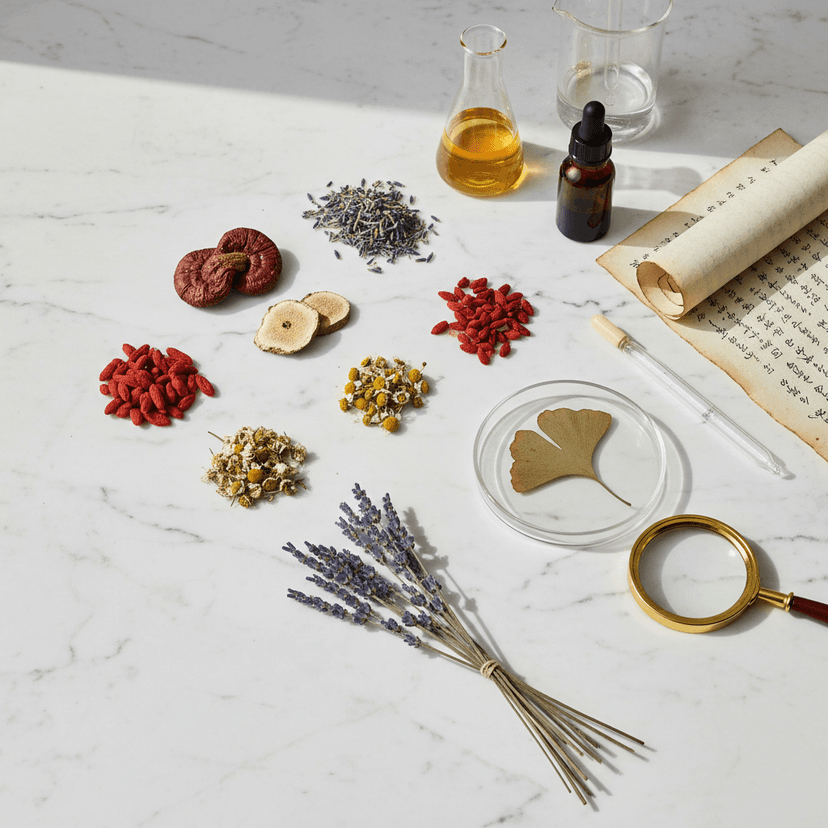
While no herb can replace mindful screen use, certain Chinese herbs are exceptional at nourishing the systems depleted by digital overdrive. They offer support to your Shen, Liver, Spleen, and Kidneys.
Suan Zao Ren (酸枣仁), also known as Spiny Jujube Seed, is a sedative and nourishing herb used in Traditional Chinese Medicine for insomnia, anxiety, and irritability. Its key active compounds include saponins and flavonoids, which contribute to its calming effects on the central nervous system. 《本草纲目》 (Compendium of Materia Medica) notes it "governs heart vexation, inability to sleep, and supplements the Liver Qi.
" This direct link to liver balance and calming the mind makes it ideal for digital-age anxiety where Liver Qi stagnation is common.
Dosage: 9-18g in decoction; often dry-fried to enhance sedative effects. Consult a licensed practitioner for personalized dosage and preparation.
Nature & Flavor: Neutral, sweet, sour.
Meridians: Heart, Liver, Gallbladder, Spleen.
Primary Actions: Nourishes Heart Yin and Blood, calms the Shen, astringes sweat.
Safety: Generally safe, but contraindicated in cases of severe diarrhea or heat due to dampness. Always consult with a qualified TCM practitioner before starting any herbal regimen, especially if you have underlying health conditions or are taking other medications.
Other Helpful Herbs:
Bai He (Lily Bulb): Clears Heat from the Heart and Lungs, moistens dryness, and calms the Shen. Excellent for restless sleep and irritability where there's a feeling of internal heat. Often paired with Suan Zao Ren for a synergistic effect.
Chai Hu (Bupleurum): For Liver Qi Stagnation. It helps to smooth the flow of Qi, easing frustration, tension, and emotional ups and downs that come from digital overload. Often part of formulas like Xiao Yao San.
Remember, herbs are not 'natural pills' to pop in isolation. They are most effective when prescribed by a skilled practitioner who can tailor a formula to your unique constitution and specific imbalances.
5. Beyond the Screen: Lifestyle Shifts for a Grounded Shen
True healing from digital overload isn't about deprivation; it's about cultivation. Cultivating practices that nourish your Qi and anchor your Shen. Western health advice often stops at limiting screen time, but TCM zeroes in on building energetic resilience.
Do This, Not That:
DO embrace Yin-nourishing activities in the evening: Gentle stretching, reading a physical book, warm baths, quiet conversation. These activities help consolidate Yin energy, which is essential for calming the Shen and promoting deep sleep. The 《黄帝内经》 (Yellow Emperor's Classic of Internal Medicine) reminds us that "Yin deficiency generates internal heat," which manifests as agitation and insomnia—exactly what happens when we're overstimulated.
NOT binge-watch or scroll: This stimulates Yang energy, preventing the body from settling into its natural nighttime rhythm. It's a classic example of what I call "revenge bedtime procrastination" in my practice—we feel cheated out of our day, so we steal back time from sleep, but ultimately deplete our vital Kidney Jing.
DO incorporate mindful movement: Qigong, Tai Chi, or even a slow walk in nature. These practices gently move stagnant Liver Qi and nourish the Spleen, improving focus and reducing anxiety. A brisk walk might feel good, but a mindful one grounds you. I once had a patient, a graphic designer named Chloe, who struggled with intense screen-induced headaches and irritability. Instead of just telling her to work less, we focused on short, intentional Qigong breaks every hour.
Within two weeks, her headaches significantly reduced, and her creative flow returned. She wasn’t working less, but her energy was flowing better.
NOT treat exercise as just a calorie burn: While physical activity is important, aggressive, high-intensity workouts can further deplete Yin and Jing if you're already in a state of exhaustion. Seek balance.
DO nourish your Spleen with warm, cooked foods: Think soups, stews, roasted vegetables, and easily digestible grains. The Spleen governs our ability to transform and transport nutrients—and thoughts! A strong Spleen means clear thinking and stable energy.
NOT rely on cold, raw foods or irregular eating: This dampens Spleen Qi, contributing to brain fog, fatigue, and digestive upset. My biggest mistake I see people make with diet? They treat food like fuel, not medicine for their unique body.
Common Mistakes: What NOT to Do When Reclaiming Your Shen
I've made these mistakes. I've seen countless patients stumble over them. So, let’s talk about what not to do:
Expecting instant results from a 'detox': Rebalancing your energetic system takes time. Initial withdrawal symptoms—irritability, restlessness—are real. Be patient and gentle with yourself. This isn't a sprint; it's a marathon of self-reconnection.
Ignoring your body's signals: If you're constantly exhausted, irritable, or foggy, don't just push through. These are direct messages from your Liver, Kidney, and Spleen telling you something is off. Listen. Rest. Adjust.
Self-diagnosing with herbs: Chinese herbs are powerful medicine. What works for one person's Shen disturbance might exacerbate another's. Always seek guidance from a licensed TCM practitioner. They can assess your unique constitution and prescribe accordingly.
Maybe the real question isn't how to live without screens, but how to live with them—without letting them hijack our deepest sense of self. It's a continuous negotiation, isn't it?
Your First 24 Hours: A Mini-Plan for Reclaiming Your Calm
You've read this far. You feel it in your bones—that longing for a more grounded, present self. So, let’s start. Not with a massive overhaul, but with small, courageous steps.
Here’s your mini-plan for the next 24 hours:
Morning Grounding (5 minutes): Before you touch your phone, practice the Baihui and Yin Tang acupressure points. Just two minutes on each. Feel the quiet come into your head. Drink a warm glass of water. Don’t look at notifications for the first 30 minutes of your day.
Mid-Day Reset (10 minutes): Take a true screen break. Step outside, even just for two minutes. Look at the sky, feel the breeze. Do a few gentle neck rolls. Then, sit quietly and focus on your breath for five minutes. No music, no podcasts.
Evening Unwind (30 minutes): Power down all screens at least 30 minutes before bed. Instead, make a warm cup of herbal tea (chamomile is fine, or ask your practitioner about a custom blend with Suan Zao Ren). Read a physical book, listen to calming music, or simply talk to a loved one. Focus on nourishing your Yin.
This isn't about perfection. It’s about cultivating awareness, honoring your body, and inviting your scattered Shen back home. It's about remembering that courage isn't the absence of fear or anxiety—it's showing up anyway, in pursuit of a more wholehearted life.
Contributing Writer at Demisunshine. Sarah brings a research-trained eye to TCM. She has spent years reading clinical literature on herbal formulas — patient enough to spot the difference between a strong finding and a fragile one — and her pieces explain that distinction the way you'd talk it through with a friend over tea.
Get TCM Wellness Tips
Weekly articles on herbal remedies, nutrition, and holistic health — delivered to your inbox.