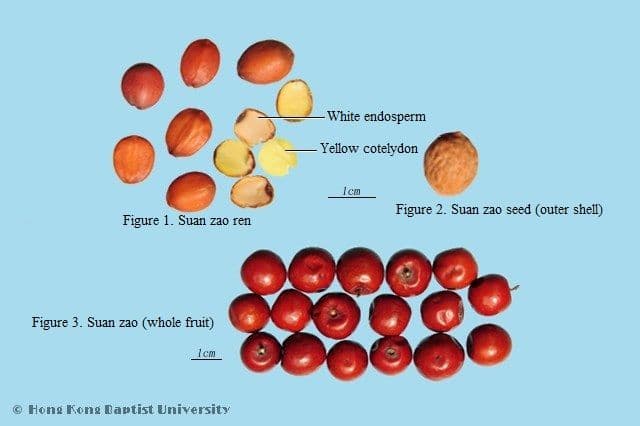
酸枣仁 · Suan Zao Ren
Semen Zizyphi Spinosae
Discover Suan Zao Ren, the spiny zizyphus seed, a cornerstone of Traditional Chinese Medicine for promoting restful sleep, calming anxiety, and supporting cognitive function by nourishing the heart and liver.
9-18g Powder:1.5-3g Tincture: 2-4ml
For a traditional decoction, use 9-18 grams of Suan Zao Ren. Gently crush the seeds slightly to break the outer shell, then simmer in 2-3 cups of water for 20-30 minutes until the liquid reduces by about one-third. Strain and drink warm, typically before bedtime for sleep support. You may reuse the seeds for a second, weaker decoction.
If using powdered Suan Zao Ren, the recommended dosage is 1.5-3 grams. This fine powder can be mixed into warm water, juice, or a smoothie. It offers a convenient way to consume the herb, bypassing the need for simmering. Ensure the powder is from a reputable source to guarantee purity and potency.
For a liquid extract or tincture, the typical dosage is 2-4 ml, usually taken once or twice daily, or as directed by your practitioner. Tinctures offer a concentrated form of the herb and are absorbed quickly. Always follow the specific instructions on the product label, as concentrations can vary between brands.
For a traditional decoction, use 9-18 grams of Suan Zao Ren. Gently crush the seeds slightly to break the outer shell, then simmer in 2-3 cups of water for 20-30 minutes until the liquid reduces by about one-third. Strain and drink warm, typically before bedtime for sleep support. You may reuse the seeds for a second, weaker decoction.
If using powdered Suan Zao Ren, the recommended dosage is 1.5-3 grams. This fine powder can be mixed into warm water, juice, or a smoothie. It offers a convenient way to consume the herb, bypassing the need for simmering. Ensure the powder is from a reputable source to guarantee purity and potency.
For a liquid extract or tincture, the typical dosage is 2-4 ml, usually taken once or twice daily, or as directed by your practitioner. Tinctures offer a concentrated form of the herb and are absorbed quickly. Always follow the specific instructions on the product label, as concentrations can vary between brands.
Clinical studies, including a meta-analysis published in *Medicine* in 2023, provide moderate to strong evidence for Suan Zao Ren's efficacy in improving patient-reported sleep quality for individuals with insomnia and sleep disturbances, showing comparable effectiveness to benzodiazepines or CBT over four weeks. Further research highlights its rich phytonutrient profile, suggesting benefits for central nervous system health, learning, and memory.
Moderate — Some clinical studies
Clinical studies, including a meta-analysis published in *Medicine* in 2023, provide moderate to strong evidence for Suan Zao Ren's efficacy in improving patient-reported sleep quality for individuals with insomnia and sleep disturbances, showing comparable effectiveness to benzodiazepines or CBT over four weeks. Further research highlights its rich phytonutrient profile, suggesting benefits for central nervous system health, learning, and memory.
Moderate — Some clinical studies
Insufficient Data
Insufficient Data
The soft glow of my clinic lamp often illuminates faces etched with the same story: the relentless struggle for a good night's sleep. One patient, a vibrant graphic designer named Liam, came to me after months of tossing and turning. He'd tried everything from sleep apps to chamomile tea, but his mind raced the moment his head hit the pillow. His exhaustion wasn't just physical; it clouded his creativity and dimmed his once-bright spirit.
Liam’s story is a familiar one, echoing through my 15 years in integrative medicine. It's a testament to how deeply our modern lives can disrupt our body's ancient rhythms.
In Traditional Chinese Medicine (TCM), we look beyond simply 'falling asleep.' We seek to restore the deep, nourishing rest that rejuvenates the entire being. And for patients like Liam, one particular herb often rises to the occasion: Suan Zao Ren (Semen Zizyphi Spinosae). Also known as Spiny Zizyphus Seeds or Sour Jujube Seeds, this remarkable botanical is a calming and nourishing herb used in TCM primarily for calming the spirit, improving sleep, and nourishing the body's vital essences.
It’s an herb that quietly works to re-establish harmony, allowing the body to find its way back to peaceful slumber and a settled mind.
The revered Shennong Ben Cao Jing, one of the earliest Chinese pharmacopoeias, notes that Suan Zao Ren 'nourishes the five viscera, lightens the body, and prolongs life' – an early recognition of its profound holistic effects that resonate with our understanding today.
From a TCM perspective, Suan Zao Ren embodies a unique energetic profile that explains its wide-ranging benefits. It is described as neutral in nature, meaning it won't excessively heat or cool the body, making it adaptable for various constitutions. Its flavors are a complex blend of sweet, sour, and acrid. The sweet taste is inherently nourishing and harmonizing, while the sourness has an astringent quality, helping to consolidate and prevent leakage of vital fluids and energy.
The acrid note, though subtle, aids in circulation and penetration.
These energetic properties allow Suan Zao Ren to target specific organ systems, or meridians, within the body. It primarily acts upon the Gallbladder, Heart, Liver, and Spleen meridians. In TCM, the Heart houses the Spirit (Shen) – our consciousness, emotions, and mental activities. When the Heart is restless or undernourished, we experience insomnia, anxiety, and palpitations. Suan Zao Ren directly addresses this by nourishing Heart Yin, which is the cooling, moistening, and calming aspect of the Heart.
Think of it as providing a soothing balm to a flickering flame.
Furthermore, Suan Zao Ren tonifies Liver Blood. The Liver, in TCM, stores the blood and ensures its smooth flow throughout the body, including nourishing the brain and supporting clear thinking. When Liver Blood is deficient, it can lead to irritability, dry eyes, muscle spasms, and contribute to a restless mind at night. By replenishing Liver Blood, Suan Zao Ren helps to anchor the Ethereal Soul (Hun), which can wander at night, causing vivid dreams or difficulty falling asleep.
The combined action on the Heart and Liver makes it a potent ally for mental and emotional balance. As the classic text Ben Cao Gang Mu by Li Shizhen observes, Suan Zao Ren, 'sweet and sour, moist and nourishing, specifically enters the Liver and Gallbladder blood aspects, therefore treating insomnia due to Gallbladder deficiency, vexation, thirst, and spontaneous sweating.' It’s a remarkable example of ancient wisdom pinpointing precise therapeutic effects.
Finally, its ability to astringe sweat and generate fluids means it can help with issues like night sweats, spontaneous sweating, or general dryness that might accompany Yin deficiency patterns, further contributing to overall comfort and balance.
This is undoubtedly Suan Zao Ren’s most celebrated application. When the Heart's Shen (Spirit) is unsettled, often due to deficiencies of Heart Yin and Liver Blood, sleep becomes elusive. Suan Zao Ren works to nourish these vital substances, creating an internal environment conducive to relaxation. I've seen it help countless patients, like Liam, who found themselves caught in a cycle of mental overactivity at night.
His racing thoughts began to quiet, allowing him to drift into a peaceful sleep he hadn't experienced in years. This traditional use is strongly supported by contemporary research. A significant meta-analysis published in Medicine in 2023, involving researchers from institutions like Memorial Sloan Kettering Cancer Center and the China Academy of Chinese Medical Sciences, found that Suan Zao Ren is associated with short-term patient-reported sleep quality improvements among individuals with insomnia or sleep disturbance, showing significant improvements compared to placebo.
Beyond sleep, the herb's calming action extends to generalized anxiety, nervousness, and irritability. In TCM, these emotional states are often linked to imbalances in the Heart and Liver. By nourishing Liver Blood and Heart Yin, Suan Zao Ren helps to stabilize the emotions, reducing the feeling of being perpetually on edge. My patients often report a subtle yet profound shift, feeling more grounded and resilient in the face of daily stressors, without the heavy sedation sometimes associated with Western anxiolytics.
This makes it a valuable tool for those seeking a more balanced emotional state throughout the day.
While primarily known for sleep, emerging research hints at Suan Zao Ren's potential for cognitive enhancement. The traditional understanding of nourishing blood to 'feed the brain' finds resonance here. A 2022 review in J Agric Food Chem. highlights that wild jujube seeds are not only used for insomnia but also as a functional food to enhance sleep quality, learning, and memory. This is attributed to its rich phytonutrient profile, including nucleosides, amino acids, polysaccharides, and fatty oils.
Further, a 2017 study in Biol Pharm Bull. suggested that an extract of Zizyphus jujuba var. spinosa (Suan Zao Ren) might attenuate amyloid β-induced long-term potentiation deficits, hinting at potential anti-Alzheimer's disease effects through specific signaling pathways. This opens exciting avenues for future exploration into its role in supporting long-term brain health.
The sour flavor of Suan Zao Ren contributes to its astringent quality, which in TCM terms means it helps to astringe sweat and generate fluids. This makes it useful for conditions involving spontaneous sweating, night sweats, or when the body feels generally depleted of fluids. It’s a subtle but important action that complements its calming effects, ensuring that the body retains its precious essences while promoting relaxation.
Modern scientific inquiry continues to validate the traditional wisdom surrounding Suan Zao Ren. The most compelling evidence lies in its impact on sleep. A comprehensive systematic review and meta-analysis published in Medicine in 2023, involving researchers from prestigious institutions like Memorial Sloan Kettering Cancer Center, China Academy of Chinese Medical Sciences, and Weill Cornell Medical College, meticulously analyzed randomized controlled trials.
Their findings concluded that Suan Zao Ren is associated with significant short-term improvements in patient-reported sleep quality for individuals experiencing insomnia or sleep disturbances. The study noted a standard mean difference of -0.58 (95% CI -1.04, -0.11; P < .01) when compared to placebo, and remarkably, showed comparable reductions in insomnia severity to benzodiazepines or cognitive behavioral therapy (CBT) at 4 weeks, with a mean difference of -2.68 points (95% CI -5.50, -0.
22; P = .03).
Beyond sleep, a 2022 review in the Journal of Agricultural and Food Chemistry highlighted the mature seed of wild jujube (Suan Zao Ren) for its beneficial effects on central nervous system diseases. Researchers pinpointed its rich array of phytonutrients, including nucleosides, amino acids, polysaccharides, and fatty oils, as key contributors to its ability to enhance sleep quality, learning, and memory. This suggests a broader neuroprotective potential.
Further explorations into cognitive function have yielded promising results. A 2017 study published in Biol Pharm Bull. demonstrated that an extract of Zizyphus jujuba var. spinosa (EZJ) attenuated amyloid β (Aβ)-induced long-term potentiation (LTP) deficits in hippocampal tissue in a concentration-dependent manner. This finding suggests potential anti-Alzheimer's disease effects, possibly mediated through BDNF/TrkB signaling pathways, which are crucial for neuronal survival and plasticity.
Meanwhile, Chinese researchers like Jia Dexian and colleagues (2024) have investigated how Suan Zao Ren extracts improve sleep quality in insomniac rats by inhibiting pathways like TXNIP/NLRP3, further elucidating its molecular mechanisms.
The complex chemistry of Suan Zao Ren is also a subject of study. Gu Wenchao and his team (2021) conducted a systematic analysis of Suan Zao Ren Tang, identifying 145 compounds, primarily flavonoids and triterpenoids. This chemical complexity underscores the herb’s multifaceted actions and the sophistication of traditional herbal formulations.
Incorporating Suan Zao Ren into your routine can be done in several ways, depending on your preference and the guidance of your practitioner. The key is consistency and proper preparation to extract its beneficial compounds.
This is a common method for preparing Chinese herbs. For Suan Zao Ren, the recommended dosage is typically 9-18 grams of the whole, slightly crushed seeds. Gently crushing the seeds helps to break the hard outer shell, allowing the medicinal compounds to be released more effectively during brewing. Place the crushed seeds in a pot with 2-3 cups of water, bring to a boil, then reduce heat and simmer for 20-30 minutes.
Strain the liquid and drink it warm, ideally 30-60 minutes before bedtime for sleep support. You can often get a second, albeit weaker, decoction from the same batch of seeds.
If you prefer convenience, Suan Zao Ren is available as a finely ground powder. The dosage for powder is typically 1.5-3 grams. This can be mixed into a small amount of warm water, juice, or a smoothie and consumed. Ensure the powder is sourced from a reputable supplier to guarantee its purity and potency.
Concentrated liquid extracts or tinctures offer another convenient option. The general dosage is 2-4 ml, usually taken once or twice daily, or as directed by a healthcare professional. Always adhere to the specific instructions provided on the product's label, as concentrations can differ between manufacturers.
You might encounter both raw (sheng) and dry-fried (chao) Suan Zao Ren. Traditionally, the dry-fried preparation is preferred for its enhanced calming and sleep-inducing properties. The roasting process is believed to amplify its soothing qualities, making it more effective for 'calming the Spirit.' Raw Suan Zao Ren, while still calming, is also valued for its fluid-generating and sweat-astringing actions.
As with any potent medicinal herb, understanding the safety profile and potential contraindications of Suan Zao Ren is paramount. While generally well-tolerated when used appropriately, there are specific situations where caution is advised or where it should be avoided entirely.
Contraindications:
Severe Diarrhea: Due to its astringent properties, use caution if experiencing severe diarrhea, as it could potentially exacerbate the condition.
Heat from Excess Conditions: If your insomnia or restlessness stems from a 'Heat from Excess' pattern (e.g., severe acute inflammation, high fever), Suan Zao Ren may not be suitable and could potentially worsen symptoms. Similarly, if insomnia is due to 'Excess Heat' or 'Hot Phlegm', it should be used with caution, as it might lead to paradoxical agitation.
Exterior Conditions: If you are experiencing an 'Exterior condition' (such as the initial stages of a common cold or flu), it's generally advised to address the exterior pathogen first before introducing nourishing or calming herbs.
Pregnancy: Use extreme caution during pregnancy. While some traditional formulas containing Suan Zao Ren have been explored for pregnancy-related insomnia in specific clinical settings in China (as per research by Liu Yanyan et al., 2025), comprehensive safety data in Western contexts remains limited. I strongly advise pregnant individuals to consult their obstetrician or a qualified integrative physician before considering Suan Zao Ren or any herbal remedy.
Drug Interactions:
Suan Zao Ren is known to prolong the sleeping time produced by various central nervous system depressants. This includes barbiturates, antihistamines, narcotic analgesics, and benzodiazepines. If you are taking any of these medications, or any other prescription drugs, it is crucial to discuss the use of Suan Zao Ren with your healthcare provider to prevent potential additive effects or adverse interactions. Never adjust your medication regimen without professional medical advice.
In our fast-paced world, the quest for peace and restorative rest often feels like a luxury rather than a fundamental need. Suan Zao Ren, with its ancient roots and burgeoning scientific validation, offers a bridge between these worlds. It reminds us that sometimes, the most profound healing comes not from powerful interventions, but from gently coaxing our bodies back into balance.
As an integrative physician, I find immense satisfaction in witnessing patients like Liam rediscover their natural capacity for calm and deep sleep, guided by the wisdom of herbs like Suan Zao Ren. It's a journey back to ourselves, one restful night at a time.
The soft glow of my clinic lamp often illuminates faces etched with the same story: the relentless struggle for a good night's sleep. One patient, a vibrant graphic designer named Liam, came to me after months of tossing and turning. He'd tried everything from sleep apps to chamomile tea, but his mind raced the moment his head hit the pillow. His exhaustion wasn't just physical; it clouded his creativity and dimmed his once-bright spirit.
Liam’s story is a familiar one, echoing through my 15 years in integrative medicine. It's a testament to how deeply our modern lives can disrupt our body's ancient rhythms.
In Traditional Chinese Medicine (TCM), we look beyond simply 'falling asleep.' We seek to restore the deep, nourishing rest that rejuvenates the entire being. And for patients like Liam, one particular herb often rises to the occasion: Suan Zao Ren (Semen Zizyphi Spinosae). Also known as Spiny Zizyphus Seeds or Sour Jujube Seeds, this remarkable botanical is a calming and nourishing herb used in TCM primarily for calming the spirit, improving sleep, and nourishing the body's vital essences.
It’s an herb that quietly works to re-establish harmony, allowing the body to find its way back to peaceful slumber and a settled mind.
The revered Shennong Ben Cao Jing, one of the earliest Chinese pharmacopoeias, notes that Suan Zao Ren 'nourishes the five viscera, lightens the body, and prolongs life' – an early recognition of its profound holistic effects that resonate with our understanding today.
From a TCM perspective, Suan Zao Ren embodies a unique energetic profile that explains its wide-ranging benefits. It is described as neutral in nature, meaning it won't excessively heat or cool the body, making it adaptable for various constitutions. Its flavors are a complex blend of sweet, sour, and acrid. The sweet taste is inherently nourishing and harmonizing, while the sourness has an astringent quality, helping to consolidate and prevent leakage of vital fluids and energy.
The acrid note, though subtle, aids in circulation and penetration.
These energetic properties allow Suan Zao Ren to target specific organ systems, or meridians, within the body. It primarily acts upon the Gallbladder, Heart, Liver, and Spleen meridians. In TCM, the Heart houses the Spirit (Shen) – our consciousness, emotions, and mental activities. When the Heart is restless or undernourished, we experience insomnia, anxiety, and palpitations. Suan Zao Ren directly addresses this by nourishing Heart Yin, which is the cooling, moistening, and calming aspect of the Heart.
Think of it as providing a soothing balm to a flickering flame.
Furthermore, Suan Zao Ren tonifies Liver Blood. The Liver, in TCM, stores the blood and ensures its smooth flow throughout the body, including nourishing the brain and supporting clear thinking. When Liver Blood is deficient, it can lead to irritability, dry eyes, muscle spasms, and contribute to a restless mind at night. By replenishing Liver Blood, Suan Zao Ren helps to anchor the Ethereal Soul (Hun), which can wander at night, causing vivid dreams or difficulty falling asleep.
The combined action on the Heart and Liver makes it a potent ally for mental and emotional balance. As the classic text Ben Cao Gang Mu by Li Shizhen observes, Suan Zao Ren, 'sweet and sour, moist and nourishing, specifically enters the Liver and Gallbladder blood aspects, therefore treating insomnia due to Gallbladder deficiency, vexation, thirst, and spontaneous sweating.' It’s a remarkable example of ancient wisdom pinpointing precise therapeutic effects.
Finally, its ability to astringe sweat and generate fluids means it can help with issues like night sweats, spontaneous sweating, or general dryness that might accompany Yin deficiency patterns, further contributing to overall comfort and balance.
This is undoubtedly Suan Zao Ren’s most celebrated application. When the Heart's Shen (Spirit) is unsettled, often due to deficiencies of Heart Yin and Liver Blood, sleep becomes elusive. Suan Zao Ren works to nourish these vital substances, creating an internal environment conducive to relaxation. I've seen it help countless patients, like Liam, who found themselves caught in a cycle of mental overactivity at night.
His racing thoughts began to quiet, allowing him to drift into a peaceful sleep he hadn't experienced in years. This traditional use is strongly supported by contemporary research. A significant meta-analysis published in Medicine in 2023, involving researchers from institutions like Memorial Sloan Kettering Cancer Center and the China Academy of Chinese Medical Sciences, found that Suan Zao Ren is associated with short-term patient-reported sleep quality improvements among individuals with insomnia or sleep disturbance, showing significant improvements compared to placebo.
Beyond sleep, the herb's calming action extends to generalized anxiety, nervousness, and irritability. In TCM, these emotional states are often linked to imbalances in the Heart and Liver. By nourishing Liver Blood and Heart Yin, Suan Zao Ren helps to stabilize the emotions, reducing the feeling of being perpetually on edge. My patients often report a subtle yet profound shift, feeling more grounded and resilient in the face of daily stressors, without the heavy sedation sometimes associated with Western anxiolytics.
This makes it a valuable tool for those seeking a more balanced emotional state throughout the day.
While primarily known for sleep, emerging research hints at Suan Zao Ren's potential for cognitive enhancement. The traditional understanding of nourishing blood to 'feed the brain' finds resonance here. A 2022 review in J Agric Food Chem. highlights that wild jujube seeds are not only used for insomnia but also as a functional food to enhance sleep quality, learning, and memory. This is attributed to its rich phytonutrient profile, including nucleosides, amino acids, polysaccharides, and fatty oils.
Further, a 2017 study in Biol Pharm Bull. suggested that an extract of Zizyphus jujuba var. spinosa (Suan Zao Ren) might attenuate amyloid β-induced long-term potentiation deficits, hinting at potential anti-Alzheimer's disease effects through specific signaling pathways. This opens exciting avenues for future exploration into its role in supporting long-term brain health.
The sour flavor of Suan Zao Ren contributes to its astringent quality, which in TCM terms means it helps to astringe sweat and generate fluids. This makes it useful for conditions involving spontaneous sweating, night sweats, or when the body feels generally depleted of fluids. It’s a subtle but important action that complements its calming effects, ensuring that the body retains its precious essences while promoting relaxation.
Modern scientific inquiry continues to validate the traditional wisdom surrounding Suan Zao Ren. The most compelling evidence lies in its impact on sleep. A comprehensive systematic review and meta-analysis published in Medicine in 2023, involving researchers from prestigious institutions like Memorial Sloan Kettering Cancer Center, China Academy of Chinese Medical Sciences, and Weill Cornell Medical College, meticulously analyzed randomized controlled trials.
Their findings concluded that Suan Zao Ren is associated with significant short-term improvements in patient-reported sleep quality for individuals experiencing insomnia or sleep disturbances. The study noted a standard mean difference of -0.58 (95% CI -1.04, -0.11; P < .01) when compared to placebo, and remarkably, showed comparable reductions in insomnia severity to benzodiazepines or cognitive behavioral therapy (CBT) at 4 weeks, with a mean difference of -2.68 points (95% CI -5.50, -0.
22; P = .03).
Beyond sleep, a 2022 review in the Journal of Agricultural and Food Chemistry highlighted the mature seed of wild jujube (Suan Zao Ren) for its beneficial effects on central nervous system diseases. Researchers pinpointed its rich array of phytonutrients, including nucleosides, amino acids, polysaccharides, and fatty oils, as key contributors to its ability to enhance sleep quality, learning, and memory. This suggests a broader neuroprotective potential.
Further explorations into cognitive function have yielded promising results. A 2017 study published in Biol Pharm Bull. demonstrated that an extract of Zizyphus jujuba var. spinosa (EZJ) attenuated amyloid β (Aβ)-induced long-term potentiation (LTP) deficits in hippocampal tissue in a concentration-dependent manner. This finding suggests potential anti-Alzheimer's disease effects, possibly mediated through BDNF/TrkB signaling pathways, which are crucial for neuronal survival and plasticity.
Meanwhile, Chinese researchers like Jia Dexian and colleagues (2024) have investigated how Suan Zao Ren extracts improve sleep quality in insomniac rats by inhibiting pathways like TXNIP/NLRP3, further elucidating its molecular mechanisms.
The complex chemistry of Suan Zao Ren is also a subject of study. Gu Wenchao and his team (2021) conducted a systematic analysis of Suan Zao Ren Tang, identifying 145 compounds, primarily flavonoids and triterpenoids. This chemical complexity underscores the herb’s multifaceted actions and the sophistication of traditional herbal formulations.
Incorporating Suan Zao Ren into your routine can be done in several ways, depending on your preference and the guidance of your practitioner. The key is consistency and proper preparation to extract its beneficial compounds.
This is a common method for preparing Chinese herbs. For Suan Zao Ren, the recommended dosage is typically 9-18 grams of the whole, slightly crushed seeds. Gently crushing the seeds helps to break the hard outer shell, allowing the medicinal compounds to be released more effectively during brewing. Place the crushed seeds in a pot with 2-3 cups of water, bring to a boil, then reduce heat and simmer for 20-30 minutes.
Strain the liquid and drink it warm, ideally 30-60 minutes before bedtime for sleep support. You can often get a second, albeit weaker, decoction from the same batch of seeds.
If you prefer convenience, Suan Zao Ren is available as a finely ground powder. The dosage for powder is typically 1.5-3 grams. This can be mixed into a small amount of warm water, juice, or a smoothie and consumed. Ensure the powder is sourced from a reputable supplier to guarantee its purity and potency.
Concentrated liquid extracts or tinctures offer another convenient option. The general dosage is 2-4 ml, usually taken once or twice daily, or as directed by a healthcare professional. Always adhere to the specific instructions provided on the product's label, as concentrations can differ between manufacturers.
You might encounter both raw (sheng) and dry-fried (chao) Suan Zao Ren. Traditionally, the dry-fried preparation is preferred for its enhanced calming and sleep-inducing properties. The roasting process is believed to amplify its soothing qualities, making it more effective for 'calming the Spirit.' Raw Suan Zao Ren, while still calming, is also valued for its fluid-generating and sweat-astringing actions.
As with any potent medicinal herb, understanding the safety profile and potential contraindications of Suan Zao Ren is paramount. While generally well-tolerated when used appropriately, there are specific situations where caution is advised or where it should be avoided entirely.
Contraindications:
Severe Diarrhea: Due to its astringent properties, use caution if experiencing severe diarrhea, as it could potentially exacerbate the condition.
Heat from Excess Conditions: If your insomnia or restlessness stems from a 'Heat from Excess' pattern (e.g., severe acute inflammation, high fever), Suan Zao Ren may not be suitable and could potentially worsen symptoms. Similarly, if insomnia is due to 'Excess Heat' or 'Hot Phlegm', it should be used with caution, as it might lead to paradoxical agitation.
Exterior Conditions: If you are experiencing an 'Exterior condition' (such as the initial stages of a common cold or flu), it's generally advised to address the exterior pathogen first before introducing nourishing or calming herbs.
Pregnancy: Use extreme caution during pregnancy. While some traditional formulas containing Suan Zao Ren have been explored for pregnancy-related insomnia in specific clinical settings in China (as per research by Liu Yanyan et al., 2025), comprehensive safety data in Western contexts remains limited. I strongly advise pregnant individuals to consult their obstetrician or a qualified integrative physician before considering Suan Zao Ren or any herbal remedy.
Drug Interactions:
Suan Zao Ren is known to prolong the sleeping time produced by various central nervous system depressants. This includes barbiturates, antihistamines, narcotic analgesics, and benzodiazepines. If you are taking any of these medications, or any other prescription drugs, it is crucial to discuss the use of Suan Zao Ren with your healthcare provider to prevent potential additive effects or adverse interactions. Never adjust your medication regimen without professional medical advice.
In our fast-paced world, the quest for peace and restorative rest often feels like a luxury rather than a fundamental need. Suan Zao Ren, with its ancient roots and burgeoning scientific validation, offers a bridge between these worlds. It reminds us that sometimes, the most profound healing comes not from powerful interventions, but from gently coaxing our bodies back into balance.
As an integrative physician, I find immense satisfaction in witnessing patients like Liam rediscover their natural capacity for calm and deep sleep, guided by the wisdom of herbs like Suan Zao Ren. It's a journey back to ourselves, one restful night at a time.
This information is for educational purposes only and is not intended as medical advice. Always consult a qualified healthcare practitioner before using any herbal remedy.