Coptis Rhizome
Cold (寒)TCM Properties
Nature (四气)
Cold (寒)Flavor (五味)
Bitter (苦)Astringent (涩)
Meridian Tropism
HeartLarge IntestineLiverStomachBladderSpleen
黄连 · Huang Lian
Rhizoma Coptidis
Dr. Maya Chen explores Huang Lian (Coptis Rhizome), an ancient Chinese herb revered for its ability to clear heat and dampness, offering profound benefits for gut health, blood sugar, and systemic inflammation.
1.5-10g; Tincture: 0.25-3ml
1.5-10g; Tincture: 0.25-3ml
For a traditional decoction, combine 1.5 to 10 grams of dried Huang Lian rhizome with 2-3 cups of water in a non-metallic pot. Bring to a boil, then reduce heat and simmer for 20-30 minutes until the liquid is reduced by about one-third. Strain and drink the intensely bitter liquid, typically 1-2 times daily. This method extracts a full spectrum of compounds.
Huang Lian can be ground into a fine powder and encapsulated, or purchased as standardized berberine capsules (Huang Lian Su). Dosages for powdered raw herb generally range from 1.5-10 grams daily, divided into smaller doses. For berberine extracts, follow manufacturer's instructions, typically 500-1500mg daily, often divided before meals, as berberine is poorly absorbed in its natural state, and extracts aim to optimize this.
A tincture is an alcohol-based extract. The recommended dosage for Huang Lian tincture is typically 0.25 to 3 milliliters, taken 2-3 times per day. Always dilute tinctures in a small amount of water or juice before consuming. Start with a lower dose to assess tolerance and adjust as advised by your practitioner.
For a traditional decoction, combine 1.5 to 10 grams of dried Huang Lian rhizome with 2-3 cups of water in a non-metallic pot. Bring to a boil, then reduce heat and simmer for 20-30 minutes until the liquid is reduced by about one-third. Strain and drink the intensely bitter liquid, typically 1-2 times daily. This method extracts a full spectrum of compounds.
Huang Lian can be ground into a fine powder and encapsulated, or purchased as standardized berberine capsules (Huang Lian Su). Dosages for powdered raw herb generally range from 1.5-10 grams daily, divided into smaller doses. For berberine extracts, follow manufacturer's instructions, typically 500-1500mg daily, often divided before meals, as berberine is poorly absorbed in its natural state, and extracts aim to optimize this.
A tincture is an alcohol-based extract. The recommended dosage for Huang Lian tincture is typically 0.25 to 3 milliliters, taken 2-3 times per day. Always dilute tinctures in a small amount of water or juice before consuming. Start with a lower dose to assess tolerance and adjust as advised by your practitioner.
Clinical research, while still growing, supports Huang Lian's traditional uses, especially concerning its active alkaloid, berberine. Studies indicate its efficacy in improving glycemic control in type 2 diabetes and highlight its broad antimicrobial and anti-inflammatory potential. Preclinical data is robust, but more large-scale, well-designed human clinical trials are needed to fully confirm all its diverse effects.
Moderate — Some clinical studies
Clinical research, while still growing, supports Huang Lian's traditional uses, especially concerning its active alkaloid, berberine. Studies indicate its efficacy in improving glycemic control in type 2 diabetes and highlight its broad antimicrobial and anti-inflammatory potential. Preclinical data is robust, but more large-scale, well-designed human clinical trials are needed to fully confirm all its diverse effects.
Moderate — Some clinical studies
May have positive effect in treating cyclophosphamide-induced cystitis and preventing cyclophosphamide urotoxicity
When clinically relevant doses of berberine supplements were coadministered, simulations predict a moderate 1.3-fold increase in systemic exposure to bosutinib, but not imatinib (34). Tacrolimus: In a pediatric patient with idiopathic nephrotic syndrome, clinically relevant increases in tacrolimus concentrations and renal toxicity occurred when berberine was added to control diarrhea (30). Cyclosporin: Berberine increased cyclosporin blood concentrations in renal transplant adults (31). Sulfo
Avoid
May have positive effect in treating cyclophosphamide-induced cystitis and preventing cyclophosphamide urotoxicity
When clinically relevant doses of berberine supplements were coadministered, simulations predict a moderate 1.3-fold increase in systemic exposure to bosutinib, but not imatinib (34). Tacrolimus: In a pediatric patient with idiopathic nephrotic syndrome, clinically relevant increases in tacrolimus concentrations and renal toxicity occurred when berberine was added to control diarrhea (30). Cyclosporin: Berberine increased cyclosporin blood concentrations in renal transplant adults (31). Sulfo
Avoid
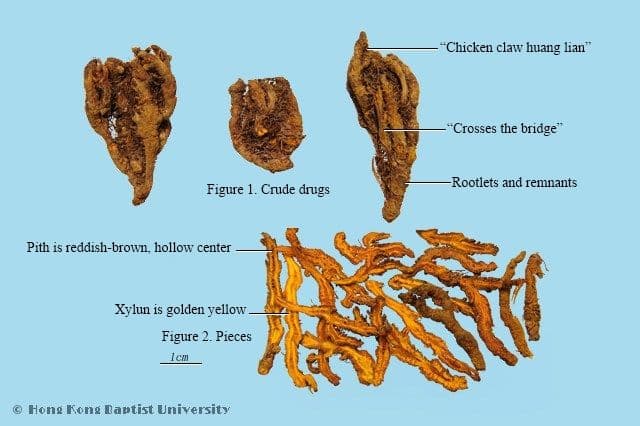
Imagine a vibrant, golden rhizome, unearthed from the cool, damp earth of China's mountainous regions. Its color hints at its power, but it's the taste—intensely, uncompromisingly bitter—that truly defines it. This isn't just a root; it’s a legend in Traditional Chinese Medicine, a botanical powerhouse with a history spanning millennia. For centuries, healers have reached for this 'golden thread' to quell internal infernos and clear the body of what they describe as 'dampness' and 'heat'.
I often tell my patients that some of the most potent medicines come with the most challenging flavors. Huang Lian is a perfect example. While its bitterness can be startling, it's a taste that signals profound therapeutic action. In my 15 years bridging TCM and Western functional medicine, I’ve seen time and again how ancient wisdom around herbs like Huang Lian finds compelling validation in modern scientific inquiry.
So, what is this remarkable herb? Huang Lian (Rhizoma Coptidis), also known as Coptis Rhizome or Goldthread Root, is a potent bitter herb used in Traditional Chinese Medicine for clearing heat, drying dampness, and resolving toxicity. It’s an herb with a profound history, even listed as a 'superior' herb in the ancient Shennong Ben Cao Jing, where it was noted for treating 'hot qi' and eye pain.
The Ben Cao Gang Mu further solidified its reputation, stating: "Huang Lian is cold in nature and bitter in taste, clearing heat, drying dampness, purging fire, and detoxifying.
In the intricate language of Traditional Chinese Medicine, Huang Lian is categorized by its core properties: it is intensely cold and bitter, with a subtle astringent quality. Imagine it as a botanical firefighter, expertly deployed to extinguish various forms of 'heat' and 'fire' within the body, while also 'drying' out 'dampness' – conditions that often manifest as inflammation, infection, or metabolic imbalances in Western terms.
Its energetic pathways, or meridians, are extensive: the Heart, Large Intestine, Liver, Stomach, Gallbladder, and Spleen. This wide reach explains its diverse applications. When we talk about clearing 'Heart Fire,' we're often addressing symptoms like anxiety, insomnia, or irritability. For the Stomach, it means reducing inflammation and acidity. In the Large Intestine, it’s about combating infection and inflammation that lead to conditions like dysentery or diarrhea.
This herb doesn't just treat a symptom; it addresses a fundamental imbalance in the body’s energetic landscape.
A patient, let's call her Sarah, came to me with persistent, foul-smelling diarrhea and a feeling of internal restlessness. Western tests had been inconclusive, but in TCM, her symptoms painted a clear picture of 'Damp-Heat' in her digestive system and a bit of 'Heart Fire' stirring. Huang Lian, carefully prescribed, acted like a precise internal cleanser.
It not only helped resolve her digestive discomfort but also brought a sense of calm, illustrating how these ancient concepts of meridians and 'fire' map onto complex physiological states.
This is perhaps Huang Lian's most celebrated role. In TCM, its primary action of 'Clearing Heat and Draining Dampness' makes it a go-to for acute gastrointestinal distress, especially conditions characterized by inflammation, infection, and loose stools. Think of it as a powerful internal cleanser, drying out excessive fluids and cooling inflamed tissues.
From a Western perspective, this aligns beautifully with its known broad-spectrum antimicrobial properties, effectively targeting pathogenic bacteria, viruses, and even some fungi that can disrupt the delicate balance of our gut microbiome. It's often my first thought for 'traveler's diarrhea' or acute dysentery.
One of the most exciting areas of modern research into Huang Lian involves its impact on blood sugar. In TCM, Huang Lian 'Drains Stomach Fire,' which can manifest as excessive appetite and thirst, often seen in early stages of metabolic imbalance. Modern science has zeroed in on berberine, one of Huang Lian's key active compounds, for its remarkable ability to reduce blood sugar. It rivals some anti-diabetic drugs in its potential, influencing insulin sensitivity and glucose metabolism.
This makes it a fascinating candidate for integrative approaches to type 2 diabetes management, always under medical supervision, of course.
Beyond the gut and blood sugar, Huang Lian is a master at 'Draining Fire and Resolving Fire Toxicity' throughout the body. This translates to powerful anti-inflammatory and detoxifying effects. For example, a patient with a persistent, low-grade fever, red eyes, and a bitter taste in their mouth—classic 'Liver Fire' symptoms in TCM—might find relief. Its ability to clear 'Heat' topically also makes it useful for inflamed skin conditions.
It's truly a systemic herb for internal imbalances that manifest as acute, hot, or toxic presentations.
Huang Lian also has an action to 'Clear Heart Fire' and act as a sedative. While not its primary use, when anxiety, irritability, or insomnia stem from an overheated 'Heart' in TCM – often characterized by a rapid pulse, flushed face, and restlessness – Huang Lian can offer a cooling, calming effect.
It’s not for every type of insomnia, especially not for those with 'Blood Deficiency with restless Heat and thirst,' but for specific patterns of 'Heart Fire,' it can be quite effective.
The scientific community has shown increasing interest in Huang Lian, largely due to its rich composition of alkaloids, particularly berberine, coptisine, palmatine, and jatrorrhizine. A comprehensive review published in the Journal of Ethnopharmacology in 2019 identified 128 chemical constituents in Coptidis Rhizoma, underscoring its complex pharmacology. These compounds contribute to its broad pharmacological spectrum, including antibacterial, antiviral, antifungal, antidiabetic, anticancer, and cardioprotective effects.
The most compelling clinical evidence often centers on berberine. A systematic review and meta-analysis published in Frontiers in Pharmacology in 2022 concluded that Huanglian prescriptions, when used as adjuvant therapies with metformin for type 2 diabetes, can significantly improve glycemic control, reduce insulin resistance, and improve lipid metabolism. This is a powerful finding, showing how a traditional herb can complement conventional treatment.
Further research, such as work by Hui Wang and colleagues in BioMed Research International in 2014, has elucidated how berberine improves insulin resistance by regulating the AMPK pathway, a key metabolic regulator. Clinical trials mentioned in this research showed significant reductions in fasting blood glucose, ranging from 18-25%.
While preclinical studies consistently demonstrate Huang Lian's antimicrobial, antidiabetic, antioxidant, and anti-inflammatory effects, as noted by the Memorial Sloan Kettering Cancer Center in 2022, they also highlight that human studies are still limited. More rigorous, well-designed clinical trials are needed to fully confirm the breadth of these effects and establish standardized protocols for its use in integrative health settings. It's a journey from traditional wisdom to evidence-based practice, and Huang Lian is certainly on that path.
It's also fascinating to see how even the origin and growing environment of the plant impact its chemical makeup. Research by Lei Ming and colleagues in Botanical Research (2024) indicates that the alkaloid content in Coptis varies significantly based on its botanical source and growth environment, with reported differences in alkaloid content varying by 2-3 times. This emphasizes the importance of consistent sourcing for clinical efficacy.
Working with Huang Lian requires respect for its potency and a careful approach. As an integrative physician, I always advise consulting with a qualified TCM practitioner or healthcare provider before incorporating it into your routine, especially given its strong nature and potential interactions. The form you choose—raw herb, powder, or extract—will depend on your specific needs and the guidance of your practitioner.
For raw Huang Lian, typically used in decoctions (herbal teas), the recommended dosage ranges from 1.5 to 10 grams daily. It’s often combined with other herbs to temper its intense coldness or to direct its action more specifically. I generally start patients on the lower end of the dosage, observing their response. For tinctures, the dosage is usually 0.25 to 3 milliliters, taken as directed by your practitioner.
Many people are familiar with Huang Lian Su, which is a standardized extract of berberine, typically found in capsule form. This offers a more precise dosage of the active compound. It's important to understand that while berberine is highly effective, it is also very poorly absorbed in its natural state; only about 5% of the total dose makes it into systemic circulation.
This is why standardized extracts are often preferred for specific functional medicine applications, while the whole herb in TCM formulas offers a broader, synergistic effect.
As with any powerful medicine, Huang Lian is not for everyone. Its intensely cold nature means it is contraindicated for those with Yang Deficiency or generalized Cold conditions. If you tend to feel cold, have a pale complexion, or experience loose stools with undigested food, Huang Lian could exacerbate these symptoms.
It is also contraindicated with Qi and Blood Deficiency. Its draining action can further deplete an already weakened system. Individuals experiencing nausea or vomiting from 'Stomach Deficiency Cold' should avoid it, as its coldness would worsen the condition. Similarly, insomnia and fright caused by 'Blood Deficiency with restless Heat and thirst' are not suitable indications, as the underlying root is deficiency, not excess heat.
Drug Interactions: Huang Lian, particularly berberine, can interact with medications. While it may have a positive effect in treating cyclophosphamide-induced cystitis and preventing its urotoxicity, it’s crucial to understand that berberine can influence the metabolism of many drugs by affecting cytochrome P450 enzymes. This means it could potentially alter the effects of drugs like blood thinners (e.g., warfarin), immunosuppressants, certain antidepressants, and drugs for high blood pressure or cholesterol.
Always disclose all your medications to your healthcare provider before taking Huang Lian.
Pregnancy Safety: Avoid. Limited research suggests that berberine can initiate uterine contractions, which might increase the risk of miscarriage. Additionally, animal research has found that berberine increases bilirubin in the blood by decreasing the binding of bilirubin to albumin, which could be a concern during pregnancy and for newborns. For these critical reasons, I strongly advise against using Huang Lian during pregnancy.
Huang Lian stands as a testament to the enduring power of botanical medicine. It reminds us that sometimes, the most challenging tastes yield the most profound healing. As we continue to unravel the complexities of human physiology, the integrative lens allows us to appreciate how an ancient concept like 'clearing heat' can find its parallel in modern antimicrobial or anti-inflammatory pathways.
This golden root, with its bitter wisdom, offers a potent ally in our pursuit of balance and health, inviting us to look beyond the obvious and embrace the deep-rooted intelligence of nature.
Imagine a vibrant, golden rhizome, unearthed from the cool, damp earth of China's mountainous regions. Its color hints at its power, but it's the taste—intensely, uncompromisingly bitter—that truly defines it. This isn't just a root; it’s a legend in Traditional Chinese Medicine, a botanical powerhouse with a history spanning millennia. For centuries, healers have reached for this 'golden thread' to quell internal infernos and clear the body of what they describe as 'dampness' and 'heat'.
I often tell my patients that some of the most potent medicines come with the most challenging flavors. Huang Lian is a perfect example. While its bitterness can be startling, it's a taste that signals profound therapeutic action. In my 15 years bridging TCM and Western functional medicine, I’ve seen time and again how ancient wisdom around herbs like Huang Lian finds compelling validation in modern scientific inquiry.
So, what is this remarkable herb? Huang Lian (Rhizoma Coptidis), also known as Coptis Rhizome or Goldthread Root, is a potent bitter herb used in Traditional Chinese Medicine for clearing heat, drying dampness, and resolving toxicity. It’s an herb with a profound history, even listed as a 'superior' herb in the ancient Shennong Ben Cao Jing, where it was noted for treating 'hot qi' and eye pain.
The Ben Cao Gang Mu further solidified its reputation, stating: "Huang Lian is cold in nature and bitter in taste, clearing heat, drying dampness, purging fire, and detoxifying.
In the intricate language of Traditional Chinese Medicine, Huang Lian is categorized by its core properties: it is intensely cold and bitter, with a subtle astringent quality. Imagine it as a botanical firefighter, expertly deployed to extinguish various forms of 'heat' and 'fire' within the body, while also 'drying' out 'dampness' – conditions that often manifest as inflammation, infection, or metabolic imbalances in Western terms.
Its energetic pathways, or meridians, are extensive: the Heart, Large Intestine, Liver, Stomach, Gallbladder, and Spleen. This wide reach explains its diverse applications. When we talk about clearing 'Heart Fire,' we're often addressing symptoms like anxiety, insomnia, or irritability. For the Stomach, it means reducing inflammation and acidity. In the Large Intestine, it’s about combating infection and inflammation that lead to conditions like dysentery or diarrhea.
This herb doesn't just treat a symptom; it addresses a fundamental imbalance in the body’s energetic landscape.
A patient, let's call her Sarah, came to me with persistent, foul-smelling diarrhea and a feeling of internal restlessness. Western tests had been inconclusive, but in TCM, her symptoms painted a clear picture of 'Damp-Heat' in her digestive system and a bit of 'Heart Fire' stirring. Huang Lian, carefully prescribed, acted like a precise internal cleanser.
It not only helped resolve her digestive discomfort but also brought a sense of calm, illustrating how these ancient concepts of meridians and 'fire' map onto complex physiological states.
This is perhaps Huang Lian's most celebrated role. In TCM, its primary action of 'Clearing Heat and Draining Dampness' makes it a go-to for acute gastrointestinal distress, especially conditions characterized by inflammation, infection, and loose stools. Think of it as a powerful internal cleanser, drying out excessive fluids and cooling inflamed tissues.
From a Western perspective, this aligns beautifully with its known broad-spectrum antimicrobial properties, effectively targeting pathogenic bacteria, viruses, and even some fungi that can disrupt the delicate balance of our gut microbiome. It's often my first thought for 'traveler's diarrhea' or acute dysentery.
One of the most exciting areas of modern research into Huang Lian involves its impact on blood sugar. In TCM, Huang Lian 'Drains Stomach Fire,' which can manifest as excessive appetite and thirst, often seen in early stages of metabolic imbalance. Modern science has zeroed in on berberine, one of Huang Lian's key active compounds, for its remarkable ability to reduce blood sugar. It rivals some anti-diabetic drugs in its potential, influencing insulin sensitivity and glucose metabolism.
This makes it a fascinating candidate for integrative approaches to type 2 diabetes management, always under medical supervision, of course.
Beyond the gut and blood sugar, Huang Lian is a master at 'Draining Fire and Resolving Fire Toxicity' throughout the body. This translates to powerful anti-inflammatory and detoxifying effects. For example, a patient with a persistent, low-grade fever, red eyes, and a bitter taste in their mouth—classic 'Liver Fire' symptoms in TCM—might find relief. Its ability to clear 'Heat' topically also makes it useful for inflamed skin conditions.
It's truly a systemic herb for internal imbalances that manifest as acute, hot, or toxic presentations.
Huang Lian also has an action to 'Clear Heart Fire' and act as a sedative. While not its primary use, when anxiety, irritability, or insomnia stem from an overheated 'Heart' in TCM – often characterized by a rapid pulse, flushed face, and restlessness – Huang Lian can offer a cooling, calming effect.
It’s not for every type of insomnia, especially not for those with 'Blood Deficiency with restless Heat and thirst,' but for specific patterns of 'Heart Fire,' it can be quite effective.
The scientific community has shown increasing interest in Huang Lian, largely due to its rich composition of alkaloids, particularly berberine, coptisine, palmatine, and jatrorrhizine. A comprehensive review published in the Journal of Ethnopharmacology in 2019 identified 128 chemical constituents in Coptidis Rhizoma, underscoring its complex pharmacology. These compounds contribute to its broad pharmacological spectrum, including antibacterial, antiviral, antifungal, antidiabetic, anticancer, and cardioprotective effects.
The most compelling clinical evidence often centers on berberine. A systematic review and meta-analysis published in Frontiers in Pharmacology in 2022 concluded that Huanglian prescriptions, when used as adjuvant therapies with metformin for type 2 diabetes, can significantly improve glycemic control, reduce insulin resistance, and improve lipid metabolism. This is a powerful finding, showing how a traditional herb can complement conventional treatment.
Further research, such as work by Hui Wang and colleagues in BioMed Research International in 2014, has elucidated how berberine improves insulin resistance by regulating the AMPK pathway, a key metabolic regulator. Clinical trials mentioned in this research showed significant reductions in fasting blood glucose, ranging from 18-25%.
While preclinical studies consistently demonstrate Huang Lian's antimicrobial, antidiabetic, antioxidant, and anti-inflammatory effects, as noted by the Memorial Sloan Kettering Cancer Center in 2022, they also highlight that human studies are still limited. More rigorous, well-designed clinical trials are needed to fully confirm the breadth of these effects and establish standardized protocols for its use in integrative health settings. It's a journey from traditional wisdom to evidence-based practice, and Huang Lian is certainly on that path.
It's also fascinating to see how even the origin and growing environment of the plant impact its chemical makeup. Research by Lei Ming and colleagues in Botanical Research (2024) indicates that the alkaloid content in Coptis varies significantly based on its botanical source and growth environment, with reported differences in alkaloid content varying by 2-3 times. This emphasizes the importance of consistent sourcing for clinical efficacy.
Working with Huang Lian requires respect for its potency and a careful approach. As an integrative physician, I always advise consulting with a qualified TCM practitioner or healthcare provider before incorporating it into your routine, especially given its strong nature and potential interactions. The form you choose—raw herb, powder, or extract—will depend on your specific needs and the guidance of your practitioner.
For raw Huang Lian, typically used in decoctions (herbal teas), the recommended dosage ranges from 1.5 to 10 grams daily. It’s often combined with other herbs to temper its intense coldness or to direct its action more specifically. I generally start patients on the lower end of the dosage, observing their response. For tinctures, the dosage is usually 0.25 to 3 milliliters, taken as directed by your practitioner.
Many people are familiar with Huang Lian Su, which is a standardized extract of berberine, typically found in capsule form. This offers a more precise dosage of the active compound. It's important to understand that while berberine is highly effective, it is also very poorly absorbed in its natural state; only about 5% of the total dose makes it into systemic circulation.
This is why standardized extracts are often preferred for specific functional medicine applications, while the whole herb in TCM formulas offers a broader, synergistic effect.
As with any powerful medicine, Huang Lian is not for everyone. Its intensely cold nature means it is contraindicated for those with Yang Deficiency or generalized Cold conditions. If you tend to feel cold, have a pale complexion, or experience loose stools with undigested food, Huang Lian could exacerbate these symptoms.
It is also contraindicated with Qi and Blood Deficiency. Its draining action can further deplete an already weakened system. Individuals experiencing nausea or vomiting from 'Stomach Deficiency Cold' should avoid it, as its coldness would worsen the condition. Similarly, insomnia and fright caused by 'Blood Deficiency with restless Heat and thirst' are not suitable indications, as the underlying root is deficiency, not excess heat.
Drug Interactions: Huang Lian, particularly berberine, can interact with medications. While it may have a positive effect in treating cyclophosphamide-induced cystitis and preventing its urotoxicity, it’s crucial to understand that berberine can influence the metabolism of many drugs by affecting cytochrome P450 enzymes. This means it could potentially alter the effects of drugs like blood thinners (e.g., warfarin), immunosuppressants, certain antidepressants, and drugs for high blood pressure or cholesterol.
Always disclose all your medications to your healthcare provider before taking Huang Lian.
Pregnancy Safety: Avoid. Limited research suggests that berberine can initiate uterine contractions, which might increase the risk of miscarriage. Additionally, animal research has found that berberine increases bilirubin in the blood by decreasing the binding of bilirubin to albumin, which could be a concern during pregnancy and for newborns. For these critical reasons, I strongly advise against using Huang Lian during pregnancy.
Huang Lian stands as a testament to the enduring power of botanical medicine. It reminds us that sometimes, the most challenging tastes yield the most profound healing. As we continue to unravel the complexities of human physiology, the integrative lens allows us to appreciate how an ancient concept like 'clearing heat' can find its parallel in modern antimicrobial or anti-inflammatory pathways.
This golden root, with its bitter wisdom, offers a potent ally in our pursuit of balance and health, inviting us to look beyond the obvious and embrace the deep-rooted intelligence of nature.
This information is for educational purposes only and is not intended as medical advice. Always consult a qualified healthcare practitioner before using any herbal remedy.