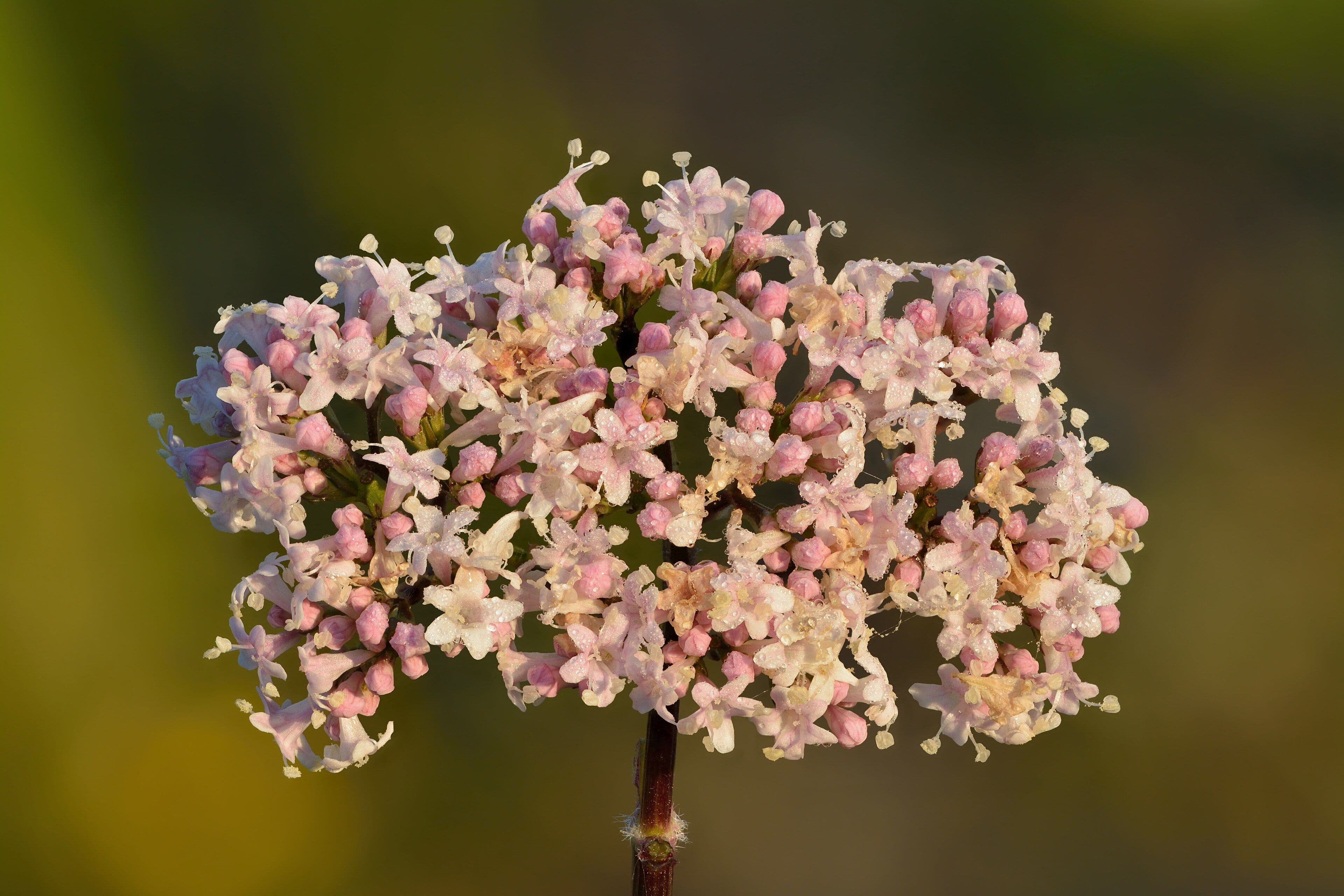
缬草 · valerian
Valeriana officinalis
Dr. Maya Chen explores Valerian (Valeriana officinalis), bridging its traditional use for calming the mind with modern science's understanding of its sedative and anxiolytic properties.
300-600mg root extract 30-60 minutes before bedtime
Take 300-600mg of a standardized root extract 30-60 minutes before bedtime with water. This is the most common and convenient form for precise dosing.
For a traditional tea, steep 1-2 grams of dried, chopped Valerian root in hot water for 10-15 minutes. Strain and drink 30-60 minutes before bedtime. Be aware of its distinct, earthy aroma. Adjust quantity to personal preference and tolerance.
Take 300-600mg of a standardized root extract 30-60 minutes before bedtime with water. This is the most common and convenient form for precise dosing.
For a traditional tea, steep 1-2 grams of dried, chopped Valerian root in hot water for 10-15 minutes. Strain and drink 30-60 minutes before bedtime. Be aware of its distinct, earthy aroma. Adjust quantity to personal preference and tolerance.
Clinical evidence for Valerian's efficacy as a sleep aid is mixed, with some systematic reviews suggesting subjective improvements but more recent umbrella reviews indicating no significant improvement in objective sleep measures. However, mechanistic studies confirm its GABAergic, serotonergic, and adenosine-modulating actions, and specific trials support its use for conditions like menopausal hot flashes.
Moderate — Some clinical studies
Clinical evidence for Valerian's efficacy as a sleep aid is mixed, with some systematic reviews suggesting subjective improvements but more recent umbrella reviews indicating no significant improvement in objective sleep measures. However, mechanistic studies confirm its GABAergic, serotonergic, and adenosine-modulating actions, and specific trials support its use for conditions like menopausal hot flashes.
Moderate — Some clinical studies
In animal models, valerian prolonged pentobarbital-induced sleep (40) (44). Benzodiazepines: An animal study and case report suggest valerian may have synergistic effects (45) (46). Haloperidol: An animal study suggests valerian may have an additive effect, causing hepatic damage (47). Clinical relevance has yet to be determined. CYP450 substrates: Valerian may inhibit CYP2D6 (48) and CYP3A4 (41) (49), although other studies in vivo and in humans suggest CYP-mediated interactions with valerian a
An animal study and case report suggest valerian may have synergistic effects [45] [46].
An animal study suggests valerian may have an additive effect, causing hepatic damage [47]. Clinical relevance has yet to be determined.
Valerian may inhibit CYP2D6 [48] and CYP3A4 [41] [49], although other studies in vivo and in humans suggest CYP-mediated interactions with valerian are unlikely [58].
Valerian may inhibit P-gp transporters and affect the intracellular concentration of substrate drugs [17] [28], although another study suggests an in vivo P-gp interaction with common valerian is less probable [49].
Insufficient Data
In animal models, valerian prolonged pentobarbital-induced sleep (40) (44). Benzodiazepines: An animal study and case report suggest valerian may have synergistic effects (45) (46). Haloperidol: An animal study suggests valerian may have an additive effect, causing hepatic damage (47). Clinical relevance has yet to be determined. CYP450 substrates: Valerian may inhibit CYP2D6 (48) and CYP3A4 (41) (49), although other studies in vivo and in humans suggest CYP-mediated interactions with valerian a
An animal study and case report suggest valerian may have synergistic effects [45] [46].
An animal study suggests valerian may have an additive effect, causing hepatic damage [47]. Clinical relevance has yet to be determined.
Valerian may inhibit CYP2D6 [48] and CYP3A4 [41] [49], although other studies in vivo and in humans suggest CYP-mediated interactions with valerian are unlikely [58].
Valerian may inhibit P-gp transporters and affect the intracellular concentration of substrate drugs [17] [28], although another study suggests an in vivo P-gp interaction with common valerian is less probable [49].
Insufficient Data
In my clinic, I've seen countless patients, often successful professionals or busy parents, whose bodies are simply wired 'on' when they desperately need to wind down. They describe the familiar cycle: lying awake, mind racing, watching the clock tick. It’s a modern epidemic of sleeplessness. For centuries, across various cultures, people have turned to a humble, unassuming root for solace – one with a surprisingly distinctive aroma that often sparks a chuckle in my herbal pharmacy: Valerian.
Valerian (Valeriana officinalis), also known as Garden Valerian or All-Heal, is a warm, bitter, and pungent herb traditionally used in Traditional Chinese Medicine (TCM) for calming fright, tranquilizing the mind, and promoting the smooth flow of Qi and blood. It’s an herb that truly embodies the integrative approach, offering a bridge between ancient wisdom and modern neuroscience.
In TCM, we understand the body not just as a collection of organs, but as an intricate network of energy pathways – meridians – and vital substances like Qi (life force), Blood, and Shen (spirit). Valerian, or 缬草 (xié cǎo) as it's known in Chinese, is classified as warm in nature, with bitter and pungent flavors. These characteristics tell us a great deal about its actions.
A warm nature means it can gently invigorate circulation and dispel cold, while its bitter taste helps to clear heat and dry dampness, and its pungent flavor moves Qi. Crucially, in TCM, Valerian is traditionally said to enter the Heart and Liver meridians. The Heart houses the Shen, our spirit and consciousness, which needs to be rooted for restful sleep.
The Liver, on the other hand, is responsible for the smooth flow of Qi throughout the body and manages our emotions. When Liver Qi stagnates, we can feel irritable, anxious, and yes, have trouble falling asleep.
As the classic text Bencao Gangmu (Compendium of Materia Medica) suggests for related calming herbs, it 'nourishes Heart Qi, resolves stagnation, and stops fright and convulsions.' This aligns beautifully with how we see Valerian working today: gently guiding a restless spirit back to tranquility, easing the tension that prevents relaxation. I recall a patient, a young lawyer named Sarah, who came to me with chronic insomnia and intense pre-trial anxiety.
Her pulse was wiry, her tongue red-tipped – classic signs of Liver Qi stagnation and a disturbed Shen. We discussed Valerian not just as a sedative, but as an herb to help her Liver Qi flow more freely, allowing her Heart-Shen to settle. It's about bringing the whole system back into harmony, not just targeting a symptom.
When we talk about Valerian, sleep is almost always the first topic. And for good reason. Many people reach for Valerian when their minds simply won't quiet down at night, feeling restless and unable to transition into sleep.
From a TCM perspective, this often points to a disturbance of the Shen (spirit) housed in the Heart, or an imbalance in the Liver, which can create internal 'wind' or agitation. Valerian's action of 'calming fright and tranquilizing the mind' directly addresses these patterns, helping to anchor the Shen and smooth the flow of Liver Qi.
Modern science offers intriguing explanations for these traditional observations. Valerian's active compounds, particularly valerenic acid and its derivatives, are known to enhance GABAergic transmission in the brain. GABA, or gamma-aminobutyric acid, is our primary inhibitory neurotransmitter – it's like the 'stop' signal for brain activity. By inhibiting GABA reuptake and stimulating its release, Valerian essentially boosts our brain's natural ability to calm itself.
It also acts as a partial agonist at 5-HT5a serotonin receptors and adenosine A1 receptors, further contributing to its anxiolytic and sedative effects. While some older systematic reviews, like one by Stephen Bent and colleagues in the American Journal of Medicine in 1997, found a statistically significant benefit for improving subjective sleep quality (relative risk = 1.8), they also cautioned about methodological problems. More recent reviews, such as one in Sleep Medicine Reviews by Miyasaka et al.
in 2007, and a 2024 umbrella review by Valente V et al. in European Neuropsychopharmacology analyzing data from 15,716 subjects, suggest that Valerian may not significantly improve objective sleep measures. This highlights the complex interplay between subjective experience and measurable biological changes.
Beyond sleep, Valerian has a long history of use for easing general nervousness and muscle tension. Think of that tight knot in your stomach or the persistent tension headaches that often accompany stress.
In TCM, the Liver system governs the smooth flow of Qi and blood, and it also controls the tendons and ligaments. When Liver Qi is constrained by stress, it can lead to physical symptoms like muscle spasms, cramps, and feelings of being 'wound up.' Valerian’s pungent flavor helps to move Qi, and its ability to 'resolve stagnation' helps relax these constricted pathways, bringing a sense of release.
Western research supports this traditional use, identifying Valerian as a spasmolytic. Studies indicate it can relax smooth muscle, likely through its influence on calcium channel modulation. This explains why it's been traditionally used for conditions ranging from menstrual cramps to digestive spasms, offering a gentle easing of physical tension alongside mental calm.
Menopause can bring a cascade of challenging symptoms, and among the most disruptive are hot flashes. While not its most famous application, Valerian has shown promise in this area, particularly for those seeking natural support.
From a TCM perspective, menopausal symptoms like hot flashes often stem from a decline in Kidney Yin, leading to a relative excess of Yang – essentially, a lack of cooling, moistening energy allowing heat to 'flare up.' While Valerian isn't a direct Yin tonic, its calming and qi-regulating properties can help mitigate the associated anxiety and nervous agitation that often exacerbate hot flashes.
A randomized controlled trial published by Mirabi P et al. in the Iranian Journal of Pharmaceutical Research in 2013 specifically investigated Valerian's effect on menopausal hot flashes. The study reported a significant reduction in hot flash frequency by 28% in the Valerian group, offering compelling evidence for this specific application.
The scientific community has spent decades trying to unravel the precise mechanisms behind Valerian’s traditional uses, especially its calming effects. The primary active compounds identified include valerenic acid and acetoxyvalerenic acid, iridoids (like valtrate and didrovaltrate), isovaleric acid, and lignans such as hydroxypinoresinol and olivil.
As I mentioned, valerenic acid is a key player, believed to enhance GABAergic transmission by inhibiting GABA reuptake and stimulating its release. This makes our brain's natural 'calm down' system more efficient. Researchers at institutions like the NIH National Center for Complementary and Integrative Health (NCCIH), where experts like Helene Langevin have advanced the understanding of integrative therapies, continue to explore how these complex plant compounds interact with our neurochemistry.
However, the research picture for sleep efficacy is nuanced. While many users report subjective improvements, objective measures are less consistent. Stephen Bent and his team, in their 1997 review in the American Journal of Medicine, found some benefit but highlighted methodological flaws. Later, a 2007 review in Sleep Medicine Reviews by Miyasaka et al. concluded that despite being safe, overall evidence didn't strongly support its clinical efficacy as a sleep aid.
This was further echoed by the 2024 umbrella review by Valente V et al. which found no significant improvement in objective sleep metrics across 15,716 subjects.
Yet, researchers like Ying-Ying Li and colleagues, writing in Frontiers in Pharmacology in 2022, remind us that while Valerian's sedative effect for insomnia is clinically well-developed, its broader traditional uses – 'calming fright, tranquilizing mind, promoting Qi and blood, and treating various system disorders' – indicate a largely 'underutilized potential.' This is where the integrative lens truly shines, recognizing that an herb's value isn't solely defined by a single, narrow indication.
Valerian is most commonly taken as a supplement or a tea, typically for its calming effects before bed. For standardized root extracts, the common dosage is 300-600mg, taken about 30-60 minutes before you plan to sleep.
If you prefer a traditional approach, a decoction or tea can be made from the dried root. While I don't typically recommend specific gram amounts without a direct consultation due to variability in raw herb potency, a general guideline for a tea would involve steeping a small amount (perhaps 1-2 grams) of dried, chopped Valerian root in hot water for 10-15 minutes. Be prepared for its distinct, earthy aroma!
It's worth noting that Valerian's effects may not always be immediate for everyone. Some individuals find that it works best after several days or even weeks of consistent use, building up its calming influence over time rather than acting as a quick fix.
As with any potent herb, Valerian is not without its considerations. I must emphasize that while generally well-tolerated, certain individuals should absolutely avoid its use.
Liver Health: There have been reports, though rare, of otherwise-healthy people experiencing acute liver toxicity following valerian supplementation. If you have any impaired liver function, or a history of liver or pancreatic disease, you must avoid Valerian entirely. This is a non-negotiable safety concern, as case reports of hepatotoxicity and a possible association with acute pancreatitis have been noted.
Operating Machinery: Valerian is intended to be sedating. Early studies indicate that even a single dose can disrupt information processing, task performance, and vigilance for 1-2 hours after administration. Therefore, you absolutely should not drive or operate dangerous machinery after taking Valerian.
Pregnancy and Nursing: Pregnant or nursing women should avoid Valerian. It has not been adequately studied in these populations, and preliminary animal models indicate potential adverse effects on fetal brain development, including reduced levels of essential micronutrients in fetal mouse brain tissue. The risks outweigh any potential benefits during these critical periods.
Drug Interactions: Valerian can interact with other medications that cause sedation. In animal models, it has been shown to prolong pentobarbital-induced sleep, and there's a case report of excessive sedation when combined with passionflower. Exercise extreme caution, and ideally avoid combining Valerian with barbiturates, benzodiazepines (like Xanax or Valium), or other sedative medications or supplements without strict medical supervision. Always discuss your full medication and supplement regimen with your physician before starting Valerian.
Valerian stands as a powerful testament to the enduring wisdom of traditional medicine, offering a gentle yet profound pathway to calm and rest. While Western science continues to meticulously dissect its mechanisms, often finding complexities and nuances, TCM has long embraced its holistic ability to soothe the Shen and harmonize the Liver.
My hope is that by understanding Valerian through both these lenses, you can approach your own well-being with greater insight, finding balance not just in a pill, but in the deeper rhythms of your body and mind. It's about respecting the intricate dance between ancient plants and modern life, fostering a more integrated sense of health.
In my clinic, I've seen countless patients, often successful professionals or busy parents, whose bodies are simply wired 'on' when they desperately need to wind down. They describe the familiar cycle: lying awake, mind racing, watching the clock tick. It’s a modern epidemic of sleeplessness. For centuries, across various cultures, people have turned to a humble, unassuming root for solace – one with a surprisingly distinctive aroma that often sparks a chuckle in my herbal pharmacy: Valerian.
Valerian (Valeriana officinalis), also known as Garden Valerian or All-Heal, is a warm, bitter, and pungent herb traditionally used in Traditional Chinese Medicine (TCM) for calming fright, tranquilizing the mind, and promoting the smooth flow of Qi and blood. It’s an herb that truly embodies the integrative approach, offering a bridge between ancient wisdom and modern neuroscience.
In TCM, we understand the body not just as a collection of organs, but as an intricate network of energy pathways – meridians – and vital substances like Qi (life force), Blood, and Shen (spirit). Valerian, or 缬草 (xié cǎo) as it's known in Chinese, is classified as warm in nature, with bitter and pungent flavors. These characteristics tell us a great deal about its actions.
A warm nature means it can gently invigorate circulation and dispel cold, while its bitter taste helps to clear heat and dry dampness, and its pungent flavor moves Qi. Crucially, in TCM, Valerian is traditionally said to enter the Heart and Liver meridians. The Heart houses the Shen, our spirit and consciousness, which needs to be rooted for restful sleep.
The Liver, on the other hand, is responsible for the smooth flow of Qi throughout the body and manages our emotions. When Liver Qi stagnates, we can feel irritable, anxious, and yes, have trouble falling asleep.
As the classic text Bencao Gangmu (Compendium of Materia Medica) suggests for related calming herbs, it 'nourishes Heart Qi, resolves stagnation, and stops fright and convulsions.' This aligns beautifully with how we see Valerian working today: gently guiding a restless spirit back to tranquility, easing the tension that prevents relaxation. I recall a patient, a young lawyer named Sarah, who came to me with chronic insomnia and intense pre-trial anxiety.
Her pulse was wiry, her tongue red-tipped – classic signs of Liver Qi stagnation and a disturbed Shen. We discussed Valerian not just as a sedative, but as an herb to help her Liver Qi flow more freely, allowing her Heart-Shen to settle. It's about bringing the whole system back into harmony, not just targeting a symptom.
When we talk about Valerian, sleep is almost always the first topic. And for good reason. Many people reach for Valerian when their minds simply won't quiet down at night, feeling restless and unable to transition into sleep.
From a TCM perspective, this often points to a disturbance of the Shen (spirit) housed in the Heart, or an imbalance in the Liver, which can create internal 'wind' or agitation. Valerian's action of 'calming fright and tranquilizing the mind' directly addresses these patterns, helping to anchor the Shen and smooth the flow of Liver Qi.
Modern science offers intriguing explanations for these traditional observations. Valerian's active compounds, particularly valerenic acid and its derivatives, are known to enhance GABAergic transmission in the brain. GABA, or gamma-aminobutyric acid, is our primary inhibitory neurotransmitter – it's like the 'stop' signal for brain activity. By inhibiting GABA reuptake and stimulating its release, Valerian essentially boosts our brain's natural ability to calm itself.
It also acts as a partial agonist at 5-HT5a serotonin receptors and adenosine A1 receptors, further contributing to its anxiolytic and sedative effects. While some older systematic reviews, like one by Stephen Bent and colleagues in the American Journal of Medicine in 1997, found a statistically significant benefit for improving subjective sleep quality (relative risk = 1.8), they also cautioned about methodological problems. More recent reviews, such as one in Sleep Medicine Reviews by Miyasaka et al.
in 2007, and a 2024 umbrella review by Valente V et al. in European Neuropsychopharmacology analyzing data from 15,716 subjects, suggest that Valerian may not significantly improve objective sleep measures. This highlights the complex interplay between subjective experience and measurable biological changes.
Beyond sleep, Valerian has a long history of use for easing general nervousness and muscle tension. Think of that tight knot in your stomach or the persistent tension headaches that often accompany stress.
In TCM, the Liver system governs the smooth flow of Qi and blood, and it also controls the tendons and ligaments. When Liver Qi is constrained by stress, it can lead to physical symptoms like muscle spasms, cramps, and feelings of being 'wound up.' Valerian’s pungent flavor helps to move Qi, and its ability to 'resolve stagnation' helps relax these constricted pathways, bringing a sense of release.
Western research supports this traditional use, identifying Valerian as a spasmolytic. Studies indicate it can relax smooth muscle, likely through its influence on calcium channel modulation. This explains why it's been traditionally used for conditions ranging from menstrual cramps to digestive spasms, offering a gentle easing of physical tension alongside mental calm.
Menopause can bring a cascade of challenging symptoms, and among the most disruptive are hot flashes. While not its most famous application, Valerian has shown promise in this area, particularly for those seeking natural support.
From a TCM perspective, menopausal symptoms like hot flashes often stem from a decline in Kidney Yin, leading to a relative excess of Yang – essentially, a lack of cooling, moistening energy allowing heat to 'flare up.' While Valerian isn't a direct Yin tonic, its calming and qi-regulating properties can help mitigate the associated anxiety and nervous agitation that often exacerbate hot flashes.
A randomized controlled trial published by Mirabi P et al. in the Iranian Journal of Pharmaceutical Research in 2013 specifically investigated Valerian's effect on menopausal hot flashes. The study reported a significant reduction in hot flash frequency by 28% in the Valerian group, offering compelling evidence for this specific application.
The scientific community has spent decades trying to unravel the precise mechanisms behind Valerian’s traditional uses, especially its calming effects. The primary active compounds identified include valerenic acid and acetoxyvalerenic acid, iridoids (like valtrate and didrovaltrate), isovaleric acid, and lignans such as hydroxypinoresinol and olivil.
As I mentioned, valerenic acid is a key player, believed to enhance GABAergic transmission by inhibiting GABA reuptake and stimulating its release. This makes our brain's natural 'calm down' system more efficient. Researchers at institutions like the NIH National Center for Complementary and Integrative Health (NCCIH), where experts like Helene Langevin have advanced the understanding of integrative therapies, continue to explore how these complex plant compounds interact with our neurochemistry.
However, the research picture for sleep efficacy is nuanced. While many users report subjective improvements, objective measures are less consistent. Stephen Bent and his team, in their 1997 review in the American Journal of Medicine, found some benefit but highlighted methodological flaws. Later, a 2007 review in Sleep Medicine Reviews by Miyasaka et al. concluded that despite being safe, overall evidence didn't strongly support its clinical efficacy as a sleep aid.
This was further echoed by the 2024 umbrella review by Valente V et al. which found no significant improvement in objective sleep metrics across 15,716 subjects.
Yet, researchers like Ying-Ying Li and colleagues, writing in Frontiers in Pharmacology in 2022, remind us that while Valerian's sedative effect for insomnia is clinically well-developed, its broader traditional uses – 'calming fright, tranquilizing mind, promoting Qi and blood, and treating various system disorders' – indicate a largely 'underutilized potential.' This is where the integrative lens truly shines, recognizing that an herb's value isn't solely defined by a single, narrow indication.
Valerian is most commonly taken as a supplement or a tea, typically for its calming effects before bed. For standardized root extracts, the common dosage is 300-600mg, taken about 30-60 minutes before you plan to sleep.
If you prefer a traditional approach, a decoction or tea can be made from the dried root. While I don't typically recommend specific gram amounts without a direct consultation due to variability in raw herb potency, a general guideline for a tea would involve steeping a small amount (perhaps 1-2 grams) of dried, chopped Valerian root in hot water for 10-15 minutes. Be prepared for its distinct, earthy aroma!
It's worth noting that Valerian's effects may not always be immediate for everyone. Some individuals find that it works best after several days or even weeks of consistent use, building up its calming influence over time rather than acting as a quick fix.
As with any potent herb, Valerian is not without its considerations. I must emphasize that while generally well-tolerated, certain individuals should absolutely avoid its use.
Liver Health: There have been reports, though rare, of otherwise-healthy people experiencing acute liver toxicity following valerian supplementation. If you have any impaired liver function, or a history of liver or pancreatic disease, you must avoid Valerian entirely. This is a non-negotiable safety concern, as case reports of hepatotoxicity and a possible association with acute pancreatitis have been noted.
Operating Machinery: Valerian is intended to be sedating. Early studies indicate that even a single dose can disrupt information processing, task performance, and vigilance for 1-2 hours after administration. Therefore, you absolutely should not drive or operate dangerous machinery after taking Valerian.
Pregnancy and Nursing: Pregnant or nursing women should avoid Valerian. It has not been adequately studied in these populations, and preliminary animal models indicate potential adverse effects on fetal brain development, including reduced levels of essential micronutrients in fetal mouse brain tissue. The risks outweigh any potential benefits during these critical periods.
Drug Interactions: Valerian can interact with other medications that cause sedation. In animal models, it has been shown to prolong pentobarbital-induced sleep, and there's a case report of excessive sedation when combined with passionflower. Exercise extreme caution, and ideally avoid combining Valerian with barbiturates, benzodiazepines (like Xanax or Valium), or other sedative medications or supplements without strict medical supervision. Always discuss your full medication and supplement regimen with your physician before starting Valerian.
Valerian stands as a powerful testament to the enduring wisdom of traditional medicine, offering a gentle yet profound pathway to calm and rest. While Western science continues to meticulously dissect its mechanisms, often finding complexities and nuances, TCM has long embraced its holistic ability to soothe the Shen and harmonize the Liver.
My hope is that by understanding Valerian through both these lenses, you can approach your own well-being with greater insight, finding balance not just in a pill, but in the deeper rhythms of your body and mind. It's about respecting the intricate dance between ancient plants and modern life, fostering a more integrated sense of health.
This information is for educational purposes only and is not intended as medical advice. Always consult a qualified healthcare practitioner before using any herbal remedy.