Anti-Aging Herbs: Why Your Strategy Is Wrong - Kai Zhang | Demisunshine
About Anti-Aging Herbs, Most Wellness Enthusiasts Get This Wrong
You're spending a fortune on 'anti-aging' supplements, chasing youth in a pill, but what if you're not just wasting money, but actively sabotaging your health? This isn't about marketing hype; it's about a core misunderstanding of true longevity.
Kai ZhangMarch 17, 202610 min read
Quick Answer
The quest for 'anti-aging' often leads people to misuse powerful herbs, treating them as magic pills rather than tools to rebalance the body's unique constitution, as understood by Traditional Chinese Medicine. True longevity comes from deep, personalized understanding of your body's evolving needs, not from a generic supplement stack designed by marketing trends.
Key Takeaways
Your pursuit of 'anti-aging' often reflects a Western symptom-chasing mentality, ignoring TCM's emphasis on balancing foundational life forces like Qi, Blood, Yin, and Yang to cultivate true longevity.
Indiscriminate use of popular herbs like Goji berries or Reishi, without considering your specific 'Acquired Constitution' and existing energetic patterns, can worsen imbalances rather than improve them.
Herbs like Huang Qi (Astragalus) and He Shou Wu possess profound benefits, but their efficacy and safety are contingent on correct TCM diagnosis, preparation methods, and appropriate dosage, not just marketing claims.
True health transformation requires confronting your lifestyle choices and internal landscape, recognizing that no herb can compensate for a total lack of discipline or an unhealthy daily routine.
The paradox of seeking anti-aging is that by chasing eternal youth, you often miss the opportunity to live fully and vibrantly in your current state, by harmonizing with your body's natural rhythms and needs.
If your body constitution is fixed at birth, a blueprint set in stone, why the hell does the same person — let’s call her Sarah — shift from textbook Qi Deficiency in her 20s to a raging Damp-Heat pattern by her late 40s? You’d think the TCM practitioner who diagnosed her in college was wrong, right? Nope. The answer lies not in misdiagnosis, but in something I call Acquired Constitution.
It's the inconvenient truth about longevity and anti-aging that the supplement industry doesn't want you to grasp, because it means their one-size-fits-all magic pills are a fucking joke.
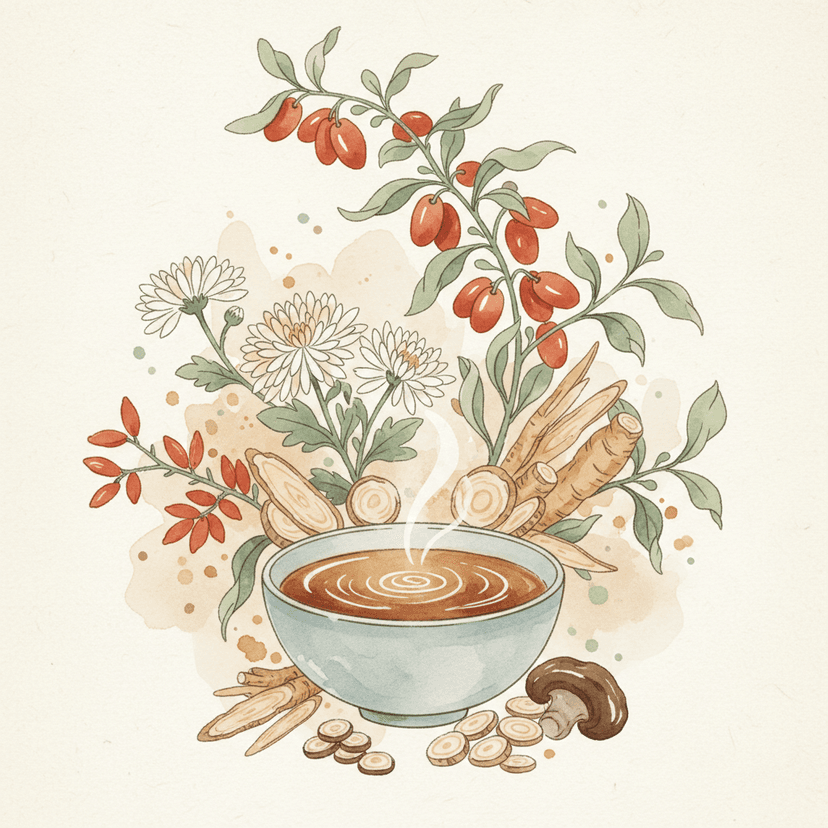
You’re treating symptoms, not the root. You’re chasing an arbitrary number on a scale or a wrinkle-free face, convinced that some exotic herb from a glossy ad is the fountain of youth. Huang Qi (Astragalus membranaceus), also known as Milk-vetch Root or Bei Qi, is a tonic herb used in Traditional Chinese Medicine for tonifying Qi, raising Yang, and consolidating the Exterior. Its key active compounds include polysaccharides, saponins, and flavonoids.
But simply popping an Astragalus capsule won't magically make you ageless if your lifestyle is actively creating the problems you’re trying to fix.
The Illusion of 'Anti-Aging' Pills: You’re Just Chasing Your Tail
Let’s be brutally honest. The Western wellness industry has bastardized the concept of longevity into a battle against time, a war you're told you can win with enough expensive pills. TCM doesn’t fight aging; it harmonizes with it. It’s not about reversing the clock; it’s about making the present moment, and every moment after, as vibrant and balanced as possible. You’re not looking for anti-aging; you’re looking for vitality. Big difference.
I watched a client, Mark, blow thousands on supplements touting youth peptides and cellular regeneration. He’d pop his NAD+ boosters, his resveratrol, his collagen, all while living on processed food, sleeping four hours a night, and seething with suppressed anger over his job. His skin looked okay, sure, but his digestion was shot, his temper flared at nothing, and he was exhausted. He was chasing a superficial ideal while his internal engine was sputtering.
This, right here, is the Acquired Constitution in action: your initial blueprint overridden by years of poor choices. No pill can fix that kind of systemic breakdown.
Your So-Called Superfood Is Making You Sicker: The Damp-Heat Deception
You see an ingredient trending on Instagram, touted by some influencer with flawless skin, and you immediately add it to your morning smoothie. Goji berries, right? Superfood. Antioxidants. Longevity. And for some, they’re great.
But for many, particularly those already prone to Dampness or Phlegm patterns according to Zang-Fu theory, those innocent-looking berries are literally gunking up your system.
They’re sweet and moistening. If your Spleen Qi is weak and struggling to transform fluids, you're just adding fuel to the fire, or rather, adding more water to an already sluggish drain.
Here's the competing interpretation:
Wellness Guru: Goji berries are incredible for eye health and boosting immunity! Everyone should add them for a youthful glow.
Kai Zhang: Yeah, if you’re a healthy, dry individual with Yin deficiency. If you’ve got a thick tongue coat, feel heavy after eating, and are generally prone to bloat, those 'super' berries are just going to make your internal swamp even worse. You're trying to put out a fire with gasoline.
This isn't about Goji berries being inherently bad. It's about the industry's criminal oversimplification. They market cooling or moistening herbs as universally beneficial, ignoring how they interact with your specific Five Elements balance and Qi-Blood patterns. You end up creating more problems than you solve, all in the name of chasing some elusive 'anti-aging' myth.
Huang Qi and the True Shield: Beyond Immunity Hype
Let’s talk about Huang Qi, Astragalus. You've seen it promoted for immune support. That's like saying a car is good for transportation — technically true, but misses the entire point of what it actually does. Huang Qi strengthens immunity primarily by tonifying Spleen and Lung Qi, which in TCM terms, means bolstering your Wei Qi (Defensive Qi) and enhancing the body's ability to extract energy from food and air. It's not just a booster; it's a fortifier.
The recommended daily dosage is 9-30g in decoction, or 3-9g in powdered form. But that's just a number. It means nothing without context.
Bensky, Clavey, & Stöger (2004) – the definitive Materia Medica – classify Huang Qi as a Qi tonic. They detail its power to raise Yang Qi, consolidate the Exterior, promote urination, and generate flesh. This is deep stuff, not just some sniffle-fighting herb.
Forget your generic 'immune booster' labels. This isn't about simply fighting colds. This is about deep, foundational strength – the energetic force field that holds your body together and protects you from external pathogens. It’s not a switch to flip when you feel a sniffle coming on; it’s a constant, vital shield.
And before you dismiss this as ancient lore, modern science backs it up. A 2012 study by Zhao et al. found that Astragalus polysaccharides could enhance the proliferation and function of human peripheral blood mononuclear cells. That’s concrete, cellular-level validation of its immunomodulatory effects.
Let's break down the truth versus the marketing spin:
Consolidates the Exterior: Prevents frequent colds, spontaneous sweating.
Promotes Urination and Reduces Edema: Helps with fluid retention due to Qi deficiency.
Supports Flesh Generation: Aids wound healing, particularly for chronic non-healing sores.
Western Marketing Claims:
Immune Booster: Broad, often superficial claim without constitutional context.
Anti-inflammatory: Focuses on one isolated effect, not the systemic rebalancing.
Longevity Supplement: Implies direct anti-aging, rather than strengthening core vitality.
The Reishi Riddle: Adaptogen or Just Expensive Mushroom Dust?
Reishi (Ling Zhi) is another darling of the longevity circuit. Marketed as the ultimate adaptogen, it promises to balance your stress, boost your energy, and generally make you a more zen human being. And yes, it can do some of that. But the real, non-obvious insight here is that Reishi's profound power isn't in some generic adaptogenic effect; it’s in its specific action on the Heart and Liver systems, calming the Shen (spirit) and nourishing Blood.
You're probably thinking, so what? The Shen isn't some woo-woo concept. It’s your consciousness, your mental clarity, your emotional stability.
When your Heart Blood is deficient or your Liver Qi is stagnant (which, let’s be real, is like 80% of stressed-out modern people), your Shen has nowhere to anchor. That’s anxiety, insomnia, irritability.
Reishi, when used correctly, doesn’t just adapt to stress; it stabilizes the core energetic patterns that make you prone to stress in the first place. This is a core shift in understanding.
Consider Sarah again (yes, the same one, her journey is a mess of self-experimentation). She was taking high-dose Reishi for general stress relief because her friend swore by it.
But her underlying pattern was Spleen Qi Deficiency with Dampness. Reishi, being slightly cool and somewhat heavy, made her feel even more sluggish and bloated initially. It wasn't until we addressed her Spleen and then introduced a prepared (not raw) Reishi in a smaller, consistent dose tailored to her Heart Yin Deficiency (which was causing her anxiety) that she actually saw results. Not instant zen, but a gradual, lasting calmness.
Don't take my word for it. Wachtel-Galor et al. (2017) extensively reviewed Ganoderma lucidum's (Reishi's) historical use for insomnia and anxiety, attributing its effects to triterpenes and polysaccharides that modulate immune function and have sedative properties, reinforcing its traditional use for calming Shen.
He Shou Wu, or Fo-Ti, is legendary. The stories claim it turned an old man’s white hair black, restored his youth, made him virile. Sounds like the ultimate anti-aging dream, doesn't it? And yes, it has incredible potential for nourishing Liver and Kidney Yin and Blood, which are crucial for lustrous hair, youthful skin, and sexual vitality. But here’s the kicker: it's not the same herb in its raw and prepared forms.
Raw He Shou Wu is a laxative. It’s used for constipation. The prepared form—steamed and processed with black beans—is what gives it its tonic, anti-aging properties. And even then, it's not for everyone. Using the wrong form, or using it without a proper TCM diagnosis, can lead to serious side effects, most notably hepatotoxicity (liver damage).
A comprehensive review by Liu et al. (2014) highlighted numerous case reports and studies on Polygonum multiflorum (He Shou Wu) induced liver injury, concluding that pre-existing liver conditions, higher dosages, or prolonged use without proper monitoring significantly increase risk. This isn't some obscure danger; it’s a well-documented risk if you treat powerful herbs like candy.
I had a client, David, whose hair was thinning, turning grey in his early 30s. He bought a He Shou Wu root online from some dodgy vendor and started making tea from it, thinking he was bypassing the 'Big Pharma' extracts. Within weeks, he had chronic diarrhea and elevated liver enzymes. He didn’t know the difference between raw and prepared, or that his 'Spleen Qi' was already weak.
His desire for a quick fix for his hair nearly put him in the hospital.
That's how quickly a powerful remedy can become a poison when ignorance is your guide.
Look.
The Real Secret to Longevity Isn't in a Pill: It's Your Damn Life
You want to know the real anti-aging secret? It’s not some herb no one wants you to know about. It’s the boring, unsexy stuff you skip every single day. It's the sleep you don’t get, the crap you eat, the constant stress you bathe in, and the emotional baggage you refuse to unpack. You think you can outsource your discipline to a capsule.
You believe that if you just find the right combination of exotic plant extracts, you can keep living like an idiot and still magically reverse the damage.
That Acquired Constitution I mentioned? It’s the direct result of your daily choices. It’s the sum total of every late night, every sugary indulgence, every unresolved conflict festering in your gut. Herbs are powerful tools, yes, but they are catalysts for your body’s inherent ability to heal and balance, not replacements for a garbage lifestyle. They won't fix what you refuse to acknowledge.
The real path to vitality, to what you mistakenly call anti-aging, isn't about adding more to your supplement stack. It’s about subtracting the crap. It’s about understanding your body’s unique energetic blueprint — the Five Elements and Zang-Fu systems that are actually at play — and then using herbs strategically, like a precision instrument, not a blunt object. It's about the daily grind of showing up for yourself, consistently, even when it’s uncomfortable. You want longevity?
Start by living a life worth preserving.
So, are you willing to do the actual work, or will you keep falling for the anti-aging charade?
Your First Step (Stop Overthinking It)
Alright, enough talk. You want to actually do something? Here are three simple, immediate actions. No supplements, no gurus, just you and your damn body.
Tongue Check: Look in the mirror. What does your tongue coat look like? Thick and greasy, especially if it's yellowish? That's a classic sign of Damp-Heat. Your first step: cut out anything sweet and moistening for 24 hours. That includes your 'healthy' Goji berries, sugary drinks, and dairy.
Bloat Tracker: For the next 48 hours, keep a mental (or actual) note of every time you feel bloated or heavy after eating. What did you just consume? This isn't about judgment; it's about data. Your body is talking; are you listening?
The 10 PM Challenge: For the next three nights, turn off all screens by 10 PM. In TCM, this is when the Liver and Gallbladder meridians begin their repair cycle. No herb can replace the restorative power of aligning with this rhythm. Just observe how you feel.
This isn't a cure. It's an awakening. It's how you start understanding your 'Acquired Constitution' and stop blindly buying into the wellness industry's crap.
The End of Forever
Ultimately, the paradox of anti-aging isn't that certain herbs work or don't work; it's that by desperately fighting the inevitable, you often waste the precious energy and time that could have been spent actually living a healthier, more fulfilled life today. You’re so busy trying to extend your lifespan that you forget to live.
Maybe the real question isn't which herbs will make you live forever, but how you can use ancient wisdom to stop fighting your body and start truly understanding the ephemeral, beautiful process of its journey.
References
Bensky, D., Clavey, S., & Stöger, E. (2004). Chinese Herbal Medicine: Materia Medica (3rd ed.). Eastland Press.
Contributing Writer at Demisunshine. Kai has been around Chinese herbs and food therapy for as long as he can remember — first at his grandmother's kitchen table, later in his own. He writes the practical pieces: what to actually do with what you've read, with concrete examples and short sentences.
Get TCM Wellness Tips
Weekly articles on herbal remedies, nutrition, and holistic health — delivered to your inbox.