Last Tuesday, a tech executive with angry, weeping eczema on her hands looked me in the eye and said, 'I don't need herbs. I need a solution.' My heart ached for her—I remember that desperation, that raw vulnerability, all too well. Because my own journey to radiant skin wasn't a smooth, serum-fueled glide into glowing health. It was a brutal, eight-year war against my own body, fought on the battlefield of my face and arms.
There are days I still feel the phantom itch of eczema, the ghost of shame from the cystic acne that used to bloom across my jawline. My palms are sweating a little even as I tell you this, revisiting the memory of trying to cover angry red patches with layers of makeup, only to have it crack and flake away. I felt broken. Flawed. And utterly alone.
I tried everything Western medicine offered—creams, antibiotics, steroid shots. And yes, some provided temporary relief. But the cycle always returned. The flare-ups, the embarrassment, the feeling that my skin was betraying me. So I went back to the clinical data, to the ancient texts, to the wisdom that had been passed down for millennia in Traditional Chinese Medicine (TCM). What I found didn’t just change my skin; it deeply changed how I viewed health, healing, and even myself.
1. That Relentless Itch: The Day My Skin Broke Me
My personal skin crisis hit hardest during my medical residency—the sheer exhaustion, the relentless stress, the microwaved meals. My eczema—which had been a minor annoyance since childhood—exploded. My arms were covered in dry, cracked, bleeding patches. The kind that made strangers stare. I remember one elderly patient, bless her heart, gently ask if I’d fallen into a rose bush. My cheeks burned with shame. I was a doctor, for goodness sake, and I couldn't heal myself.
It was a breakdown. An undeniable moment where my body screamed for attention that my mind was too busy to give. I’d been trained to fix symptoms, to identify pathogens, to prescribe pharmaceuticals. But my body was telling me something deeper was wrong.
The conventional creams felt like patching a leaky roof while the foundation was crumbling. It’s a feeling I hear from so many of my patients—a quiet desperation for something more, something that actually fixes the problem.
2. Beyond the Surface: What Your Skin Is Really Telling You
In Western dermatology, we often categorize skin conditions by their visual presentation—is it acne? Eczema? Psoriasis? Then we target the inflammation, the bacteria, the overactive cell turnover. And that’s incredibly important for acute management. But TCM asks a different question: Why is this happening? What internal imbalance is manifesting on the skin?
So many of us are taught that skin issues are purely cosmetic, or just bad genetics—something we’re stuck with. But no, your skin is our largest organ, you know? And it’s intimately connected to every other system inside you. When we treat skin only from the outside, we miss the entire conversation happening within.
TCM diagnoses involve looking at your tongue, feeling your pulse, asking about your digestion, sleep, and emotional state. My own eczema, for instance, was eventually diagnosed as a combination of 'Damp-Heat' affecting the Spleen and 'Blood Deficiency.' This isn't jargon, not really—it's a detailed blueprint for healing, a map.
The Huang Di Nei Jing, one of the oldest medical texts, even mentions similar symptoms: 《素问·玉机真藏论》 describes “身热而肤痛,为浸淫” – body heat and skin pain manifesting as an oozing eruption, akin to what we now call eczema.
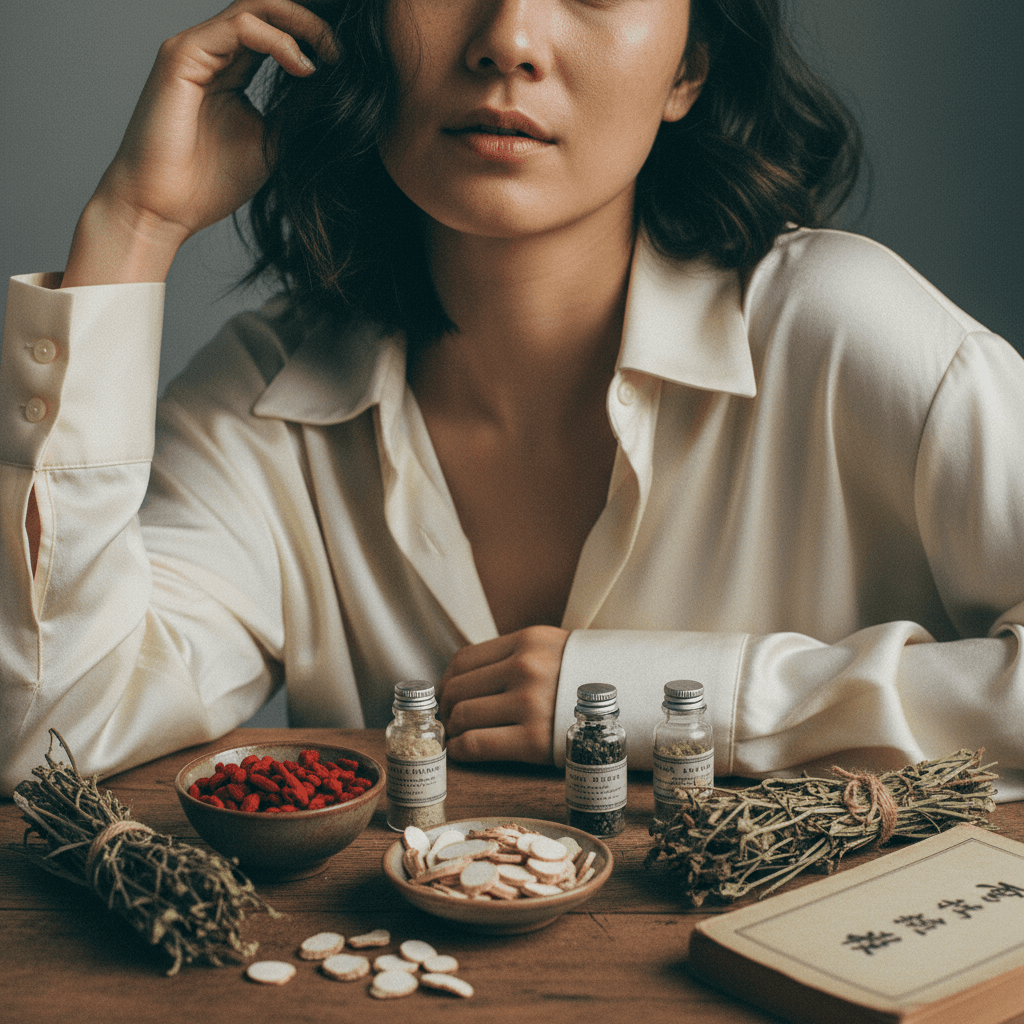
Consider the herb Bai Zhu (Atractylodes macrocephala)), also known as White Atractylodes. It’s a fundamental tonic herb in Traditional Chinese Medicine used primarily for strengthening the Spleen, drying dampness, and stopping sweating. Its key active compounds include atractylol, atractylon, and polysaccharides. In cases of damp-heat eczema, like mine, addressing the Spleen’s role in fluid metabolism is critical. The 《金匮要略》 even prescribed Huang Lian (Coptis chinensis) powder for “浸淫疮” (weeping lesions), highlighting the ancient understanding of clearing heat and dampness.
Understanding Bai Zhu: Your Spleen’s Best Friend
This herb is often a cornerstone in formulas for dampness-related skin issues. Here’s what you need to know:
Dosage: Typically 6-15g in a decoction, tailored by a practitioner. Nature & Flavor: Warm, sweet, slightly bitter. Meridians: Spleen, Stomach. Primary Actions: Tonifies Spleen Qi, dries dampness, strengthens the Stomach, stabilizes the Exterior (useful for spontaneous sweating often seen in 'damp' constitutions).
3. From Topical Fixes to Internal Rebalance: Three Surprising Pathways
My journey, and what I’ve seen work for countless patients, distills into these core shifts.
Pathway 1: Rethinking Your Plate — Food as Medicine, Not Just Fuel
Most of us think about foods to avoid for skin issues—dairy, sugar, gluten. And yes, inflammatory foods can absolutely be triggers. But TCM flips the script. It’s less about restriction and more about building a healthy foundation. For my damp-heat eczema, this meant warm, cooked foods, gently spiced, supporting my Spleen to transform dampness, not create more of it. It’s a shift: from deprivation to nourishment, from anxiety to intention.
One patient, Mark, a 30-year-old architect with chronic pustular acne, came to me after years of antibiotics. His face was red, inflamed, and painful. We identified an underlying 'Stomach Heat' pattern. Instead of harsh cleansers, we focused on cooling his internal system through diet—less spicy food, more cooling vegetables like cucumber and bitter melon. Within three months, his inflammation had dramatically reduced, and his breakouts were fewer and less severe.
He still has scars, yes, but the constant, burning pain was gone. He looked me in the eye one day and said, 'It’s like someone turned down the fire inside me.
Pathway 2: The Power of Personalised Herbs — Your Body’s Specific Recipe
This is where TCM stands out. There’s no single herb for eczema, just as there’s no single cause. Herbal formulas are intricate, bespoke concoctions designed to address your unique pattern of imbalance. For my eczema, the combination included herbs to clear damp-heat, nourish blood, and calm the shen (spirit) because stress was a massive trigger.
The research supports this nuanced approach. For psoriasis, oral Chinese herbal medicine (CHM) has shown significant promise. Luo Y, Chen J, et al. (2021) noted that CHM significantly reduced the Psoriasis Area Severity Index (PASI) score and improved the Dermatology Life Quality Index (DLQI), with the CHM group showing a significantly lower PASI score compared to placebo. Another meta-analysis by Zhang CS, Yang L, et al.
(2016) found that oral CHM was effective for psoriasis vulgaris, comparable to acitretin, and could even offer add-on benefits when combined with it, potentially reducing adverse events. This isn't about suppressing symptoms; it’s about restoring balance, cell by cell.
For eczema, while Gu, S., et al. (2013) found no conclusive evidence that CHM significantly reduced severity, one study did report improved quality of life with oral CHM. It’s a nuanced picture, and it speaks to the fact that 'eczema' in Western terms can encompass many different TCM patterns, each requiring a specific herbal strategy.
The general approach of strengthening the Spleen and regulating qi and blood, as highlighted by 王涵竹等 (2025) in their analysis of common herbs like Bai Zhu and Fu Ling for eczema, is key.
Pathway 3: The Untapped Power of Your Mind — Stress and Skin, Hand-in-Hand
This is often the most overlooked piece of the puzzle. Stress doesn't just make skin conditions worse—it can alter your internal environment, triggering inflammation and disrupting hormonal balance. From a TCM perspective, chronic stress often leads to 'Liver Qi Stagnation,' which can generate 'heat' or impair the flow of 'Blood,' directly impacting skin health. The 《诸病源候论》 spoke of “风湿邪气,客于腠理” (wind-damp evil invading the superficial layers)—stress can be a trigger that invites such 'evil' into the body.
For me, managing residency stress wasn't just about my mental health; it was critical for my skin. Techniques like acupuncture, meditation, and even simple breathing exercises became non-negotiable. They weren’t a luxury; they were medicine. When I finally prioritized rest, my skin started to breathe again. When I learned to process my emotions, my internal 'heat' cooled.
It’s hard work, this emotional excavation—but my therapist just looked at me and said, 'You're a mess, but at least you’re an honest mess.' And my skin agreed.
The Hard Truth About “Herbal” Creams and Quick Fixes
Let’s talk about something uncomfortable: the unregulated market of 'herbal' creams. I’ve seen patients come in with miraculous-looking 'natural' creams that cleared their eczema overnight—only to have it rebound worse than ever when they stopped. The hard truth is, some of these products, unfortunately, contain undeclared corticosteroids. They aren't truly herbal medicine; they're dangerous, deceptive, and they contribute to the skepticism surrounding genuine TCM.
This isn’t to say all topical TCM is bad—far from it. But the key is transparency and professional prescription. A qualified TCM practitioner will either prepare formulas themselves or recommend reputable, certified brands. They will never promise a 'miracle cure' or a generic topical fix. True TCM healing is a process, an ongoing conversation between your body and targeted, high-quality herbs. Always ask for ingredient lists, sourcing, and consult a licensed practitioner you trust.
If it sounds too good to be true, it probably is.
4. Integrating West and East: It’s Not Either/Or
This is crucial. As someone well-read in both traditions, I don't believe in choosing sides. Western medicine offers diagnostic precision, immediate relief for acute issues, and life-saving interventions. TCM offers a deep insight of internal balance, personalized strategies, and long-term constitutional support. They are not mutually exclusive; they are complementary.
For instance, a patient with severe atopic dermatitis might use Dupilumab (a biologic) for acute flare-ups, while simultaneously working with a TCM practitioner on oral herbal formulas and dietary adjustments to strengthen their immune system and reduce underlying inflammation. This integrative approach has shown promise. 樊静媛等 (2024) published research indicating that a particular TCM topical paste, 六经调理膏, combined with Dupilumab, significantly improved moderate to severe atopic dermatitis, with a 42.7% drop in SCORAD scores in the treatment group.
This isn’t about replacing; it’s about augmenting, enhancing, and ultimately creating a more resilient you.
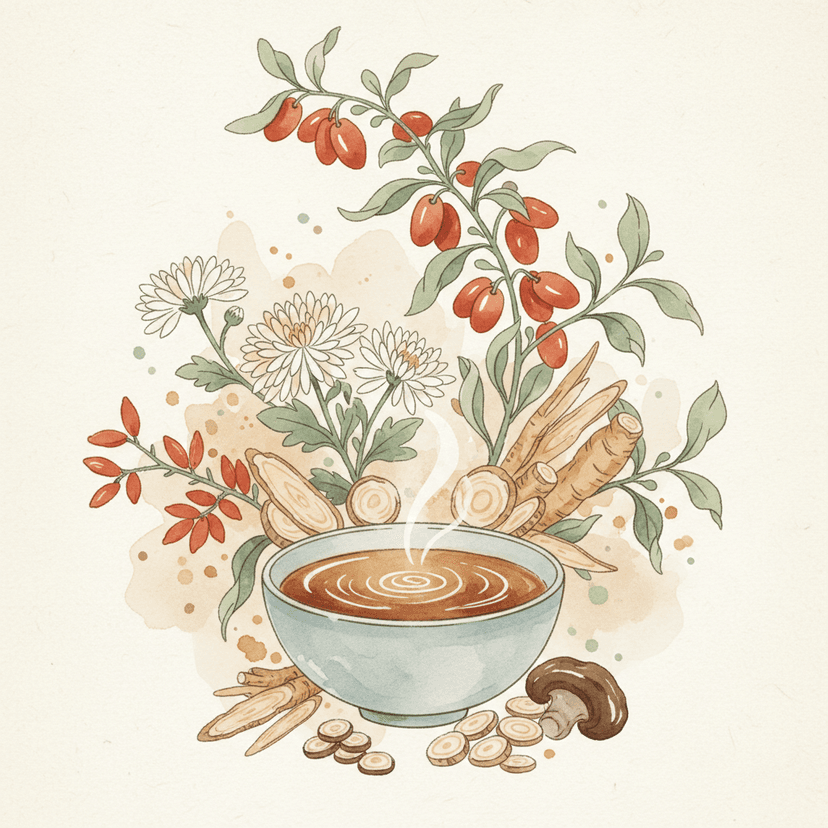
My tech executive patient, the one who just wanted a solution? By Thursday, she was drinking a simple chrysanthemum and goji berry tea to gently clear some internal heat, and guess what? She reported sleeping through the night for the first time in months. It wasn't a cure, not yet. But it was a start—a gentle shift from frantic problem-solving to thoughtful self-care.
Mistakes I See: The Traps Even Well-Meaning Seekers Fall Into
Here’s where many people stumble on their journey to radiant skin with TCM. And trust me, I’ve made some of these mistakes myself, and I see them daily in my practice.
Mistake 1: Treating Herbs Like Supplements
The biggest mistake I see people make with herbal supplements? They treat them like vitamins—pop a pill and forget about it. That's not how complex TCM herbal formulas work. They’re dynamic, specific, and require a skilled practitioner to prescribe and adjust. Self-diagnosing and buying generic 'skin-clearing' formulas from the internet is like trying to perform surgery on yourself with a butter knife. Dangerous, ineffective, and potentially harmful. You need a map, and a guide.
Mistake 2: Expecting Instant Miracles
We live in a world of instant gratification. See a spot, zap it. But chronic skin conditions didn't develop overnight, and they won't disappear overnight. TCM is about gentle, consistent rebalancing. It takes time—weeks, sometimes months—to see significant, lasting change. This requires patience, trust in the process, and a commitment to consistency. It’s a marathon, not a sprint, and often, the most profound healing happens slowly, beneath the surface.
Mistake 3: Ignoring the Lifestyle Piece
You can take all the best herbs in the world, but if you’re still eating inflammatory foods, burning the candle at both ends, and drowning in stress, you’re essentially pouring water into a leaky bucket. TCM asks for a holistic commitment. Diet, sleep, stress management, movement—they're all part of your prescription. Ignoring these foundational elements will significantly hinder your progress. Your body is a whole ecosystem; treat it that way.
So, maybe the real question isn't which herbs to take, or which cream to apply—but whether we've been thinking about wellness through entirely the wrong lens. What if our skin isn't just a barrier, but a profound messenger? What if embracing ancient wisdom, tempered by modern science, is the courageous path to true, undeniable radiance?
Your First 24 Hours: A Gentle Beginning
Ready to move beyond the creams and truly listen to your skin? Here’s what you can do in the next day to start your journey:
- Hydrate with Warm Water (5 minutes, immediately): Instead of cold drinks, start sipping warm water throughout the day. In TCM, cold can 'stagnate' digestion and contribute to dampness. A simple switch that makes a big difference to your Spleen.
- Observe Your Tongue (2 minutes, morning): First thing in the morning, before brushing or eating, look at your tongue in the mirror. Note its color, any coating, and its shape. This is a foundational diagnostic tool in TCM and can give you clues about your internal state. Just observe—no judgment, just curiosity.
- Mindful Meal (20-30 minutes, your next meal): Eat your next meal slowly, mindfully. Pay attention to the flavors, textures, and how your body feels afterwards. Avoid overeating. This simple act supports healthy digestion, which is key to preventing internal imbalances that manifest on the skin.
- Schedule a Consult (10 minutes, today): Find a licensed TCM practitioner in your area who specializes in dermatology. This is your most crucial step. A true expert will offer personalized guidance, safety protocols, and a clear path forward. You don't have to walk this path alone.
References
- Zhang CS, Yang L, Zhang AL, May BH, Yu JJ, Guo X, Lu C, Xue CC. J Altern Complement Med., 2016 — Oral Chinese herbal medicine (CHM) is effective for psoriasis vulgaris
- Gu, S., et al. Cochrane Database of Systematic Reviews, 2013 — Conclusive evidence that Chinese herbal medicine (CHM) taken by mouth or applied topically could reduce the severity of eczema in children or adults was not found
- 《金匮要略》 — 浸淫疮,黄连粉主之
- 《素问·玉机真藏论》 — 夏脉太过则令人身热而肤痛,为浸淫
- 《诸病源候论》 — 干癣...皆是风湿邪气,客于腠理