Did you know that what's happening on your skin's surface—that persistent acne, the dullness, the fine lines—is often a direct reflection of much deeper, unseen processes within your body? Most conventional skincare routines, frankly, miss this entirely. In fact, a 2021 study in Chin. Med.
highlighted that active ingredients in Traditional Chinese Medicine (TCM) can safely and effectively repair damaged skin barriers, offering a theoretical basis for clinical treatments of skin diseases, which suggests our focus should be far more internal than external.
I've spent 15 years bridging the wisdom of Beijing University of Chinese Medicine with Western functional medicine, and what I’ve consistently observed is this: real radiance isn't something you apply. It's something you cultivate. It’s a glow that emanates from within, signaling a harmonious internal landscape. This concept challenges the common belief that a new cream or serum is the ultimate answer to skin woes.
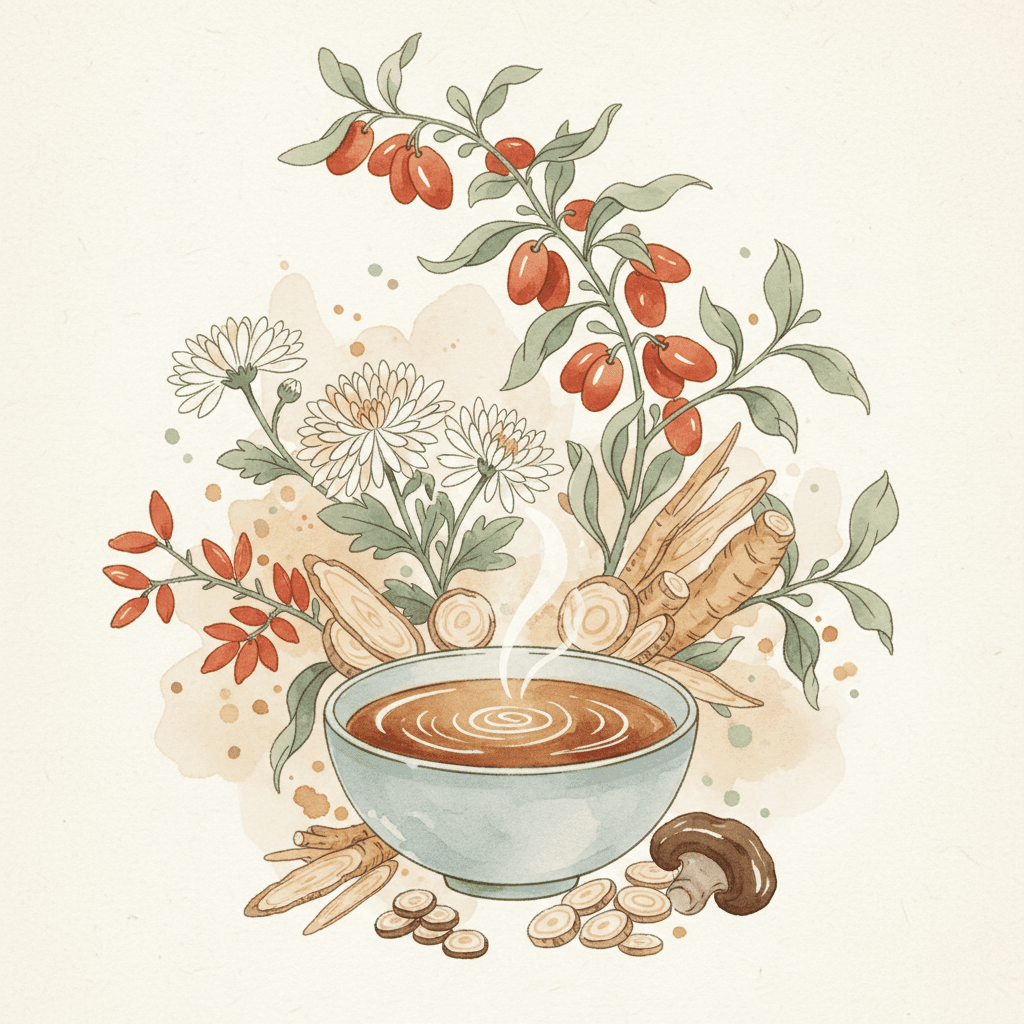
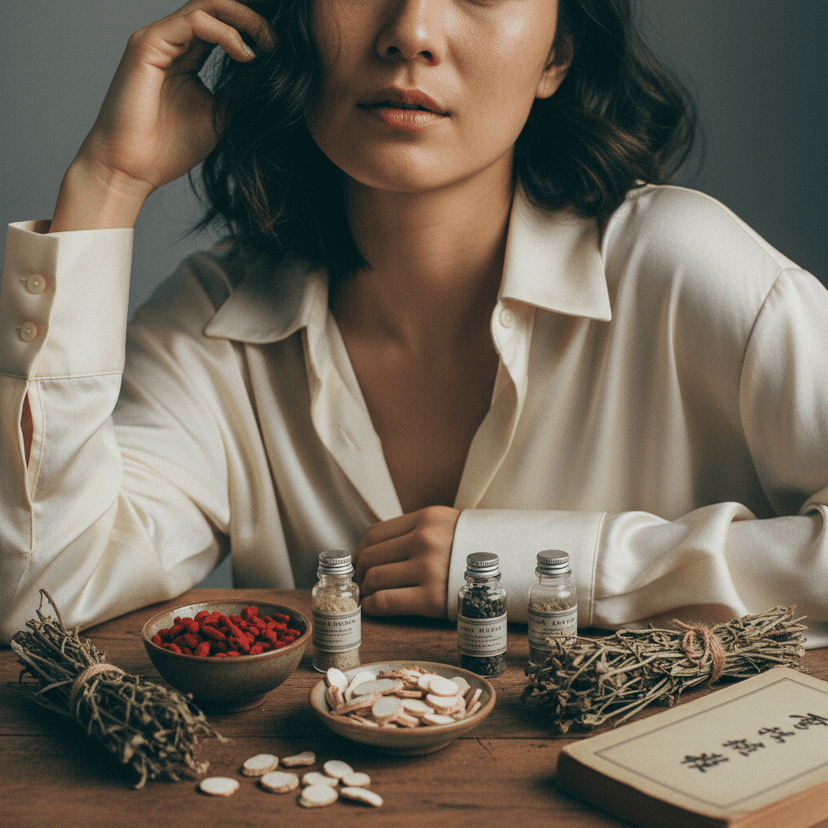
Let's talk about Dang Gui (Angelica sinensis), also known as Female Ginseng. This is a foundational herb in Traditional Chinese Medicine used primarily for blood tonification, circulation, and gynecological health. Its key active compounds include ligustilide and ferulic acid, both recognized for their antioxidant and anti-inflammatory properties, which directly contribute to healthier skin.
The ancient text 《本草纲目》 (Compendium of Materia Medica) specifically notes Dang Gui's ability to '润肠胃筋骨皮肤' – moisten the intestines, stomach, sinews, bones, and skin – underscoring its broad systemic nourishing effects.
So, how do we tap into this ancient wisdom and apply it to our modern lives? How can we move beyond superficial fixes and fully unlock that internal glow? Here are some of the most powerful TCM strategies I've seen deliver significant, lasting results.
1. It's All About Qi and Blood: Your Skin's Lifelines
In TCM, your skin's vitality connects directly to the balance of Qi (vital energy) and Blood (Xue). Picture Qi as the energetic current that fuels every cellular function.
Blood, on the other hand, is the nourishing river, carrying oxygen and nutrients to every cell – including those in your skin. If either Qi or Blood becomes deficient or stagnant, your skin will show it. Dullness, dryness, loss of elasticity, and a lackluster complexion are often direct signs of this internal imbalance.
From a Western perspective, Qi can be understood as mitochondrial function, cellular metabolism, and nervous system regulation, while Blood encompasses not just red blood cells, but also plasma, lymph, and the entire circulatory system responsible for nutrient delivery and waste removal. When your microcirculation is poor, your skin simply isn't getting what it needs to thrive. It’s that straightforward.
I had a patient, Sarah, a 38-year-old marketing executive from San Francisco. She came to me with chronic fatigue and persistent dark circles, despite using every eye cream on the market. Her skin was perpetually dull, with no bounce. In TCM terms, she had significant Qi and Blood Deficiency due to long hours and poor diet. We started on an herbal formula including Huang Qi (Astragalus membranaceus) and Dang Gui.
Huang Qi, as described in 《中药学》 textbooks, is a potent Qi tonic, while Dang Gui nourishes Blood. Within three months, her energy improved, and her skin began to glow. The dark circles faded because her internal circulation and nourishment had finally caught up.
Evidence supports this: Zhang Ying and Wu Jingping (2024) found that 调和气血 (harmonizing Qi and Blood) can improve skin aging indicators, with clinical data showing specific Qi- and Blood-tonifying formulas significantly enhancing skin elasticity and luster.
Clinical Takeaway: If your skin lacks vitality, your internal Qi and Blood might be calling for attention. Prioritize nourishing foods and stress reduction to support these fundamental energies.
2. Beyond the Topical: Addressing 'Heat' and 'Dampness' for Clear Skin
When Western medicine looks at acne, it often focuses on bacteria, hormones, and sebum production. All valid, of course. But TCM asks: Why is there excess sebum? Why are these bacteria thriving? And what's driving the inflammation? Often, the answer lies in internal Damp-Heat.
Dampness in TCM can be compared to systemic inflammation and fluid retention, while Heat is akin to infection or hyper-metabolic states that produce redness and irritation. Together, Damp-Heat creates the perfect internal environment for cystic acne, rosacea flare-ups, and even some forms of eczema. It's like a swampy, overheated garden where weeds—or breakouts—flourish.
I remember a young patient, Michael, 22, who suffered from severe cystic acne across his jawline and back. He’d tried every antibiotic and topical cream, but nothing stuck. His diet was full of spicy foods, dairy, and cold beverages—classic Damp-Heat generators in TCM. We focused on clearing the internal heat and drying the dampness using herbs like Huang Lian (Coptis chinensis) and Pu Gong Ying (Dandelion). Simultaneously, we adjusted his diet to emphasize cooling, drying foods and eliminate triggers.
His skin began to clear significantly within two months. It wasn't about killing bacteria; it was about changing the internal terrain so bacteria couldn't thrive.
This approach highlights a key difference in perspective:
TCM vs. Western Acne Approaches
• Western Approach: Targets bacteria (antibiotics), reduces oil (retinoids), manages hormones (birth control). Focus on symptomatic relief and external control.
• TCM Approach: Identifies internal imbalances like 'Damp-Heat' or 'Liver Qi Stagnation.' Uses herbs to clear heat, resolve dampness, regulate hormones, and improve circulation. Focus on root cause resolution and internal harmony.
Clinical Takeaway: For persistent acne, look beyond topical solutions. Consider a dietary and herbal approach to clear internal Damp-Heat, especially if your skin is oily, red, and prone to cystic breakouts.
3. The Gut-Skin Axis: What Your Digestion Says About Your Complexion
It’s not revolutionary to suggest that gut health impacts skin health in Western functional medicine circles. Researchers like Dr. Brent Bauer at Mayo Clinic have emphasized the gut microbiome's role in systemic health. TCM, however, has understood this connection for millennia. The Spleen and Stomach systems, responsible for digestion and nutrient assimilation, are considered foundational to producing Qi and Blood.
If your digestion is weak, your body can't create enough of these vital substances to nourish your skin, or it produces unwanted 'dampness' or 'toxins' that manifest externally.
Consider the common issue of chronic inflammatory skin conditions like eczema and psoriasis. Western medicine often manages symptoms with corticosteroids or immunosuppressants. These are effective, no doubt, but they don't always get to the underlying imbalance. In TCM, these conditions are frequently linked to imbalances in the Spleen, Liver, and Lung systems. A compromised gut barrier, for instance, can lead to systemic inflammation—what TCM might call internal 'heat' or 'toxins'—that then erupts on the skin.
A 2022 study in J Dermatolog Treat. indicated that TCM might be beneficial for decreasing PASI (Psoriasis Area and Severity Index) scores in psoriasis vulgaris, positioning it as an effective alternative therapy. This approach isn't focused on surface solutions. It's about healing the gut, strengthening digestion, and reducing the internal inflammatory load that drives conditions like psoriasis.
Clinical Takeaway: Pay attention to your digestion. Bloating, indigestion, or irregular bowel movements are not just nuisances; they are signals from your body that your skin might also be suffering. Support your Spleen and Stomach with warm, cooked foods and probiotics.
4. The Anti-Aging Secret: Cultivating Collagen from Within, Not Just Topically
We spend billions on anti-aging creams, serums, and procedures. These often focus on stimulating collagen production or reducing oxidative stress from the outside. While beneficial, they miss a crucial point: your body's innate ability to produce and maintain collagen is directly tied to its internal vitality. In TCM, this goes back to the Kidney essence (Jing) and the strength of your Qi and Blood.
A fascinating study by Feng Chunbo (2024) revealed that a specific five-flavor herbal formula demonstrated significantly stronger anti-skin aging effects. Specifically, this compound increased collagen generation by 38% and reduced SA-β-gal activity by 27%—SA-β-gal being a recognized biomarker for cellular senescence, or aging. These aren't minor improvements. These are substantial, measurable changes driven by powerful internal mechanisms.
This points to a non-obvious insight: real anti-aging isn't solely about protecting existing collagen; it's about enhancing your body's intrinsic capacity to regenerate and repair. Herbs like Gynostemma pentaphyllum (Jiao Gu Lan) and Rehmannia glutinosa (Di Huang) are often used in TCM to nourish Kidney essence and Blood, supporting cellular repair and longevity, which translates directly to more youthful, resilient skin.
Clinical Takeaway: Internal nourishment holds tremendous potential for anti-aging. Seek out herbs and foods that support your Kidney essence and boost Qi and Blood, laying the groundwork for sustained cellular regeneration and collagen health.
5. Facial Acupuncture and Gua Sha: More Than Just a Pretty Face
While internal medicine is paramount, external TCM therapies offer powerful synergistic effects. Facial acupuncture, for instance, involves placing tiny needles into specific points on the face. Yes, it stimulates local blood flow, enhancing microcirculation and oxygen delivery. But it also influences the underlying meridians, reaching deeper.
From a Western viewpoint, Dr. Helene Langevin at NIH NCCIH has conducted extensive research on the physiological effects of acupuncture, highlighting its impact on connective tissue and fascial planes. These tissues are rich in mechanoreceptors and nerve endings, meaning acupuncture can influence cellular repair, reduce inflammation, and even modulate pain pathways, which can indirectly improve skin conditions like redness and sensitivity. This stimulation also encourages natural collagen production and muscle toning, offering a natural lift.
Then there’s Gua Sha, a technique that involves gently scraping the skin with a smooth tool, typically jade or rose quartz. Many people wonder, does Gua Sha really work for facial rejuvenation? Yes, it does. It improves lymphatic drainage, reduces puffiness, and breaks up fascial adhesions, allowing Qi and Blood to flow more freely. The cost of a quality Gua Sha tool is often less than $20, making it a very accessible daily practice.
Clinical Takeaway: External TCM therapies offer more than cosmetic benefits. They actively stimulate the body's intrinsic healing and regenerative capacities. Incorporate facial Gua Sha into your routine for improved circulation and lymphatic flow, and consider facial acupuncture for deeper tissue rejuvenation and balancing.
6. Dietary Wisdom: Eating for Your Skin Type and Season
One of the most actionable aspects of TCM is its precise dietary guidance, tailored to individual body constitutions and seasonal changes. This isn't about counting calories. It's about understanding the energetic properties of food. Are you consuming too many 'heaty' foods like spicy dishes, coffee, or alcohol, leading to inflammation and breakouts? Or too many 'cooling' foods like raw salads and iced beverages that can weaken digestion and lead to dampness and dullness?
I often see patients, particularly those with hormonal acne, whose condition significantly improves just by cutting back on iced drinks and excess sugar. This change helps to reduce internal 'damp-heat' and support the Spleen, which is key in processing fluids and preventing stagnation. It’s a simple shift that can yield profound results.
For instance, someone with Blood Deficiency (pale skin, brittle nails, dizziness) would benefit from nourishing foods like bone broth, dark leafy greens, and lean red meat. Conversely, someone with Damp-Heat (oily skin, acne, redness) would need to emphasize cooling and drying foods like cucumber, celery, and mung beans. There’s no one-size-fits-all diet for radiant skin.
Clinical Takeaway: Understand your body's constitution and adjust your diet accordingly. Favor warm, cooked meals, reduce inflammatory foods, and hydrate with room-temperature water. Your plate is a powerful tool for skin health.
7. The Liver's Role in Melasma and Hormonal Balance: A Deeper Connection
When melasma or persistent hormonal acne appears, Western medicine often points to estrogen dominance or sun exposure. While these are critical factors, TCM unveils a deeper, systemic player: the Liver. In TCM, the Liver is responsible for the smooth flow of Qi and Blood throughout the body. It's central to detoxification and regulating emotions.
When the Liver Qi stagnates—often due to stress, anger, or an unhealthy lifestyle—it can lead to heat accumulation and impaired blood circulation, manifesting as hyperpigmentation, particularly melasma.
Consider the powerful traditional formula Tao Hong Si Wu Tang. Xie Yusha et al. (2024) explored its use in treating melasma, identifying 53 therapeutic targets, including core targets like ALB (Albumin) and VEGFA (Vascular Endothelial Growth Factor A). This multi-target mechanism highlights TCM's approach: it doesn't address just one pathway. Instead, it orchestrates a symphony of biological responses, impacting inflammation, blood flow, and cellular communication to resolve complex conditions like melasma.
This redefines how we think about hormonal skin issues. Maybe the real question isn't how much estrogen is present, but rather how effectively your body processes and metabolizes it? What happens if your emotional stress is making your Liver sluggish? Are you nourishing your blood sufficiently to keep your complexion clear? These are the deeper inquiries that TCM prompts us to consider for lasting radiant skin.
The beauty of TCM for skin health is its unwavering commitment to the whole person. It reminds us that our skin is a mirror, reflecting the intricate dance of our internal landscape, our emotions, our diet, and our environment. Achieving lasting radiance isn't a quick fix you buy off a shelf; it's a profound, insightful process of understanding and harmonizing your body from the inside out.
It demands patience, consistency, and a willingness to listen to what your body is genuinely telling you—but the results, a lasting, vibrant glow, are well worth it.
And that, in my clinical experience, is deeply impactful.
References
- J Dermatolog Treat. 2022 — TCM for psoriasis vulgaris
- Front Immunol. 2025 — TCM compounds for autoimmune skin diseases
- Chin. Med. 2021 — TCM for skin barrier repair
- 张莹, 伍景平 2024 — 调和气血改善皮肤衰老
- 冯春波 2024 — 五味中草药组方抗皮肤衰老
- 《神农本草经》
- 《本草纲目》
- 《中药学》教材
- Langevin, H. M. — Connective tissue and acupuncture