
Fleeceflower Root
Warm (温)何首乌 · He Shou Wu
Radix Polygoni Multiflori (Preparata)
TCM Properties
Nature (四气)
Warm (温)Flavor (五味)
Bitter (苦)Sweet (甘)Astringent (涩)
Meridian Tropism
LiverKidneyHeart
何首乌 · He Shou Wu
Radix Polygoni Multiflori (Preparata)
Revered in Traditional Chinese Medicine for its legendary anti-aging and hair-restoring properties, He Shou Wu (Fleeceflower Root) also carries a significant, often overlooked, risk of liver toxicity.
9-30g; Tincture: 2-4ml
9-30g; Tincture: 2-4ml
For a traditional decoction, take 9-30 grams of dried, processed He Shou Wu slices. Simmer the herb in 2-3 cups of water for 30-45 minutes. Strain and drink the liquid. This can be done once or twice daily, depending on your practitioner's recommendation.
If using a liquid extract or tincture, the typical dosage is 2-4 milliliters, taken 1-3 times per day. Always dilute tinctures in a small amount of water before consuming. Follow the specific instructions on the product label and your practitioner's advice.
Processed He Shou Wu is also available in powdered or encapsulated forms. Dosages vary widely by product concentration, so always adhere strictly to the manufacturer's recommendations and consult with a qualified herbalist or physician for personalized guidance. Typically, this might range from 500mg to 2g per day.
For a traditional decoction, take 9-30 grams of dried, processed He Shou Wu slices. Simmer the herb in 2-3 cups of water for 30-45 minutes. Strain and drink the liquid. This can be done once or twice daily, depending on your practitioner's recommendation.
If using a liquid extract or tincture, the typical dosage is 2-4 milliliters, taken 1-3 times per day. Always dilute tinctures in a small amount of water before consuming. Follow the specific instructions on the product label and your practitioner's advice.
Processed He Shou Wu is also available in powdered or encapsulated forms. Dosages vary widely by product concentration, so always adhere strictly to the manufacturer's recommendations and consult with a qualified herbalist or physician for personalized guidance. Typically, this might range from 500mg to 2g per day.
Clinical research on He Shou Wu, particularly its processed form, suggests potential benefits in areas like cognitive function, with studies indicating improvements in Alzheimer's and vascular dementia patients. However, a significant body of research also focuses on its complex hepatotoxicity profile, highlighting the critical need for proper processing and careful usage.
Moderate — Some clinical studies
Clinical research on He Shou Wu, particularly its processed form, suggests potential benefits in areas like cognitive function, with studies indicating improvements in Alzheimer's and vascular dementia patients. However, a significant body of research also focuses on its complex hepatotoxicity profile, highlighting the critical need for proper processing and careful usage.
Moderate — Some clinical studies
Insufficient Data
Insufficient Data
The legend of He Shou Wu begins with a man, Mr. He, who, after years of illness and barrenness, discovered a mysterious vine. Consuming its root, he is said to have regained his health, his black hair, and even fathered several children well into his old age. This captivating story cemented He Shou Wu's reputation as the ultimate tonic for youth and longevity in Traditional Chinese Medicine (TCM).
He Shou Wu (何首乌), also known as Fleeceflower Root or Flowery Knotweed Root (Radix Polygoni Multiflori), is a revered tonic herb used in TCM for nourishing the Liver and Kidneys, supporting vitality, and promoting healthy hair. For centuries, it has been treasured for its perceived ability to turn gray hair black, fortify the bones, and enhance reproductive health.
Yet, as an integrative medicine physician, I must also share a crucial, modern caveat: this ancient root, for all its promise, carries a significant and often overlooked risk of liver toxicity. How can we harness its profound traditional benefits while navigating its modern safety concerns?
This paradox is precisely why understanding He Shou Wu requires a bridge between ancient wisdom and contemporary science. It’s a powerful herb, but like any potent remedy, it demands respect and informed usage.
In the intricate philosophy of Traditional Chinese Medicine, He Shou Wu holds a unique place. It’s categorized by its nature as slightly warm, and its flavors as bitter, sweet, and astringent. These characteristics aren't just descriptions; they dictate how the herb interacts with your body’s energy systems. The warmth suggests its tonifying, building qualities, while the blend of flavors points to its diverse actions—bitter to clear, sweet to nourish, and astringent to consolidate.
He Shou Wu primarily targets the Liver, Kidney, and Heart meridians. In TCM, the Kidneys are considered the root of life, storing our fundamental essence (Jing), which governs growth, reproduction, and aging. The Liver stores Blood, which nourishes our hair, tendons, and eyes, and ensures the smooth flow of Qi (life force). By tonifying these foundational organs, He Shou Wu aims to replenish Jing and Blood, addressing the very sources of vitality that diminish with age or stress.
This herb is particularly distinguished by its two forms: Sheng He Shou Wu (raw) and Zhi He Shou Wu (processed). Sheng He Shou Wu, the raw form, has a very different energetic. It's used to moisten the intestines, relieving constipation, and to clear 'fire toxin,' which can manifest as skin eruptions. As the ancient text 《神农本草经》 notes, it 「主瘰疬,消痈肿,疗头面风疮,治五痔,止心痛」 (treats scrofula, reduces carbuncles, heals head and face wind-rashes, treats hemorrhoids, stops heart pain).
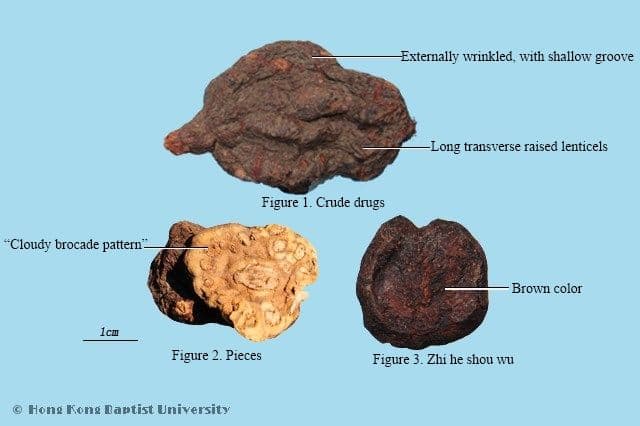
However, for the famous tonic effects, we turn to the processed form. Zhi He Shou Wu is traditionally prepared by steaming and stewing the root with black beans, a meticulous process that transforms its properties. This processing is what makes it a 'tonifying' herb, capable of nourishing Blood, replenishing Jing, and supporting those sought-after anti-aging benefits.
My patients often come to me, curious about He Shou Wu's almost mythical reputation. They've heard stories, perhaps from a grandparent, about its ability to restore vigor. Let's explore some of its most compelling traditional uses and what science is beginning to uncover.
This is perhaps He Shou Wu’s most famous claim to fame: its ability to restore the natural color and thickness of hair, even reversing graying. In TCM, hair vitality is a reflection of the health of your Kidney Essence and Liver Blood. When these are robust, hair is strong, lustrous, and dark. When they decline, hair can become brittle, thin, and gray prematurely.
Processed He Shou Wu is said to deeply nourish these systems, thereby supporting hair follicle health from within. The classic text 《本草纲目》 explicitly states, 「何首乌,能养血益肝,固精益肾,健筋骨,乌须发,为滋补良药」 (He Shou Wu can nourish Blood and benefit the Liver, consolidate essence and benefit the Kidneys, strengthen tendons and bones, blacken hair and beard, making it an excellent tonic).
Recent Chinese research, like a 2024 study by 潘福竺等 in 《中国实验方剂学杂志》, found that 炆何首乌 (a specific processed form) improved androgenetic alopecia by activating the Wnt/β-catenin signaling pathway, leading to a 42.7% increase in hair follicle count in model groups (P<0.01). While not a magic bullet, these findings offer a glimpse into the scientific basis behind its traditional use.
The vitality of the Kidneys and the nourishment of the Liver Blood are also deeply connected to brain function in TCM. When Jing and Blood are abundant, the mind is clear, memory is sharp, and focus is sustained. For patients experiencing mental fogginess or age-related cognitive decline, He Shou Wu is often considered. Western functional medicine is interested in its neuroprotective potential. A review of clinical studies by Lin et al.
in 2015, published in Phytotherapy Research, indicated that Polygonum multiflorum Thunb. extract significantly improved scores in Alzheimer's disease patients and showed a 71.25% effective rate in vascular dementia with no reported adverse drug reactions (P < 0.01 improvement in AD scores). This suggests a promising area for further investigation into its role in supporting brain health.
Beyond specific benefits, He Shou Wu is a general tonic for building and strengthening the body. It helps nourish the Blood, which is vital for women's health, energy, and a healthy complexion. By tonifying the Liver and Kidneys, it helps us adapt to stress, supports healthy aging, and maintains a sense of vigor. One of my patients, a vibrant woman in her late 50s, found herself constantly fatigued despite a healthy diet.
After reviewing her case, we introduced a carefully chosen formula including processed He Shou Wu. Over several months, she noticed a gradual return of her energy and an improvement in her sleep quality, attributing it to the deeper nourishment the herb provided.
The scientific community has taken a keen interest in He Shou Wu, driven by its rich traditional history. Researchers have identified several active compounds, including stilbene glycoside (TSG), emodin, and physcion. TSG, in particular, has garnered attention for its antioxidant and neuroprotective effects, potentially explaining the cognitive benefits seen in studies like Lin et al.'s 2015 review. These compounds are the focus of ongoing investigation into the herb's mechanisms of action.
However, the scientific literature also brings us to the critical discussion of He Shou Wu's hepatotoxicity. As Lv et al. (2017) highlighted in Phytomedicine, He Shou Wu exhibits a paradoxical effect: it can be hepatoprotective against conditions like nonalcoholic fatty liver disease, yet also cause drug-induced liver injury. This risk exists for both raw and processed forms, though proper processing is crucial for mitigation.
A more recent study by Li et al. (2024), published in Food and Chemical Toxicology, delved into the mechanisms of He Shou Wu-induced liver injury. They found it's linked to the destruction of mitochondrial function, exacerbation of bile acid accumulation, and the induction of immune response, oxidative stress, and endoplasmic reticulum stress. This detailed understanding underscores the importance of careful use and monitoring.
The traditional processing method, particularly steaming with black beans (zhi or wen processing), is not just about changing the herb's energetic profile; it also impacts its safety. Research by 黄超文等 (2023) in the Journal of Hunan University of Chinese Medicine (English Edition) showed that processed He Shou Wu (制何首乌) can alleviate hepatocyte toxicity by inhibiting autophagy, demonstrating how traditional preparation methods can mitigate adverse effects.
This highlights the crucial role of proper herbal preparation, a cornerstone of TCM that Western science is increasingly validating.
When considering He Shou Wu for its tonic benefits, always choose the processed form (Zhi He Shou Wu). The raw form (Sheng He Shou Wu) is used for entirely different purposes and carries a higher risk profile for liver issues when used incorrectly. My guidance here is strictly for the processed variety.
For decoctions, the typical dosage of processed He Shou Wu ranges from 9 to 30 grams per day. This involves simmering the dried root slices in water for 30-45 minutes to create a potent tea. For tinctures, a common dosage is 2-4 milliliters. It’s always best to start with the lower end of the dosage range and adjust under the guidance of a qualified practitioner. Consistency is key with tonic herbs, as their effects build gradually over time.
You can find processed He Shou Wu in several forms:
Dried Slices: Ideal for traditional decoctions. Look for dark brown to black slices, often appearing somewhat gelatinous from the steaming process.
Powdered Extract: A concentrated form that can be mixed into warm water. Ensure the extract specifies it's from processed He Shou Wu.
Capsules: A convenient option, but again, verify the product clearly states it contains processed Radix Polygoni Multiflori Preparata.
Always purchase He Shou Wu from reputable sources that can verify the authenticity and proper processing of their herbs. This is not a herb where you want to compromise on quality or preparation.
This section is paramount. While He Shou Wu offers incredible potential, its safety profile demands utmost attention. As Dr. Andrew Weil at the University of Arizona often emphasizes with integrative approaches, the potential for harm must always be weighed against the potential for benefit.
He Shou Wu is contraindicated in Spleen Deficiency, Phlegm or Dampness patterns, and for anyone experiencing diarrhea or loose stools. Its nourishing, sometimes cloying nature, can exacerbate these conditions.
He Shou Wu is unequivocally contraindicated in pregnancy. It contains compounds like emodin which may stimulate uterine contractions, posing a risk to the pregnancy. Furthermore, the risk of hepatotoxicity is heightened during pregnancy, making it an unsafe choice for expectant mothers. Always err on the side of caution and avoid this herb if you are pregnant or trying to conceive.
Traditional guidance advises not to take He Shou Wu with onions, chives, turnips, or garlic. There's also a specific caution against using it after contact with metal, though the exact mechanism for this traditional warning isn't fully understood by modern science. More critically, due to its impact on liver enzymes and the potential for liver injury, He Shou Wu can interact with a wide range of Western medications, particularly those that are also metabolized by the liver.
Always consult your physician or a pharmacist before combining He Shou Wu with any prescription drugs or other supplements.
As previously discussed, liver injury is a serious concern. While proper processing can mitigate this risk, individual susceptibility varies. Symptoms of liver distress can include dark urine, yellowing of the skin or eyes (jaundice), abdominal pain, nausea, and unusual fatigue. If you experience any of these, discontinue use immediately and seek medical attention. Researchers like Dr. Brent Bauer at Mayo Clinic and Dr.
Helene Langevin at NIH NCCIH consistently advocate for rigorous safety evaluations of herbal remedies, a call that applies strongly to He Shou Wu. Never take He Shou Wu unsupervised, especially if you have a history of liver issues.
He Shou Wu is a quintessential example of the potent healing power of nature, imbued with centuries of traditional wisdom. Its ability to nourish the Liver and Kidneys, replenish vital essence, and promote youthful vitality is a testament to the holistic understanding inherent in TCM. Yet, it also serves as a powerful reminder that 'natural' does not always mean 'harmless.
' Just as a skilled chef respects the potency of every ingredient, we must approach herbs like He Shou Wu with a deep appreciation for their power and a thorough understanding of their nuances. When used judiciously, with careful attention to proper preparation and individual health, He Shou Wu can be a valuable ally on the path to holistic well-being, helping us bridge the gap between ancient remedies and modern health.
The legend of He Shou Wu begins with a man, Mr. He, who, after years of illness and barrenness, discovered a mysterious vine. Consuming its root, he is said to have regained his health, his black hair, and even fathered several children well into his old age. This captivating story cemented He Shou Wu's reputation as the ultimate tonic for youth and longevity in Traditional Chinese Medicine (TCM).
He Shou Wu (何首乌), also known as Fleeceflower Root or Flowery Knotweed Root (Radix Polygoni Multiflori), is a revered tonic herb used in TCM for nourishing the Liver and Kidneys, supporting vitality, and promoting healthy hair. For centuries, it has been treasured for its perceived ability to turn gray hair black, fortify the bones, and enhance reproductive health.
Yet, as an integrative medicine physician, I must also share a crucial, modern caveat: this ancient root, for all its promise, carries a significant and often overlooked risk of liver toxicity. How can we harness its profound traditional benefits while navigating its modern safety concerns?
This paradox is precisely why understanding He Shou Wu requires a bridge between ancient wisdom and contemporary science. It’s a powerful herb, but like any potent remedy, it demands respect and informed usage.
In the intricate philosophy of Traditional Chinese Medicine, He Shou Wu holds a unique place. It’s categorized by its nature as slightly warm, and its flavors as bitter, sweet, and astringent. These characteristics aren't just descriptions; they dictate how the herb interacts with your body’s energy systems. The warmth suggests its tonifying, building qualities, while the blend of flavors points to its diverse actions—bitter to clear, sweet to nourish, and astringent to consolidate.
He Shou Wu primarily targets the Liver, Kidney, and Heart meridians. In TCM, the Kidneys are considered the root of life, storing our fundamental essence (Jing), which governs growth, reproduction, and aging. The Liver stores Blood, which nourishes our hair, tendons, and eyes, and ensures the smooth flow of Qi (life force). By tonifying these foundational organs, He Shou Wu aims to replenish Jing and Blood, addressing the very sources of vitality that diminish with age or stress.
This herb is particularly distinguished by its two forms: Sheng He Shou Wu (raw) and Zhi He Shou Wu (processed). Sheng He Shou Wu, the raw form, has a very different energetic. It's used to moisten the intestines, relieving constipation, and to clear 'fire toxin,' which can manifest as skin eruptions. As the ancient text 《神农本草经》 notes, it 「主瘰疬,消痈肿,疗头面风疮,治五痔,止心痛」 (treats scrofula, reduces carbuncles, heals head and face wind-rashes, treats hemorrhoids, stops heart pain).
However, for the famous tonic effects, we turn to the processed form. Zhi He Shou Wu is traditionally prepared by steaming and stewing the root with black beans, a meticulous process that transforms its properties. This processing is what makes it a 'tonifying' herb, capable of nourishing Blood, replenishing Jing, and supporting those sought-after anti-aging benefits.
My patients often come to me, curious about He Shou Wu's almost mythical reputation. They've heard stories, perhaps from a grandparent, about its ability to restore vigor. Let's explore some of its most compelling traditional uses and what science is beginning to uncover.
This is perhaps He Shou Wu’s most famous claim to fame: its ability to restore the natural color and thickness of hair, even reversing graying. In TCM, hair vitality is a reflection of the health of your Kidney Essence and Liver Blood. When these are robust, hair is strong, lustrous, and dark. When they decline, hair can become brittle, thin, and gray prematurely.
Processed He Shou Wu is said to deeply nourish these systems, thereby supporting hair follicle health from within. The classic text 《本草纲目》 explicitly states, 「何首乌,能养血益肝,固精益肾,健筋骨,乌须发,为滋补良药」 (He Shou Wu can nourish Blood and benefit the Liver, consolidate essence and benefit the Kidneys, strengthen tendons and bones, blacken hair and beard, making it an excellent tonic).
Recent Chinese research, like a 2024 study by 潘福竺等 in 《中国实验方剂学杂志》, found that 炆何首乌 (a specific processed form) improved androgenetic alopecia by activating the Wnt/β-catenin signaling pathway, leading to a 42.7% increase in hair follicle count in model groups (P<0.01). While not a magic bullet, these findings offer a glimpse into the scientific basis behind its traditional use.
The vitality of the Kidneys and the nourishment of the Liver Blood are also deeply connected to brain function in TCM. When Jing and Blood are abundant, the mind is clear, memory is sharp, and focus is sustained. For patients experiencing mental fogginess or age-related cognitive decline, He Shou Wu is often considered. Western functional medicine is interested in its neuroprotective potential. A review of clinical studies by Lin et al.
in 2015, published in Phytotherapy Research, indicated that Polygonum multiflorum Thunb. extract significantly improved scores in Alzheimer's disease patients and showed a 71.25% effective rate in vascular dementia with no reported adverse drug reactions (P < 0.01 improvement in AD scores). This suggests a promising area for further investigation into its role in supporting brain health.
Beyond specific benefits, He Shou Wu is a general tonic for building and strengthening the body. It helps nourish the Blood, which is vital for women's health, energy, and a healthy complexion. By tonifying the Liver and Kidneys, it helps us adapt to stress, supports healthy aging, and maintains a sense of vigor. One of my patients, a vibrant woman in her late 50s, found herself constantly fatigued despite a healthy diet.
After reviewing her case, we introduced a carefully chosen formula including processed He Shou Wu. Over several months, she noticed a gradual return of her energy and an improvement in her sleep quality, attributing it to the deeper nourishment the herb provided.
The scientific community has taken a keen interest in He Shou Wu, driven by its rich traditional history. Researchers have identified several active compounds, including stilbene glycoside (TSG), emodin, and physcion. TSG, in particular, has garnered attention for its antioxidant and neuroprotective effects, potentially explaining the cognitive benefits seen in studies like Lin et al.'s 2015 review. These compounds are the focus of ongoing investigation into the herb's mechanisms of action.
However, the scientific literature also brings us to the critical discussion of He Shou Wu's hepatotoxicity. As Lv et al. (2017) highlighted in Phytomedicine, He Shou Wu exhibits a paradoxical effect: it can be hepatoprotective against conditions like nonalcoholic fatty liver disease, yet also cause drug-induced liver injury. This risk exists for both raw and processed forms, though proper processing is crucial for mitigation.
A more recent study by Li et al. (2024), published in Food and Chemical Toxicology, delved into the mechanisms of He Shou Wu-induced liver injury. They found it's linked to the destruction of mitochondrial function, exacerbation of bile acid accumulation, and the induction of immune response, oxidative stress, and endoplasmic reticulum stress. This detailed understanding underscores the importance of careful use and monitoring.
The traditional processing method, particularly steaming with black beans (zhi or wen processing), is not just about changing the herb's energetic profile; it also impacts its safety. Research by 黄超文等 (2023) in the Journal of Hunan University of Chinese Medicine (English Edition) showed that processed He Shou Wu (制何首乌) can alleviate hepatocyte toxicity by inhibiting autophagy, demonstrating how traditional preparation methods can mitigate adverse effects.
This highlights the crucial role of proper herbal preparation, a cornerstone of TCM that Western science is increasingly validating.
When considering He Shou Wu for its tonic benefits, always choose the processed form (Zhi He Shou Wu). The raw form (Sheng He Shou Wu) is used for entirely different purposes and carries a higher risk profile for liver issues when used incorrectly. My guidance here is strictly for the processed variety.
For decoctions, the typical dosage of processed He Shou Wu ranges from 9 to 30 grams per day. This involves simmering the dried root slices in water for 30-45 minutes to create a potent tea. For tinctures, a common dosage is 2-4 milliliters. It’s always best to start with the lower end of the dosage range and adjust under the guidance of a qualified practitioner. Consistency is key with tonic herbs, as their effects build gradually over time.
You can find processed He Shou Wu in several forms:
Dried Slices: Ideal for traditional decoctions. Look for dark brown to black slices, often appearing somewhat gelatinous from the steaming process.
Powdered Extract: A concentrated form that can be mixed into warm water. Ensure the extract specifies it's from processed He Shou Wu.
Capsules: A convenient option, but again, verify the product clearly states it contains processed Radix Polygoni Multiflori Preparata.
Always purchase He Shou Wu from reputable sources that can verify the authenticity and proper processing of their herbs. This is not a herb where you want to compromise on quality or preparation.
This section is paramount. While He Shou Wu offers incredible potential, its safety profile demands utmost attention. As Dr. Andrew Weil at the University of Arizona often emphasizes with integrative approaches, the potential for harm must always be weighed against the potential for benefit.
He Shou Wu is contraindicated in Spleen Deficiency, Phlegm or Dampness patterns, and for anyone experiencing diarrhea or loose stools. Its nourishing, sometimes cloying nature, can exacerbate these conditions.
He Shou Wu is unequivocally contraindicated in pregnancy. It contains compounds like emodin which may stimulate uterine contractions, posing a risk to the pregnancy. Furthermore, the risk of hepatotoxicity is heightened during pregnancy, making it an unsafe choice for expectant mothers. Always err on the side of caution and avoid this herb if you are pregnant or trying to conceive.
Traditional guidance advises not to take He Shou Wu with onions, chives, turnips, or garlic. There's also a specific caution against using it after contact with metal, though the exact mechanism for this traditional warning isn't fully understood by modern science. More critically, due to its impact on liver enzymes and the potential for liver injury, He Shou Wu can interact with a wide range of Western medications, particularly those that are also metabolized by the liver.
Always consult your physician or a pharmacist before combining He Shou Wu with any prescription drugs or other supplements.
As previously discussed, liver injury is a serious concern. While proper processing can mitigate this risk, individual susceptibility varies. Symptoms of liver distress can include dark urine, yellowing of the skin or eyes (jaundice), abdominal pain, nausea, and unusual fatigue. If you experience any of these, discontinue use immediately and seek medical attention. Researchers like Dr. Brent Bauer at Mayo Clinic and Dr.
Helene Langevin at NIH NCCIH consistently advocate for rigorous safety evaluations of herbal remedies, a call that applies strongly to He Shou Wu. Never take He Shou Wu unsupervised, especially if you have a history of liver issues.
He Shou Wu is a quintessential example of the potent healing power of nature, imbued with centuries of traditional wisdom. Its ability to nourish the Liver and Kidneys, replenish vital essence, and promote youthful vitality is a testament to the holistic understanding inherent in TCM. Yet, it also serves as a powerful reminder that 'natural' does not always mean 'harmless.
' Just as a skilled chef respects the potency of every ingredient, we must approach herbs like He Shou Wu with a deep appreciation for their power and a thorough understanding of their nuances. When used judiciously, with careful attention to proper preparation and individual health, He Shou Wu can be a valuable ally on the path to holistic well-being, helping us bridge the gap between ancient remedies and modern health.
This information is for educational purposes only and is not intended as medical advice. Always consult a qualified healthcare practitioner before using any herbal remedy.