TCM for Period Pain: Addressing Root Causes, Not Just Symp | Demisunshine
What My Own Period Pain Taught Me About TCM's Root Causes
For years, I masked my period pain with quick fixes. But my own debilitating cramps forced me to look beyond symptoms and embrace TCM's root-cause approach, changing how I understood women's health.
Sarah LinMarch 17, 20267 min read
Quick Answer
Traditional Chinese Medicine (TCM) offers a holistic approach to period pain by identifying and addressing the specific energetic imbalances, or 'root causes,' unique to each individual. Through modalities like acupuncture, herbal medicine, and lifestyle adjustments, TCM aims for lasting relief and an improved understanding of the body's natural rhythms, often complementing Western medical diagnoses for comprehensive care.
Key Takeaways
Period pain, in TCM, is a signal of deeper energetic imbalances (Qi stagnation, Blood stasis, Cold-Damp), not merely a standalone symptom, requiring a personalized diagnostic approach.
Clinical research supports TCM modalities like acupuncture, acupressure, moxibustion, and specific herbal formulas (e.g., Wen Jing Tang) as effective for primary dysmenorrhea, often superior to NSAIDs for pain reduction and overall symptom improvement.
Integrating Western medical diagnoses (like endometriosis) with TCM allows for a comprehensive 'both/and' approach, reducing recurrence rates and minimizing side effects compared to single-modality treatments.
Sustainable relief from period pain with TCM requires commitment, lifestyle adjustments, and may involve a temporary worsening of symptoms as the body rebalances, emphasizing the importance of a qualified practitioner's guidance.
Feeling in control comes from understanding your unique body patterns, moving beyond temporary fixes to actively participate in addressing the root causes of menstrual discomfort.
I used to believe my period pain was just... my lot. A monthly sentence handed down by biology. And for years, even with my medical training—Western and then TCM—I treated it that way. Popped an NSAID, maybe brewed a generic “calming” tea, and gritted my teeth. My palms are actually sweating a little as I confess this, because here I am telling you I knew better.
I had this vast, profound toolkit of Traditional Chinese Medicine right at my fingertips, and yet, when my own abdomen cramped into a knot so tight I couldn't stand up straight, I defaulted to the quick fix.
It was embarrassing. A personal failure, really. How could I advocate for integrative health when I wasn't even integrating it for myself? The cognitive dissonance was a heavy, dull ache almost as bad as the cramps.
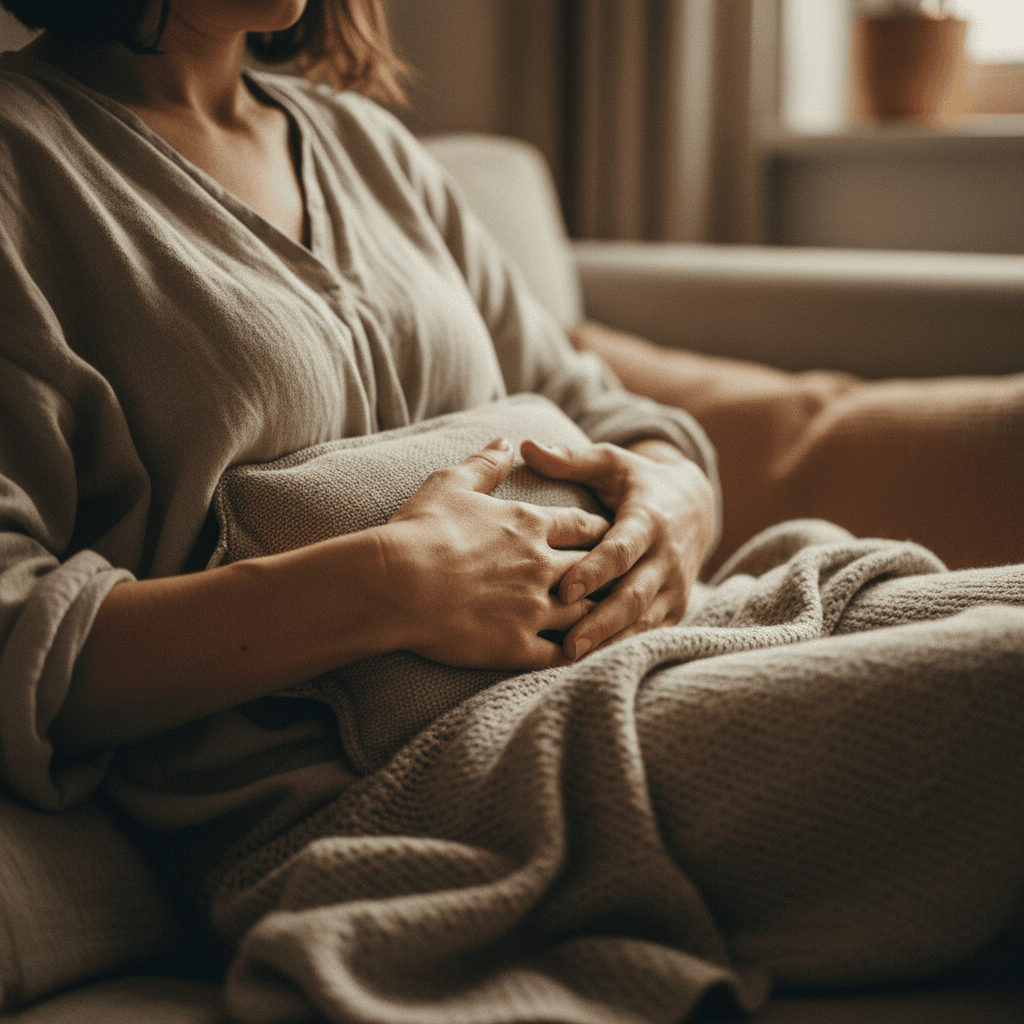
Then one cycle, the NSAIDs just... stopped working. The pain was relentless, a hot, throbbing wave that left me breathless and defeated. I remember lying on my bathroom floor, tears blurring my vision, thinking, “There has to be another way. A real way.” And that's when I snapped. So I went back to the data, to my textbooks, to the core of TCM theory—not just for my patients, but for myself.
What I found changed everything, not just my periods, but how I approach chronic conditions, period.
The Western Playbook: Masking the Symphony
Let’s be honest: when period pain hits, most of us reach for the ibuprofen. Or maybe the birth control pill. And look, there's nothing inherently wrong with that. These are legitimate tools in Western medicine, designed to offer quick, effective relief.
NSAIDs target inflammation and pain pathways directly.
Oral contraceptive pills (OCPs) regulate hormones, often reducing the severity of uterine contractions. These methods are good at what they do—managing symptoms.
The common idea we've all bought into, though, is that this is the only approach. That period pain is just a biological annoyance to be suppressed. We rarely ask why the pain is there in the first place. My biggest mistake was treating myself like a broken machine, rather than a complex system trying to tell me something.
This symptom-first mindset works, for a while. It offers immediate comfort. But it doesn't change the underlying narrative your body is trying to weave. For many, like me, the effectiveness wanes, or the side effects—hello, upset stomach from NSAIDs—become their own problem. It’s like turning down the volume on a smoke alarm instead of putting out the fire. Eventually, the fire gets bigger.
Unpacking TCM: A Symphony of Root Causes
In Traditional Chinese Medicine (TCM), what Western medicine often labels as primary dysmenorrhea—or period pain—is viewed through a profoundly different lens. It’s a symptom of deeper energetic imbalances, not a single condition. This holistic perspective aims to understand the pattern of disharmony in the body.
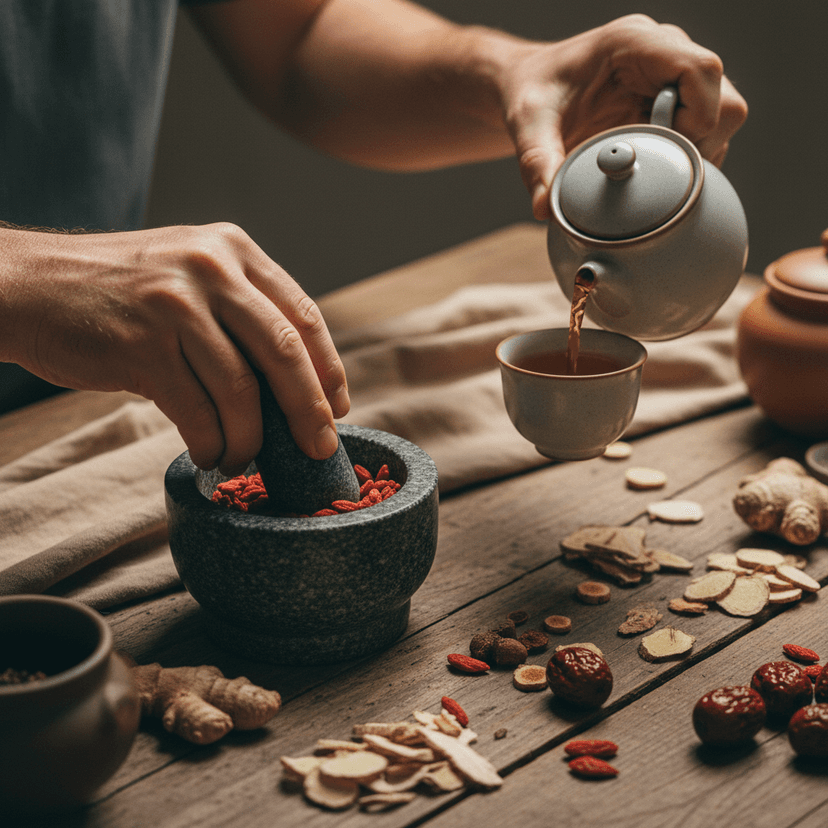
A classic example of addressing these patterns is the formula Wen Jing Tang, also known as Warm the Menses Decoction. This herbal formula, originating from the ancient text 《金匮要略》 (Jīn Guì Yào Lüè), is specifically used for conditions where there is cold in the lower abdomen, blood stasis, and deficiency, often manifesting as painful periods, irregular menstruation, and even infertility.
Its efficacy, as research shows, often comes from regulating substances like PGF2α and TXB2 to improve uterine blood flow, bringing ancient wisdom into modern scientific light.
Discovery 1: It’s Never “Just Pain”
My pain wasn't just pain. It was a specific kind of pain—stabbing, fixed, radiating to my lower back—and it came with cold hands and feet, bloating, and irritability. These aren't random symptoms; they're clues. In TCM, these point to patterns like Qi Stagnation and Blood Stasis, often exacerbated by Cold. My body was literally stuck, and cold, and asking for warmth and movement.
What we call Qi stagnation and Blood stasis may actually be the body's inflammatory response coupled with impaired microcirculation—the question isn't which came first, but how to resolve the cycle.
Discovery 2: The Modalities Aren’t Just Placebo
I used to quietly nod when patients expressed skepticism about acupuncture or herbs. I get it. It sounds... mystical. But the research is compelling. Chen et al. (2024), in a systematic review and network meta-analysis published in Frontiers in Medicine, found that modalities like acupressure, acupuncture, warm needling, and moxibustion were superior to NSAIDs and waitlist for primary dysmenorrhea pain. And not just a little bit superior—some interventions showed a higher probability of being better.
This isn't about some vague balancing of Qi; it's modulating neuroendocrine pathways, influencing local blood flow, and reducing inflammation.
Another systematic review by Lin et al. (2020) in Annals of Palliative Medicine even suggested that the efficacy of acupuncture was superior to traditional Chinese herbal medicine alone for primary dysmenorrhea, with an odds ratio of 4.86. That's a significant finding, indicating that while herbs are effective, the direct stimulation of acupuncture points can have a more immediate, potent impact for some.
Discovery 3: Personalization Changes Everything
My cramps weren’t like my friend’s. Hers were dull, heavy, and she felt tired all the time. Mine were sharp, severe, and came with anger. We needed different approaches. TCM excels here. It doesn't offer a one-size-fits-all pill. Instead, it offers a playbook tailored to your unique pattern.
That's where Wen Jing Tang came back into my life. For my specific pattern of cold, blood stasis, and deficiency, it was the perfect formulation. One of its key ingredients is Dang Gui (Angelica sinensis), an herb traditionally revered for its ability to invigorate and nourish Blood. 《本草纲目》 (Běn Cǎo Gāng Mù), a classic text, notes Dang Gui 「主治...妇人漏下绝子,诸恶疮疡,金疮」 (primarily treats...
female uterine bleeding and infertility, various sores and wounds, traumatic injuries), highlighting its role in blood health and circulation. This herb's modern pharmacological mechanisms, like regulating uterine blood flow, align perfectly with its historical use. It’s not just about a specific herb, but how it works in concert within a formula to rebalance your unique body.
Head-to-Head: My Own Experience on the Table
When I fully committed to TCM for my period pain, the shift wasn't overnight. It was a slow, sometimes frustrating, unraveling. But it was real. Here’s how the two approaches compare, from my personal, dual-licensed perspective:
The Western approach: Immediate pain suppression. I'd take an NSAID, and within an hour, the sharp edges of the pain would soften. It was a lifeline in crucial moments, allowing me to function. But it didn't change the underlying misery of the next month, or the month after that. It was like patching a leaky roof during a storm—necessary, but not a permanent fix.
The TCM approach: Identifying and resolving the why. My own pattern—cold, blood stasis, deficiency—meant specific herbs, targeted acupuncture points, and dietary changes (less cold food, more warming soups).
It took about three cycles before I noticed a significant reduction in pain intensity and associated symptoms. After six months, my periods were not only less painful but also more regular, and my energy levels improved throughout the month. The pain, when it came, was a dull ache, not a debilitating spasm. It felt like the entire house had been re-roofed.
This isn't about ditching Western medicine. In fact, for complex conditions like endometriosis, PCOS, or fibroids, a Western diagnosis is critical. TCM can then work with that diagnosis. Clinical trials, like one by Shi et al. (2025), showed that integrating TCM with Western medicine for primary dysmenorrhea can reduce recurrence rates to below 15% and decrease gastrointestinal side effects by 40%. That's a significant improvement—better results, fewer negative impacts. It's the ultimate both/and approach.
The real question isn't which medicine is 'better,' but how can we integrate the strengths of both systems to give women not just symptom relief, but genuine, lasting healing?
The Hard Truth About Real Healing
Here's the hard truth nobody likes to talk about: TCM isn't a magic bullet. It requires commitment. It asks you to show up for yourself, often daily, through herbal teas, dietary shifts, or regular acupuncture appointments. And sometimes—and this is a big sometimes that can be very disheartening—your symptoms might temporarily worsen before they get better. Especially if we're addressing deep-seated patterns like Yang deficiency, the body might have a 'healing crisis' as it rebalances.
It’s like stirring up sediment in murky water; it gets cloudier before it settles clear. This is why consistent communication with your practitioner is non-negotiable.
But real healing, genuine root-cause work, is rarely linear. It's a dance, a negotiation with your body, a path of discovery. Duan et al. (2025) highlighted in Frontiers in Endocrinology the significant analgesic effects of various TCM strategies with small adverse reactions, underscoring the safety and efficacy of these approaches when guided by a professional.
A New Rhythm: The Integrative Verdict
If your goal is quick, temporary symptom relief, Western painkillers and hormonal therapies are very effective. There’s no shame in using them. But if you’re tired of the monthly battle, if you crave a deeper understanding of your body, and if you’re ready to address the root cause of your period pain, then an integrative approach with Traditional Chinese Medicine is not just an option—it’s an impactful path to lasting change.
My personal reversal from relying solely on quick fixes to embracing TCM for my own debilitating period pain was messy, humbling, and ultimately, profoundly liberating. It taught me that my body wasn't failing me; it was speaking to me in a language I hadn't yet learned to understand. Now, the conversation is clearer, softer, and far less painful.
If you are experiencing painful periods, please—talk to a qualified healthcare practitioner. That means both your Western doctor for a proper diagnosis and a licensed TCM practitioner to explore a personalized root-cause treatment plan. You deserve to feel well, not just less bad. Consider scheduling an initial consultation within the next two weeks to begin your exploration. It's a step towards understanding your body's unique rhythm and reclaiming your menstrual health.
Contributing Writer at Demisunshine. Sarah brings a research-trained eye to TCM. She has spent years reading clinical literature on herbal formulas — patient enough to spot the difference between a strong finding and a fragile one — and her pieces explain that distinction the way you'd talk it through with a friend over tea.
Get TCM Wellness Tips
Weekly articles on herbal remedies, nutrition, and holistic health — delivered to your inbox.