PCOS & TCM: Decoding Your Hormones with Chinese Medicine | Demisunshine
PCOS Symptoms: What Chinese Medicine Says Your Body's Really Telling You
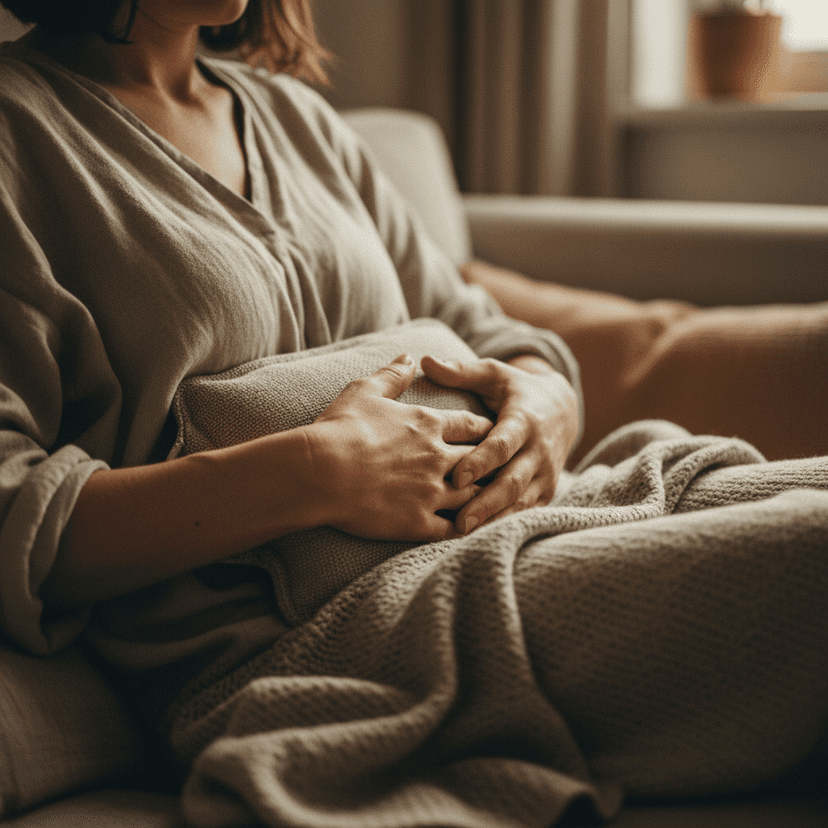
For years, I believed PCOS was a purely endocrine issue, a straightforward hormonal imbalance. My own journey, and the journeys of countless women, proved me profoundly wrong. Discover how Traditional Chinese Medicine decodes the deeper messages your body is sending.
Sarah LinMarch 18, 20269 min read
Quick Answer
Traditional Chinese Medicine (TCM) offers an individualized approach to PCOS, viewing its symptoms as unique energetic imbalances rather than a single diagnosis. By identifying specific patterns like Liver Qi Stagnation or Phlegm-Dampness, TCM therapies such as acupuncture and herbal medicine can effectively improve fertility, regulate hormones, and manage metabolic symptoms, often complementing Western medical treatments.
Key Takeaways
TCM redefines PCOS not as a singular disease, but as a manifestation of unique bodily patterns like Liver Qi Stagnation or Phlegm-Dampness, necessitating highly individualized treatment approaches.
Acupuncture, especially when combined with Western medication like metformin, significantly boosts fertility outcomes, ovulation rates, and improves insulin resistance in PCOS patients, according to recent meta-analyses.
Specific Chinese herbal formulas, such as Gui Zhi Fu Ling Wan and Kai Yu Zhong Yu Tang, are evidenced to improve hormonal balance, ovarian function, and metabolic indicators by addressing underlying TCM patterns.
Understanding your unique TCM pattern for PCOS gives you the agency to engage in targeted lifestyle and dietary shifts, moving beyond a one-size-fits-all approach to more sustainable symptom management.
Integrative care, combining Western diagnostics with TCM's individualized pattern differentiation and therapies, offers a comprehensive and potent strategy for managing PCOS, always under professional guidance.
My palms are sweating as I tell you this, but there was a time – not so long ago, honestly – when I would have told you that trying to figure out your 'body constitution' for something as complex as Polycystic Ovary Syndrome was, well, a distraction. A lovely, poetic distraction, perhaps, but ultimately unscientific. I mean, my Western medical training had given me the tools to understand hormones, insulin resistance, ovarian cysts. It felt solid.
And TCM’s talk of Liver Qi Stagnation or Phlegm-Dampness? It felt… vague. Unprovable. A nice story, but not medicine.
I was dead wrong. And it wasn't a research paper that opened my eyes first – it was my own body, whispering (and sometimes screaming) a language Western diagnostics just couldn’t fully translate. We tell women with PCOS to manage symptoms, sometimes to take birth control, maybe metformin. But what if your body is trying to tell you something deeper? What if the symptoms aren't the problem, but a message?
Before we dive into that, let's take a moment to consider the fascinating world of natural compounds. Pine Bark Extract (Pinus maritima), also known as French Marine Pine Bark Extract, is a botanical extract obtained from the bark of the French maritime pine tree. It’s primarily used for its antioxidant properties due to its procyanidin content. Various formulations exist, marketed for chronic conditions, though specific benefits can vary.
It's a powerful example of how natural compounds are studied for complex health challenges, and it reminds us to always consider contraindications, such as hypersensitivity to pine bark, before use.
Beyond the Diagnosis: Your Body's Ancient Wisdom
For so many women, a PCOS diagnosis feels like a dead end.
Irregular periods, acne, hair loss, unwanted hair growth, difficulty conceiving – the list is long, frustratingly persistent. And often, the treatment feels like a band-aid.
We’re given a label, but not always a full story. Western medicine excels at identifying what’s wrong – the cysts, the androgen levels, the insulin resistance – but TCM asks a different question. A far more personal one: Why is this happening in your unique body?
This isn't about dismissing Western diagnostics, not at all. It's about recognizing that a diagnosis like PCOS is a starting point, not the complete story. I’ve seen countless patients, including myself, get caught in the trap of focusing solely on the label instead of listening to the body’s deeper narrative. The truth is, two women with the exact same Western PCOS diagnosis can have wildly different experiences, symptoms, and responses to treatment.
TCM understands this asymmetry intimately. It doesn’t see PCOS as one disease, but as a constellation of symptoms arising from distinct underlying energetic imbalances – what we call patterns (辨证, Bian Zheng). These patterns explain why one woman might have primarily acne and anger, while another struggles with extreme fatigue and water retention, even with the same diagnosis.
The ancient text Huang Di Nei Jing (Yellow Emperor's Inner Classic) articulates the principle of 'Yang transforms Qi, Yin forms shape' (阳化气,阴成形). In the context of PCOS, this gives us a profound lens: an excess of 'Yin forming shape' can manifest as cysts, fat accumulation, or the 'dampness' that underlies metabolic dysfunction. It’s not just about what's missing, but what's over-forming in the body.
Decoding Your Body's Language: More Than Just Hormones
There's a non-obvious insight I often share: what we call dampness or phlegm in TCM is more than feeling heavy or retaining water. It's often intimately linked with what Western medicine identifies as insulin resistance and chronic, low-grade inflammation. Think about it: sticky, sluggish metabolic processes – that’s dampness accumulating. It’s the body struggling to transform and transport fluids and nutrients effectively. That’s a significant shift for how we approach dietary recommendations, beyond just carb counting.
From a TCM perspective, common patterns for PCOS include:
Kidney Qi/Yang Deficiency with Phlegm-Dampness: This often correlates with fatigue, weight gain, cold extremities, a deep sense of tiredness, and irregular, light periods. The Kidneys are seen as the root of reproductive vitality and metabolic fire. When they’re weak, dampness accumulates.
Liver Qi Stagnation with Blood Stasis: Think irritability, mood swings, painful periods, PMS, breast tenderness, and often, acne. The Liver in TCM is responsible for the smooth flow of Qi and Blood throughout the body, including menstrual cycles. When it's stuck, things get backed up.
Spleen Qi Deficiency with Phlegm-Dampness: Digestive issues, bloating, fatigue after eating, easy weight gain, and a tendency toward excessive mucus or discharge. The Spleen is key for transforming food into Qi and Blood, and preventing dampness. A weak Spleen means dampness wins.
Look, I know this sounds like a lot of foreign concepts. But here’s the Do This / Not That I give my patients:
DO THIS: Start observing your body for patterns. What makes your fatigue worse? What are your mood shifts like? Is your digestion sluggish? What does your tongue look like – thick coating, thin, pale? (Yes, your tongue is a diagnostic map in TCM!)
NOT THAT: Don't just focus on suppressing individual symptoms with isolated treatments. If you only treat the acne, you might miss the underlying Liver Qi Stagnation that’s also causing your irritability and painful periods.
I remember a patient, let’s call her Maya. Her Western diagnosis was classic PCOS – high androgens, irregular cycles, polycystic ovaries on ultrasound. But she was frustrated. Metformin helped her insulin resistance, but she still felt exhausted, had severe bloating, and emotionally, she was a wreck – prone to angry outbursts. Her previous practitioners focused on her blood sugar and testosterone.
When she came to me, I saw her pattern: a combination of Liver Qi Stagnation (the anger, the breast tenderness, the painful periods) and Spleen Qi Deficiency with Dampness (the bloating, the fatigue, the water retention). By addressing both – using acupuncture to move the Liver Qi and specific herbs to strengthen her Spleen and resolve dampness – her transformation was significant. The anger softened, the bloating subsided, and her periods became more regular.
Her Western labs even showed improvements in her androgen levels. It wasn't just about hormones anymore; it was about flow and transformation in her body.
The Data Speaks: Acupuncture and Herbs Beyond the Hype
So I went back to the clinical data. As someone well-read in both traditions, I demand evidence. And what I found, even with the acknowledged limitations of some research designs, was compelling. My own experience, and Maya’s, wasn't just anecdotal hope; it was supported by a growing body of scientific inquiry. The skepticism I once felt? It started to melt away, replaced by a quiet awe at how ancient wisdom held up under modern scrutiny.
Here are some of my discoveries:
Acupuncture's Potent Synergy: A systematic review and meta-analysis by Li et al. (2022) examined 9 Randomized Controlled Trials (RCTs) involving 1,159 women with PCOS. Their conclusion? Acupuncture combined with metformin significantly improved pregnancy rate, ovulation rate, and insulin resistance compared to metformin alone. We’re talking a Relative Risk of 1.31 for pregnancy rate and a Mean Difference of -0.68 for HOMA-IR (a marker of insulin resistance). This isn't small stuff.
Beyond Fertility — Hormones and Metabolism: Another comprehensive review by Li et al. (2025), encompassing 46 articles (51 studies), indicated that acupuncture and its combined therapies offer benefits across a spectrum of PCOS indicators. This includes improving hormonal balance, metabolic markers, and even body weight. They noted specific acupuncture points, like those on the Stomach meridian of foot yangming, were most frequently used – which makes sense from a TCM perspective, given the Stomach’s role in digestion and transformation.
Herbal Powerhouses: Specific Chinese herbal formulas are also making waves. Gui Zhi Fu Ling Wan, a classic formula from the Jin Gui Yao Lue (Synopsis of Prescriptions of the Golden Cabinet), is traditionally used to 'transform blood stasis.' Recent findings, like that by Zhang Q. et al. (2024), suggest it improves ovarian insulin resistance by regulating pathways like PI3K/Akt/mTOR, showing clinical total effective rates between 82.3% and 94.7%. Another formula, Kai Yu Zhong Yu Tang, was found by Zuo W.T. et al. (2023) to lower HOMA-IR by 28.6% and increase the excellent embryo rate by 19.8% in PCOS infertility patients. These are more than old wives' tales – these are targeted interventions.
A Holistic Improvement: A systematic review of 18 publications by Linjing Wang et al. (2021) found that overall PCOS symptoms improved with Chinese medicine compared to control groups. While acknowledging issues with research design and outcome measure reliability in some studies – a common challenge in integrative medicine research – the consistent trend towards improvement is clear.
This data isn't a secret weapon to cure PCOS overnight. Instead, it’s a powerful affirmation that there are scientifically supported, complementary pathways to address the complex layers of symptoms and imbalances that define this condition.
My Own PCOS Experience: A Messy, Beautiful Unfolding
I get it, you might be rolling your eyes right now. Herbs? Acupuncture? For PCOS?
My own experience with PCOS – yes, I have it too – started with that very same skepticism. I meticulously tracked my cycles, agonized over my hormone panels, and felt the frustration of irregular periods and persistent cystic acne. My Western training gave me the answers, but it didn't give me peace. It didn't make me feel whole. There was a constant low hum of anxiety about what my body was doing, or rather, not doing.
My breakthrough came when I finally applied TCM principles to my own pattern. It wasn't a single aha! moment, but a slow, steady unfolding. I realized my relentless drive – that push through mentality – was fueling my Liver Qi Stagnation. My love for cold smoothies and raw salads, while healthy on paper, wasn't supporting my already weak Spleen, leading to more dampness and fatigue. It was messy. It involved changing deeply ingrained habits and confronting my own resistance.
My therapist just looked at me and said, You’re a mess, Sarah, but you're making progress. And she was right.
Learning to listen to my body, through the lens of TCM, allowed me to adjust my diet, incorporate specific herbs, and embrace acupuncture not as a quick fix, but as a way to gently nudge my systems back into harmony. My periods became more regular, my acne lessened, and the crushing fatigue that had become my baseline started to lift. It’s an ongoing conversation with my body – not a battle.
Synergy and Safety: Stepping Forward with Confidence
This isn't an either/or proposition. This is a both/and approach. Western medicine provides invaluable diagnostic clarity and acute symptom management. TCM offers a profound understanding of underlying patterns and a pathway to holistic rebalancing. Together, they create an integrative approach to PCOS.
However, with any powerful medicine – and make no mistake, Chinese herbs are potent medicine – safety is paramount. Always, always, consult with a qualified, licensed practitioner of Traditional Chinese Medicine. They are trained to accurately diagnose your specific pattern, prescribe the correct herbs, and ensure there are no contraindications or potential drug interactions with any Western medications you may be taking. Self-prescribing is not just ineffective; it can be harmful.
For example, some herbs may interact with blood thinners or diabetes medications. Your health is too important for guesswork.
Finding a practitioner who understands both Western and Eastern perspectives – like myself – can truly help you take charge of your health. They can help you interpret your Western lab results through a TCM lens, and vice-versa, creating a truly personalized treatment plan. Ask about their training, their experience with PCOS, and how they integrate with your existing Western medical team.
Maybe the real question isn't just how do I treat my PCOS? but what is my body trying to tell me, and how can I really listen? It's an invitation to courage, to explore what holistic balance really feels like for you. To move beyond the label and into the nuanced, individual story of your own health. It's a path worth exploring, messy and beautiful as it may be.
Contributing Writer at Demisunshine. Sarah brings a research-trained eye to TCM. She has spent years reading clinical literature on herbal formulas — patient enough to spot the difference between a strong finding and a fragile one — and her pieces explain that distinction the way you'd talk it through with a friend over tea.
Get TCM Wellness Tips
Weekly articles on herbal remedies, nutrition, and holistic health — delivered to your inbox.