My palms are sweating as I type this, even now. I remember feeling completely unmoored, standing in my own kitchen, a pile of fresh herbs on the counter. The Western medicine part of my brain was screaming, “This is silly. You’re a doctor. You know better than this.” But the Traditional Chinese Medicine (TCM) practitioner in me — the one who’d seen a 91.
7% total effective rate for perimenopausal syndrome when combining TCM with Western approaches (Complementary Therapies in Medicine, 2023) — knew there was something more. Something I was missing about my own body.
It wasn’t just about the hot flashes, the night sweats, the brain fog that made my morning coffee feel pointless. It was the feeling that I was losing myself, piece by piece.
The prevailing Western narrative of “just deal with it” or “here’s HRT” felt incomplete. My own journey through perimenopause was a rude awakening. A deeply personal crisis that forced me to reconcile my two medical worlds.
This brings me to Maya. Forty-eight years old, a marketing executive, sharp as a tack, and utterly exhausted. When she first sat in my office, she looked like a woman who’d been running a marathon for years without a finish line. “Dr. Lin,” she started, her voice a tired whisper, “I feel like I’m losing my mind. My doctor says it’s just 'perimenopause,' gives me a prescription, and sends me on my way.
But I wake up drenched, my brain feels like soup, and I snap at my husband over nothing. My joints ache like I’ve aged twenty years overnight.” She was trying a low-dose HRT, and it helped a little with the hot flashes, but the crushing fatigue, the unpredictable bursts of anxiety, the sheer irritability — those were still there, gnawing at her.
Maya was a planner, a doer. Her life was meticulously organized, like a complex orchestral score. Now, it felt like someone had thrown all the sheet music in the air.
She’d tried all the “self-care” — yoga, meditation apps, cutting out caffeine (which, she confessed, only made her more miserable).
Nothing seemed to touch the deep-seated chaos she felt. Her Western doctors had checked her hormones, confirmed perimenopause, and offered the standard solutions. But Maya felt dismissed, unheard. She came to me because she instinctively knew there was a bigger picture.
My Own Body's Betrayal: When the 'Normal' Doesn't Feel Right
I get it, Maya. I really do. Because that was me. I’m standing there, a Western-trained physician, looking at my own lab results, confirming what I already suspected: my hormones were doing the perimenopausal cha-cha. But the feeling — the profound sense of being off-kilter — was so much more than fluctuating estrogen. It was like my internal thermostat had gone rogue, switching from desert heat to arctic chill in minutes. My sleep was fractured. My patience? Gone.
It wasn't just physical. The shame of feeling so out of control, as a doctor no less, was a heavy cloak. I remember one morning, staring at my reflection, thinking, “Who is this person?” My therapist, bless her, just looked at me and said, “Sarah, you're a mess. And that's okay.” It was a moment of deep, vulnerable relief. It’s easy to intellectualize these things in a textbook, but living it — that’s a different kind of education. Just… raw.
The Western Lens: What We Miss When We Simplify
Western medicine excels at diagnosis, at identifying specific deficiencies or excesses. Hormonal shifts in perimenopause? Absolutely. We can measure FSH levels, check estrogen, and offer targeted hormone replacement. And for many, HRT is a lifeline, reducing severe hot flashes and preventing bone loss. But here's where the tension often arises. The experience of perimenopause is so varied, so individual. One woman's hot flashes are another's crushing anxiety.
The prevailing Western approach often frames perimenopause as primarily an “estrogen deficiency.” And while estrogen levels do decline, reducing this complex transition to a single chemical imbalance can feel reductive. It doesn't fully account for why some women sail through with minimal symptoms while others are completely derailed. It certainly didn't explain Maya's pervasive anxiety or my own sudden joint aches, beyond a shrug and another prescription. We're asking, “What hormone is low?
” when maybe the better question is, “What is my whole system trying to rebalance?
TCM's Deeper Map: It's Not a Deficiency — It's an Imbalance
The TCM framework — a system that sees the body not as a collection of separate organs, but as an intricate, interconnected ecosystem — changed my perspective. TCM doesn't focus on “menopause” as a disease, but rather as a natural physiological transition, a shift in the body's internal architecture, if you will.
As the Huangdi Neijing (Yellow Emperor's Inner Classic) states in Su Wen: Shang Gu Tian Zhen Lun, at seven sevens (49 years old), the Ren (Conception) and Chong (Penetrating) vessels become deficient, Tian Gui (Heavenly Water, or menses) dries up, and the earthly passage closes. This Kidney Essence — often likened to our body's foundational vitality and reserves, a bit like the deep aquifer that sustains a garden — naturally declines with age. This isn't a failure; it's a phase.
A significant transition.
When this Kidney Essence wanes, especially Kidney Yin (the cooling, moistening aspect), it can lead to a relative excess of Yang (the warming, active aspect). Think of it like a house where the air conditioning is faltering, and the heating system is still running full blast. The result? Heat symptoms: hot flashes, night sweats, irritability, dry skin. But it's rarely just Kidney Yin deficiency.
Often, the liver—responsible for the smooth flow of Qi and emotions—gets involved, leading to Liver Qi stagnation, manifesting as anxiety, mood swings, and a feeling of being 'stuck'.
For Maya, her combination of anxiety, irritability, and those drenching night sweats painted a classic picture not just of Kidney Yin deficiency, but also significant Liver Qi stagnation with some internal heat. Maya didn't simply 'lack estrogen'; her entire energetic system was out of sync. This concept of “Zheng differentiation” (syndrome differentiation) is absolutely crucial in TCM. It’s what allows us to tailor treatments precisely, rather than a one-size-fits-all approach.
You can't treat two women with “perimenopause” the same way if one has hot flashes and the other has severe fatigue and cold hands. It just doesn't work. Not even close.
I went back to the clinical data, desperate for some clarity for both Maya and myself. What I found was both validating and illuminating.
Finding My Flow Again: The Unexpected Path to Relief
Discovery 1: Acupuncture is More Than Just Needles
Multiple studies show acupuncture isn't just for pain. A 2024 systematic review and network meta-analysis, covering 49 RCTs and 4,579 participants (Frontiers in Public Health), found that various acupuncture modalities bring significant relief for perimenopausal syndrome. Specifically, acupuncture combined with Western medicine (AWM) was most effective for hormone regulation, while electroacupuncture combined with Western medicine (EAWM) was optimal for menopausal symptoms and depression, and moxibustion showed the highest overall effectiveness.
Maya, who had tried acupuncture before for a shoulder injury, was open to it. We focused on points to nourish Kidney Yin, clear heat, and soothe the Liver Qi.
Discovery 2: Herbal Formulas: More Than Just 'Natural Hormones'
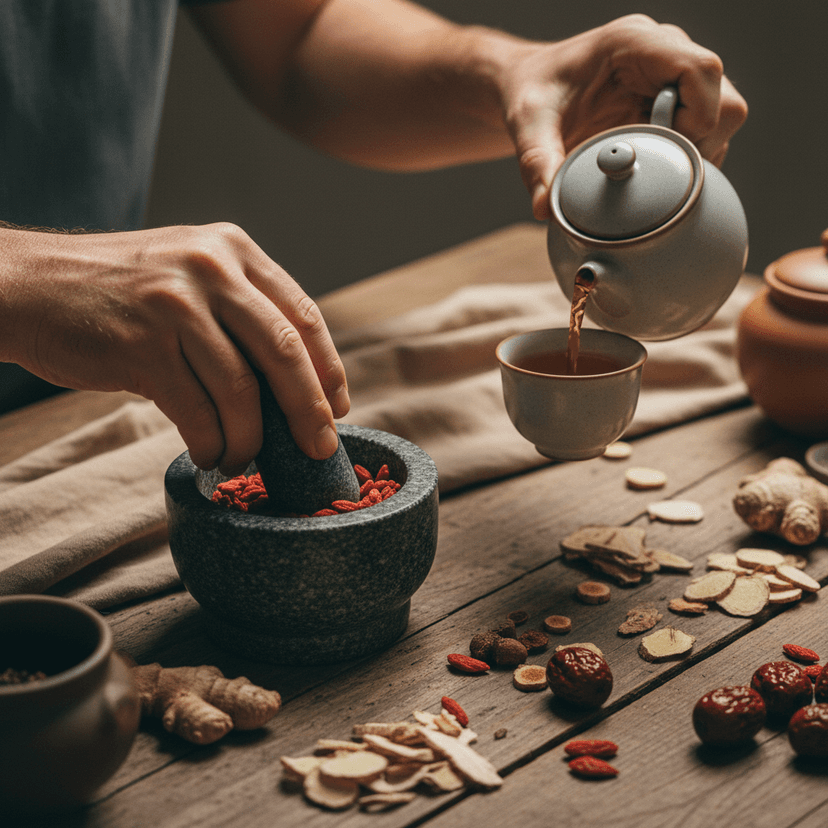
Chinese herbal medicine (CHM) is complex. It's not about finding a “natural estrogen replacement.” It's about restoring balance. A 2023 study in Complementary Therapies in Medicine showed that acupoint application therapy combined with CHM significantly enhanced efficacy and safety for perimenopausal syndrome patients, with a total effective rate of 91.7% in the combined group compared to 83.49% in the Western medicine group. The herbs often work synergistically, addressing multiple imbalances at once.
For Maya, this meant a formula designed to both nourish her Kidney Yin and calm her Liver Qi—a delicate dance.
Key Herb Spotlight: Da Bu Yin Wan (Great Tonify the Yin Pill)
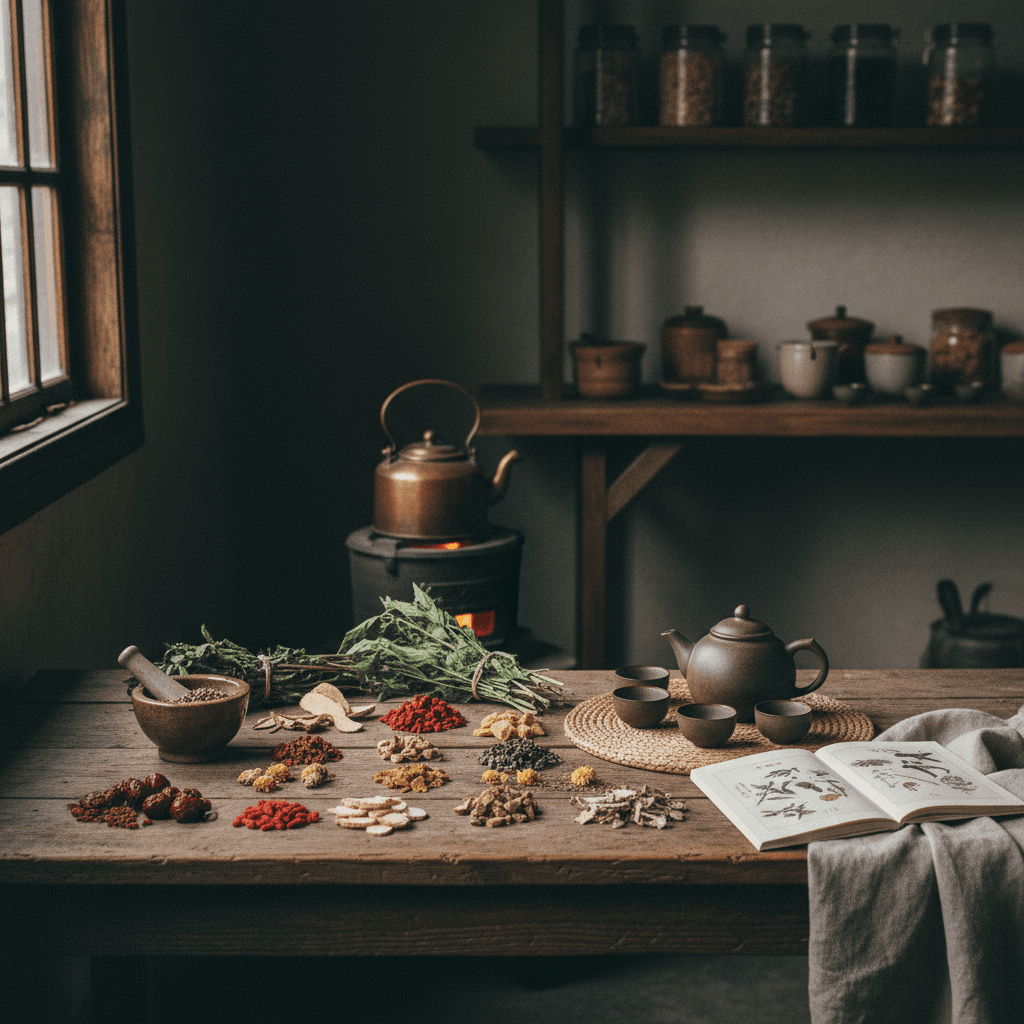
Before we dive into the formula, a quick spotlight on a core ingredient: Rehmannia glutinosa (Shu Di Huang), or Prepared Rehmannia Root. This powerhouse herb is all about nourishing your Yin and blood. It’s a tonic herb, specifically aimed at conditions rooted in Kidney Yin deficiency—think night sweats, hot flashes, dizziness, that nagging low back pain. Its active compounds, things like iridoid glycosides and polysaccharides, contribute to its anti-inflammatory and immune-modulating properties. It's foundational.
This classical formula, often modified, is a foundational formula for Kidney Yin deficiency. It's built upon principles established over centuries, with key ingredients like Rehmannia root, which Shennong Ben Cao Jing (Divine Farmer's Materia Medica) states nourishes the marrow and builds flesh, making it perfect for Yin depletion.
Composition: Shu Di Huang (Prepared Rehmannia Root), Gui Ban (Tortoise Plastron), Huang Bai (Phellodendron Bark), Zhi Mu (Anemarrhena Rhizome).
Actions: Nourishes Yin, descends Fire.
Indications: Night sweats, tidal fever, dry mouth, five-palm heat, steaming bone sensation, agitation, weak lower back and knees.
Dosage: Typically 9-15g of granules or decocted herbs, divided into 2-3 doses daily.
Nature & Flavor: Cool and moistening.
Meridians: Kidney, Liver.
Safety: Generally well-tolerated, but consult a practitioner for appropriate modifications and to avoid potential interactions with Western medications, especially those affecting blood clotting or liver function. Not suitable for those with spleen deficiency with dampness.
A similar study from Zhejiang University of Chinese Medicine Journal (2022) reported a 93.33% effective rate for modified Da Bu Yin Wan in treating Yin deficiency type perimenopausal syndrome, with a 57.2% reduction in TCM symptom scores after a 3-month course. This wasn't just anecdotal—it was consistent with clinical observation.
Discovery 3: Emotional Health is Core Qi Health
The mind-body connection in TCM isn’t a trendy concept; it’s central to everything. Emotions are seen as internal causes of disease. Chronic stress, unprocessed anger, or worry can directly impact organ systems, especially the Liver (anger, frustration) and Spleen (worry, overthinking). A 2019 study (Complementary Therapies in Medicine) found that CHM and acupuncture effectively reduced the severity of depression in perimenopausal and menopausal women, showing comparable effects to antidepressants.
For Maya, addressing her anxiety wasn't just a side benefit; it was integral to her treatment. We talked about how her corporate stress was literally impacting her Liver Qi, making her perimenopausal symptoms worse.
For Maya, the shift wasn't overnight. It was more like gradually tuning an instrument. After about six weeks of weekly acupuncture and a customized herbal formula, she walked in looking visibly lighter. “My night sweats are maybe 50% better,” she said, “but the biggest thing? I don't feel like I'm going to burst into tears at every minor inconvenience. My husband even said I laughed yesterday.” She still had some hot flashes, but her anxiety had significantly reduced.
The brain fog was lifting.
For me, the realization was equally profound. My personal journey through perimenopause, while humbling, cemented my belief in this integrative approach. It wasn't about choosing Western or TCM. It was about allowing them to speak to each other. Western medicine identified the hormonal shifts, but TCM provided the context, the subtle language of the body's rebalancing act. It was about nourishing, calming, and supporting, rather than just replacing.
My joint pain, a symptom I hadn't even fully connected to my perimenopause, slowly faded as my Kidney Yin was nourished.
It’s like being an architect (Western medicine) who knows how to build a structurally sound house, and then learning from an ecologist (TCM) how to ensure that house exists in harmony with its natural environment—how the airflow works, how the sunlight hits, how the local plants thrive. You need both to build a real home, not just a structure.
What Maya (and You) Can Learn from My Mess
Look, perimenopause is messy. It's a seismic shift, and it will challenge everything you think you know about your body. But it doesn't have to break you. Here's what I’ve learned, both as a clinician and as someone who’s lived through it:
- Your symptoms are a conversation, not a failing. Maya felt like her body was failing her. I did too. But TCM taught me to listen to the whispers of my body, to understand that hot flashes aren't just an estrogen drop; they're often a sign of Yin deficiency, a loss of cooling fluids. Or that anxiety isn't just chemical; it might be Liver Qi stagnation, a feeling of being 'stuck'. Pay attention.
- Integrate, don't just choose. Don't feel pressured to pick a side. Western medicine has incredible tools for diagnosis and specific interventions, like HRT. TCM offers a sophisticated framework for understanding and addressing the underlying patterns of imbalance. For many, the synergy is where real relief lies. Always discuss both approaches with all your practitioners, even if it feels uncomfortable. “Can we explore some acupuncture alongside my current regimen?” is a powerful question you can ask in the next 24 hours.
- Find a practitioner who genuinely listens to your unique story. Not every hot flash is the same. Not every anxiety attack has the same root. A skilled TCM practitioner will perform “Zheng differentiation” — looking at your tongue, pulse, detailed symptom history, and lifestyle — to craft a truly individualized treatment plan. Don't settle for generic advice; your story is too complex for that.
- This is an invitation to deeper self-awareness—a move beyond mere symptom management. This is the big one. Perimenopause forced me to slow down, to pay attention to my cycles, my stress, my diet, my emotional regulation. It was an uncomfortable, vulnerable journey, but it was also profoundly clarifying. It's a chance to build a more resilient you for the next chapter of life.
References
- Acupoint application therapy combined with Chinese herbal medicine significantly enhanced the efficacy and safety for patients with perimenopausal syndrome.
- Chinese herbal medicine and acupuncture treatments effectively reduced the severity of depression in perimenopausal and menopausal women.
- 大补阴丸加减治疗阴虚型围绝经期综合征有效率93.33%
- 黄帝内经·素问·上古天真论
- 神农本草经
- 邓捷, 张广梅
- 刘佩琪, 张跃辉