艾灸 · Ai Jiu
Moxibustion is a traditional Chinese medicine therapy that involves burning dried mugwort (moxa) on or near the surface of the skin. Its purpose is to warm and invigorate the flow of Qi and blood in the body, expelling cold and dampness, and promoting healing.
Moxibustion (艾灸, ài jiǔ) is a time-honored therapy within Traditional Chinese Medicine (TCM). It involves burning a small, cone-shaped amount of dried mugwort, known as moxa, on or very near the surface of the skin. The heat generated penetrates deeply.
The primary goal of moxibustion is to warm and stimulate specific acupuncture points or areas of the body. This process aims to invigorate the flow of Qi (vital energy) and blood, dispel cold and dampness, and promote overall healing and well-being.
The practice of moxibustion boasts a history spanning thousands of years, predating even acupuncture in some historical accounts. Ancient texts, such as the Huangdi Neijing (The Yellow Emperor's Classic of Internal Medicine), describe its therapeutic applications.
Originating in northern China, where cold climates were prevalent, moxibustion became a crucial method for treating conditions associated with cold and dampness. Its efficacy led to its widespread adoption and refinement throughout East Asia.
According to TCM theory, illness often arises from imbalances in the body's Qi and blood circulation, or from the invasion of external pathogenic factors like cold and dampness. Moxibustion directly addresses these imbalances.
The penetrating heat from burning moxa warms the meridians, which are energy pathways in the body. This warmth helps to unblock stagnation, improve circulation, and strengthen the body's Yang Qi, restoring harmony and promoting natural healing.
There are several methods of applying moxibustion. Direct moxibustion involves placing a small cone of moxa directly on the skin, sometimes with a protective barrier. It is often removed before burning completely to avoid blistering.
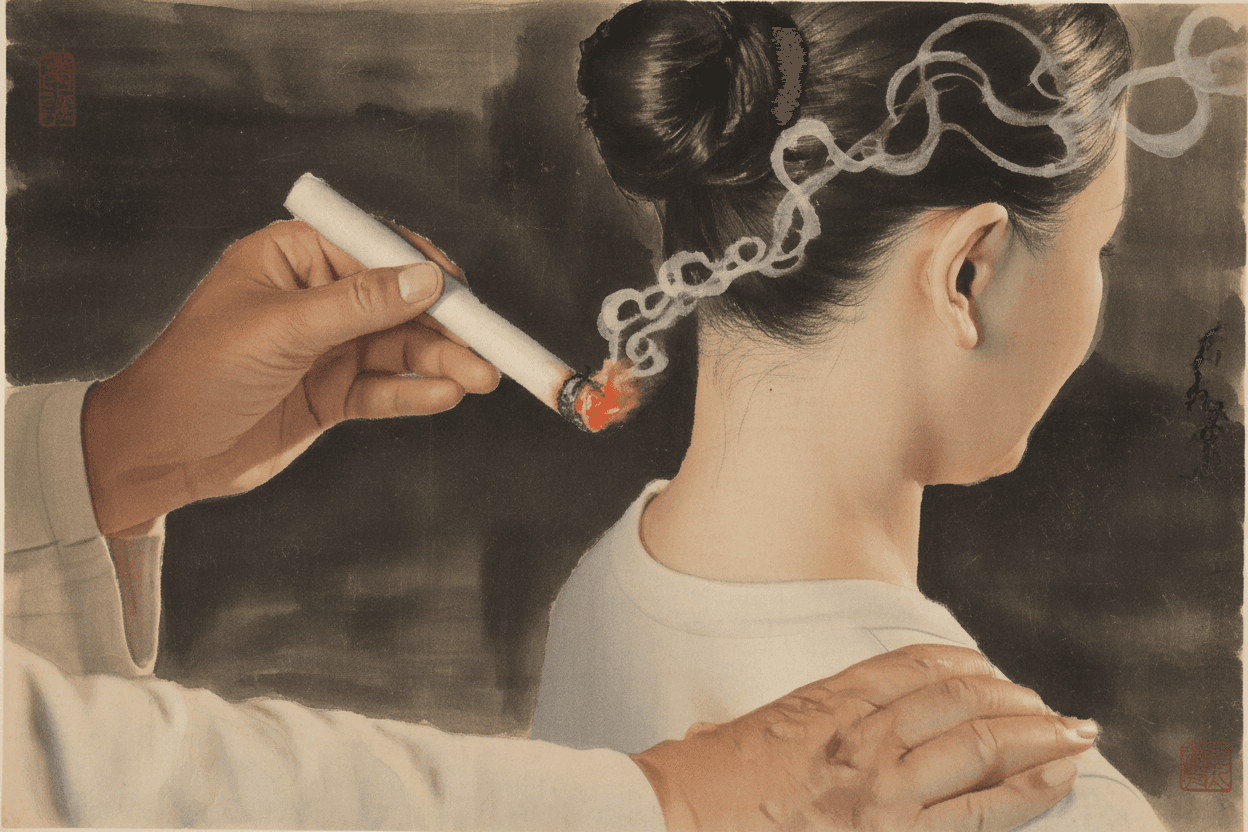
Indirect moxibustion is more common. This technique uses a barrier, such as ginger, garlic, or salt, between the moxa and skin. Alternatively, a moxa stick (a cigar-shaped roll) is held a short distance above the skin, moving to create warmth.
Another method is needle moxibustion, where a piece of moxa is placed on the handle of an inserted acupuncture needle and ignited. The heat travels down the needle into the acupuncture point, combining the benefits of both therapies.
Moxibustion is widely used for a variety of conditions. It is particularly effective for chronic pain, especially that which worsens with cold, such as arthritis, back pain, and menstrual cramps.
Digestive issues like chronic diarrhea, irritable bowel syndrome, and nausea can also benefit from moxa therapy. It helps to warm the digestive system and improve its function.
Furthermore, moxibustion is often employed to boost immunity, reduce fatigue, and turn breech babies by stimulating a specific point on the little toe. It promotes overall vitality and strengthens the body's defenses.
While generally safe, moxibustion should always be performed by a trained and qualified practitioner. Proper technique is essential to prevent burns or skin irritation, especially with direct moxibustion.
Individuals with certain conditions, such as high fever, inflammation, or certain skin sensitivities, may need to avoid moxibustion. Pregnant women should consult their practitioner, as some points are contraindicated during pregnancy.
Moxibustion (艾灸, ài jiǔ) is a time-honored therapy within Traditional Chinese Medicine (TCM). It involves burning a small, cone-shaped amount of dried mugwort, known as moxa, on or very near the surface of the skin. The heat generated penetrates deeply.
The primary goal of moxibustion is to warm and stimulate specific acupuncture points or areas of the body. This process aims to invigorate the flow of Qi (vital energy) and blood, dispel cold and dampness, and promote overall healing and well-being.
The practice of moxibustion boasts a history spanning thousands of years, predating even acupuncture in some historical accounts. Ancient texts, such as the Huangdi Neijing (The Yellow Emperor's Classic of Internal Medicine), describe its therapeutic applications.
Originating in northern China, where cold climates were prevalent, moxibustion became a crucial method for treating conditions associated with cold and dampness. Its efficacy led to its widespread adoption and refinement throughout East Asia.
According to TCM theory, illness often arises from imbalances in the body's Qi and blood circulation, or from the invasion of external pathogenic factors like cold and dampness. Moxibustion directly addresses these imbalances.
The penetrating heat from burning moxa warms the meridians, which are energy pathways in the body. This warmth helps to unblock stagnation, improve circulation, and strengthen the body's Yang Qi, restoring harmony and promoting natural healing.
There are several methods of applying moxibustion. Direct moxibustion involves placing a small cone of moxa directly on the skin, sometimes with a protective barrier. It is often removed before burning completely to avoid blistering.
Indirect moxibustion is more common. This technique uses a barrier, such as ginger, garlic, or salt, between the moxa and skin. Alternatively, a moxa stick (a cigar-shaped roll) is held a short distance above the skin, moving to create warmth.
Another method is needle moxibustion, where a piece of moxa is placed on the handle of an inserted acupuncture needle and ignited. The heat travels down the needle into the acupuncture point, combining the benefits of both therapies.
Moxibustion is widely used for a variety of conditions. It is particularly effective for chronic pain, especially that which worsens with cold, such as arthritis, back pain, and menstrual cramps.
Digestive issues like chronic diarrhea, irritable bowel syndrome, and nausea can also benefit from moxa therapy. It helps to warm the digestive system and improve its function.
Furthermore, moxibustion is often employed to boost immunity, reduce fatigue, and turn breech babies by stimulating a specific point on the little toe. It promotes overall vitality and strengthens the body's defenses.
While generally safe, moxibustion should always be performed by a trained and qualified practitioner. Proper technique is essential to prevent burns or skin irritation, especially with direct moxibustion.
Individuals with certain conditions, such as high fever, inflammation, or certain skin sensitivities, may need to avoid moxibustion. Pregnant women should consult their practitioner, as some points are contraindicated during pregnancy.
This information is for educational purposes only and is not intended as medical advice. Always consult a qualified healthcare practitioner before using any herbal remedy.