Beyond Tired: What Chronic Fatigue Really Means for Your Vitality
You've been told chronic fatigue is 'just stress' or 'all in your head.' That's a dangerous oversimplification. I'm Dr. Maya Chen, and I'm here to show you how Traditional Chinese Medicine offers a deep, evidence-backed lens on this debilitating condition, bridging ancient wisdom with modern sc
Maya ChenMarch 27, 2026
Quick Answer
Chronic fatigue, far from being 'all in your head,' is understood in Traditional Chinese Medicine as a complex imbalance, often involving Spleen Qi Deficiency. Integrative approaches, combining targeted acupuncture and herbal formulas like Buzhong Yiqi Tang, show promise in alleviating symptoms by addressing underlying systemic dysfunctions, offering a holistic path to restoring vitality.
Key Takeaways
Let’s talk about Huang Qi, a foundational herb in TCM for chronic fatigue.
In TCM, the Spleen and Stomach are the Root of Post-Heaven Qi – they extract vital energy from the food we eat.
For centuries, Western medicine dismissed meridians—the invisible pathways through which Qi flows in TCM—as purely metaphorical.
One of the biggest pitfalls in managing chronic fatigue is treating symptoms in isolation.
The exciting frontier isn't about choosing between TCM and Western medicine.
Hey everybody. You've probably heard the dismissive phrase, 'You're just tired,' or even worse, 'It's all in your head' when you’ve tried to explain the crushing exhaustion of chronic fatigue. That mindset is frankly outdated, harmful, and it completely misses the mark. For many, chronic fatigue is more than a simple lack of sleep; it's a multi-system breakdown that Western medicine is only now beginning to fully grasp.
The perception that chronic fatigue is a psychological issue, or a vague complaint, has hampered genuine understanding for far too long.
What does this all mean for you? It means you might be asking the wrong question. Instead of 'How do I get more energy?', we should be asking, 'What is draining my body’s fundamental vitality and why?' Here, ancient Traditional Chinese Medicine (TCM) offers an insightful, surprisingly scientific perspective.
In TCM, what we call Qi is often translated as vital energy, but it’s so much more. Think of Qi not just as caloric energy, but as the intelligent, dynamic force that animates all physiological processes—from digestion and immunity to mood regulation and cognitive function. When Qi is deficient, especially Spleen Qi (which governs digestion and nutrient absorption), the entire system falters. This isn't some abstract concept.
Modern research increasingly shows how gut health, nutrient assimilation, and immune regulation are inextricably linked to energy levels.
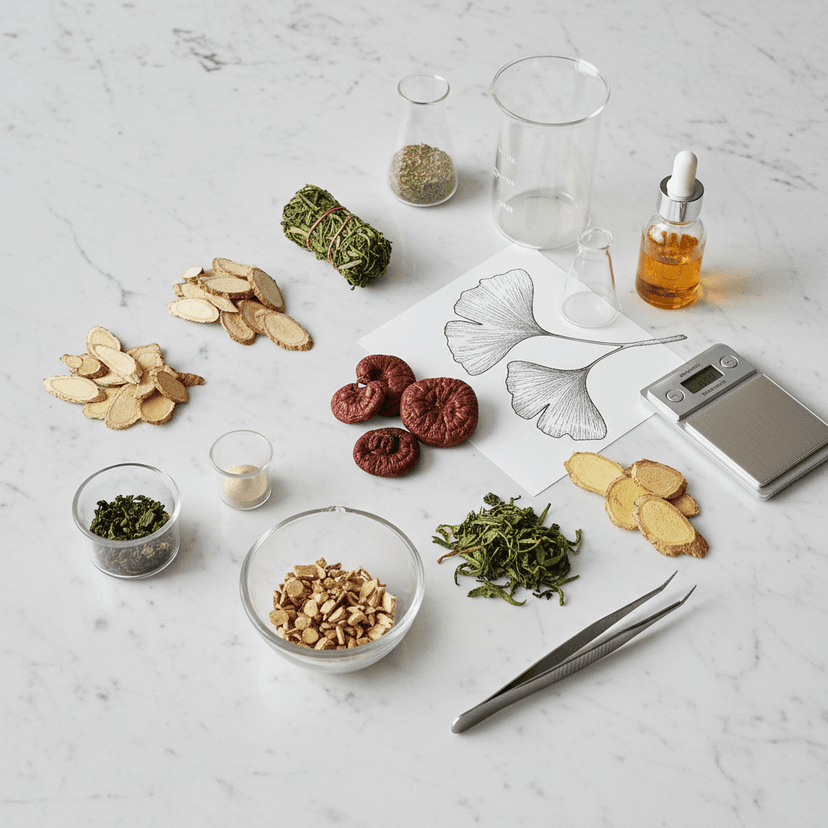
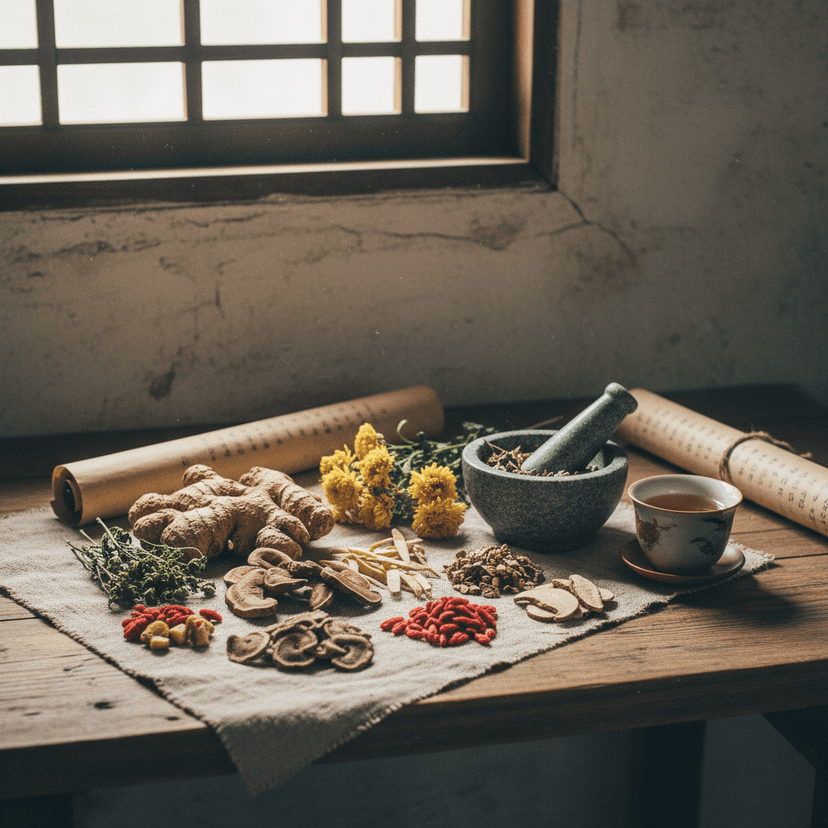
Let’s talk about Huang Qi, a foundational herb in TCM for chronic fatigue. This is Huang Qi (Astragalus membranaceus), also known as Radix Astragali or Milk-vetch Root.
It’s a powerful Qi-tonifying herb used to boost vital energy, strengthen immunity, and consolidate the body’s protective exterior.
Helping prevent illness is a significant benefit from one root. It's quite remarkable, honestly.
What makes it so effective? Its key active compounds include polysaccharides, triterpene saponins (astragalosides), and flavonoids. Modern pharmacology has deeply investigated its adaptogenic and immune-modulating effects, showing this isn't just ancient folklore; it's verifiable science.
Written by
Maya Chen
Contributing Writer at Demisunshine. Maya has spent much of her adult life around the practice of integrative medicine and herbal traditions. Her writing reflects a long familiarity with how women's health, body constitution, and emotional wellbeing intersect — and her pieces tend to acknowledge that the messy parts of healing rarely fit a neat formula.
Get TCM Wellness Tips
Weekly articles on herbal remedies, nutrition, and holistic health — delivered to your inbox.
Huang Qi strengthens immunity primarily by enhancing the activity of immune cells like T-lymphocytes and natural killer cells, and promoting the production of cytokines. The recommended daily dosage is typically 9-30g in decoction, though individualized dosages are crucial.
Classical texts like 《本草纲目》 (Bencao Gangmu) describe Huang Qi as “甘温,补气固表” (sweet and warm, tonifies Qi and consolidates the exterior). This ancient observation aligns strikingly with contemporary understanding of its immune-boosting and adaptogenic properties. The herb helps the body adapt to stress, much like a well-tuned thermostat responding to temperature changes. It’s not about an artificial jolt, but about restoring innate resilience.
Here’s a snapshot of its key properties:
Nature & Flavor: Slightly warm, sweet
Meridians: Lung, Spleen
Primary Actions: Tonifies Spleen and Lung Qi, raises Yang Qi, consolidates the exterior, promotes urination, generates flesh, expels toxins.
Huang Qi's ginsenosides, for instance, don't directly produce energy. Instead, this insight is that they work through cortisol modulation, helping to balance the HPA (hypothalamic-pituitary-adrenal) axis, which is often dysregulated in chronic fatigue syndrome patients, as highlighted by researchers at institutions like the Mayo Clinic.
Clinical Takeaway: Huang Qi doesn't provide 'energy' in the stimulating sense. It rebuilds foundational vitality by supporting digestive Qi, immune function, and stress resilience. That makes it a pillar for chronic fatigue management.
The Spleen Connection: Why Your Digestion Holds the Key
In TCM, the Spleen and Stomach are the Root of Post-Heaven Qi – they extract vital energy from the food we eat. If your Spleen Qi is weak, you can eat the most nutritious diet in the world and still feel utterly drained because your body isn't effectively transforming food into usable Qi and Blood. This is a common pattern I see in my clinic, a pattern that mainstream medicine often overlooks.
I remember Sarah, a 38-year-old marketing executive who came to me after years of being told her fatigue, brain fog, and constant bloating were just stress. Western tests showed nothing overtly wrong, but she felt like she was dragging herself through quicksand every day. Her tongue was pale with teeth marks on the sides, and her pulse was weak and thready – classic signs of Spleen Qi Deficiency.
We focused on strengthening her Spleen Qi with herbs like Huang Qi and Bai Zhu (Atractylodes macrocephala), which 《本草纲目》 (Bencao Gangmu) notes “白术苦温,健脾益气” (bitter and warm, strengthens Spleen and tonifies Qi). We also used acupuncture at specific points to harmonize her digestive system.
Within three months, Sarah's bloating significantly reduced, her energy levels steadily climbed, and her brain fog began to lift. She wasn’t cured overnight – chronic fatigue rarely is – but she had regained a significant portion of her life. Her story isn't unique; it illustrates the strong connection between our gut health, as understood through the Spleen's function in TCM, and our overall vitality.
Clinical Takeaway: Chronic fatigue often signals a compromised digestive system, in TCM terms. Addressing Spleen Qi deficiency with targeted herbs and dietary changes is crucial for restoring the body's ability to generate energy from within.
Bridging Ancient Insights with Modern Science: Meridians Explained
For centuries, Western medicine dismissed meridians—the invisible pathways through which Qi flows in TCM—as purely metaphorical. Not anymore.
Pioneering research by individuals like Dr. Helene Langevin, formerly of the National Institutes of Health's National Center for Complementary and Integrative Health (NCCIH), has shown fascinating correlations between acupuncture points and connective tissue planes. Her work suggests that meridians might correspond to pathways of fascial tissue, which play a critical role in cellular communication, inflammation, and even pain signaling. This scientific grounding helps us understand the effectiveness of acupuncture in modulating systemic responses, including those related to chronic fatigue.
Acupuncture doesn’t just relieve symptoms. It helps the body re-establish communication pathways, reducing inflammation and enhancing the body's natural healing capabilities. Think of it like defragging a computer hard drive – it optimizes the system's efficiency. Recent clinical evidence supports this. A 2024 study by Wang Yitong and colleagues published in the Beijing University of Chinese Medicine Journal found that acupuncture using Buzhong Yiqi group points significantly improved symptoms in patients with Chronic Fatigue Syndrome.
These aren't just subjective feelings; these are measurable improvements in quality of life and energy scales.
Clinical Takeaway: Acupuncture, especially when we target Spleen and Kidney points, proves a powerful tool. It modulates immune function, reduces inflammation, and improves energy pathways, offering tangible benefits for CFS patients.
Beyond Symptoms: Diagnosing the Root Cause in TCM
One of the biggest pitfalls in managing chronic fatigue is treating symptoms in isolation. Western medicine often struggles because it lacks a unified model for CFS, leading to a patchwork of treatments for individual symptoms. TCM, however, excels at identifying underlying patterns of disharmony, or zheng, which manifest as fatigue.
For example, while Sarah presented with Spleen Qi Deficiency, I also had Mark, a 50-year-old accountant whose fatigue came with significant heaviness, brain fog, and a persistent cough with sticky phlegm. His tongue was thick and greasy, and his pulse was slippery. But for Mark, it was more than just Qi deficiency; it was a clear case of Damp-Phlegm Obstructing the Spleen. Treating him solely for Qi deficiency would have been ineffective, maybe even counterproductive.
For Mark, we needed to transform phlegm and drain dampness alongside tonifying his Spleen. Zhang Yanming et al.'s 2025 study in the Journal of Ningxia Medical University specifically found that Buzhong Yiqi Tang (a classic Spleen Qi tonic) could improve phlegm-damp symptoms and sleep quality in fatigue patients, even though it's primarily a Qi tonic. This highlights the interconnectedness of TCM patterns and the nuanced effects of herbal formulas.
Mark’s regimen included herbs to dry dampness, such as Cang Zhu (Atractylodes lancea), alongside his Spleen Qi tonics. This individualized approach genuinely highlights the power of TCM.
Consider the stark differences in how we approach this condition:
TCM vs. Western Functional Medicine: A Comparison for Chronic Fatigue
TCM Approach (Example: Spleen Qi Deficiency)
Focus: Restore balance of Qi, Blood, Yin, Yang; strengthen organ systems (Spleen, Kidney).
Clinical Takeaway: Treating chronic fatigue effectively always demands a personalized approach. Western functional medicine uncovers biochemical dysfunctions, while TCM offers a nuanced framework for understanding the energetic imbalances that drive these issues. This allows for genuinely targeted interventions.
Ancient Wisdom and Modern Validation: A Powerful Combination
The exciting frontier isn't about choosing between TCM and Western medicine. It's about integrating their strengths. Andrew Weil, a pioneer in integrative medicine at the University of Arizona, has long advocated for this bridge, understanding that the whole person, not just isolated symptoms, must be treated. This means using TCM’s diagnostic precision to identify energetic patterns while using Western science to understand the underlying physiological mechanisms.
For instance, when 《神农本草经》 (Shennong Bencao Jing) describes Wu Wei Zi (Schisandra chinensis) as “主益气,补不足,强阴” (primarily tonifies Qi, supplements deficiency, strengthens Yin), modern research corroborates its adaptogenic properties, showing how it supports liver function, enhances stress resistance, and improves mitochondrial efficiency – all critical factors in chronic fatigue. This goes beyond poetic description. It's an empirical observation that science is now quantifying.
The combined effect of acupuncture and herbal medicine is a powerful example of this integration. While acupuncture directly stimulates specific points to regulate energy flow and biochemical responses, herbal medicine provides sustained internal support. A 2024 study by Wang Ruohan et al. in Traditional Chinese Medicine on Lai’s Tongyuan Therapy, which combines various TCM modalities including herbs, showed an 82.3% effective rate in treating chronic fatigue syndrome.
These are compelling numbers, but what does it really mean for the future of treatment?
Clinical Takeaway: Combining TCM modalities like acupuncture and personalized herbal formulas offers a synergistic approach. It addresses chronic fatigue on multiple levels, enhancing efficacy by using both energetic and biochemical pathways.
Your Path to Regaining Vitality: Actionable Steps
So, what can you do right now, if chronic fatigue is stealing your life? The biggest mistake I see people make is trying to force their way through it, ignoring their body’s cries for help. Stop doing that. Your body is giving you crucial information.
1. Seek Personalized Diagnosis: Find an integrative physician or a skilled TCM practitioner who can perform a thorough intake, including tongue and pulse diagnosis. This will help identify your specific zheng, whether it’s Spleen Qi Deficiency, Damp-Phlegm, or another pattern. Generic approaches simply won't cut it. You need a map, not just a compass.
2. Prioritize Digestive Health: Start with your Spleen. Incorporate warm, cooked, easily digestible foods into your diet. Think nourishing soups, stews, and steamed vegetables. Reduce cold, raw foods, and sugary or processed items that burden your digestive fire. This is an immediate action you can take to support your Qi.
3. Consider Acupuncture: Look for a licensed acupuncturist experienced in chronic fatigue. They can help regulate your meridians, reduce inflammation, and calm your nervous system. The cumulative effect can be significant.
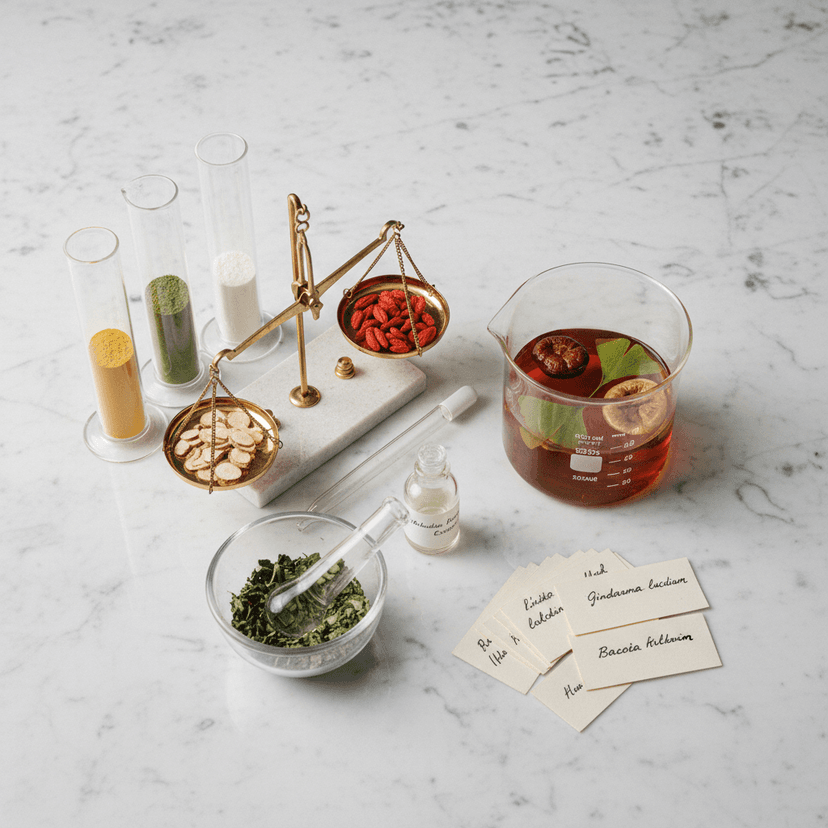
4. Explore Personalized Herbal Formulas: Under the guidance of a qualified practitioner, specific herbal blends can be tailored to your unique pattern of disharmony. These aren't supplements you pick off a shelf; they are powerful, synergistic formulas designed to address your body’s specific needs. But remember, always disclose any Western medications you are taking, as potential interactions must be carefully managed.
Clinical Takeaway: Empower yourself. Seek an individualized diagnosis and embrace a holistic approach that nurtures your body’s inherent ability to heal. Start with foundational digestive health and professional guidance.
Uncharted Territory: Long-Term Healing and Modern Understanding
While the clinical evidence for TCM in chronic fatigue is compelling, especially in improving symptoms and quality of life, there are still gaps. Critics rightly point out the need for more robust, long-term follow-up data and a deeper dive into the precise modern physiological mechanisms by which these ancient therapies work. We’ve seen correlations with inflammation markers and immune cell activity, but the full picture is still emerging. This isn't a weakness.
Instead, I see it as an exciting opportunity for continued research and deeper integration.
The question isn't whether TCM works for chronic fatigue. My 15 years in practice and the growing body of evidence tell me it absolutely does. The deeper question is how we can use the framework of modern science to fully unpack why it works, and how we can refine these ancient practices to be even more potent and universally understood. This productive tension between tradition and innovation is where true breakthroughs happen.
We are not just treating fatigue; we are fundamentally redefining what it means to be well, one patient at a time.