A significant percentage of people who contracted COVID-19 in 2022 still grapple with persistent symptoms like debilitating fatigue, memory issues, and sleep disturbances. Some estimates, like that from 王凯 et al. (2023) in Tianjin, China, placed the Long COVID incidence at around 7.8% among Omicron infections. For many, this marks a fundamental shift in their ability to live fully – a deep fatigue that resists easy fixes.
You might feel it right now, that dull ache behind your eyes, the heavy weight in your limbs, making even the smallest tasks feel like climbing a mountain.
While Western medicine continues to explore the mechanisms of this post-viral syndrome, Traditional Chinese Medicine (TCM) has long held a nuanced understanding of how such illnesses can 'lodge' in the body, depleting vital energy and creating a cascade of imbalances. It's a different way of looking at health, yes, but often a deeply resonant one for those feeling adrift in conventional medical approaches.
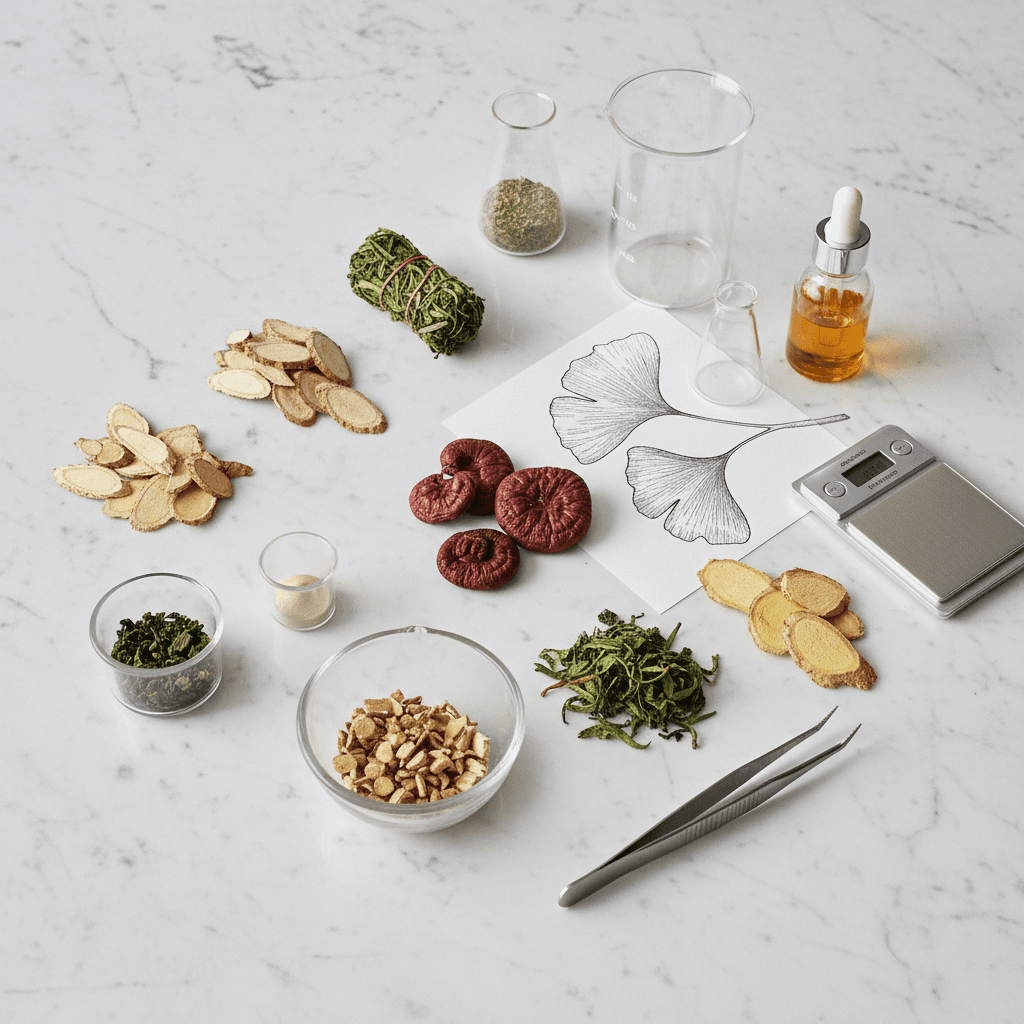
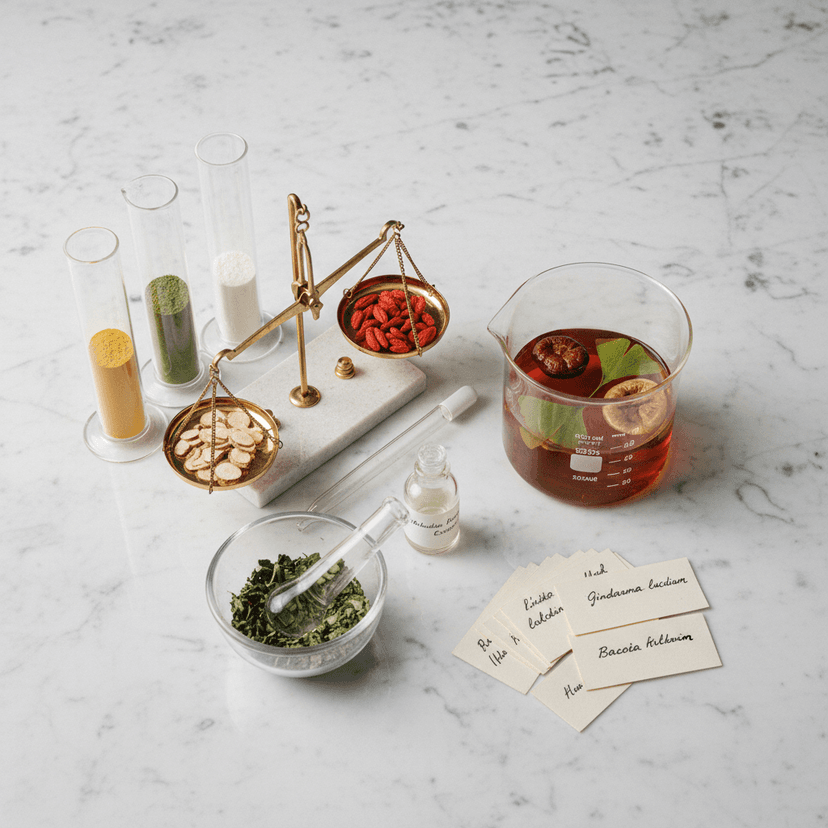
When we talk about TCM approaches to conditions like chronic fatigue, an herb that often comes up is Huang Qi (Astragalus membranaceus). It’s considered a tonifying herb, traditionally used to support Qi, strengthen the immune system, and consolidate the body's exterior defenses. Its key active compounds include polysaccharides, flavonoids, and saponins. From a TCM perspective, Huang Qi strengthens immunity primarily by boosting the body's 'Zheng Qi' or righteous qi, which TCM considers the body's intrinsic defensive energy against external pathogens.
This focus extends beyond just preventing a new cold; it’s about restoring your core strength.
Elena’s Lingering Shadow: When 'Just Rest' Isn't Enough
Meet Elena, a 48-year-old architect from Seattle. Before 2022, she was a whirlwind of activity, sketching designs late into the night, hiking on weekends, and navigating complex client meetings with a sharp, focused mind.
Then, like millions globally, she caught COVID-19. The acute phase was rough, but she expected to bounce back. She didn't. Months later, the exhaustion became a constant, suffocating blanket. Her once-vibrant mind was shrouded in a persistent brain fog, making it hard to concentrate on blueprints or even follow conversations.
Sleep, despite her deep fatigue, was elusive. She'd lie awake, her chest feeling tight, her thoughts racing, only to wake up feeling as if she hadn't slept at all. Her energy reserves, once seemingly boundless, felt completely depleted. She went to her primary care doctor, then specialists. Tests came back mostly normal. The advice was always the same: rest, manage stress, wait it out. But Elena felt like she was drowning.
This is a story many people with Long COVID or post-viral fatigue know intimately. The frustrating gap between how you feel and what conventional tests can quantify. From a TCM perspective, Elena’s experience pointed to more than simple fatigue; it was a complex mix of issues.
The Deeper Current: Unpacking Qi and Lingering Imbalances
In TCM, vitality hinges on the smooth flow and abundance of Qi (pronounced 'chee'), often translated as vital energy or life force. Think of your body as a garden. Qi is the sunshine, the water, the fertile soil that keeps everything thriving. Meridians are the irrigation channels, ensuring energy and nutrients reach every plant. When a severe illness like a viral infection hits, it’s like a harsh drought and a sudden storm all at once.
It depletes the soil (Qi), clogs the irrigation lines (meridians), and leaves behind lingering dampness or heat that hinders recovery.
For Elena, TCM practitioners commonly observe patterns like what she experienced: Qi deficiency (that profound fatigue, weak voice, shortness of breath), often coupled with Yin deficiency (night sweats, insomnia, racing thoughts), and dampness (brain fog, heavy limbs, chest tightness). This understanding isn't confined to ancient texts. 赵兰才 et al.
(2024) described the core pathology of Long COVID as 'Qi and Yin deficiency combined with damp-heat and blood stasis,' with the Spleen and Heart being key affected organ systems in their cluster analysis.
Why 'Rest' Alone Falls Short
The common Western advice to 'just rest' makes sense on the surface. But if your Qi is already depleted and your internal systems are out of balance, simply resting won't magically restore them. It’s like trying to fill a leaking bucket by just turning off the tap; you need to patch the hole first.
A Different Map: Elena's Journey with TCM
Frustrated, Elena sought out a TCM practitioner recommended by a friend. During her initial consultation, the practitioner spent a long time listening, asking about her energy levels throughout the day, her digestion, sleep, even her emotional state. They examined her tongue and felt her pulse – diagnostic methods that offer a snapshot of internal organ function and overall balance in TCM. Elena’s diagnosis: Spleen Qi Deficiency with underlying Kidney Yin Deficiency and accumulated Dampness.
This explained everything, from her fatigue (Spleen Qi) to her insomnia (Kidney Yin) and brain fog (Dampness).
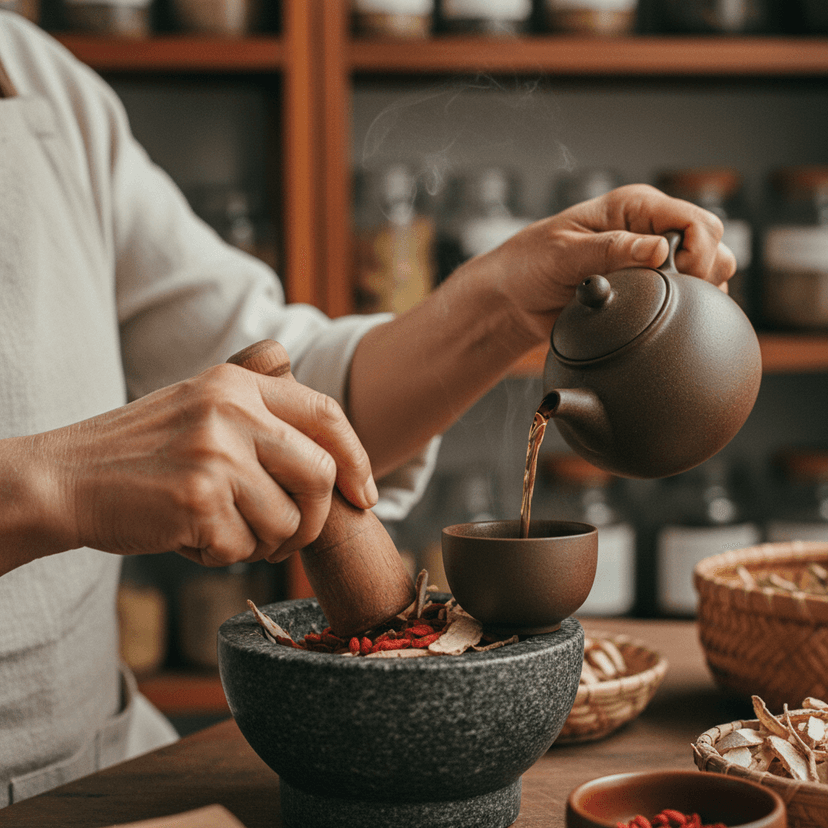
Her treatment plan was comprehensive and highly individualized, a stark contrast to the 'one-size-fits-all' approach she’d encountered before. It included a personalized Chinese herbal formula, weekly acupuncture sessions, and specific dietary recommendations.
Herbs for Rebuilding Vitality
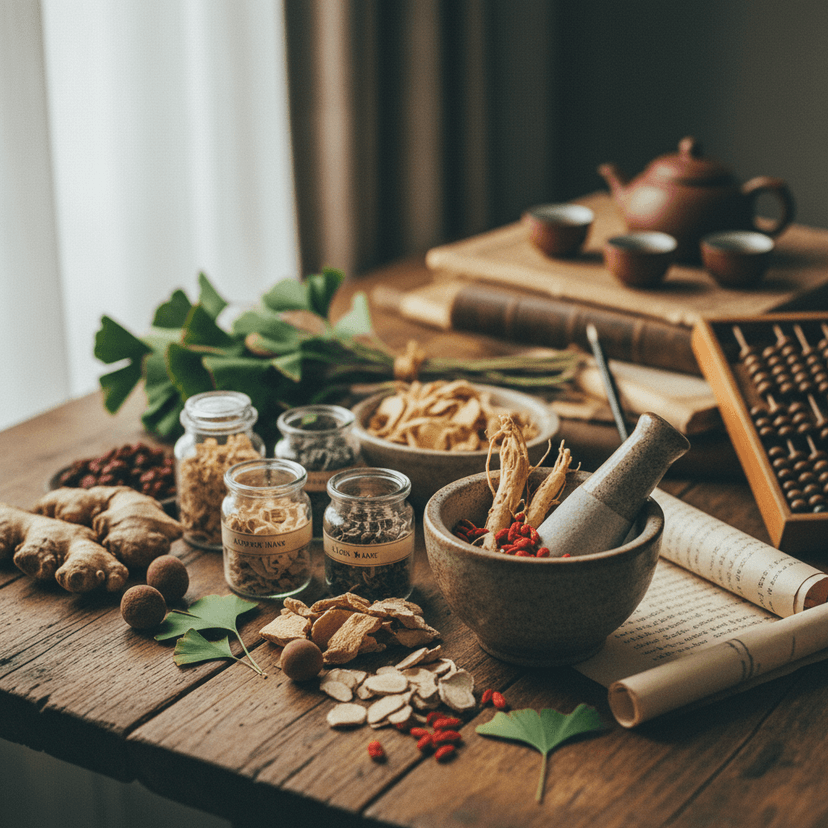
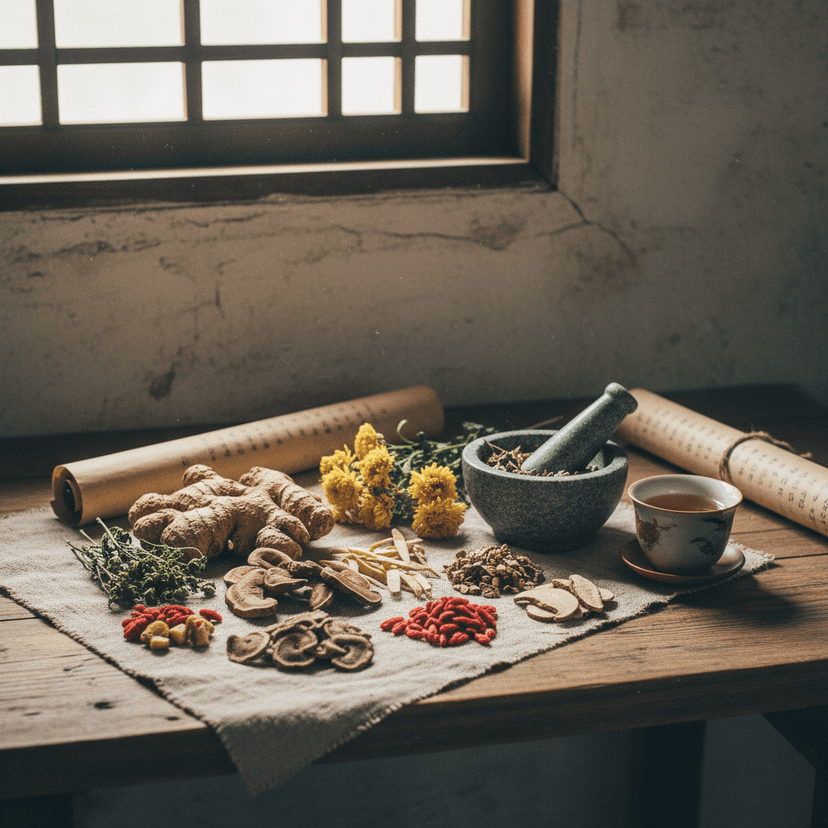
The herbal formula Elena received was designed to address her specific imbalances. It included herbs to tonify her Spleen Qi, nourish Kidney Yin, and resolve dampness.
When we look at some key herbs, like Huang Qi and Ginseng, here's how they're understood in TCM:
Huang Qi (Astragalus membranaceus): Dosage: 9-30g decoction. Nature & Flavor: Slightly warm, sweet. Meridians: Lung, Spleen. Classical texts like the 《神农本草经》 (Shennong Ben Cao Jing) describe Huang Qi's ability to 'fortify the exterior' and 'promote tissue regeneration,' aligning with its use for strengthening the protective Qi and immune function – something so important after a viral attack.
Ren Shen (Ginseng): Dosage: 3-9g decoction (higher for acute deficiency). Nature & Flavor: Warm, sweet, slightly bitter. Meridians: Spleen, Lung, Heart, Kidney. The 《本草纲目》 (Bencao Gangmu) famously notes Ginseng can 'tonify the five Zang organs, calm the spirit, stop palpitations, eliminate evil Qi, brighten the eyes, open the heart, and benefit wisdom.' This speaks directly to its profound ability to replenish core vitality and support cognitive function – exactly what you'd want for brain fog and overall exhaustion like Elena's.
When we look at modern research, it echoes some of these traditional observations. A systematic review by Li et al. (2024) in PLOS One found that Chinese herbal medicine (CHM) showed a good effect in improving post-viral fatigue, reducing fatigue symptoms by an average of 0.56 points on the TCM fatigue syndrome scale and enhancing body immunity. Another review by Li et al.
(2025) in the Journal of Translational Medicine suggested TCM might help relieve specific post-COVID-19 symptoms, particularly chest tightness (with a relative risk of 1.40, P < 0.0001) and insomnia (RR = 1.23, P = 0.0216), both issues Elena struggled with.
Beyond the Formula: Mind-Body Practices and Daily Rhythms
Herbs were only one piece of Elena's puzzle. The TCM practitioner also emphasized the importance of gentle movement and mindfulness. For someone experiencing profound fatigue, intense exercise is often counterproductive, further depleting already low energy reserves. Instead, Elena was introduced to Qigong, a traditional Chinese mind-body exercise combining slow movements, deep breathing, and meditation.
This focus on gentle movement, it turns out, isn't just something passed down through generations. Research by Chen et al. (2023) in Frontiers in Public Health indicated that traditional Chinese mind-body exercises (TCME) like Qigong and Tai Chi likely reduce the severity of post-intervention fatigue, depression, and anxiety in Chronic Fatigue Syndrome (CFS) patients. They found a standardized mean difference (SMD) of 0.85 for fatigue reduction with moderate certainty when compared to passive control groups.
This suggests that practices focusing on harmonizing mind and body can offer significant relief, even for conditions as stubborn as CFS, which shares many overlaps with Long COVID fatigue patterns.
Elena also began incorporating specific warming, nourishing foods into her diet, avoiding cold or raw foods that, from a TCM perspective, can further tax a weakened digestive system (Spleen Qi deficiency, remember?). It was about building internal warmth and energy, much like tending a gentle fire to cook food slowly and thoroughly.
The Slow Unfolding: Reclaiming Her Vitality
Healing from Long COVID isn't a straight line. Elena had good days and bad days. The initial weeks brought subtle shifts: slightly less brain fog, a few more hours of solid sleep. But consistency was key. After about three months, she reflected on her progress.
“I’m not back to my old self, not yet,” she told her husband one evening, “but I feel like I’ve finally found a path out of the fog. It’s like someone turned down the static in my brain. I can actually think again.”
This wasn't an instant fix, but a gradual, deliberate process of rebuilding. Her energy levels slowly climbed. The chest tightness eased. The quality of her sleep improved, allowing her body to genuinely rest and repair. What genuinely helped was the personalized attention and the holistic framework that acknowledged her symptoms as interconnected expressions of imbalance, rather than isolated problems.
What Elena’s Story Teaches Us About Chronic Fatigue
Elena's path raises a powerful question: instead of asking 'how do I get rid of this fatigue?', perhaps we should ask 'what is my body trying to tell me about its deepest needs for balance and restoration?' Western medicine often seeks to identify a single pathogen or physiological malfunction. TCM, on the other hand, asks how the entire system has been disrupted, and how to gently guide it back to harmony.
It acknowledges that healing is messy, often non-linear, and rarely fits into a neat formula.
This perspective challenges the common assumption that chronic post-viral symptoms are solely a matter of time or willpower.
The insights from TCM practitioners, combined with emerging research like that from Li et al. (2024), really suggest the value of a more integrated approach. This means listening to the body’s whispers before they become shouts, and understanding that genuine vitality comes from a deeply rooted sense of balance.
Your Path to Reclaiming Vitality
If you are grappling with persistent Long COVID or post-viral fatigue, consider seeking a qualified TCM practitioner who understands chronic illness and post-viral conditions.
Explore gentle mind-body practices like Qigong or Tai Chi, as they can significantly aid in regulating your nervous system and gradually rebuilding energy, as shown by Chen et al. (2023).
Pay attention to your diet, favoring warm, cooked, nourishing foods that support your digestive Qi, and observe how different foods impact your energy levels.
Remember that healing requires patience and consistent self-care, acknowledging that improvements may be gradual and non-linear, mirroring Elena's own experience.
References
- Li et al. – Chinese herbal medicine for post-viral fatigue: A systematic review and meta-analysis. PLOS One, 2024.
- Li et al. – Efficacy and safety of Traditional Chinese Medicine for post-COVID-19 conditions: a systematic review and meta-analysis. Journal of Translational Medicine, 2025.
- Liu et al. – Traditional Chinese Medicine for chronic fatigue syndrome: a systematic review of randomized clinical trials. Journal of Traditional Chinese Medicine, 2014.
- Chen et al. – Traditional Chinese mind-body exercises for chronic fatigue syndrome: A systematic review and meta-analysis. Frontiers in Public Health, 2023.
- 王凯等 – 奥密克戎感染后长新冠发生率研究. 天津中医药, 2023.
- 赵兰才等 – 长新冠核心病机为气阴两虚夹湿热瘀阻. 北京中医药大学学报, 2024.
- 《本草纲目》
- 《神农本草经》
- 孙雪松等,《北京中医药》