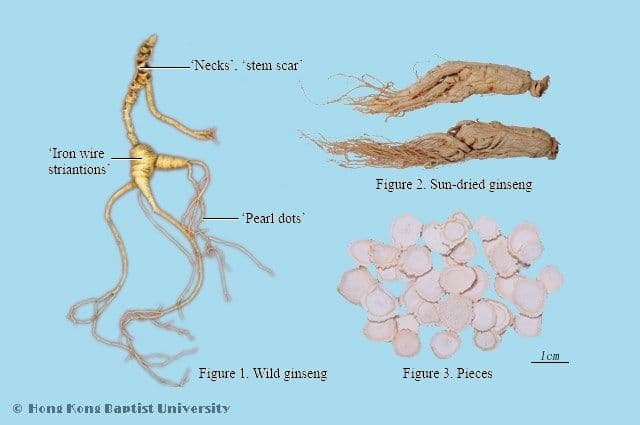
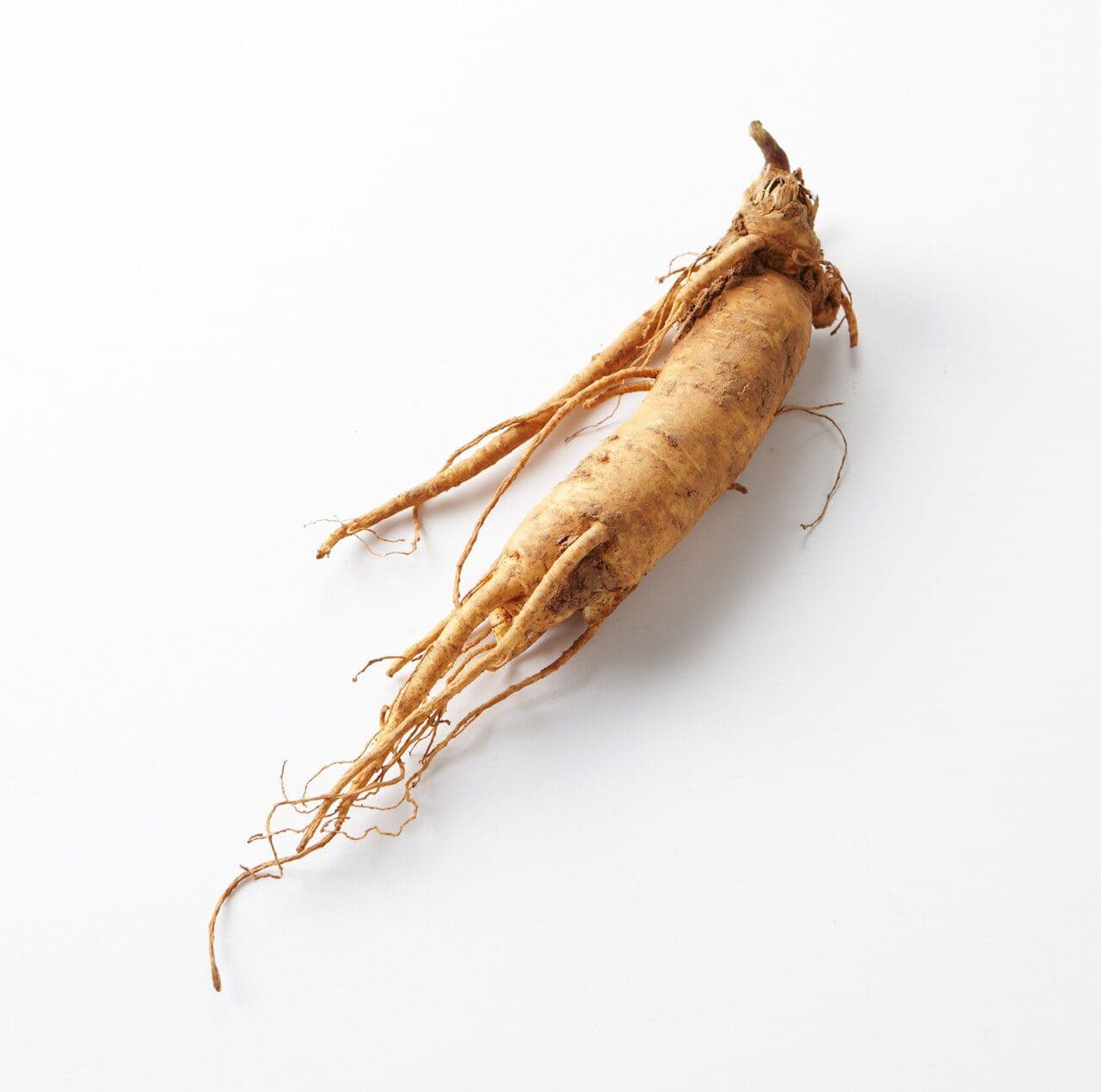
Ginseng Root
Warm (温)人參 · Ren Shen
Radix Ginseng
TCM Properties
Nature (四气)
Warm (温)Flavor (五味)
Sweet (甘)Bitter (苦)
Meridian Tropism
LungSpleen
人參 · Ren Shen
Radix Ginseng
Unearth the ancient secrets and modern science behind Ren Shen Ginseng Root, a revered tonic in Traditional Chinese Medicine, to discover its profound impact on vitality, immunity, and cognitive health.
Decocted separately: 1-9g; Powder: 0.5-1g; Tincture: 0.25-3ml or 3-10ml; Emergencies: up to 30g in multiple doses
Decocted separately: 1-9g; Powder: 0.5-1g; Tincture: 0.25-3ml or 3-10ml; Emergencies: up to 30g in multiple doses
For a standard decoction, use 1-9g of dried Ren Shen slices. It is often recommended to decoct Ren Shen separately for a longer period (e.g., 20-30 minutes) to extract its full benefits, then add this concentrated liquid to other herbal formulas. For emergencies, up to 30g may be used in multiple doses, but only under expert supervision.
Ren Shen can be ground into a fine powder. A typical dosage is 0.5-1g, taken orally, often mixed with warm water or encapsulated. This method allows for direct absorption and is convenient for regular supplementation.
Ren Shen tinctures offer a concentrated form. Dosage ranges from 0.25-3ml for general tonic use, or up to 3-10ml in specific cases, as directed by a practitioner. Tinctures are absorbed quickly and are convenient for on-the-go use.
Ren Shen is famously added to nourishing soups and stews, particularly during colder months or for recovery. The root can be sliced and simmered with chicken or other meats and vegetables. This gentle, prolonged cooking helps extract its beneficial compounds and integrates it into a wholesome meal. Be mindful of the dosage even in culinary preparations.
For a standard decoction, use 1-9g of dried Ren Shen slices. It is often recommended to decoct Ren Shen separately for a longer period (e.g., 20-30 minutes) to extract its full benefits, then add this concentrated liquid to other herbal formulas. For emergencies, up to 30g may be used in multiple doses, but only under expert supervision.
Ren Shen can be ground into a fine powder. A typical dosage is 0.5-1g, taken orally, often mixed with warm water or encapsulated. This method allows for direct absorption and is convenient for regular supplementation.
Ren Shen tinctures offer a concentrated form. Dosage ranges from 0.25-3ml for general tonic use, or up to 3-10ml in specific cases, as directed by a practitioner. Tinctures are absorbed quickly and are convenient for on-the-go use.
Ren Shen is famously added to nourishing soups and stews, particularly during colder months or for recovery. The root can be sliced and simmered with chicken or other meats and vegetables. This gentle, prolonged cooking helps extract its beneficial compounds and integrates it into a wholesome meal. Be mindful of the dosage even in culinary preparations.
Clinical evidence for Ren Shen is growing, with systematic reviews and meta-analyses exploring its efficacy for conditions like fatigue and Type 2 Diabetes Mellitus. Research highlights the role of active compounds, ginsenosides, in various pharmacological actions, including anti-tumor, cardiovascular protection, and immune modulation. While some studies are protocols or animal-based, a significant body of traditional knowledge is increasingly supported by modern scientific inquiry.
Moderate — Some clinical studies
Clinical evidence for Ren Shen is growing, with systematic reviews and meta-analyses exploring its efficacy for conditions like fatigue and Type 2 Diabetes Mellitus. Research highlights the role of active compounds, ginsenosides, in various pharmacological actions, including anti-tumor, cardiovascular protection, and immune modulation. While some studies are protocols or animal-based, a significant body of traditional knowledge is increasingly supported by modern scientific inquiry.
Moderate — Some clinical studies
In humans, P. ginseng may increase the hypoglycemic effect of insulin and sulfonylureas (5). Antiplatelets: P. ginseng may increase aspirin bioavailability (49). Anticoagulants: Studies on whether P. ginseng can antagonize the effects of anticoagulants are mixed (6) (7) (8) (50) (51). Clinical relevance needs further assessment. MAOIs: In humans, P. ginseng may cause manic-like symptoms when combined with MAOIs (9). Imatinib: A case report indicates that P. ginseng may increase risk of hepatotox
Avoid
In humans, P. ginseng may increase the hypoglycemic effect of insulin and sulfonylureas (5). Antiplatelets: P. ginseng may increase aspirin bioavailability (49). Anticoagulants: Studies on whether P. ginseng can antagonize the effects of anticoagulants are mixed (6) (7) (8) (50) (51). Clinical relevance needs further assessment. MAOIs: In humans, P. ginseng may cause manic-like symptoms when combined with MAOIs (9). Imatinib: A case report indicates that P. ginseng may increase risk of hepatotox
Avoid
Imagine a root, gnarled and ancient, whispered about in hushed tones for millennia, believed to hold the very essence of life force within its fibers. This isn't folklore; this is the enduring legacy of Ren Shen. For centuries, this prized root was reserved for emperors and the gravely ill, a symbol of ultimate healing and longevity.
My own grandmother, a woman of formidable wisdom, would save her precious slivers of Ren Shen for times of true depletion, her belief in its restorative power unwavering. She understood, intuitively, what modern science is now beginning to articulate.
Ren Shen (Radix Ginseng), also known as Ginseng Root, Asian Ginseng, or Panax, is a powerful tonic herb used in Traditional Chinese Medicine (TCM) primarily for invigorating vital energy (Yuan Qi) and promoting overall vitality. It's not merely a stimulant; it’s a deep restorative, working at the core of your energetic being. Its fame is global, a testament to its profound impact on health and well-being.
From the misty mountains of Korea and Northeast China, this root has traveled across continents, carrying with it an ancient promise of resilience and rejuvenation.
When we look at the historical records, the reverence for Ren Shen is clear. The authoritative 《中国药典》(2000年版) succinctly encapsulates its core functions: “大补元气,复脉固脱,补脾益肺,生津,安神” – powerfully tonifies Yuan Qi, restores the pulse and prevents collapse, tonifies the Spleen and Lungs, generates fluids, and calms the Spirit. It's a comprehensive tonic for conditions of profound deficiency, a concept we'll explore as we bridge ancient wisdom with contemporary understanding.
In the intricate language of Traditional Chinese Medicine, every herb has a unique energetic signature, a specific role it plays in restoring balance. Ren Shen's signature is one of profound restoration and invigoration. Its nature is slightly warm, and its flavors are sweet and slightly bitter.
Think of the sweet flavor as nourishing and harmonizing, gently building up your body's reserves, while the slight bitterness guides its energy downward and helps clear any subtle dampness or heat that might impede its tonifying action. This combination makes it a uniquely potent and balanced tonic.
Ren Shen specifically targets the Lung and Spleen meridians, and also impacts the Heart. In TCM, the Spleen is central to digestion and transforming food into energy (Qi), while the Lungs govern respiration and distribute Qi throughout the body, including our defensive energy (Wei Qi). By strengthening these foundational systems, Ren Shen directly boosts your core vitality, helping your body produce and circulate the essential energy it needs to thrive.
The Heart meridian connection means it also calms the mind and supports emotional well-being.
I once had a patient, a busy executive named Sarah, who came to me utterly drained after years of high-stress work. Western labs showed no major abnormalities, but her energy was consistently low, her digestion sluggish, and her focus wavering. In TCM terms, her Spleen and Lung Qi were severely depleted, and her Yuan Qi was suffering. After a careful diagnosis, we incorporated Ren Shen into her regimen. Within weeks, she noticed a subtle yet profound shift.
It wasn't a caffeine-like jolt, but a deep, sustained energy that allowed her to get through her day without crashing. Her digestion improved, and she felt a clarity she hadn't experienced in years. This is the power of Ren Shen: it doesn't just mask symptoms; it rebuilds from the inside out, aligning with what modern medicine recognizes as supporting adrenal function and metabolic efficiency.
Ren Shen's multifaceted actions make it a powerhouse for a variety of health concerns. Let's explore some of its most compelling benefits, linking its traditional uses to contemporary scientific understanding.
This is perhaps Ren Shen’s most celebrated role. If you feel perpetually exhausted, not just tired, but deeply weary even after rest, Ren Shen may offer profound support. In TCM, this translates to powerfully tonifying Yuan Qi, Spleen Qi, and Lung Qi – the very engines of your body’s energy production and distribution. It’s like recharging your internal batteries at their source.
From a Western perspective, this aligns with its adaptogenic properties, helping the body manage stress and optimize energy utilization. Researchers like Wang et al. (2020) in Frontiers in Pharmacology conducted a systematic review of Panax ginseng for fatigue, identifying 8 eligible randomized controlled trials and 30 animal studies. While they noted previous reviews had inconclusive results due to methodological flaws, the volume of ongoing research underscores its potential in this area.
Do you find yourself catching every cold that goes around? Ren Shen is a fantastic ally for strengthening your immune defenses. By tonifying Lung Qi, it fortifies your body’s protective barrier, known as Wei Qi or defensive energy, making you more resilient against external pathogens. The Journal of Traditional Chinese Veterinary Medicine (2012) highlighted that studies have shown Ren Shen enhances killer T-cell activity and boosts antiviral effects.
This suggests a direct impact on cellular immunity, helping your body identify and neutralize threats more effectively.
If brain fog or a lack of focus is a concern, Ren Shen might be worth exploring. Its ability to tonify Heart Qi and calm the Spirit is traditionally associated with improved mental acuity. From a functional medicine perspective, this aligns with its neuroprotective properties. The Journal of Traditional Chinese Veterinary Medicine (2012) also noted that Ginseng positively affects brain function.
The active compounds, ginsenosides, are subjects of ongoing research for their potential roles in improving memory, concentration, and overall cognitive performance.
Beyond its energetic qualities, Ren Shen is also known to generate Body Fluids and stop thirst. In TCM, this refers to its ability to replenish the essential fluids that lubricate our tissues and organs, preventing dryness and supporting metabolic processes. This isn't just about drinking water; it's about the body's intrinsic ability to produce and retain vital fluids. For someone experiencing chronic dry mouth or a feeling of internal dryness due to Qi deficiency, this action can be incredibly beneficial.
In our fast-paced world, stress often leaves us feeling anxious and restless. Ren Shen tonifies Heart Qi and calms the Spirit, which in TCM signifies a profound harmonizing effect on the nervous system and emotional state. This can manifest as reduced anxiety, improved sleep quality, and a greater sense of inner peace.
The Journal of Traditional Chinese Veterinary Medicine (2012) also highlighted Ginseng's ability to limit adrenal stress response, a key mechanism through which it supports stress resilience from a Western physiological standpoint.
The bridge between TCM and Western functional medicine is continuously being built, and Ren Shen stands as one of its strongest pillars. The primary active compounds responsible for many of ginseng's therapeutic effects are ginsenosides, a class of steroid glycosides. These compounds are extensively studied for their diverse pharmacological properties.
Regarding its role in metabolic health, especially for Type 2 Diabetes Mellitus (T2DM), a significant research initiative was outlined by Li et al. (2021) in Medicine (Baltimore). They published a protocol for a systematic review and meta-analysis specifically to evaluate the effectiveness and safety of Renshen and Huanglian for T2DM, focusing on key biomarkers like fasting blood glucose and HbA1c. This kind of rigorous study design is crucial for understanding its clinical application.
Beyond metabolism, the broad spectrum of Ren Shen’s effects is continually being investigated. Researchers at institutions like Changchun University of Chinese Medicine have explored how compounds in Ren Shen formulas regulate sugar metabolism through multiple core targets. Furthermore, systematic reviews in Chinese biomedical literature, such as one from 2023 by the China Biological Medical Literature Service System, highlight that ginsenosides and polysaccharides possess multiple pharmacological actions, including anti-tumor and cardiovascular protective effects.
Another 2023 study in the Chinese Journal of Experimental Traditional Medical Formulae revealed how a Ren Shen-based oral liquid improved kidney fibrosis through specific metabolic pathways.
It’s important to distinguish between the well-documented traditional use of Ren Shen, which spans thousands of years, and clinically studied benefits, which are subject to modern scientific scrutiny. While some areas, like erectile function and testosterone, have shown subpar results in clinical trials despite traditional use, its effectiveness for mood, immunity, and cognition is gaining more robust scientific backing. My colleagues, like Dr. Brent Bauer at Mayo Clinic and Dr.
Helene Langevin at NIH NCCIH, continually emphasize the importance of rigorous research to validate these ancient practices.
Ren Shen is a powerful herb, and its preparation and dosage require careful consideration. Its versatility allows for various forms of consumption, each suited to different needs and preferences.
This is a traditional and highly effective method. For a standard decoction, use 1-9g of dried Ren Shen slices. It’s often recommended to decoct Ren Shen separately for a longer period – typically 20-30 minutes – to fully extract its beneficial compounds, then add this concentrated liquid to other herbal formulas or consume on its own. The modern Chinese Materia Medica textbooks consistently emphasize this '另煎兑入汤剂' (decoct separately and add to the main formula) method.
In acute emergencies or severe collapse, doses can go up to 30g in multiple doses, but this should only be done under the direct supervision of a qualified practitioner.
For convenience, Ren Shen can be ground into a fine powder. A typical dosage is 0.5-1g, taken orally, often mixed with warm water or encapsulated. This method allows for consistent dosing and is easy to incorporate into a daily routine.
Ren Shen tinctures offer a concentrated liquid extract. Dosage ranges from 0.25-3ml or 3-10ml, depending on the concentration and the specific health concern. Tinctures are absorbed quickly and are a convenient option for those who prefer not to prepare teas or powders.
Ren Shen is a star ingredient in traditional East Asian nourishing soups and stews, especially during colder months or periods of convalescence. Slices of the root can be simmered with chicken or other meats and vegetables for several hours. This gentle, prolonged cooking helps extract its beneficial compounds and integrates it into a wholesome, restorative meal. Always remember that even in culinary applications, the potency of Ren Shen means mindful dosing is important.
Given its potency, I always advise my patients to seek guidance from a qualified TCM practitioner or integrative physician before incorporating Ren Shen into their regimen. A personalized assessment of your constitution and health needs is essential to ensure safe and effective use.
While Ren Shen is a powerful tonic, it is not suitable for everyone. Its potent, warming, and stimulating properties mean that certain individuals should strictly avoid it. This is a critical section, and I cannot overstate the importance of understanding these contraindications.
Ren Shen is contraindicated for Yin Deficiency with Heat signs or 'steaming bone disorder.' This means if you experience symptoms like night sweats, five-palm heat (hot palms, soles, and chest), dry mouth, malar flush, or a rapid pulse, Ren Shen could exacerbate these heat symptoms. Similarly, it is contraindicated for Heat Excess (e.g., high fever, severe inflammation) and for Liver Yang Rising (symptoms like headaches, dizziness, irritability, red face/eyes).
It should also be avoided in cases of Fire due to Stagnation, where underlying stagnation is generating heat. Finally, it is strictly contraindicated for hypertension with systolic blood pressure greater than 180mm Hg, as it can potentially elevate blood pressure in sensitive individuals.
Ren Shen should be avoided during pregnancy. Several in vitro and in vivo animal studies have indicated that certain ginsenosides (bioactive compounds found in Panax ginseng) may have teratogenic effects, meaning they could potentially cause birth defects. While no human studies have been conducted to confirm this, the precautionary principle dictates complete avoidance to ensure fetal safety.
Given its potent effects, Ren Shen can interact with certain prescription medications. It may enhance the effects of blood thinners (anticoagulants), increasing the risk of bleeding. Individuals taking blood pressure medications should consult their doctor, as Ren Shen can affect blood pressure. It may also interact with stimulants, immunosuppressants, and medications for diabetes. Always inform your healthcare provider about any herbal supplements you are taking, especially Ren Shen, to avoid potential adverse interactions.
Ren Shen is more than just an herb; it is a symbol of profound vitality, a testament to the enduring wisdom of Traditional Chinese Medicine. Its journey from ancient reverence to modern scientific inquiry reflects our continuous quest to understand and harness nature’s healing potential. As we navigate the complexities of modern health, Ren Shen offers a powerful reminder that true wellness often lies in deeply nourishing our foundational energy, respecting the intricate balance within our bodies.
It invites us to listen to our innate wisdom, supported by both the profound insights of the ancients and the ever-unfolding discoveries of contemporary science.
Imagine a root, gnarled and ancient, whispered about in hushed tones for millennia, believed to hold the very essence of life force within its fibers. This isn't folklore; this is the enduring legacy of Ren Shen. For centuries, this prized root was reserved for emperors and the gravely ill, a symbol of ultimate healing and longevity.
My own grandmother, a woman of formidable wisdom, would save her precious slivers of Ren Shen for times of true depletion, her belief in its restorative power unwavering. She understood, intuitively, what modern science is now beginning to articulate.
Ren Shen (Radix Ginseng), also known as Ginseng Root, Asian Ginseng, or Panax, is a powerful tonic herb used in Traditional Chinese Medicine (TCM) primarily for invigorating vital energy (Yuan Qi) and promoting overall vitality. It's not merely a stimulant; it’s a deep restorative, working at the core of your energetic being. Its fame is global, a testament to its profound impact on health and well-being.
From the misty mountains of Korea and Northeast China, this root has traveled across continents, carrying with it an ancient promise of resilience and rejuvenation.
When we look at the historical records, the reverence for Ren Shen is clear. The authoritative 《中国药典》(2000年版) succinctly encapsulates its core functions: “大补元气,复脉固脱,补脾益肺,生津,安神” – powerfully tonifies Yuan Qi, restores the pulse and prevents collapse, tonifies the Spleen and Lungs, generates fluids, and calms the Spirit. It's a comprehensive tonic for conditions of profound deficiency, a concept we'll explore as we bridge ancient wisdom with contemporary understanding.
In the intricate language of Traditional Chinese Medicine, every herb has a unique energetic signature, a specific role it plays in restoring balance. Ren Shen's signature is one of profound restoration and invigoration. Its nature is slightly warm, and its flavors are sweet and slightly bitter.
Think of the sweet flavor as nourishing and harmonizing, gently building up your body's reserves, while the slight bitterness guides its energy downward and helps clear any subtle dampness or heat that might impede its tonifying action. This combination makes it a uniquely potent and balanced tonic.
Ren Shen specifically targets the Lung and Spleen meridians, and also impacts the Heart. In TCM, the Spleen is central to digestion and transforming food into energy (Qi), while the Lungs govern respiration and distribute Qi throughout the body, including our defensive energy (Wei Qi). By strengthening these foundational systems, Ren Shen directly boosts your core vitality, helping your body produce and circulate the essential energy it needs to thrive.
The Heart meridian connection means it also calms the mind and supports emotional well-being.
I once had a patient, a busy executive named Sarah, who came to me utterly drained after years of high-stress work. Western labs showed no major abnormalities, but her energy was consistently low, her digestion sluggish, and her focus wavering. In TCM terms, her Spleen and Lung Qi were severely depleted, and her Yuan Qi was suffering. After a careful diagnosis, we incorporated Ren Shen into her regimen. Within weeks, she noticed a subtle yet profound shift.
It wasn't a caffeine-like jolt, but a deep, sustained energy that allowed her to get through her day without crashing. Her digestion improved, and she felt a clarity she hadn't experienced in years. This is the power of Ren Shen: it doesn't just mask symptoms; it rebuilds from the inside out, aligning with what modern medicine recognizes as supporting adrenal function and metabolic efficiency.
Ren Shen's multifaceted actions make it a powerhouse for a variety of health concerns. Let's explore some of its most compelling benefits, linking its traditional uses to contemporary scientific understanding.
This is perhaps Ren Shen’s most celebrated role. If you feel perpetually exhausted, not just tired, but deeply weary even after rest, Ren Shen may offer profound support. In TCM, this translates to powerfully tonifying Yuan Qi, Spleen Qi, and Lung Qi – the very engines of your body’s energy production and distribution. It’s like recharging your internal batteries at their source.
From a Western perspective, this aligns with its adaptogenic properties, helping the body manage stress and optimize energy utilization. Researchers like Wang et al. (2020) in Frontiers in Pharmacology conducted a systematic review of Panax ginseng for fatigue, identifying 8 eligible randomized controlled trials and 30 animal studies. While they noted previous reviews had inconclusive results due to methodological flaws, the volume of ongoing research underscores its potential in this area.
Do you find yourself catching every cold that goes around? Ren Shen is a fantastic ally for strengthening your immune defenses. By tonifying Lung Qi, it fortifies your body’s protective barrier, known as Wei Qi or defensive energy, making you more resilient against external pathogens. The Journal of Traditional Chinese Veterinary Medicine (2012) highlighted that studies have shown Ren Shen enhances killer T-cell activity and boosts antiviral effects.
This suggests a direct impact on cellular immunity, helping your body identify and neutralize threats more effectively.
If brain fog or a lack of focus is a concern, Ren Shen might be worth exploring. Its ability to tonify Heart Qi and calm the Spirit is traditionally associated with improved mental acuity. From a functional medicine perspective, this aligns with its neuroprotective properties. The Journal of Traditional Chinese Veterinary Medicine (2012) also noted that Ginseng positively affects brain function.
The active compounds, ginsenosides, are subjects of ongoing research for their potential roles in improving memory, concentration, and overall cognitive performance.
Beyond its energetic qualities, Ren Shen is also known to generate Body Fluids and stop thirst. In TCM, this refers to its ability to replenish the essential fluids that lubricate our tissues and organs, preventing dryness and supporting metabolic processes. This isn't just about drinking water; it's about the body's intrinsic ability to produce and retain vital fluids. For someone experiencing chronic dry mouth or a feeling of internal dryness due to Qi deficiency, this action can be incredibly beneficial.
In our fast-paced world, stress often leaves us feeling anxious and restless. Ren Shen tonifies Heart Qi and calms the Spirit, which in TCM signifies a profound harmonizing effect on the nervous system and emotional state. This can manifest as reduced anxiety, improved sleep quality, and a greater sense of inner peace.
The Journal of Traditional Chinese Veterinary Medicine (2012) also highlighted Ginseng's ability to limit adrenal stress response, a key mechanism through which it supports stress resilience from a Western physiological standpoint.
The bridge between TCM and Western functional medicine is continuously being built, and Ren Shen stands as one of its strongest pillars. The primary active compounds responsible for many of ginseng's therapeutic effects are ginsenosides, a class of steroid glycosides. These compounds are extensively studied for their diverse pharmacological properties.
Regarding its role in metabolic health, especially for Type 2 Diabetes Mellitus (T2DM), a significant research initiative was outlined by Li et al. (2021) in Medicine (Baltimore). They published a protocol for a systematic review and meta-analysis specifically to evaluate the effectiveness and safety of Renshen and Huanglian for T2DM, focusing on key biomarkers like fasting blood glucose and HbA1c. This kind of rigorous study design is crucial for understanding its clinical application.
Beyond metabolism, the broad spectrum of Ren Shen’s effects is continually being investigated. Researchers at institutions like Changchun University of Chinese Medicine have explored how compounds in Ren Shen formulas regulate sugar metabolism through multiple core targets. Furthermore, systematic reviews in Chinese biomedical literature, such as one from 2023 by the China Biological Medical Literature Service System, highlight that ginsenosides and polysaccharides possess multiple pharmacological actions, including anti-tumor and cardiovascular protective effects.
Another 2023 study in the Chinese Journal of Experimental Traditional Medical Formulae revealed how a Ren Shen-based oral liquid improved kidney fibrosis through specific metabolic pathways.
It’s important to distinguish between the well-documented traditional use of Ren Shen, which spans thousands of years, and clinically studied benefits, which are subject to modern scientific scrutiny. While some areas, like erectile function and testosterone, have shown subpar results in clinical trials despite traditional use, its effectiveness for mood, immunity, and cognition is gaining more robust scientific backing. My colleagues, like Dr. Brent Bauer at Mayo Clinic and Dr.
Helene Langevin at NIH NCCIH, continually emphasize the importance of rigorous research to validate these ancient practices.
Ren Shen is a powerful herb, and its preparation and dosage require careful consideration. Its versatility allows for various forms of consumption, each suited to different needs and preferences.
This is a traditional and highly effective method. For a standard decoction, use 1-9g of dried Ren Shen slices. It’s often recommended to decoct Ren Shen separately for a longer period – typically 20-30 minutes – to fully extract its beneficial compounds, then add this concentrated liquid to other herbal formulas or consume on its own. The modern Chinese Materia Medica textbooks consistently emphasize this '另煎兑入汤剂' (decoct separately and add to the main formula) method.
In acute emergencies or severe collapse, doses can go up to 30g in multiple doses, but this should only be done under the direct supervision of a qualified practitioner.
For convenience, Ren Shen can be ground into a fine powder. A typical dosage is 0.5-1g, taken orally, often mixed with warm water or encapsulated. This method allows for consistent dosing and is easy to incorporate into a daily routine.
Ren Shen tinctures offer a concentrated liquid extract. Dosage ranges from 0.25-3ml or 3-10ml, depending on the concentration and the specific health concern. Tinctures are absorbed quickly and are a convenient option for those who prefer not to prepare teas or powders.
Ren Shen is a star ingredient in traditional East Asian nourishing soups and stews, especially during colder months or periods of convalescence. Slices of the root can be simmered with chicken or other meats and vegetables for several hours. This gentle, prolonged cooking helps extract its beneficial compounds and integrates it into a wholesome, restorative meal. Always remember that even in culinary applications, the potency of Ren Shen means mindful dosing is important.
Given its potency, I always advise my patients to seek guidance from a qualified TCM practitioner or integrative physician before incorporating Ren Shen into their regimen. A personalized assessment of your constitution and health needs is essential to ensure safe and effective use.
While Ren Shen is a powerful tonic, it is not suitable for everyone. Its potent, warming, and stimulating properties mean that certain individuals should strictly avoid it. This is a critical section, and I cannot overstate the importance of understanding these contraindications.
Ren Shen is contraindicated for Yin Deficiency with Heat signs or 'steaming bone disorder.' This means if you experience symptoms like night sweats, five-palm heat (hot palms, soles, and chest), dry mouth, malar flush, or a rapid pulse, Ren Shen could exacerbate these heat symptoms. Similarly, it is contraindicated for Heat Excess (e.g., high fever, severe inflammation) and for Liver Yang Rising (symptoms like headaches, dizziness, irritability, red face/eyes).
It should also be avoided in cases of Fire due to Stagnation, where underlying stagnation is generating heat. Finally, it is strictly contraindicated for hypertension with systolic blood pressure greater than 180mm Hg, as it can potentially elevate blood pressure in sensitive individuals.
Ren Shen should be avoided during pregnancy. Several in vitro and in vivo animal studies have indicated that certain ginsenosides (bioactive compounds found in Panax ginseng) may have teratogenic effects, meaning they could potentially cause birth defects. While no human studies have been conducted to confirm this, the precautionary principle dictates complete avoidance to ensure fetal safety.
Given its potent effects, Ren Shen can interact with certain prescription medications. It may enhance the effects of blood thinners (anticoagulants), increasing the risk of bleeding. Individuals taking blood pressure medications should consult their doctor, as Ren Shen can affect blood pressure. It may also interact with stimulants, immunosuppressants, and medications for diabetes. Always inform your healthcare provider about any herbal supplements you are taking, especially Ren Shen, to avoid potential adverse interactions.
Ren Shen is more than just an herb; it is a symbol of profound vitality, a testament to the enduring wisdom of Traditional Chinese Medicine. Its journey from ancient reverence to modern scientific inquiry reflects our continuous quest to understand and harness nature’s healing potential. As we navigate the complexities of modern health, Ren Shen offers a powerful reminder that true wellness often lies in deeply nourishing our foundational energy, respecting the intricate balance within our bodies.
It invites us to listen to our innate wisdom, supported by both the profound insights of the ancients and the ever-unfolding discoveries of contemporary science.
This information is for educational purposes only and is not intended as medical advice. Always consult a qualified healthcare practitioner before using any herbal remedy.