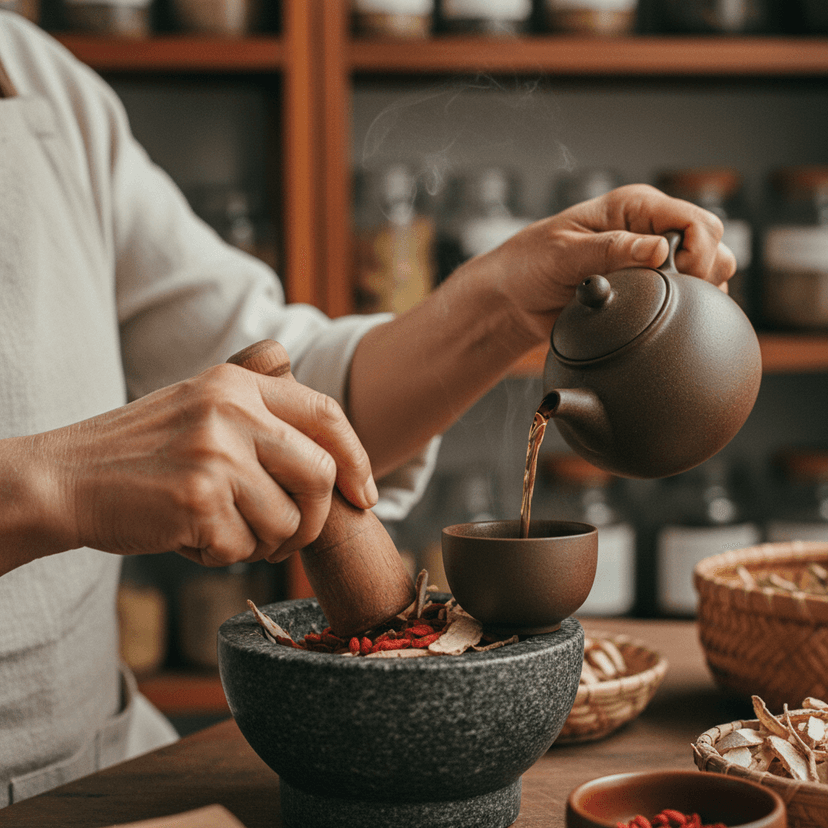
The common wisdom says brain fog is just a sign of aging or overwork, easily fixed with a cup of coffee or a trendy supplement. But what if I told you that the very 'brain boosters' you're reaching for might be missing the fundamental root of your cognitive decline, even accelerating it over time? This might sound surprising.
MODIFIED TEST ONLY
They are often the body's early warning signals – a complex interplay of systemic imbalances that Traditional Chinese Medicine has understood for millennia and that modern science is finally beginning to validate.
My mission? To help you understand these signals, to move beyond the superficial fixes, and to cultivate true cognitive resilience.
Myth #1: Brain Fog is Just a 'Brain Problem'
Many people assume their fuzzy thinking originates solely within their cranium. They blame poor sleep, stress, or simply getting older, and then they reach for a supplement promising to 'boost' their brainpower.
It’s an understandable assumption, especially with the constant barrage of marketing for nootropics and focus-enhancing drinks.
But this hyper-focused view misses the forest for a single tree.
Your Brain is Part of a Whole-Body Symphony
In TCM, your brain, often referred to as the 'Sea of Marrow,' is intimately connected to the health of your Kidney, Liver, and Spleen systems. When we talk about Kidney essence deficiency, we're not just talking about the physical kidney organs. We're talking about the fundamental wellspring of vitality, growth, reproduction, and the very marrow that fills your brain and spinal cord.
Think of it like the deep, nutrient-rich soil in a garden: if the soil is depleted, the plants won't thrive, no matter how much you water their leaves.
When this essence dwindles, you don't just feel tired; your memory dims, your focus wavers, and you might experience ringing in the ears or lower back pain. It's a systemic issue, not just a localized one.
Modern science, too, is recognizing this broader connection. Researchers like Helene Langevin at NIH NCCIH are exploring the intricate links between inflammation, metabolic health, and neurological function. What TCM calls Kidney essence, Western medicine might see reflected in mitochondrial function, cellular repair processes, or neurotrophic factor production. It’s a different language, but often pointing to the same underlying biological truths.
Myth #2: All 'Brain Herbs' Work the Same Way
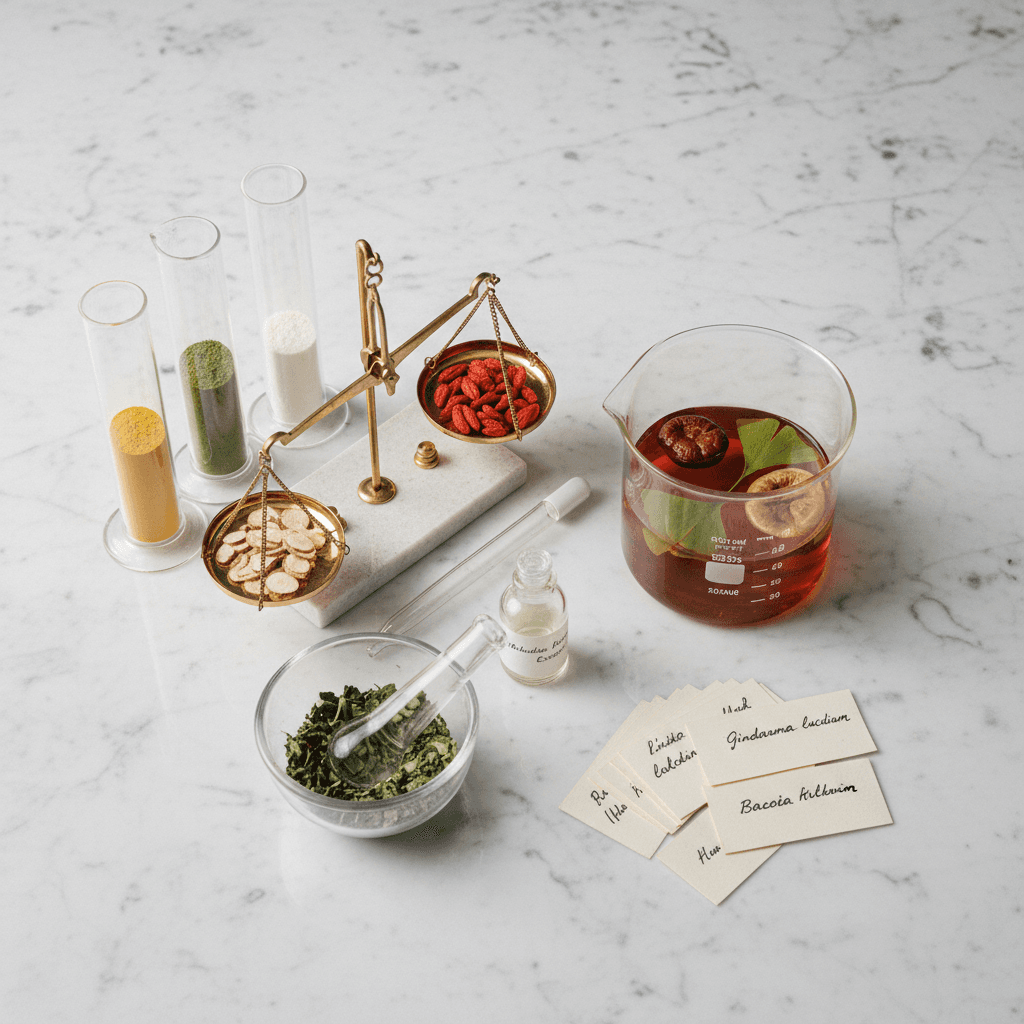
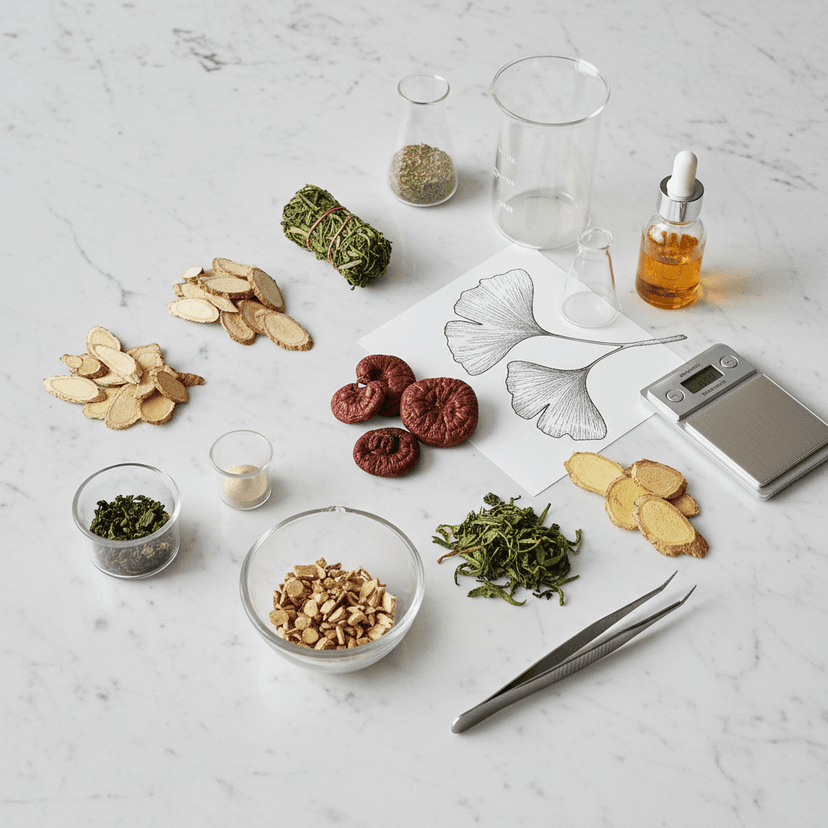
Pop into any health food store, and you'll see shelves packed with supplements marketed for 'brain health'—Ginkgo, Bacopa, Lion's Mane. These herbs certainly have their merits. But the idea that they all function as generic 'brain boosters,' acting on some vague neural pathway, is a gross oversimplification. It’s like saying all tools in a toolbox do the same job.
Herbs Work Differently: Targeted Energetic Action and Molecular Precision
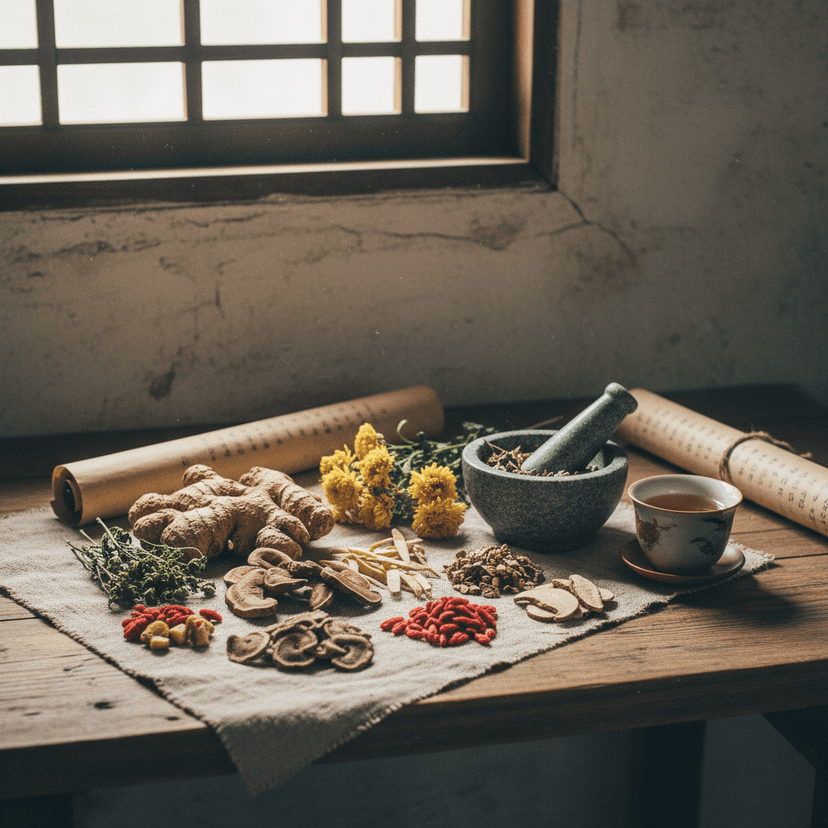
TCM herbs are chosen for their specific energetic properties (warm, cool, sweet, bitter) and their affinity for particular organ systems or meridians. They don't just boost; they regulate, nourish, or clear imbalances. Take the combination of Shu Di Huang (Prepared Rehmannia Root) and Shan Zhu Yu (Cornus Fruit). These aren't random choices.
Shu Di Huang is a deeply nourishing herb for Kidney Yin and essence, while Shan Zhu Yu astringes and stabilizes, preventing the essence from leaking away. Together, they form a powerful synergistic pair. In a 2025 data mining study by Hao Zhihua and Meng Tianwei, this combination showed a significant support rate of 92.3% as a high-frequency drug pair in formulas for mild cognitive impairment, specifically addressing the TCM patterns of nourishing Liver and Kidney, and tonifying Qi and Spleen.
The magic lies in how these herbs work together to restore balance. This is a cornerstone of TCM wisdom that Western reductionist approaches often overlook.
Research Spotlight: Huang Jing and Cellular Renewal
Let's talk about Huang Jing (Polygonatum sibiricum), a classic herb praised in Shen Nong Ben Cao Jing for its ability to 'prolong life and replenish internal organs.' This isn't just folk wisdom; modern science is unraveling its mechanisms.
Known also as Siberian Solomon's Seal or Rhizoma Polygonati, Huang Jing is a potent tonifying herb. In TCM, we use it for nourishing Yin, moistening the Lungs, and tonifying the Spleen and Qi. Its key active compounds? Polysaccharides, saponins, and flavonoids – a rich botanical symphony.
A groundbreaking 2024 study by Liao Kexin, Jiang Jielin, and Xiao Yisheng investigated Huang Jing Wan in mice with memory impairment. They found that a high-dose group treated with Huang Jing Wan showed a significant increase in the LC3Ⅱ/LC3Ⅰ ratio (47.6%) compared to the model group (P<0.01). That's not just a statistic; it points to a crucial underlying mechanism.
The LC3Ⅱ/LC3Ⅰ ratio is a critical marker for autophagy, the body's cellular 'self-eating' process that clears out damaged proteins and organelles, essential for neuronal health and preventing neurodegeneration. The study suggests Huang Jing Wan improves memory by regulating the mTOR/Beclin-1 pathway, a key regulator of autophagy. This means Huang Jing Wan improves memory by enhancing cellular cleansing and repair.
This is a perfect example of how ancient wisdom, which speaks of nourishing essence for longevity, maps directly onto modern molecular biology and the cutting-edge science of cellular self-renewal.
Myth #3: Cognitive Decline is an Inevitable Part of Aging
How many times have you heard someone shrug off memory lapses as 'just a senior moment'? This pervasive belief that declining cognitive function is an unavoidable consequence of getting older is perhaps the most dangerous myth of all. It breeds a sense of helplessness, discouraging proactive steps for maintaining mental acuity.
Cognitive Decline is Not Inevitable: Resilience is Within Reach
While some cognitive changes are normal with age, significant decline is not. Both TCM and modern functional medicine advocate for proactive interventions. One patient, let's call her Sarah, came to me at 62. She was a retired teacher, vibrant in spirit, but her memory had become a 'sieve,' as she put it. She couldn't remember her grandchildren's school schedules, often forgot why she walked into a room. She'd been told it was 'just part of it.'
After a thorough intake, her TCM pattern pointed to Spleen Qi Deficiency with Phlegm-Dampness obstructing the orifices – essentially, her digestive system wasn't properly transforming food into vital energy (Qi) and was instead creating internal 'dampness' that clouded her mind. We focused on Spleen-tonifying herbs and dietary changes, alongside specific acupuncture points like Zusanli (ST36) and Fenglong (ST40), known for resolving phlegm.
Within three months, Sarah's memory improved drastically. She was recalling details, engaging in conversations without effort, and felt a lift in her overall mood. “I feel like the cobwebs have finally cleared,” she told me, beaming. Her story isn't unique.
Consider the work from the Nanjing University of Chinese Medicine team in 2017. They investigated Compound Chang Pu Yi Zhi Tang (Acorus/Polygala Decoction) in patients with post-stroke cognitive impairment. This formula contains Shi Chang Pu (Acorus tatarinowii) and Yuan Zhi (Polygala tenuifolia), herbs historically used to 'open the heart orifices' and 'benefit intelligence,' as cited in the Ben Cao Gang Mu. The study found that the treatment group's ADAS-cog (Alzheimer's Disease Assessment Scale-Cognitive Subscale) score decreased by 4.
2 points, a statistically significant improvement compared to the nimodipine control group (P<0.05).
This isn't about subjective feelings; it's measurable, objective data demonstrating the impact of targeted TCM intervention.
Myth #4: All You Need is a Quick Fix
The hustle culture of modern life, especially with the constant demands of digital connectivity and the push for instant gratification, often leads us to seek immediate solutions for complex health issues. We want a pill, a powder, a quick hack to fix our brain fog, much like we might reach for a seasonal allergy pill when the pollen count is high. But this approach almost always backfires.
Lasting Resilience: A Holistic Journey, Not a Quick Fix
True cognitive resilience isn't built overnight. It's a process of restoring balance, repairing cellular damage, and strengthening the body's innate capacity for health. It’s like tending to a delicate ecosystem. You can't just sprinkle a magic fertilizer once and expect a lush forest.
My approach, deeply rooted in both my Beijing University of Chinese Medicine training and my integrative medicine residency, involves a multi-pronged strategy:
1. Personalized Herbal Formulas: This isn't a one-size-fits-all approach. Based on your unique TCM pattern diagnosis – whether it's Kidney essence deficiency, Spleen Qi deficiency, or Liver Qi stagnation – we select specific herbs. Take Huang Qi (Astragalus membranaceus), for instance. It’s a powerful Qi tonifier, often used for its immune-enhancing properties by strengthening vital energy and supporting adaptive immune responses.
Its dosage (9-30g in decoction), slightly warm nature, and affinity for the Lung and Spleen meridians are all part of a precise therapeutic strategy.
2. Acupuncture: Specific points on the scalp like Baihui (GV20) and Shenting (GV24) are often used to 'open the orifices,' improve cerebral blood flow, and calm the Shen (mind-spirit). Research into the neurobiological effects of acupuncture, spearheaded by individuals like Dr. Langevin, continues to reveal how these ancient practices influence brain function and neural networks.
3. Diet and Lifestyle: This is crucial. What you eat, how you sleep, and how you manage stress directly impact your cognitive health. I often guide patients towards food-as-medicine principles, incorporating ingredients like Huang Jing and Gou Qi Zi (Goji berries) into daily meals to nourish the Kidneys and Liver, supporting brain function from the inside out. The recommended daily dosage is 3-9g for tonic herbs in culinary applications.
It’s a commitment, yes. But the payoff is not just temporary clarity, but lasting cognitive resilience—a mind that's genuinely sharp, adaptable, and robust for the long haul.
The Bigger Picture: Reclaiming Your Cognitive Destiny
We live in an age where cognitive complaints are increasingly common, driven by everything from chronic stress and poor sleep to environmental toxins and nutrient deficiencies. The impulse to seek a quick fix is powerful, understandable even. But the real solution isn't found in isolated supplements or fleeting trends.
It's about understanding your body as an integrated system, one that communicates its needs through symptoms like brain fog. It’s about honoring the wisdom of traditions like TCM, which have observed these patterns for thousands of years, and then validating that wisdom with the precision of modern science. This integrative approach helps you reclaim your cognitive destiny.
So, maybe the real question isn't which herb to take for your brain, but whether we've been asking the wrong questions about our health all along.
Perhaps it's time to listen more deeply to our bodies, guided by the profound harmony between ancient insights and cutting-edge discoveries.
References
- 廖可欣, 姜劼琳, 肖移生 — 黄精丸通过调控mTOR/Beclin-1通路改善D-半乳糖/东莨菪碱诱导的记忆障碍, 2024
- 南京中医药大学团队 — 复方菖蒲益智汤显著改善中风后认知障碍患者的ADAS-cog评分和血清Hcy水平, 2017
- 《本草纲目》 — 远志, 石菖蒲
- 《神农本草经》 — 黄精
- 廖可欣, 姜劼琳, 肖移生