五味子 · Wu Wei Zi
Fructus Schisandrae
Dive into the ancient wisdom and modern science of Wu Wei Zi (Schisandra fruit), a unique adaptogen revered for its 'five flavors' and its profound ability to support stress resilience, liver health, cognitive function, and overall vitality.
1.5-9g; Tincture 2-4ml (1-2ml for chronic cough; 6-9g as tonic)
Simmer 1.5-9g of dried Schisandra berries in 2-3 cups of water for 20-30 minutes. Strain and drink the liquid. For a more tonic effect, use the higher end of the dosage range. You can also combine it with other herbs.
Mix 1/2 to 1 teaspoon (approximately 1.5-3g) of Schisandra powder into water, juice, or a smoothie once or twice daily. Start with a lower dose to assess tolerance, as the taste can be quite complex due to its five flavors.
Follow the product's specific instructions, but a general guideline is 2-4ml of tincture daily, typically divided into 2-3 doses. For chronic cough support, some practitioners suggest 1-2ml. Measure carefully with a dropper.
Take as directed by the manufacturer, usually 1-2 capsules (often standardized extracts) once or twice daily with food. Always check the concentration and recommended serving size on the label.
Simmer 1.5-9g of dried Schisandra berries in 2-3 cups of water for 20-30 minutes. Strain and drink the liquid. For a more tonic effect, use the higher end of the dosage range. You can also combine it with other herbs.
Mix 1/2 to 1 teaspoon (approximately 1.5-3g) of Schisandra powder into water, juice, or a smoothie once or twice daily. Start with a lower dose to assess tolerance, as the taste can be quite complex due to its five flavors.
Follow the product's specific instructions, but a general guideline is 2-4ml of tincture daily, typically divided into 2-3 doses. For chronic cough support, some practitioners suggest 1-2ml. Measure carefully with a dropper.
Take as directed by the manufacturer, usually 1-2 capsules (often standardized extracts) once or twice daily with food. Always check the concentration and recommended serving size on the label.
The Western scientific evidence for Schisandra's benefits is largely derived from extensive preclinical animal studies and in vitro research, with limited but emerging human clinical trials, particularly outside of older, less accessible Russian research. Its traditional use as an adaptogen and for organ support is well-established.
Preliminary — In vitro / animal studies
The Western scientific evidence for Schisandra's benefits is largely derived from extensive preclinical animal studies and in vitro research, with limited but emerging human clinical trials, particularly outside of older, less accessible Russian research. Its traditional use as an adaptogen and for organ support is well-established.
Preliminary — In vitro / animal studies
In vitro studies suggest that lignans isolated from schisandra can inhibit CYP3A4 and CYP3A5 enzymes (41). Animal studies suggest schisandra inhibits CYP3A4 and CYP1A2 and can affect the intracellular concentration of drugs metabolized by these enzymes. Long-term use can also induce CYP3A4 activity (33) (34). Clinical relevance has yet to be determined.
Lab and human studies suggest schisandra can inhibit P-gp activity and may interfere with the metabolism of certain drugs (35) (36).
In liver transplant patients, schisandra increased blood levels of tacrolimus, an immunosuppressant (24).
Insufficient Data
In vitro studies suggest that lignans isolated from schisandra can inhibit CYP3A4 and CYP3A5 enzymes (41). Animal studies suggest schisandra inhibits CYP3A4 and CYP1A2 and can affect the intracellular concentration of drugs metabolized by these enzymes. Long-term use can also induce CYP3A4 activity (33) (34). Clinical relevance has yet to be determined.
Lab and human studies suggest schisandra can inhibit P-gp activity and may interfere with the metabolism of certain drugs (35) (36).
In liver transplant patients, schisandra increased blood levels of tacrolimus, an immunosuppressant (24).
Insufficient Data
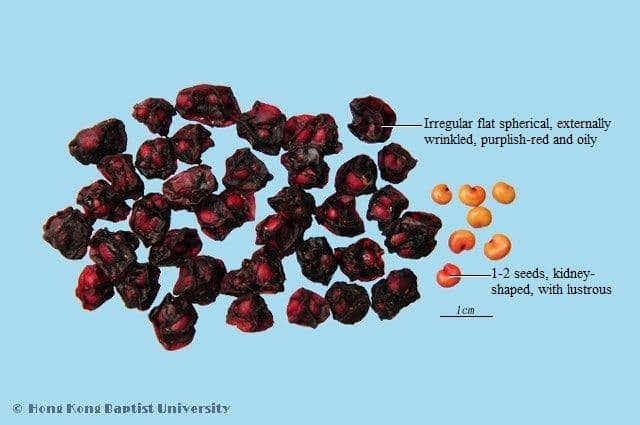
Imagine biting into a single berry and tasting sour, sweet, acrid, bitter, and salty all at once. That's the extraordinary experience of Wu Wei Zi (Fructus Schisandrae), also known as Schisandra Fruit, Chinese Magnolia-vine Fruit, or Orange Magnolia-vine Fruit. It is a powerful adaptogenic herb used in Traditional Chinese Medicine (TCM) for its comprehensive ability to support vitality, calm the spirit, and protect vital organs.
For centuries, this remarkable 'five-flavor fruit' has been revered in Asian cultures, not just for its unique taste, but for its profound impact on overall well-being.
In my practice, I often introduce patients to Wu Wei Zi when they feel stretched thin, experiencing a persistent low hum of stress that impacts their sleep, energy, or mental clarity. It's a botanical bridge between ancient wisdom and modern needs, offering a holistic approach to resilience that I find deeply compelling.
In TCM, herbs are categorized by their nature (temperature), flavors, and the meridians they enter. Wu Wei Zi is considered Warm in nature, and uniquely possesses all five flavors: Sour, Sweet, Acrid, Bitter, and Salty. This rare combination is highly significant, as each flavor corresponds to a specific organ system and its associated functions in TCM theory.
For instance, the sour flavor is often linked to the Liver and its astringent qualities, while sweet nourishes the Spleen, acrid disperses Lung Qi, bitter clears the Heart, and salty binds the Kidney essence.
This spectrum of flavors allows Wu Wei Zi to interact with multiple Meridians: Heart, Kidney, and Lung. This broad action explains its versatility. When an herb can touch so many vital systems, it becomes a powerful harmonizer. As the classic text 《神农本草经》 (Shennong Ben Cao Jing) states, Wu Wei Zi is listed as a 'superior herb,' primarily for its ability to 'benefit Qi, counter cough and upward rushing Qi, treat emaciation from overstrain, and supplement deficiency.
' This ancient insight perfectly captures its role as a fundamental tonic.
I explain to my patients that this multi-flavored profile makes Wu Wei Zi an incredible adaptogen. Think of an adaptogen as a smart switch for your body’s stress response—it helps you adapt to whatever life throws at you, whether it’s a demanding work schedule or simply the changing seasons. It doesn't stimulate or sedate; it brings balance. This comprehensive action is why it’s been valued for centuries as a cornerstone of vitality.
In our fast-paced world, stress is an undeniable reality. Wu Wei Zi shines here as a premier adaptogen. My patient, a busy executive named Sarah, came to me feeling perpetually exhausted, mentally foggy, and on edge. Her cortisol levels were consistently elevated. In TCM, this might be seen as a disharmony of the Heart and Kidney Qi, leading to an unsettled spirit. Wu Wei Zi’s ability to 'quiet the Spirit' and 'calm Heart Qi' directly addresses this.
Modern science supports this. While much of the foundational adaptogenic research on Schisandra comes from older Russian studies that are hard to access, contemporary reviews, like one mentioned in a 2020 Cleveland Clinic article, suggest that Schisandra chinensis might improve anxiety symptoms in adults. It's believed to help modulate the body's stress response system, assisting in the regulation of stress hormones like cortisol. This allows your body to return to a balanced state more efficiently after a stressful event.
The liver is our primary detoxification organ, constantly working to process everything we encounter. In TCM, the Liver is associated with the sour flavor, and Wu Wei Zi's prominent sourness points to its affinity for this vital organ. It’s traditionally used to support the Liver's harmonious function and 'bind Essence,' which can be interpreted as supporting the body's fundamental restorative processes.
Western research provides compelling evidence for this. A comprehensive review in Phytomedicine Plus (2025) highlighted that lignans—the active compounds in Schisandra—possess diverse pharmacological activities, including hepatoprotective effects. Even more recently, a systematic review and preclinical meta-analysis of 54 animal studies, published in Frontiers in Pharmacology (2025), found that Schisandra chinensis significantly reduced liver injury markers (like ALT and AST) and pro-inflammatory cytokines, while increasing antioxidant enzymes. This strong antioxidant and anti-inflammatory action is crucial for maintaining liver vitality.
If you've ever felt that frustrating mental fog or struggled to concentrate under pressure, you understand the need for cognitive support. In TCM, Wu Wei Zi is said to 'quiet the Spirit' and 'calm Heart Qi,' which directly relates to mental stability and clarity. When the Heart and Spirit are settled, the mind can function more effectively.
While large-scale human trials on Schisandra for cognitive enhancement are still emerging, the adaptogenic properties themselves contribute to improved mental performance by reducing stress-induced fatigue and enhancing overall brain resilience. Some historical accounts, particularly from traditional Russian medicine, lauded Schisandra for its ability to improve concentration and mental endurance. It's not about a sudden jolt of energy, but a sustained, clear-headed focus.
Feeling drained is a common complaint. Wu Wei Zi is traditionally revered for its ability to 'tonify Qi' and 'astringe Lung Qi,' which means it helps consolidate and build the body's vital energy, while also enhancing respiratory function and preventing energy leakage. This makes it a fantastic herb for sustained energy rather than a quick, fleeting boost.
I recall a patient, a long-distance runner struggling with fatigue after her workouts. Her 'Lung Qi' was clearly depleted. We incorporated Wu Wei Zi, and over a few weeks, she reported feeling more sustained energy and better recovery. The ancient text 《本草纲目》 (Compendium of Materia Medica) notes that Wu Wei Zi 'tonifies Kidneys, binds Essence,' which speaks to its deep energetic support, helping to conserve the body’s fundamental reserves and enhance physical stamina.
The scientific community, particularly researchers in integrative medicine like Dr. Helene Langevin at NIH NCCIH, are increasingly looking at how traditional herbs function on a molecular level. For Wu Wei Zi, the key players are often its unique compounds known as lignans. These lignans, such as schisandrin, gomisin, and deoxyschisandrin, are responsible for many of the herb's observed effects.
As highlighted in a 2025 review in Phytomedicine Plus, these lignans exhibit a diverse range of pharmacological activities: they are potent antioxidants, fighting cellular damage from free radicals; they are anti-inflammatory, helping to calm systemic inflammation; and they are neuroprotective, meaning they help protect brain cells. This multifaceted action supports its adaptogenic role.
The liver protective qualities are particularly well-studied. The 2025 systematic review in Frontiers in Pharmacology, analyzing 54 animal studies, found clear evidence of Schisandra’s ability to reduce markers of liver injury and inflammation while boosting the body’s natural antioxidant defenses like SOD and GSH. This isn't just traditional folklore; it's a measurable physiological effect.
While much of the robust human clinical data, especially regarding its adaptogenic and performance-enhancing effects, originates from decades-old Russian research that is not readily accessible in Western databases, ongoing studies are steadily building the modern evidence base. This dual perspective—deep traditional understanding coupled with rigorous scientific inquiry—is what makes integrative medicine so powerful.
Incorporating Wu Wei Zi into your routine can be simple, but the form you choose depends on your preference and desired effect. I always emphasize starting with a lower dose to see how your body responds.
This is a traditional and effective method. For a standard tea, steep 1.5-3g of dried berries in hot water for 15-20 minutes. For a stronger decoction, which extracts more of the active compounds, simmer 3-9g of berries in 2-3 cups of water for 20-30 minutes. Strain the liquid and drink it warm. This dosage range (1.5-9g) is quite broad because the application varies; 6-9g is often used for a more tonic effect, while 1.5-3g might suffice for daily adaptogenic support.
Liquid extracts or tinctures offer a convenient way to consume Wu Wei Zi. A typical dosage is 2-4ml per day. For specific concerns like chronic cough, a smaller dose of 1-2ml might be suggested. Always follow the specific instructions on the product label and use a dropper for accurate measurement.
Many prefer the simplicity of capsules or adding powders to smoothies. If using a powder, blend 1/2 to 1 teaspoon (approximately 1.5-3g) into your favorite beverage. For capsules, adhere to the manufacturer's recommended dosage, which is usually based on standardized extracts for consistent potency.
While Wu Wei Zi is a powerful herb, it is not for everyone. As an integrative physician, I cannot overstate the importance of understanding contraindications and potential drug interactions. This section is critical for your safety.
You should avoid Wu Wei Zi if you have:
Uncleared External Pathogens: This means if you have an acute cold, flu, or infection where the pathogen has not yet been expelled from the body. Its astringent nature could trap the pathogen, worsening symptoms.
Excess Internal Heat Conditions: If you experience symptoms like a flushed face, high fever, severe irritability, or red tongue with a yellow coating, this herb's warm nature could exacerbate these signs of excess heat.
Early-Stage Coughs or Rashes: Similar to external pathogens, its astringent quality can hinder the body's natural process of expelling irritants, potentially prolonging the condition.
Heartburn or Acid Reflux: Wu Wei Zi may cause heartburn in some individuals. If you have a history of acid reflux, use with caution or avoid.
Pregnancy and Breastfeeding: It is contraindicated during pregnancy and while breastfeeding due to insufficient safety data. Always prioritize the health of mother and baby.
This is where professional guidance becomes indispensable. Wu Wei Zi's lignans can inhibit CYP1A2, 3A4, and 3A5 enzymes in the liver. These enzymes are crucial for metabolizing a vast number of prescription medications. This means Wu Wei Zi could potentially increase the concentration of drugs like certain statins (e.g., simvastatin), immunosuppressants (e.g., cyclosporine), calcium channel blockers, blood thinners (e.g., warfarin), and certain antidepressants or anti-anxiety medications.
This could lead to elevated drug levels, increasing the risk of side effects or toxicity.
Furthermore, its effects are amplified by serotonergic receptor antagonists and reduced by serotonergic agonists, GAB(A) and cholinergic receptor antagonists. This complex interaction suggests it can influence various neurotransmitter systems. If you are on any prescription medication, especially those for chronic conditions, you must consult your doctor or a pharmacist experienced in herbal medicine before taking Wu Wei Zi.
Wu Wei Zi, the enigmatic five-flavor berry, stands as a testament to the enduring wisdom of Traditional Chinese Medicine and the growing validation of modern science. It reminds us that balance is not a static state but a dynamic process—a dance between internal and external forces. This powerful adaptogen doesn't simply mask symptoms; it invites your body to recalibrate, to find its inherent resilience in the face of life’s demands.
As I guide my patients through their wellness journeys, Wu Wei Zi serves as a beautiful example of how ancient remedies, understood through a contemporary lens, can offer profound support. It’s a journey toward harmony, where every flavor—and every challenge—contributes to a richer, more balanced existence.
Imagine biting into a single berry and tasting sour, sweet, acrid, bitter, and salty all at once. That's the extraordinary experience of Wu Wei Zi (Fructus Schisandrae), also known as Schisandra Fruit, Chinese Magnolia-vine Fruit, or Orange Magnolia-vine Fruit. It is a powerful adaptogenic herb used in Traditional Chinese Medicine (TCM) for its comprehensive ability to support vitality, calm the spirit, and protect vital organs.
For centuries, this remarkable 'five-flavor fruit' has been revered in Asian cultures, not just for its unique taste, but for its profound impact on overall well-being.
In my practice, I often introduce patients to Wu Wei Zi when they feel stretched thin, experiencing a persistent low hum of stress that impacts their sleep, energy, or mental clarity. It's a botanical bridge between ancient wisdom and modern needs, offering a holistic approach to resilience that I find deeply compelling.
In TCM, herbs are categorized by their nature (temperature), flavors, and the meridians they enter. Wu Wei Zi is considered Warm in nature, and uniquely possesses all five flavors: Sour, Sweet, Acrid, Bitter, and Salty. This rare combination is highly significant, as each flavor corresponds to a specific organ system and its associated functions in TCM theory.
For instance, the sour flavor is often linked to the Liver and its astringent qualities, while sweet nourishes the Spleen, acrid disperses Lung Qi, bitter clears the Heart, and salty binds the Kidney essence.
This spectrum of flavors allows Wu Wei Zi to interact with multiple Meridians: Heart, Kidney, and Lung. This broad action explains its versatility. When an herb can touch so many vital systems, it becomes a powerful harmonizer. As the classic text 《神农本草经》 (Shennong Ben Cao Jing) states, Wu Wei Zi is listed as a 'superior herb,' primarily for its ability to 'benefit Qi, counter cough and upward rushing Qi, treat emaciation from overstrain, and supplement deficiency.
' This ancient insight perfectly captures its role as a fundamental tonic.
I explain to my patients that this multi-flavored profile makes Wu Wei Zi an incredible adaptogen. Think of an adaptogen as a smart switch for your body’s stress response—it helps you adapt to whatever life throws at you, whether it’s a demanding work schedule or simply the changing seasons. It doesn't stimulate or sedate; it brings balance. This comprehensive action is why it’s been valued for centuries as a cornerstone of vitality.
In our fast-paced world, stress is an undeniable reality. Wu Wei Zi shines here as a premier adaptogen. My patient, a busy executive named Sarah, came to me feeling perpetually exhausted, mentally foggy, and on edge. Her cortisol levels were consistently elevated. In TCM, this might be seen as a disharmony of the Heart and Kidney Qi, leading to an unsettled spirit. Wu Wei Zi’s ability to 'quiet the Spirit' and 'calm Heart Qi' directly addresses this.
Modern science supports this. While much of the foundational adaptogenic research on Schisandra comes from older Russian studies that are hard to access, contemporary reviews, like one mentioned in a 2020 Cleveland Clinic article, suggest that Schisandra chinensis might improve anxiety symptoms in adults. It's believed to help modulate the body's stress response system, assisting in the regulation of stress hormones like cortisol. This allows your body to return to a balanced state more efficiently after a stressful event.
The liver is our primary detoxification organ, constantly working to process everything we encounter. In TCM, the Liver is associated with the sour flavor, and Wu Wei Zi's prominent sourness points to its affinity for this vital organ. It’s traditionally used to support the Liver's harmonious function and 'bind Essence,' which can be interpreted as supporting the body's fundamental restorative processes.
Western research provides compelling evidence for this. A comprehensive review in Phytomedicine Plus (2025) highlighted that lignans—the active compounds in Schisandra—possess diverse pharmacological activities, including hepatoprotective effects. Even more recently, a systematic review and preclinical meta-analysis of 54 animal studies, published in Frontiers in Pharmacology (2025), found that Schisandra chinensis significantly reduced liver injury markers (like ALT and AST) and pro-inflammatory cytokines, while increasing antioxidant enzymes. This strong antioxidant and anti-inflammatory action is crucial for maintaining liver vitality.
If you've ever felt that frustrating mental fog or struggled to concentrate under pressure, you understand the need for cognitive support. In TCM, Wu Wei Zi is said to 'quiet the Spirit' and 'calm Heart Qi,' which directly relates to mental stability and clarity. When the Heart and Spirit are settled, the mind can function more effectively.
While large-scale human trials on Schisandra for cognitive enhancement are still emerging, the adaptogenic properties themselves contribute to improved mental performance by reducing stress-induced fatigue and enhancing overall brain resilience. Some historical accounts, particularly from traditional Russian medicine, lauded Schisandra for its ability to improve concentration and mental endurance. It's not about a sudden jolt of energy, but a sustained, clear-headed focus.
Feeling drained is a common complaint. Wu Wei Zi is traditionally revered for its ability to 'tonify Qi' and 'astringe Lung Qi,' which means it helps consolidate and build the body's vital energy, while also enhancing respiratory function and preventing energy leakage. This makes it a fantastic herb for sustained energy rather than a quick, fleeting boost.
I recall a patient, a long-distance runner struggling with fatigue after her workouts. Her 'Lung Qi' was clearly depleted. We incorporated Wu Wei Zi, and over a few weeks, she reported feeling more sustained energy and better recovery. The ancient text 《本草纲目》 (Compendium of Materia Medica) notes that Wu Wei Zi 'tonifies Kidneys, binds Essence,' which speaks to its deep energetic support, helping to conserve the body’s fundamental reserves and enhance physical stamina.
The scientific community, particularly researchers in integrative medicine like Dr. Helene Langevin at NIH NCCIH, are increasingly looking at how traditional herbs function on a molecular level. For Wu Wei Zi, the key players are often its unique compounds known as lignans. These lignans, such as schisandrin, gomisin, and deoxyschisandrin, are responsible for many of the herb's observed effects.
As highlighted in a 2025 review in Phytomedicine Plus, these lignans exhibit a diverse range of pharmacological activities: they are potent antioxidants, fighting cellular damage from free radicals; they are anti-inflammatory, helping to calm systemic inflammation; and they are neuroprotective, meaning they help protect brain cells. This multifaceted action supports its adaptogenic role.
The liver protective qualities are particularly well-studied. The 2025 systematic review in Frontiers in Pharmacology, analyzing 54 animal studies, found clear evidence of Schisandra’s ability to reduce markers of liver injury and inflammation while boosting the body’s natural antioxidant defenses like SOD and GSH. This isn't just traditional folklore; it's a measurable physiological effect.
While much of the robust human clinical data, especially regarding its adaptogenic and performance-enhancing effects, originates from decades-old Russian research that is not readily accessible in Western databases, ongoing studies are steadily building the modern evidence base. This dual perspective—deep traditional understanding coupled with rigorous scientific inquiry—is what makes integrative medicine so powerful.
Incorporating Wu Wei Zi into your routine can be simple, but the form you choose depends on your preference and desired effect. I always emphasize starting with a lower dose to see how your body responds.
This is a traditional and effective method. For a standard tea, steep 1.5-3g of dried berries in hot water for 15-20 minutes. For a stronger decoction, which extracts more of the active compounds, simmer 3-9g of berries in 2-3 cups of water for 20-30 minutes. Strain the liquid and drink it warm. This dosage range (1.5-9g) is quite broad because the application varies; 6-9g is often used for a more tonic effect, while 1.5-3g might suffice for daily adaptogenic support.
Liquid extracts or tinctures offer a convenient way to consume Wu Wei Zi. A typical dosage is 2-4ml per day. For specific concerns like chronic cough, a smaller dose of 1-2ml might be suggested. Always follow the specific instructions on the product label and use a dropper for accurate measurement.
Many prefer the simplicity of capsules or adding powders to smoothies. If using a powder, blend 1/2 to 1 teaspoon (approximately 1.5-3g) into your favorite beverage. For capsules, adhere to the manufacturer's recommended dosage, which is usually based on standardized extracts for consistent potency.
While Wu Wei Zi is a powerful herb, it is not for everyone. As an integrative physician, I cannot overstate the importance of understanding contraindications and potential drug interactions. This section is critical for your safety.
You should avoid Wu Wei Zi if you have:
Uncleared External Pathogens: This means if you have an acute cold, flu, or infection where the pathogen has not yet been expelled from the body. Its astringent nature could trap the pathogen, worsening symptoms.
Excess Internal Heat Conditions: If you experience symptoms like a flushed face, high fever, severe irritability, or red tongue with a yellow coating, this herb's warm nature could exacerbate these signs of excess heat.
Early-Stage Coughs or Rashes: Similar to external pathogens, its astringent quality can hinder the body's natural process of expelling irritants, potentially prolonging the condition.
Heartburn or Acid Reflux: Wu Wei Zi may cause heartburn in some individuals. If you have a history of acid reflux, use with caution or avoid.
Pregnancy and Breastfeeding: It is contraindicated during pregnancy and while breastfeeding due to insufficient safety data. Always prioritize the health of mother and baby.
This is where professional guidance becomes indispensable. Wu Wei Zi's lignans can inhibit CYP1A2, 3A4, and 3A5 enzymes in the liver. These enzymes are crucial for metabolizing a vast number of prescription medications. This means Wu Wei Zi could potentially increase the concentration of drugs like certain statins (e.g., simvastatin), immunosuppressants (e.g., cyclosporine), calcium channel blockers, blood thinners (e.g., warfarin), and certain antidepressants or anti-anxiety medications.
This could lead to elevated drug levels, increasing the risk of side effects or toxicity.
Furthermore, its effects are amplified by serotonergic receptor antagonists and reduced by serotonergic agonists, GAB(A) and cholinergic receptor antagonists. This complex interaction suggests it can influence various neurotransmitter systems. If you are on any prescription medication, especially those for chronic conditions, you must consult your doctor or a pharmacist experienced in herbal medicine before taking Wu Wei Zi.
Wu Wei Zi, the enigmatic five-flavor berry, stands as a testament to the enduring wisdom of Traditional Chinese Medicine and the growing validation of modern science. It reminds us that balance is not a static state but a dynamic process—a dance between internal and external forces. This powerful adaptogen doesn't simply mask symptoms; it invites your body to recalibrate, to find its inherent resilience in the face of life’s demands.
As I guide my patients through their wellness journeys, Wu Wei Zi serves as a beautiful example of how ancient remedies, understood through a contemporary lens, can offer profound support. It’s a journey toward harmony, where every flavor—and every challenge—contributes to a richer, more balanced existence.
This information is for educational purposes only and is not intended as medical advice. Always consult a qualified healthcare practitioner before using any herbal remedy.