TCM's Root Cause Approach to Insomnia & Better Sleep | Demisunshine
My Sleep Saga: Why Counting Sheep Misses the Mark
I thought insomnia was just a late-night battle. Then my own body started unraveling, and I learned why typical advice — like counting sheep — completely misses the real, energetic roots of sleeplessness.
Sarah LinMarch 17, 202610 min read
Quick Answer
Traditional Chinese Medicine (TCM) sees insomnia as a symptom of underlying energetic imbalances, not a standalone sleep problem. By diagnosing specific patterns like Liver Qi Stagnation or Heart Blood Deficiency, TCM offers personalized treatments such as acupuncture and herbal medicine. Clinical studies confirm these approaches effectively and safely address the root causes of sleeplessness, offering lasting relief.
Key Takeaways
TCM views insomnia as a symptom of deeper energetic imbalances, not merely a sleep-related issue. This challenges the Western focus on symptomatic relief alone.
Traditional Chinese Medicine identifies distinct patterns of sleeplessness—like difficulty falling asleep (Liver Qi Stagnation) or frequent waking (Heart Blood Deficiency)—allowing for precise, personalized treatments with acupuncture and herbs.
Clinical research—systematic reviews of over 186 RCTs, for example—backs the efficacy of Chinese herbal medicines and acupuncture. They improve sleep quality and reduce anxiety, often outperforming conventional pharmaceutical options.
Integrating TCM with conventional sleep hygiene involves addressing root causes through personalized herbal formulas, acupuncture, targeted acupressure, and specific dietary/lifestyle shifts, rather than relying solely on surface-level remedies.
To improve sleep, start by understanding your body's unique energetic blueprint. Simple daily practices, like warm foot soaks or specific acupressure, can begin to rebalance your system within 24 hours.
Let me just confess: for years, I was the queen of bad sleep advice. And not just for my patients—for myself. I was the 'student of both traditions' who, after a particularly brutal night, would find herself staring blankly at the ceiling at 3 AM, thinking, 'Maybe if I just count... one hundred thousand sheep?' My palms are sweating a little even just recalling those nights, the creeping shame that I, a doctor, couldn't even help myself sleep.
That conventional wisdom, the 'counting sheep' narrative? It’s unhelpful. A brutal lie, really. It implies sleep is a simple switch, easily flipped if you just relax or distract yourself. But deep down, I knew something was profoundly wrong with that picture. My fatigue wasn't just physical; it felt like a soul-sickness.
So, I went back to the clinical data. Not just Western sleep studies, which I knew by heart, but I dove headfirst into the ancient texts of Traditional Chinese Medicine (TCM) and contemporary research integrating both approaches. And what I found—what TCM has shown me, both personally and professionally—changed everything.
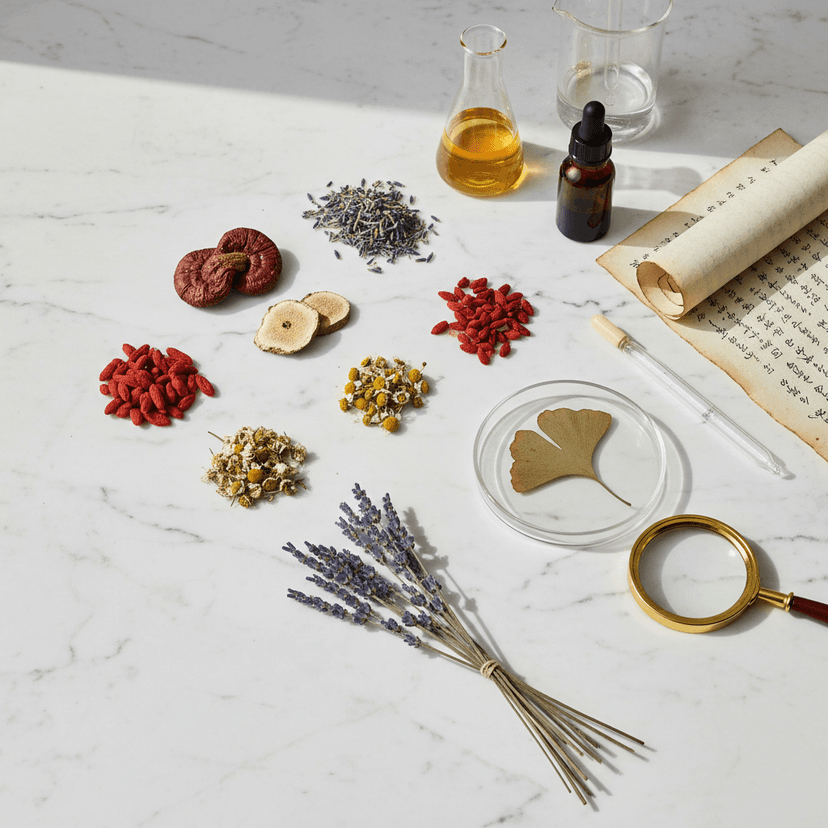
Many TCM insomnia remedies feature Suan Zao Ren (Ziziphus jujuba seed), also known as Jujube seed. This common, gentle herb in Traditional Chinese Medicine primarily nourishes the Heart and calms the Spirit (Shen). It addresses irritability and reduces spontaneous sweating. Its key active compounds—jujubosides and flavonoids—are believed to contribute to its sedative and anxiolytic effects.
Counting Sheep: The Symptom Trap We Fall Into
The cultural myth around insomnia? It's that it's a simple, isolated problem. Period.
Just sleep more. Or try melatonin. Or, God forbid, count sheep. This advice, it's just throwing solutions at the surface.
It's like trying to patch a hole without finding out why the boat is sinking. We treat the sleeplessness itself—without ever asking the more fundamental question: Why isn't my body cooperating with its natural need for rest?
This is a profound reframe, much more than a mere clinical distinction. When we only chase symptoms, we end up in a frustrating cycle of temporary fixes. We pop a pill, try a new white noise machine, ban screens an hour before bed—all useful steps, mind you, but often not enough for those of us truly exhausted. The deeper issue isn't just missing sleep; it’s why the body struggles to get it.
That's a question Western medicine, focusing on the sleep-wake cycle's surface, can sometimes miss.
The actual physiological mechanisms for sleep are intricate, yes, but TCM offers a framework that goes even deeper than neurotransmitters. It questions whether the topic's core assumption—that insomnia is purely a neurological issue—is entirely correct. Maybe, just maybe, it's a system-wide distress signal.
What TCM Sees When Your Body Fights Sleep
For TCM, sleep is less about a single hormone or brain region and more about a harmonious balance of your entire being. It’s about the flow of Qi (life force), Blood, Yin, and Yang. It’s about how your internal organ systems—not just anatomical organs, but energetic networks like the Heart, Liver, Spleen, and Kidneys—are communicating.
The better question, then, isn't How do I fall asleep? but Why is my body fighting its natural inclination to rest?
Ancient texts recognized this fundamental rhythm. The Huangdi Neijing (Yellow Emperor's Inner Canon), a foundational text of TCM, states: 'Yang Qi exhausted, Yin Qi abundant, then the eyes close (sleep); Yin Qi exhausted, Yang Qi abundant, then one awakens.' (《黄帝内经·灵枢》载:'阳气尽,阴气盛,则目瞑;阴气尽,而阳气盛,则寤矣。') This isn't poetry; it’s a direct observation of the body's energetic balance shifting from active Yang to restful Yin.
My Own Unraveling: The Liver Qi That Refused to Settle
I’m talking about my early thirties. Clinic was booming, I was trying to write a book, and my personal life felt like a perpetual balancing act on a tightrope over a shark tank. Every night, I'd climb into bed utterly exhausted, only for my mind to spin. Not just thoughts, mind you, but this visceral buzz behind my eyes, a heat that felt like a low-grade fever simmering beneath my skin.
I’d wake up between 1 AM and 3 AM, every single night, heart pounding, a subtle tremor in my hands.
I was a doctor, for goodness sake, and I was failing at the most basic human function. The shame was a heavy, suffocating blanket. My Western doctor colleagues suggested low-dose meds, cognitive behavioral therapy for insomnia (CBT-I)—all valid, all useful. But I felt in my bones that this went deeper than 'sleep hygiene' or 'anxiety.' My system felt fundamentally out of whack.
My TCM mentor, bless her insightful soul, took one look at my flushed face, felt my wiry pulse, and said, 'Sarah, your Liver Qi is running rampant, and it’s stirring up your Heart. You have Liver Heat disturbing your Shen (Spirit).' Liver Qi Stagnation, she explained, is often linked to stress, repressed emotions, and an unbalanced lifestyle. When that Qi gets stuck, it can generate heat, which then 'harasses' the Heart, where TCM believes the mind and spirit reside.
No wonder I couldn’t settle down.
It was an unexpected insight, a challenge to my own initial premise that this was 'just stress.' But it resonated. I was asking the wrong question. It wasn't how do I get more sleep? but how do I soothe my rebellious Liver and calm my agitated Heart?
The Three Patterns of Sleeplessness (And What They Really Mean)
TCM doesn't see a single 'insomnia.' It sees distinct patterns, each with its own root cause. This specificity is powerful because it means treatment isn't one-size-fits-all.
1. Difficulty Falling Asleep: The Mind That Won't Quit
If you lie in bed for what feels like hours, thoughts racing, tossing and turning, TCM often looks to your Liver. Liver Qi Stagnation or Liver Fire can create a feeling of agitation, irritability, and a head full of unresolvable problems. The Qi is stuck, creating a restless energy that prevents sleep from settling in. This was my pattern, the one that left me feeling constantly on edge.
2. Waking Frequently or Early: The Restless Heart
Do you fall asleep easily but then wake up multiple times during the night, or consistently at the same early hour (say, 3 AM), unable to drift back off? This often points to imbalances in the Heart or Spleen. Heart Blood Deficiency or Heart Yin Deficiency means your Shen (spirit/mind) isn’t properly anchored. It’s like a boat without enough ballast.
Spleen Qi Deficiency can also contribute, as the Spleen helps transform food into Blood and Qi, vital for nourishing the Heart. Think of feeling emotionally sensitive, easily startled, or having a poor memory—those are often Heart-related.
3. Disturbed Dreams & Night Sweats: The Overactive Yang
If your sleep is punctuated by vivid, disturbing dreams, night sweats, a dry mouth, or a feeling of heat in your palms and soles, TCM often identifies a Heart-Kidney Disharmony or Yin Deficiency pattern. The Kidneys are the root of Yin and Yang, and if Kidney Yin is depleted (often due to overwork, chronic stress, or aging), it can't nourish and cool the Heart effectively.
This allows Yang energy to become relatively overactive, creating internal heat that disturbs the Shen and manifests as restless, dream-filled sleep.
Beyond the Pills: TCM's Integrated Toolkit for Lasting Rest
This isn't about ditching Western medicine. Not even close. It's about a deeper understanding, a complementary approach. While pharmaceutical sleep aids can offer acute relief, they rarely address the underlying energetic imbalances. TCM, conversely, aims to restore balance, often leading to more sustainable improvements in sleep quality and overall well-being.
I’ve seen it work miracles. Acupuncture doesn't only relax you; it subtly re-tunes your body's energetic circuits. Wang et al. (2025) conducted a systematic review and meta-analysis, demonstrating that acupuncture significantly improves subjective sleep quality in patients with chronic insomnia disorder. Both manual acupuncture and electroacupuncture showed improvements in PSQI (Pittsburgh Sleep Quality Index) and ISI (Insomnia Severity Index) scores compared to sham acupuncture.
It’s about stimulating specific points to calm the Heart, soothe the Liver, or nourish the Kidneys, depending on your individual pattern. This takes about 30-45 minutes per session, typically once or twice a week initially.
Herbal Medicine: Nature's Internal Rebalance
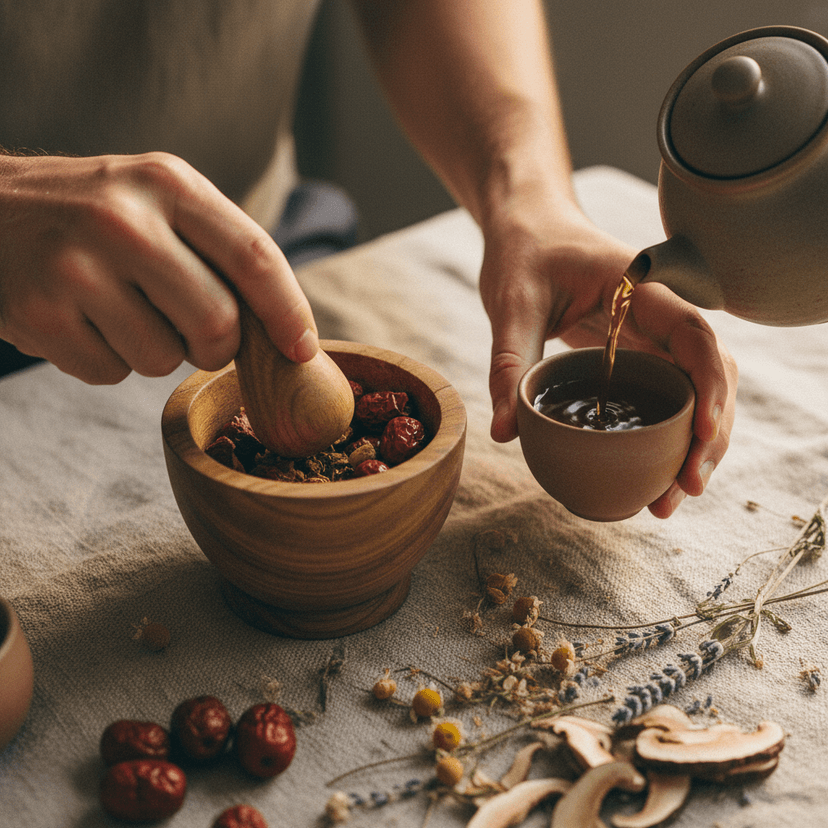
Ancient wisdom meets modern science in Chinese herbal medicine (CHM). We use complex formulas, not single herbs, precisely tailored to your specific TCM pattern. A systematic review and network meta-analysis of 186 randomized controlled trials by the Department of General Surgery, Chengdu Integrated Traditional Chinese Medicine and Western Medicine Hospital (2025) found that certain Chinese herbal medicines (like Guipi Decoction or Shenqi Schisandra Tablet) were effective and safe for insomnia, often outperforming conventional pharmacological treatments in improving sleep quality.
This isn't some stimulating 'herbal tea' you grab at the grocery store; it's precise botanical pharmacology.
Let’s revisit Suan Zao Ren, for instance, a staple in many formulas for sleeplessness:
• Dosage: 9-18g in decoction (typically dry-fried, chao suan zao ren, for calming Shen). The Bencao Gangmu (Compendium of Materia Medica) recorded its use for 'calming the spirit and moistening the Liver,' specifically noting 'cooked use for treating gallbladder deficiency leading to insomnia, vexation, thirst, and spontaneous sweating.'
• Nature & Flavor: Sweet, sour, neutral.
• Meridians: Heart, Liver, Gallbladder, Spleen.
• Properties: Nourishes Heart Yin, augments Liver Blood, calms Shen, stops sweating. It helps strengthen immunity by supporting the Spleen, which generates qi and blood. The recommended daily dosage typically falls within the 9-18 gram range, often prepared as a decoction.
Safety is paramount here. While many Chinese herbal medicines are safe, they are potent. Always consult a qualified TCM practitioner who can diagnose your pattern and prescribe the correct formula, ensuring it's safe for you, especially if you're on other medications.
Lifestyle & Diet: Your Daily Rituals for Rest
Beyond treatments, TCM emphasizes how daily choices impact sleep. The Yueyang Hospital of Integrated Traditional Chinese and Western Medicine (2025) published an umbrella review showing that acupuncture, Tuina massage, Chinese exercises (like Tai Chi or Qigong), and Chinese herbal medicine are all effective in improving overall sleep quality. These practices aren't just about relaxation; they actively balance your Qi and Blood.
Simple changes, like eating a warm, nourishing meal in the evening (think soups, stews) instead of cold or raw foods, can support your Spleen and prevent a restless stomach from keeping you up. Even gentle movement, like a slow walk after dinner, can help move stagnant Liver Qi.
Common Missteps: What NOT to Do When Chasing Sleep
Here's where we get it wrong, and I've seen it time and again in my clinic—and lived it myself.
Mistake #1: Treating All Insomnia the Same
This is the big one. If your insomnia is due to Liver Heat, chugging chamomile tea (which is cooling) might not be enough, and it certainly won't address the underlying heat. Conversely, if you have a Heart Yin deficiency, a strong stimulating herb will only worsen things. Personalized diagnosis is paramount. Don’t self-diagnose based on a quick online search.
Mistake #2: Ignoring the Emotional-Physical Connection
Western medicine, in its analytical glory, sometimes compartmentalizes. Sleep over here, emotions over there. But TCM understands that anger affects the Liver, worry impacts the Spleen, and fear damages the Kidneys—all of which can spiral into sleeplessness. Ignoring chronic stress or unresolved emotions is like trying to fix a leaky pipe by just mopping the floor. It doesn’t work.
This is why acupuncture and Tuina massage are noted for their potential to improve anxiety and depression, according to the Yueyang Hospital review (2025).
Mistake #3: Expecting a Magic Bullet
TCM is not a quick fix. It’s a process. It took me months of consistent acupuncture, custom herbal formulas, and significant lifestyle adjustments to truly rebalance my Liver Qi and calm my Shen. Zhao Ziy and Cao Desheng (2024) highlighted in their meta-analysis that combination therapies often yield better results than single interventions in TCM for insomnia. Be patient, be consistent, and trust the process.
Maybe the real question isn't which herbs to take—but whether we've been thinking about wellness through entirely the wrong lens. What if true healing isn't about fixing a broken part, but reconnecting with the innate wisdom of our own bodies?
Your First 24 Hours: A Mini-Plan for Rest
Ready to stop counting sheep and start listening to your body? Here are three concrete actions you can take in the next day to begin shifting your sleep narrative.
Evening Foot Soak (15 minutes before bed): Fill a basin with warm water, just hot enough to be comfortable. Add a handful of Epsom salts or a few drops of lavender essential oil. Soak your feet for 15-20 minutes. This draws excess Yang energy downwards, calming the mind and preparing the body for sleep. Do this tonight.
Acupressure for Calm (5 minutes before bed): Locate Shenmen (Heart 7), on the crease of your inner wrist, in line with your pinky finger. Gently massage this point in small circles for 1-2 minutes on each wrist. Then find Yongquan (Kidney 1), in the depression on the sole of your foot, about a third of the way down from your toes. Massage firmly for 1-2 minutes on each foot. These points help calm the Shen and anchor floating energy. Integrate this into your nightly routine starting tonight.
Observe Your Energy (all day tomorrow): Pay attention to your energy levels throughout the day. When do you feel most wired? When do you crash? What foods make you feel heavy or agitated? Notice your emotions. This isn't about judgment, but about gathering data for your future self. Begin this practice tomorrow. Understanding your body's unique blueprint starts with honest observation.
Contributing Writer at Demisunshine. Sarah brings a research-trained eye to TCM. She has spent years reading clinical literature on herbal formulas — patient enough to spot the difference between a strong finding and a fragile one — and her pieces explain that distinction the way you'd talk it through with a friend over tea.
Get TCM Wellness Tips
Weekly articles on herbal remedies, nutrition, and holistic health — delivered to your inbox.