The Architect, His Empty Tank, and a New Lens on Male Fatigue
When conventional medicine offered little solace for chronic fatigue and low drive, one man found an ancient approach of understanding that didn't just explain his symptoms, but offered a path to reclaiming his vitality.
James WuMarch 17, 20269 min read
Quick Answer
Traditional Chinese Medicine (TCM) offers a nuanced perspective on male fatigue and low drive, moving beyond Western diagnoses like 'low T' to identify deeper energetic imbalances such as Kidney Yang deficiency and Liver Qi stagnation. It emphasizes holistic treatment through specific herbs and lifestyle changes, aiming to restore the body's inherent vitality rather than just managing symptoms.
Key Takeaways
Male fatigue and low drive are often viewed by TCM through a holistic lens, connecting symptoms like brain fog and irritability to underlying energetic imbalances, particularly Kidney Yang deficiency and Liver Qi stagnation.
Conventional hormone panels offer a partial picture; TCM seeks to address the foundational energetic 'drain' that might manifest as low testosterone, rather than merely supplementing the hormone itself.
Integrating specific Chinese herbs, like Epimedium (淫羊藿) and Cuscuta Seed (菟丝子), or even Western herbs like Tongkat Ali, can support the body's intrinsic ability to restore vitality and drive by nourishing Kidney essence and regulating Qi flow.
A sustained shift in daily habits—including diet, stress management, and mindful activity—is as critical as herbal intervention for long-term recovery from 'silent drain' patterns, emphasizing a patient's active role in their healing journey.
The journey back to vitality is not always linear; expect potential adjustment periods when commencing TCM treatments, as the body rebalances, and always maintain open communication with your practitioner.
Dear person who stares at the ceiling at 3 AM, wondering where your energy went, and why the drive that once defined you now feels like a distant memory — this one’s for you. And no, we’re not going to start by telling you to just “get more sleep” or “reduce stress.” You’ve heard that already. You’ve probably tried that already.
Marcus Chen, a 47-year-old architect, lived in a meticulously designed home overlooking Puget Sound, but inside, his personal world was falling apart. Every morning, the alarm felt less like a signal to begin the day and more like a cruel interruption of a sleep that offered no refreshment. He would drag himself out of bed, the kind of person who once tackled complex blueprints before his first coffee, now finding himself simply trying to remember where he’d left his keys.
The Seattle drizzle outside seemed to mirror the pervasive dullness within him.
His firm, Chen & Associates, was known for its innovative, sustainable designs. Marcus had built it, brick by painstaking brick, over two decades. But lately, the creative spark had dimmed. Deadlines felt like insurmountable walls. His wife, Sarah, a vibrant marketing executive, noticed the shift first. The witty banter that characterized their evenings had faded into strained silences. Intimacy? That had become another item on a perpetually postponed to-do list.
He’d tried everything: expensive supplements, cutting out gluten, even a brief, half-hearted attempt at intermittent fasting. Nothing. He felt like a high-performance engine running on fumes, with no mechanic able to diagnose the real problem.
His primary care physician, after a battery of blood tests, offered the standard pronouncements: “Testosterone’s a little low, but still within range for your age. Stress, probably. Try to relax.” Marcus had left the office feeling dismissed, not diagnosed. The feeling of an invisible drain, pulling his energy and desire away, persisted. He was searching for a language to describe what was happening to him, and Western medicine, for all its precision, didn't seem to speak it.
The Invisible Drain: When Western Answers Fall Short
Marcus’s experience, I've observed, is far from unique. Many men, especially those in high-pressure environments, find themselves in this specific kind of purgatory.
Lab numbers might appear acceptable, yet their lived reality is one of profound depletion.
This disconnect between objective metrics and subjective experience often creates friction. Western diagnostics excel at identifying structural damage or overt disease. But they often struggle with the subtle, systemic imbalances that manifest as chronic fatigue and low drive. What Traditional Chinese Medicine calls the “silent drain.”
Consider the common narrative around low libido and fatigue in men: it’s almost always framed as a testosterone problem. And while testosterone certainly plays a role, attributing all male vitality issues to this single hormone is like blaming a city-wide blackout on a single faulty lightbulb. It misses the interconnected grid, the complex power stations, and the intricate distribution lines that all need to function harmoniously.
The question isn't only about the level of a single hormone, but the vitality of the entire system that produces and uses it.
This is precisely the premise TCM reframes. What we call Kidney Yang deficiency, or Liver Qi stagnation, may indeed correlate with hormonal dysregulation, but TCM suggests these patterns aren't just symptoms of low testosterone; they are the underlying energetic conditions that precede and contribute to it. The initial question, 'How do I raise my testosterone?' often becomes 'How do I restore the fundamental energy that allows my body to thrive?' when you look through a TCM lens.
A Different Kind of Map: Unpacking Marcus's Inner World
Frustrated, Marcus eventually sought out Dr. Thomas G. Lee, L.Ac., Ph.D., a practitioner at the Far East Holistic Health Care Center, known for his ability to bridge traditional and modern understanding. Their first consultation was different. Dr. Lee didn't immediately reach for blood tests. Instead, he asked about Marcus’s sleep patterns, his digestion, his emotional state, even the quality of his urine. Marcus felt Dr. Lee was painting a picture of his inner world, not just cataloging isolated symptoms.
“Your pulse is weak and deep,” Dr. Lee observed, pressing his fingers gently on Marcus’s wrist. “Your tongue has a pale body, and a thin white coat. These are classic signs of Kidney Yang deficiency, complicated by Spleen Qi deficiency and some Liver Qi stagnation. It’s like your internal furnace is low, your digestive system is sluggish, and your energy is getting stuck, unable to circulate smoothly.”
Kidney Yang, in TCM, represents the body’s fundamental warming, activating, and metabolic energy. It’s the pilot light of our vitality, responsible for not just sexual function and fertility, but also bone health, mental clarity, and warming the body. When Kidney Yang is deficient, symptoms like chronic fatigue, cold limbs, low back pain, frequent urination, and, crucially, diminished libido and erectile function emerge. It’s the silent drain that pulls away your inner warmth and drive.
Then there was the Spleen Qi deficiency. This pattern accounts for the brain fog, the feeling of heaviness, and Marcus’s often bloated digestion. The Spleen in TCM governs transformation and transportation, extracting nutrients from food and converting them into Qi (vital energy) and Blood. A weak Spleen means inadequate fuel for the entire system. And the Liver Qi stagnation?
That explained the irritability, the feeling of being perpetually wound up despite the fatigue, and the sense that his emotions were trapped, unable to flow freely. This often directly impacts sexual desire, as the Liver channel passes through the genitals.
“So, not just low T?” Marcus asked, a flicker of hope in his voice.
“Low T is a manifestation,” Dr. Lee replied. “But the root is deeper. We need to stoke your inner fire, clear the pathways, and nourish your foundation.”
Beyond Testosterone: What Actually Moved the Needle
Dr. Lee prescribed a customized herbal formula designed to warm the Kidney Yang, strengthen the Spleen Qi, and gently move the Liver Qi. He also recommended acupuncture sessions, focusing on points along the Kidney, Spleen, and Liver meridians. The herbs included a mix of commonly used botanicals.
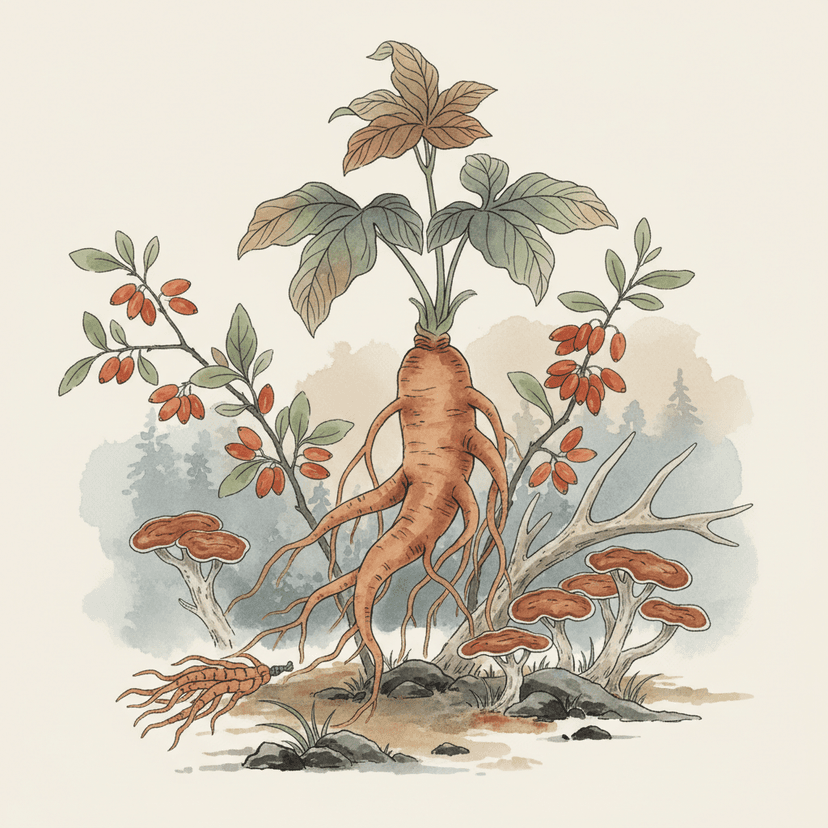
One key herb often found in such formulas is 淫羊藿 (Epimedium sagittatum), commonly known as Horny Goat Weed. 淫羊藿 (Epimedium sagittatum), also known as Xian Ling Pi, is a tonic herb used in Traditional Chinese Medicine for warming the Kidneys, fortifying Yang, expelling wind-dampness, and strengthening sinews and bones. Its key active compounds include icariin and other flavonoids.
Classical texts like 《本草纲目》 (Compendium of Materia Medica) explicitly state that 淫羊藿 is “性温,味辛,归肾经,主阴痿茎中痛,利小便,益气力” (warm in nature, pungent in flavor, enters the Kidney meridian, primarily treats impotence and penile pain, benefits urination, and boosts strength and energy). This ancient wisdom increasingly finds contemporary scientific corroboration. For example, research by Tang Tian and colleagues in 《中国药物警戒》 (Chinese Journal of Pharmacovigilance) in 2024 explored how 淫羊藿 (Epimedium) improves sperm motility via the PI3K/Akt pathway, with findings indicating a 27.
4% increase in sperm activity rate. This suggests a direct mechanism by which this herb can address aspects of male reproductive health and, by extension, overall vitality.
For Marcus, the initial phase was challenging. “I felt a little… off,” he recounted later. “Almost more tired, like my body was fighting something.” This is a common experience, what some practitioners refer to as a “healing crisis” or an adjustment period, as the body begins to clear old patterns of stagnation and reorient itself. Dr. Lee had warned him, explaining that true healing is rarely a linear, comfortable ascent.
After about six weeks, the shifts began. Subtle at first. He started waking with a fraction more energy. His digestion felt less burdened. The brain fog, once a constant companion, lifted periodically, offering glimpses of his former clarity. His irritability softened. Sarah noticed it too. The tension in the house eased.
The improvements in libido and vitality, for which Marcus initially sought help, often follow the broader restoration of the body's energetic balance. This is where TCM intersects with modern research on adaptogenic herbs. While Epimedium is a specific example, studies on other botanicals used for similar purposes offer parallel insights. For instance, a 2021 study by Leitão et al.
in Maturitas demonstrated that Tongkat Ali supplementation (200 mg/day) combined with exercise significantly increased total testosterone and improved sexual desire in men with androgen deficiency of aging males, observing a 15% rise in total testosterone after six months. Another study by Ismail et al.
in Evidence-Based Complementary and Alternative Medicine (2012) found that a standardized water extract of Tongkat Ali (PHYSTA, 200 mg/day) led to a 14% increase in libido scores and a 44% increase in sperm motility in healthy men aged 40-65. These findings, while on different herbs, underscore the potent capacity of certain botanicals to influence the very physiological markers that contribute to male vitality.
The wisdom of 《神农本草经》 (The Divine Farmer’s Materia Medica), which notes that 五味子 (Schisandra chinensis) “主益气,补不足,强阴,益男子精” (primarily benefits Qi, supplements deficiency, strengthens Yin, and benefits male essence), speaks to a long-held understanding of how specific herbs nourish the fundamental energies that govern male health. It's not about a magic bullet, but a sustained, systemic recalibration.
Over several months, Marcus continued his treatments. Dr. Lee also emphasized lifestyle changes: incorporating more warming, cooked foods, reducing late-night work, and finding small pockets of time for quiet contemplation, even just five minutes of staring out at the rain. These were not quick fixes. They were a gradual, deliberate rebuilding. His energy returned. His focus sharpened. The playful spark with Sarah reignited.
The Uncomfortable Truth About Healing
The biggest mistake I see people make with herbal supplements? They treat them like vitamins — pop a pill and forget about it. This approach often overlooks the essential context of constitutional differences and the impact of daily choices. A vegan diet, for instance, while beneficial for some, can exacerbate Spleen Qi or Kidney Yang deficiencies in others if not carefully managed with warming, nourishing foods, as it tends to be cooling and depleting from a TCM perspective.
Gabriel Chan, a practitioner at Oak Health Chinese Medicine, often highlights how diet and emotional resilience are deeply connected to the efficacy of any herbal intervention.
The point isn't only about what you take; it’s about what you cultivate.
The story of Marcus Chen is not an isolated anecdote. The work of researchers like Dr. Huijun Z. Ring at Stanford University, exploring the intersection of traditional remedies and modern pharmacology, continually clarifies these ancient insights. It’s a slow, meticulous process, translating concepts like “Kidney Yang” into measurable biomarkers, but the connections are undeniable.
Maybe the real question isn’t which herbs to take — but whether we’ve been thinking about wellness through entirely the wrong lens.
What We Miss When We Only See the Surface
Marcus Chen still designs buildings, but now he does so with a renewed sense of purpose. He still faces deadlines, but the internal pressure no longer feels like a crushing weight. The silent drain, once a constant presence, has receded, replaced by a steady current of vitality. He still checks in with Dr. Lee periodically, not for a quick fix, but for maintenance, understanding that the health of his inner world requires ongoing attention.
His story illuminates a fundamental difference in approach. While Western medicine excels at acute intervention and symptomatic relief, TCM offers a profound understanding of the body's energetic ecosystem. It reminds us that male fatigue and low drive are rarely isolated incidents; they are often the body's nuanced signals of a deeper imbalance, a call for a more holistic recalibration. The architect learned that sometimes, to build something truly resilient, you first have to understand the ground beneath it.
Three concrete takeaways from Marcus's journey:
When conventional lab results are 'normal' but you feel depleted, seek a diagnostic framework that considers energetic imbalances, such as Kidney Yang or Liver Qi stagnation, for a more comprehensive understanding.
Understand that true restoration of vitality is a process, not an event; expect an initial adjustment period with TCM treatments and commit to consistent, gentle lifestyle shifts alongside herbal support.
Prioritize warming, nourishing foods, adequate rest, and mindful stress management as foundational elements, recognizing they are as critical as any herbal formula for building sustained male vitality.
Guest Writer at Demisunshine. James writes from a long-standing curiosity about wellness traditions, with a journalist's habit of pushing back when something sounds too good to be true. He's the contributor readers turn to for the contrarian take — the piece that asks 'wait, does this actually hold up?'
Get TCM Wellness Tips
Weekly articles on herbal remedies, nutrition, and holistic health — delivered to your inbox.