TCM for Prostate Health After 40: Beyond Western Medicine | Demisunshine
Prostate Health After 40: What Your Doctor Misses
You're told to get check-ups, but your yearly screenings ignore the real damn story of your prostate health after 40. Conventional medicine often misses it. TCM offers a radically different lens, addressing root imbalances your doctor might never mention.
Kai ZhangMarch 17, 20268 min read
Quick Answer
Traditional Chinese Medicine (TCM) offers a comprehensive, root-cause approach to prostate health after 40, addressing underlying energetic imbalances like Kidney Deficiency, Liver Qi Stagnation, and Damp-Heat, often providing superior quality of life improvements and symptom reduction compared to conventional Western treatments for BPH and prostatitis by integrating herbal medicine, acupuncture, and profound lifestyle changes.
Key Takeaways
Conventional prostate care often treats symptoms; TCM focuses on identifying and resolving deep-seated energetic imbalances like Kidney deficiency or Liver Qi stagnation, offering a more holistic and sustainable approach.
Specific Chinese herbs, like Ju He (Tangerine Seed) and Chuan Lian Zi (Sichuan Pagoda Tree Fruit), have demonstrated efficacy in systematic reviews for reducing prostate volume and alleviating pain in BPH and prostatitis.
Acupuncture, targeting points like Guanyuan (CV 4) and Sanyinjiao (SP 6), can regulate nerve pathways and reduce inflammation, offering a tangible mechanism for pain relief and improved urinary function.
True prostate health requires a radical shift in perspective from external fixes to internal alignment, demanding lifestyle changes that support your body's innate energetic balance, not just managing symptoms.
When researchers at Harvard mapped acupuncture points using fMRI in 2021, they expected to confirm meridian theory neatly. What they found was messier — and far more interesting. It showed the body’s wisdom isn’t always where Western science expects to find it, but it’s there, operating on its own damn terms.
But the real mess? It’s the one in your head, the one convincing you that a yearly check-up and a half-hearted prescription are enough to fix the ticking bomb in your pelvis after 40. You're waking up three times a night, rushing to the toilet, feeling that dull ache, but your doctor says your numbers are “fine.” So you settle. You accept the "Just Live With It Prescription. And that, my friend, is a profound failure of imagination.
Your Prostate Isn't an Isolated Problem
Let’s be blunt: Western medicine, for all its undeniable brilliance in acute care, often treats your body like a collection of broken parts. Prostate acting up? Here's a pill to shrink it. Inflammation? Here’s something to dull the pain. This isn't healing; it's an endless cycle of symptom-chasing game. You keep hitting the symptoms, but the root cause, the thing driving the mole out of its hole, remains untouched. And you wonder why it keeps coming back.
My father, a TCM practitioner, spent his life watching men over 40 limp into his clinic, disillusioned. They'd been told their prostate issues were just 'aging,' an inevitable decline. But he knew better. He knew it was a story, a narrative written by your entire life, not just a random organ's rebellion. He saw the Inner Plumbing Blueprint of the body, the interconnectedness that modern medicine often dismisses as poetic metaphor.
The Western Gaze: A Microscopic View
When you walk into a urologist's office with urinary urgency or difficulty, they’ll run tests: PSA levels, urine analysis, perhaps an ultrasound. They’re looking for a specific pathology: Benign Prostatic Hyperplasia (BPH), prostatitis, or, God forbid, cancer. Their goal is to identify the disease and then apply a targeted intervention. Alpha-blockers to relax muscle tissue, 5-alpha reductase inhibitors to shrink the gland, or surgery when all else fails.
And sometimes, it works. For a while. But how often does it actually resolve the issue, rather than just manage the symptoms? How often do those medications come with their own list of side effects, turning one problem into two?
You're being told your prostate is enlarged, but never why. Or rather, the why is reduced to 'age' or 'hormones,' which are just convenient labels for 'we don't really know, so here's a drug.'
TCM's Radical Reframing: Your Organs are Talking
In Traditional Chinese Medicine, the prostate isn't just a gland; it’s a crossroads. It’s where the Kidney’s essence (your fundamental life force, including reproductive and urinary functions) flows, and where the Liver’s Qi (the smooth flow of energy and emotions) can get stuck.
And it's where Damp-Heat (inflammation, infection, congestion) loves to accumulate if your Spleen (digestion and fluid metabolism) isn't doing its job. It's a barometer of your entire system.
When you come to me with prostate issues, I'm not just asking about your peeing habits. I'm asking about your energy, your stress levels, your digestion, your sleep, your emotional state.
Because it’s all connected in the Five Elements cycle, and the Zang-Fu organ system. This isn't woo-woo; it's a sophisticated diagnostic framework that’s been refined for thousands of years. It’s the Root River Flow – if the river is blocked upstream, you can dam it all you want downstream, but the current will still be fucked.
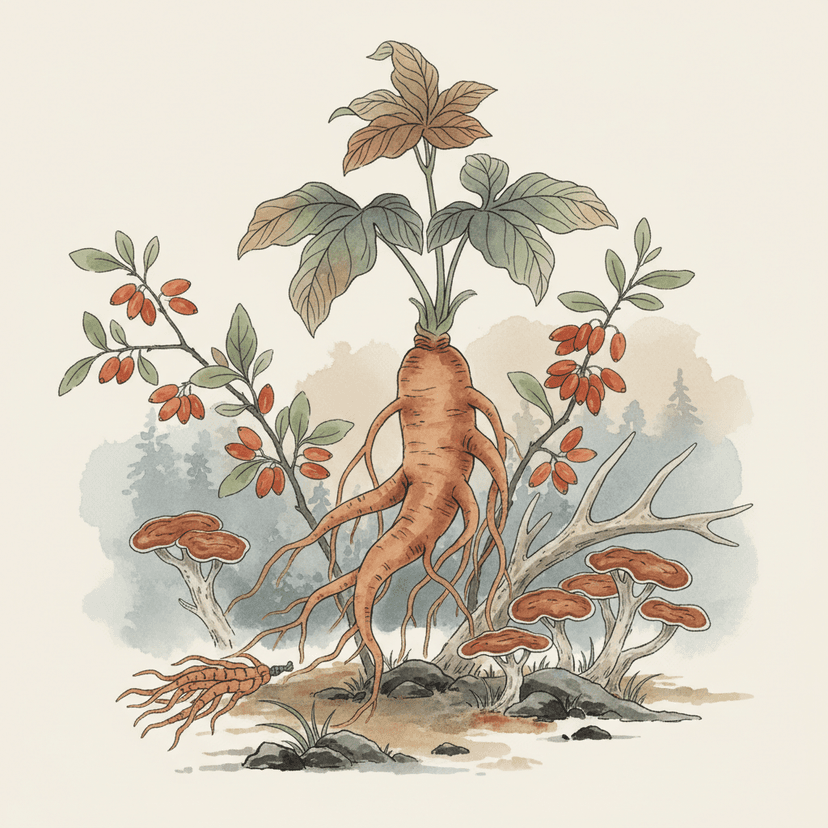
Consider Ju He (橘核, Tangerine Seed). This isn't just a random seed; it's a Qi-regulating herb used in Traditional Chinese Medicine for alleviating pain, regulating qi, and dispersing nodules, particularly in conditions like hernia, testicular swelling, and prostate issues caused by Liver Qi stagnation. Its key active compounds include limonoids and flavonoids.
It’s a direct hit on the Qi Quagmire – that feeling of stagnation and pressure in the lower abdomen.
When prescribed correctly, it works because it addresses the underlying energetic pattern, not just the swollen gland.
The Science Says: Ancient Wisdom, Modern Validation
You think TCM is just old wives' tales? Think again. There’s a growing body of peer-reviewed evidence proving what practitioners have known for millennia. Huang et al. (2013) conducted a systematic review of 31 studies on Benign Prostatic Hyperplasia (BPH) and found that Chinese herbal medicine was superior to Western medication in improving quality of life and reducing prostate volume, with similar or fewer adverse events. Superior. Let that sink in.
It's not just BPH. Li et al. (2019) reviewed studies on chronic prostatitis/chronic pelvic pain syndrome (CP/CPPS), a debilitating condition affecting up to 13.8% of adult men, and concluded that TCM can alleviate pain and significantly improve quality of life. Your doctor might tell you to just manage the pain. TCM asks why you have it.
And it’s not just herbs. Acupuncture, that ancient art of needle placement, isn't just for relaxation. Lai Yu et al. (2025) highlighted how acupuncture at specific points like Guanyuan (CV 4) and Sanyinjiao (SP 6) can regulate the prostate-bladder sensitization pathway. It’s directly influencing nerve signaling, reducing hypersensitivity and inflammation. It's a tangible, physiological effect, not just a placebo.
These aren’t isolated anecdotes; these are systematic reviews. These are hard facts showing that the Qi-Blood Theory of TCM, the concept of balanced energy and circulation, translates into measurable improvements in your body. It’s about preventing stagnation and accumulation.
Remember 桃仁 (Tao Ren, Peach Kernel)? 《本草纲目》 (Compendium of Materia Medica) describes it as bitter, sweet, and neutral, 'breaking blood and moving stasis'. Modern research confirms Tao Ren's extracts can inhibit inflammatory factors like IL-6 and TNF-α, directly impacting the inflammation that causes you pain. Or 昆布 (Kun Bu, Kelp), mentioned in 《神农本草经》 (The Divine Farmer's Materia Medica) for 'treating twelve types of edema and breaking up accumulations.
' Modern studies show its polysaccharides reduce prostate tissue swelling through anti-inflammatory effects. The wisdom is ancient, the mechanisms are verifiable.
Head-to-Head: Choosing Your Battlefield
You're at a crossroads. Your conventional doctor offers one path, rooted in reductionism. TCM offers another, holistic and deeply personal. Let’s strip away the marketing hype and look at the brutal truth.
Western Medicine: Focuses on the organ-specific issue. Your prostate is enlarged. Your prostate is inflamed. Diagnosis is based on lab tests and imaging. Treatment is typically pharmaceutical or surgical, aiming to fix or remove the problematic part. It’s effective for acute, immediate problems, but often falls short on chronic, lingering conditions that erode your quality of life.
Traditional Chinese Medicine: isn't focused on a gland; it sees your prostate issues as a scream from a system out of whack. It's a manifestation of systemic imbalance.
When you sit with a TCM practitioner, we don’t just poke. We look at your tongue. We feel your pulse. We ask a thousand questions about your life – your stress, your sleep, your pissing habits. We're identifying patterns: Kidney Yang Deficiency (cold, frequent urination, fatigue)? Liver Qi Stagnation with Damp-Heat (irritability, burning pain, urgent urination)? Your body is telling a story, and we’re listening.
The treatment? It's not a magic pill. It's a commitment: personalized herbal formulas, acupuncture, dietary changes, and lifestyle adjustments, aimed at rebalancing your entire damn system. It takes longer, yeah. But the goal isn’t symptom suppression. It’s lasting change.
I had a client, David, 52. Chronic prostatitis. Three rounds of antibiotics, zero relief. His urologist was at a loss.
When he came to me, his tongue was purple, his pulse wiry. Classic 'Liver's Vice Grip'—a system choked by stress and poor diet.
We didn't touch the prostate directly. We worked on his Liver, the Damp-Heat, his Kidney. Within months, his pain was down 70%.
It wasn't magic. It was finally listening to his body's language.
The Real F*cking Problem: Your Choices
You can chase every new supplement, every fad diet, every quick fix. But if you’re still pounding processed garbage, chain-smoking stress, and sleeping three hours a night, you’re pissing into the wind. Your prostate isn't going to heal itself because you bought a bottle of saw palmetto. That's treating a symptom with another symptom, just with a 'natural' label on it (which, in your case, means you feel good about doing nothing).
The biggest mistake I see? People treat Chinese herbs like Western drugs. Pop a pill, ignore the rest of your life. That's a surefire way to fail. The true power of TCM, the real Cognitive Upgrade it offers, is the relentless demand for you to participate in your own goddamn healing. It's about taking responsibility for the choices that led you here.
Verdict: Stop Treating Symptoms, Start Living
If you're content with chasing symptoms, by all means, stick to the conventional path. It'll give you answers, temporary relief, and maybe even a surgery date. But if you're sick of the endless cycle of symptom-chasing, if you're ready to understand the deeper currents of your body, then you need to embrace the uncomfortable truth: your prostate isn't sick; you are. And it’s screaming for attention.
If you are suffering from chronic prostate issues with persistent pain, frequent urination, and poor quality of life, then seek out a qualified TCM practitioner who can diagnose your specific energetic pattern – whether it’s a Kidney Empty Well or a Liver's Vice Grip – and provide a personalized herbal formula and acupuncture treatment. Stop hoping for a magic pill. Start doing the work.
If you're simply looking for preventive measures and mild discomfort, here’s your 24-hour mission:
Action #1: Ditch your morning coffee. It’s heating, it aggravates internal heat and dampness, especially in your lower jiao. Instead, drink a large glass of room-temperature water with a squeeze of fresh lemon to gently support your Liver Qi and kickstart your body’s natural detox. Do that one thing, consistently.
Action #2: Avoid sitting for more than 45 minutes straight. Set a timer. Get up and walk for 2 minutes to break Qi stagnation in the pelvis. Your lower body needs movement to keep energy flowing, not to be a stagnant swamp.
Action #3: Massage Sanyinjiao (SP 6) before bed. Spend 3 minutes deeply massaging this point on both legs (it's about four finger-widths above your inner ankle bone). It’s a direct command to your body to improve circulation in the lower abdomen and soothe your Liver and Spleen. Do these three things, consistently. And then build from there.
Maybe the real question isn’t which treatment is better for your prostate — but whether you’ve been thinking about your body through entirely the wrong lens all along.
Contributing Writer at Demisunshine. Kai has been around Chinese herbs and food therapy for as long as he can remember — first at his grandmother's kitchen table, later in his own. He writes the practical pieces: what to actually do with what you've read, with concrete examples and short sentences.
Get TCM Wellness Tips
Weekly articles on herbal remedies, nutrition, and holistic health — delivered to your inbox.