For years, I've seen countless men walk into my clinic convinced their struggles with low energy, flagging libido, and a general sense of 'less than' were simply a matter of declining testosterone. The common narrative, often amplified by aggressive marketing for testosterone replacement therapies, is that low T is the single culprit and the only solution. But what if I told you that approach, while sometimes necessary, often misses the forest for the trees?
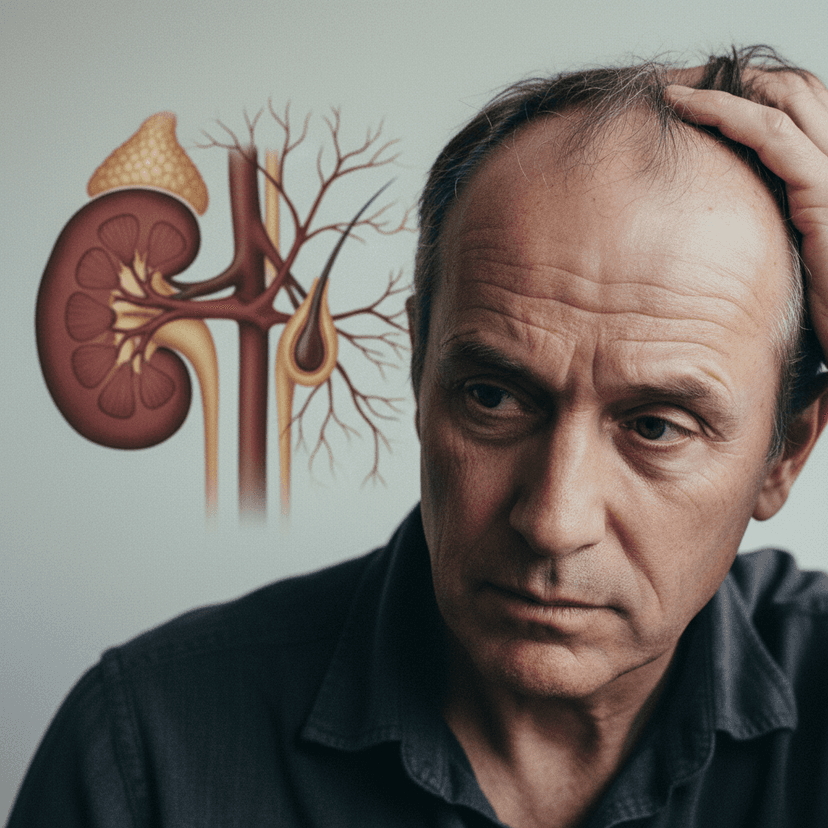
It certainly did for a patient I'll call Mr. David Miller, whose case profoundly shaped my understanding. He’d meticulously tracked his testosterone levels for months, convinced that if he could just get that number up, everything else would fall into place.
Traditional Chinese Medicine (TCM) offers a radically different lens, one that views male vitality not as a single hormone’s dominion, but as an intricate dance of interconnected energetic systems. At its core for male health, TCM often focuses on the Kidney system, which encompasses far more than just the anatomical kidneys. This system governs growth, reproduction, bone health, willpower, and our fundamental life force, known as Kidney Essence (Jing).
When we talk about Kidney Yang deficiency – a common TCM diagnosis for men experiencing low vitality – we're referring to a depletion of the body's warming, active, and functional energy. This manifests as fatigue, cold limbs, low libido, erectile dysfunction, and even anxiety or depression. From a Western functional perspective, this often correlates with adrenal fatigue, mitochondrial dysfunction, or dysregulation of the HPA axis, showing how ancient observations map onto modern physiology.
The Missing Link: How Ancient Wisdom Sees Modern Stress
Mr. Miller, in his early forties, embodied this pattern. His Western labs were borderline, but his symptoms were profound. Chronic stress from a demanding job, poor sleep, and a diet heavy in processed foods had taken a toll. His issues weren't solely about low T; his entire system was depleted. His Kidney Yang was struggling, and his Liver Qi was stagnating from all the unexpressed frustration. That, in TCM, is a recipe for disaster for male vitality.
Chinese herbal medicine offers a powerful approach here. It's not about quick fixes; it's about rebalancing the entire system.
Let me give you an example. A clinical trial in the Journal of Ethnopharmacology (2015) investigated a traditional herbal formula, Fufang Xuanju capsule, for late-onset hypogonadism. The findings were compelling: an overall efficacy rate of 71.9% in improving libido and erectile dysfunction. Patients saw their IIEF-5 scores — a standard measure for erectile function — increase from an average of 11.2 to 17.9 after just three months.
For me, this showed that restoring function and confidence was possible, moving beyond a simple numerical adjustment.
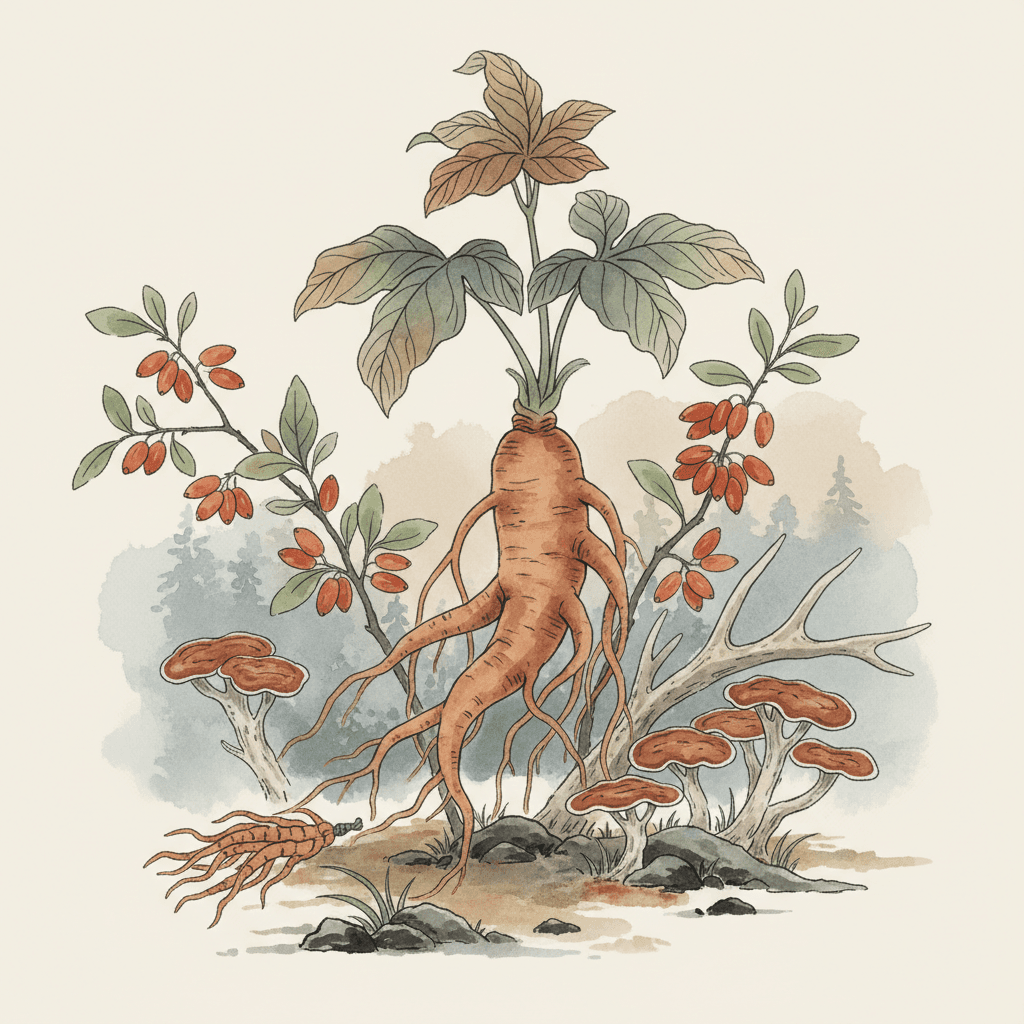
The efficacy of these complex formulas comes from their synergistic action. Take Tusizi (菟丝子), also known as Cuscuta chinensis seed. 《本草纲目》 (Compendium of Materia Medica) states it “supplements insufficiency, boosts Qi and strength, and makes one robust.” Modern research is exploring how its active compounds might modulate endocrine functions, helping the body help itself. This shows how classical texts offered insights that science is only now catching up to.
Beyond Physical Symptoms: The Emotional Connection
What often goes unaddressed in Western approaches to male sexual dysfunction is the profound emotional toll it takes. Anxiety, depression, and stress aren't just consequences; they're often contributing factors, creating a vicious cycle. A systematic review and meta-analysis in Frontiers in Pharmacology (2023) highlighted this brilliantly. Chinese Herbal Medicine, the researchers concluded, “significantly alleviates anxiety and depression in Male Sexual Dysfunction (MSD) patients while concurrently improving core MSD symptoms.
” Specifically, CHM significantly reduced SAS scores (a measure of anxiety) and improved IIEF-5 scores. This shows treatment extends to the whole person—mind and spirit—not just the physical body. Dr. Brent Bauer and his team at Mayo Clinic have long championed this integrated approach for complex conditions, understanding that mental and physical health are inseparable.
The 'Brain-Heart-Kidney-Essence Chamber' Axis: A Holistic Blueprint
In TCM, we speak of the Brain-Heart-Kidney-Essence Chamber axis – a fascinating concept that explains the intricate interplay of cognition, emotion, vitality, and reproductive function. It’s a systemic view of health, much broader than focusing on a single organ or hormone. For conditions like ejaculatory dysfunction, modern Chinese studies are exploring this axis.
For instance, research published in 《北京中医药》 in 2024 by Wu Xiuchuan and colleagues described how a combination of 石菖蒲 (Shi chang pu), 煅牡蛎 (Duan Mu li), and 菟丝子 (Tu si zi) can regulate this axis to improve ejaculatory function, achieving an overall clinical efficacy rate of 85.00% in their observation group. That's a powerful number.
Each herb plays a specific role. 石菖蒲 (Shi chang pu), or Acorus tatarinowii, is noted in the 《神农本草经》 for “opening the orifices of the heart and mind.” Think of it as clearing mental fog and calming the spirit, which directly impacts the 'Brain' and 'Heart' aspects of the axis.
煅牡蛎 (Duan Mu li), calcined oyster shell, is known for its ability to “calm the spirit and astringe essence” according to 《本草纲目》, helping to stabilize and consolidate the 'Essence Chamber' function. These are not random ingredients; they're chosen for their specific actions within a complex system.
Another powerful approach in TCM for erectile dysfunction is the 补肾疏肝法 (Bu Shen Shu Gan Fa), or Tonifying the Kidney and Soothing the Liver method. Research by An Liwen and others in 《中医学》 in 2024 reported an 85.00% clinical efficacy rate for ED and a 23.6% increase in forward motile sperm percentage with this method.
This highlights TCM's dual focus on physiological function and underlying emotional regulation, recognizing that stress and frustration (Liver Qi stagnation) can directly impede the Kidney's ability to govern vitality. This speaks to the sophistication of TCM differential diagnosis.
Acupuncture's Role: Precision and Patience
And what about acupuncture? This ancient therapy, often misunderstood in the West, aims to restore the smooth flow of Qi (life energy) through the body's meridians. For male vitality issues, specific points can be chosen to tonify Kidney Yang, soothe Liver Qi, or calm the Heart-Mind. While many patients report improvements, the scientific literature is still evolving.
A 2016 systematic review in BioMed Research International on acupuncture for erectile dysfunction concluded that the available evidence was insufficient to definitively prove acupuncture as an effective intervention due to inconsistent results across studies. However, some studies have shown patient satisfaction, with one reporting 68.4% satisfactory response for psychogenic ED This doesn't negate acupuncture's potential; rather, it underscores the need for more rigorous, high-quality trials, something researchers like Dr. Helene Langevin at the NIH NCCIH are actively pursuing.
I've certainly seen significant shifts in my clinic, especially when a patient is open to the process.
Integrating for Lasting Power: What I've Learned
True impact comes from integration. Mr. Miller eventually embraced this. We didn't dismiss his Western doctor's concerns about his testosterone; we simply broadened the conversation. We talked about his diet, his sleep hygiene, and the gnawing stress that was depleting his Zheng Qi – his righteous Qi, his fundamental immune vitality. This holistic approach defines integrative medicine. Dr.
Andrew Weil at the University of Arizona has long advocated for this synergistic model, emphasizing that the best care often combines the strengths of multiple traditions.
For Mr. Miller, this meant a personalized herbal formula to nourish his Kidney Yang and soothe his Liver Qi, along with dietary shifts. I encouraged him to start his day with a warming breakfast, perhaps a bowl of millet porridge with a teaspoon of grated ginger and a pinch of cinnamon, rather than cold cereal.
He also committed to a simple, weekly ginger-mutton stew (using about 500g mutton, 30g fresh ginger, and a few dates, simmered for 2-3 hours) – a classic TCM dish to deeply warm and nourish the Kidney system. These seemingly small changes are monumental for supporting the body’s innate healing capacity.
His Wei Qi – his defensive energy – was boosted not just by herbs, but by consistent sleep and reduced stress, allowing his body to recover properly. Within six months, his energy was noticeably higher, his libido had returned, and frankly, he just looked more vibrant. His testosterone levels, while not dramatically higher, were more stable, but most importantly, he felt better, which is what matters.
TCM vs. Western Approach: A Snapshot
To illustrate the difference, consider this comparison:
Western Approach to Low Vitality/Libido
- Focus: Often on specific hormones (e.g., testosterone) or physiological mechanisms (e.g., blood flow for ED).
- Diagnosis: Lab tests (hormone panels, blood work), physical exams.
- Treatment: Hormone replacement therapy, pharmaceuticals (e.g., PDE5 inhibitors), lifestyle advice (exercise, diet).
TCM Approach to Low Vitality/Libido
- Focus: Holistic balance of Qi, Blood, Yin, Yang, and Essence; strength of internal organ systems (especially Kidney, Liver, Spleen).
- Diagnosis: Pulse and tongue diagnosis, symptom pattern analysis (e.g., Kidney Yang deficiency, Liver Qi stagnation), detailed patient history.
- Treatment: Customized herbal formulas, acupuncture, dietary therapy, lifestyle adjustments (stress reduction, sleep optimization).
My clinical observation is this: when addressing male vitality, a purely reductionist view often leaves significant gaps in care. Lasting vitality requires acknowledging the intricate web of physiological, emotional, and energetic factors at play.
Finding Your Path: The Practitioner Puzzle
I often hear skepticism about TCM, and it’s a valid concern. How do you find a legitimate practitioner? How do you ensure safety? My advice is always to seek out professionals certified by recognized bodies, like the National Certification Commission for Acupuncture and Oriental Medicine (NCCAOM) in the US. They have undergone rigorous training and adhere to ethical standards. Don’t hesitate to ask about their experience with male health issues.
Quality and safety of herbal preparations are paramount; a good practitioner will source from reputable suppliers.
Can TCM be safely used alongside Western medications? In many cases, yes, but it requires careful communication between all your healthcare providers. An integrative physician, like myself, can help bridge this gap, ensuring there are no contraindications or potential drug interactions. It’s about creating a unified front for your health, not separate battlefields. Your wellness path, in the end, is a collaboration.
Looking back, Mr. Miller's initial frustration wasn't unique. It was a reflection of a healthcare system that often prioritizes isolated metrics over holistic well-being. But his shift – from a man obsessed with a single number to one who understood and respected his body's deeper rhythms – that, for me, is the real success story. This reminds me that sometimes, the most effective solutions aren't found in chasing a single data point, but in understanding the body's complex interplay.
Perhaps the real question isn't solely about boosting numbers, but about hearing your body's signals? That's the ongoing path, for all of us.
References
- Li et al. — Fufang Xuanju capsule for late-onset hypogonadism
- Yang et al. — CHM for Male Sexual Dysfunction, anxiety, and depression
- Wang et al. — Acupuncture for erectile dysfunction: a systematic review
- Wu Xiuchuan et al. — 石菖蒲-煅牡蛎-菟丝子组药改善射精功能障碍
- An Liwen et al. — 补肾疏肝法治疗勃起功能障碍
- 《本草纲目》 — 菟丝子
- 《神农本草经》 — 石菖蒲
- 《本草纲目》 — 牡蛎
- Andrew Weil Center for Integrative Medicine, University of Arizona
- National Center for Complementary and Integrative Health (NCCIH), NIH