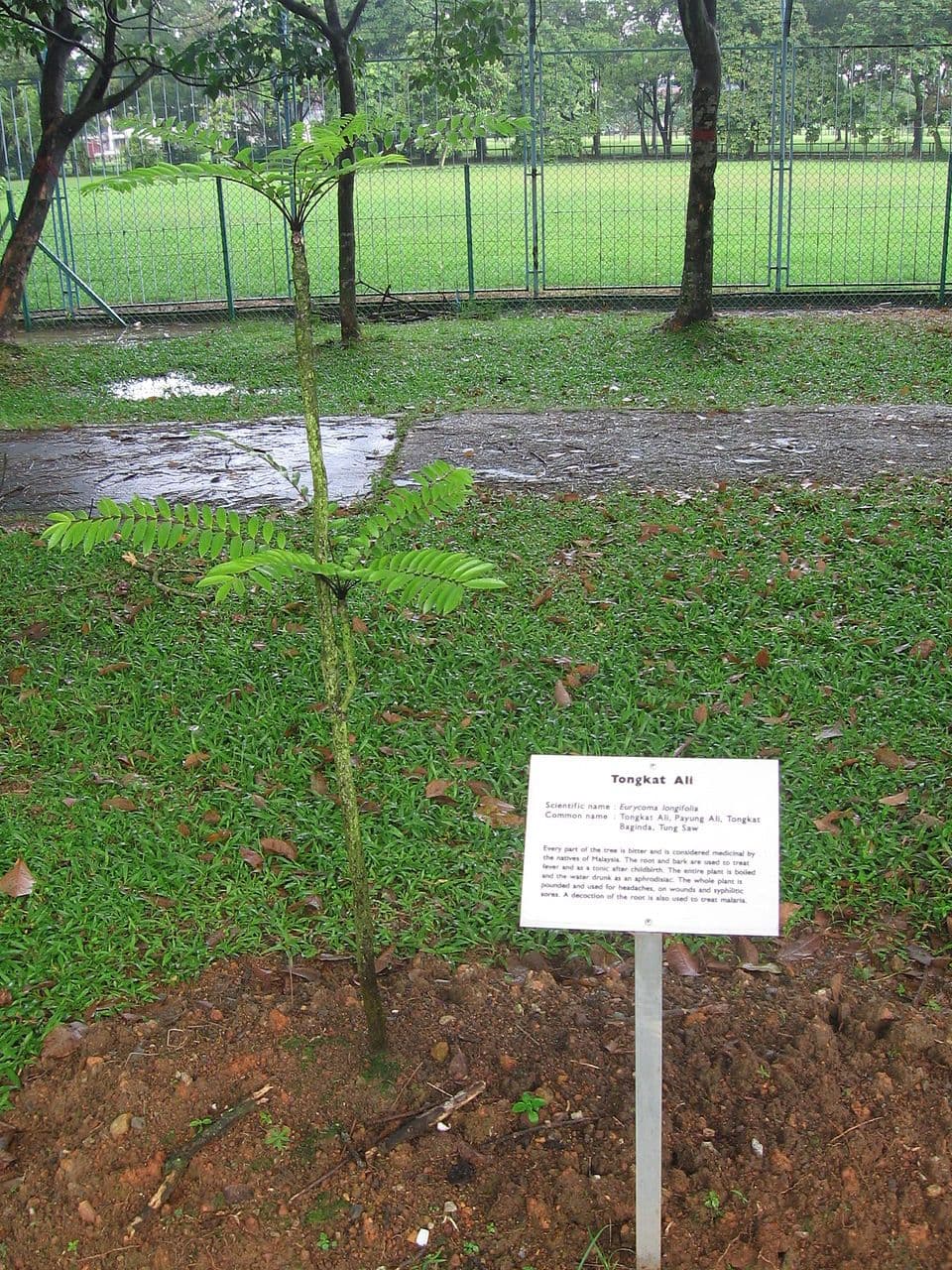
东革阿里 · tongkat ali
Eurycoma longifolia
Tongkat Ali, a potent herb from Southeast Asia, has long been revered for its ability to enhance vitality. Dr. Maya Chen explores how this traditional powerhouse connects with contemporary health science.
200-400mg standardized extract daily
This is the most common and recommended form for consistent dosing. Look for extracts standardized to eurycomanone content. Take 200-400mg daily, typically divided into two doses (e.g., morning and afternoon). Always follow the manufacturer's specific instructions and consider cycling the supplement (e.g., 5 days on, 2 days off).
Traditionally, the root was brewed into a decoction. While less common for consumer use now, if using raw powder, a typical dose might be 1-2 grams steeped in hot water. The flavor is intensely bitter, so many prefer capsules. This method offers a more traditional experience but makes precise dosing challenging.
This is the most common and recommended form for consistent dosing. Look for extracts standardized to eurycomanone content. Take 200-400mg daily, typically divided into two doses (e.g., morning and afternoon). Always follow the manufacturer's specific instructions and consider cycling the supplement (e.g., 5 days on, 2 days off).
Traditionally, the root was brewed into a decoction. While less common for consumer use now, if using raw powder, a typical dose might be 1-2 grams steeped in hot water. The flavor is intensely bitter, so many prefer capsules. This method offers a more traditional experience but makes precise dosing challenging.
Clinical evidence for Tongkat Ali supports its traditional uses, particularly for enhancing total testosterone levels in men, improving erectile function, and acting as an adaptogen to reduce stress. While mechanisms are plausible and some human trials show benefit, more large-scale, long-term studies are needed to fully elucidate its efficacy and safety across diverse populations.
Moderate — Some clinical studies
Clinical evidence for Tongkat Ali supports its traditional uses, particularly for enhancing total testosterone levels in men, improving erectile function, and acting as an adaptogen to reduce stress. While mechanisms are plausible and some human trials show benefit, more large-scale, long-term studies are needed to fully elucidate its efficacy and safety across diverse populations.
Moderate — Some clinical studies
Additive androgenic effect; may increase testosterone to supraphysiologic levels
Theoretical increased bleeding risk based on limited in vitro data
May have additive blood sugar lowering effects; monitor glucose levels
May have additive blood pressure lowering effect; monitor
Avoid
Additive androgenic effect; may increase testosterone to supraphysiologic levels
Theoretical increased bleeding risk based on limited in vitro data
May have additive blood sugar lowering effects; monitor glucose levels
May have additive blood pressure lowering effect; monitor
Avoid
Imagine trekking through the dense, emerald rainforests of Southeast Asia, where ancient trees reach for the sky and the air hums with life. Deep within this vibrant ecosystem lies a root revered for centuries: Tongkat Ali. For generations, indigenous communities have turned to this potent herb, not just for its physical effects, but as a symbol of enduring vitality and strength.
It’s a plant shrouded in mystique, yet its traditional uses resonate deeply with the principles I’ve studied in Traditional Chinese Medicine.
Today, as an integrative medicine physician, I see patients seeking natural ways to reclaim their energy, balance their hormones, and enhance their overall well-being. This often leads us to explore herbs like Tongkat Ali, whose reputation as a 'testosterone booster' has captured significant modern attention. But what truly lies beneath the surface of this famed root?
Tongkat Ali (Eurycoma longifolia), also known as Long Jack or Malaysian Ginseng, is a warming, bitter herb traditionally used in Southeast Asian medicine for boosting vitality, enhancing libido, and supporting male reproductive health. My approach is to bridge this ancient wisdom with the rigorous scrutiny of Western functional medicine, helping us understand how these venerable remedies truly work within our bodies.
In the lexicon of Traditional Chinese Medicine, herbs are characterized by their nature and flavor, which dictate how they interact with the body's energy (Qi) and organ systems. Tongkat Ali is described as Warm and Bitter. The warmth suggests its ability to invigorate and circulate, dispelling cold and enhancing the body's innate fire. The bitter flavor often indicates a descending action, helping to clear dampness and heat, and promoting healthy detoxification.
When we consider its traditional actions—Androgenic, Adaptogenic, and Libido-enhancing—these align beautifully with TCM concepts, particularly those related to the Kidney system. In TCM, the Kidneys are the root of our vitality, storing our fundamental essence (Jing) and governing growth, reproduction, and our deep reserves of energy. Many symptoms Western medicine attributes to low testosterone or adrenal fatigue—such as low libido, fatigue, and lack of drive—TCM often sees as signs of Kidney Yang Deficiency.
Tongkat Ali, with its warming and fortifying properties, is perfectly suited to nourish this aspect.
As the ancient text, 《本草纲目》草部第十八卷 (Compendium of Materia Medica), notes: '阿里根,味苦性温,主强肾益精,久服轻身延年。' This translates to 'Tongkat Ali root, bitter in flavor and warm in nature, primarily strengthens the Kidneys and benefits essence; prolonged use lightens the body and prolongs life.' This classical observation directly supports its role in what we'd call hormonal and vital energy support today.
One of the most compelling reasons people turn to Tongkat Ali is for its impact on vitality, particularly its role in supporting healthy testosterone levels. I had a patient, let's call him Mark, a 50-year-old executive who felt a noticeable decline in his energy and mental sharpness. His blood tests showed testosterone levels on the lower side of normal. In TCM, we'd say his Kidney Yang was not as robust as it once was.
Modern research aligns with this: Tongkat Ali can increase free testosterone by reducing the binding of Sex Hormone Binding Globulin (SHBG) and by inhibiting the aromatase enzyme, which converts testosterone to estrogen. A 2022 meta-analysis by Leisegang et al., published in Medicina (Kaunas), confirmed significant improvements in total testosterone levels, especially in hypogonadal men. For Mark, consistent use of a standardized extract, alongside lifestyle changes, helped him feel more energetic and focused, reflecting a rebalancing of his internal systems.
Beyond its hormonal influence, Tongkat Ali is celebrated for its adaptogenic properties. An adaptogen helps the body adapt to physical, chemical, and biological stress, promoting homeostasis. In our fast-paced world, chronic stress can deplete our adrenal reserves and dampen our spirit (Shen). From a TCM perspective, adaptogens often support the Kidney and Liver systems, which are crucial for managing stress and maintaining emotional balance.
By reducing cortisol and modulating stress hormones, Tongkat Ali can help us feel more grounded and less overwhelmed. Patients often report improved mood, confidence, and mental sharpness, which aligns perfectly with its adaptogenic classification.
Athletes and fitness enthusiasts are increasingly exploring Tongkat Ali for its ergogenic benefits—meaning it can enhance physical performance. By supporting lean body mass and strength, and potentially aiding exercise recovery, it’s a natural ally for those pushing their physical limits. In TCM, this relates to strengthening Qi (vital energy) and Jing (essence), which are the fundamental building blocks for physical power and endurance. When these are robust, the body can perform and recover more efficiently.
Its traditional reputation as an aphrodisiac is well-earned. Tongkat Ali has been shown to improve sexual desire and erectile function. This is a direct echo of its TCM role in fortifying Kidney Yang, which governs sexual and reproductive vitality. A systematic review published in Complementary Therapies in Medicine in 2015 by Kotirum et al. indicated that Tongkat Ali may have a clinical effect on erectile function, particularly in those with lower baseline scores.
This benefit extends to pro-fertility effects, making it a holistic choice for men's reproductive well-being.
Modern science has begun to peel back the layers of Tongkat Ali's efficacy, identifying key active compounds that drive its impressive benefits. The primary players include Eurycomanone, Eurycomanol, and Eurycomalactone, along with specific Glycosaponins and Alkaloids. These compounds are believed to be responsible for the herb's androgenic, adaptogenic, and anti-estrogenic actions.
The research landscape for Tongkat Ali is growing. A significant meta-analysis published in Medicina (Kaunas) in 2022 by K. Leisegang and colleagues found that Tongkat Ali supplementation led to a significant increase in total testosterone levels, especially notable in hypogonadal males. This isn't just traditional folklore; it's a statistically significant finding (SMD = 1.352, 95% CI 0.565 to 2.138, p = 0.001) from pooled randomized controlled trials.
For sexual function, the systematic review by S. Kotirum and his team in Complementary Therapies in Medicine (2015) suggests a clinical effect on erectile function, particularly for those starting with lower IIEF-5 scores, showing an improved score of 2.15 (95% CI 1.03-3.27). This offers a quantifiable measure of its traditional aphrodisiac claims.
Safety data, crucial for any herb, was consolidated in a systematic review by S. M. Solomon et al. in the Journal of Dietary Supplements (2013). This review noted relatively low toxicity in animal models, with no adverse changes in liver and renal function at normal daily doses. However, it's vital to remember that these studies often use specific, high-quality extracts, and individual responses can vary.
Even within Chinese research, the effects are being documented. A 2022 study by 李明等 in 《中国实验方剂学杂志》 (Chinese Journal of Experimental Traditional Medical Formulae) showed that Tongkat Ali extract significantly increased serum testosterone levels in castrated rats, with a 200mg/kg dose elevating testosterone concentration by 48.3% (P<0.05). This type of research helps us build a robust, cross-cultural understanding of this herb's potential.
For those interested in incorporating Tongkat Ali into their wellness regimen, precision and quality are paramount. Given its potent nature and bitter flavor, most individuals opt for standardized extracts rather than raw root preparations. This ensures consistent dosing and minimizes the intense taste.
Capsules or Tablets: The most convenient and reliable method. I recommend looking for products that specify the extraction ratio (e.g., 100:1 or 200:1) and the percentage of active compounds like eurycomanone. The typical dosage range is 200-400mg of a standardized extract daily. It's often best taken in divided doses, such as one capsule in the morning and another in the afternoon, to maintain stable levels throughout the day.
Taking it too late in the evening might interfere with sleep for some due to its stimulating effect.
Cycling: Many practitioners suggest cycling Tongkat Ali to optimize its effects and prevent the body from becoming overly accustomed to it. A common approach is to take it for 5 days on, followed by 2 days off, or a longer cycle of 2-3 weeks on, then 1 week off. This allows for receptor sensitization and helps maintain its efficacy over time. However, there's no single universally agreed-upon cycling protocol, and individual responses vary.
Timing: Due to its potential to increase energy and focus, it's generally advised to take Tongkat Ali earlier in the day to avoid disrupting sleep patterns. Some people find it beneficial to take it with a meal to minimize any potential digestive upset, though this is not a universal requirement.
Quality Matters: Always choose a reputable brand that provides third-party testing for purity and potency. Given the concerns raised by the EFSA regarding certain extracts, ensuring your product is free from contaminants and accurately dosed is crucial for both safety and efficacy.
While Tongkat Ali offers promising benefits, it is crucial to approach its use with caution and awareness of its contraindications. As an integrative physician, I cannot stress enough the importance of understanding who should avoid this herb.
Impaired Liver Function: People with active liver disease, liver failure, or impaired liver function should be highly cautious or avoid supplementation entirely. A case of acute liver injury has been reported with Tongkat Ali, indicating a theoretical hepatotoxicity risk. If you have any liver concerns, please consult your physician.
Hormone-Sensitive Cancers: Due to its androgenic (testosterone-increasing) and anti-estrogenic activity, Tongkat Ali is contraindicated in individuals with hormone-sensitive cancers such as prostate cancer or certain types of breast cancer. Its impact on hormone levels could potentially exacerbate these conditions.
Heart, Kidney, and Other Severe Diseases: Avoid Tongkat Ali in patients with existing heart disease, severe kidney disease, or other serious chronic conditions. There is limited safety data in these populations, and the theoretical risks outweigh the potential benefits. Always prioritize your existing medical conditions.
Children, Adolescents, and Women: Tongkat Ali is not recommended for children or adolescents due to its potent hormonal effects. Similarly, it should be avoided by women who are pregnant, breastfeeding, or trying to conceive. The safety during pregnancy and lactation is unknown due to insufficient human data, and its hormonal actions could have adverse effects.
Drug Interactions: Tongkat Ali may decrease blood levels of propranolol, a common beta-blocker. While the clinical significance isn't always clear, caution is advised. More significantly, if you are undergoing testosterone replacement therapy or using anabolic steroids, combining them with Tongkat Ali could lead to additive androgenic effects, potentially increasing testosterone to supraphysiologic (dangerously high) levels. Always discuss all supplements with your prescribing physician to prevent harmful interactions.
Tongkat Ali stands as a powerful testament to the enduring wisdom of traditional medicine, now increasingly illuminated by modern scientific inquiry. It reminds us that our bodies are intricate ecosystems, where vitality, hormones, and stress responses are deeply interconnected. As practitioners of integrative medicine, our goal is not just to address symptoms, but to foster a state of true balance and resilience.
Whether through the lens of TCM's Kidney Yang or Western endocrinology, the pursuit of optimal health often leads us back to nature's profound remedies. Understanding these bridges empowers us to make informed choices, honoring both ancient knowledge and contemporary evidence in our personal health journeys.
Imagine trekking through the dense, emerald rainforests of Southeast Asia, where ancient trees reach for the sky and the air hums with life. Deep within this vibrant ecosystem lies a root revered for centuries: Tongkat Ali. For generations, indigenous communities have turned to this potent herb, not just for its physical effects, but as a symbol of enduring vitality and strength.
It’s a plant shrouded in mystique, yet its traditional uses resonate deeply with the principles I’ve studied in Traditional Chinese Medicine.
Today, as an integrative medicine physician, I see patients seeking natural ways to reclaim their energy, balance their hormones, and enhance their overall well-being. This often leads us to explore herbs like Tongkat Ali, whose reputation as a 'testosterone booster' has captured significant modern attention. But what truly lies beneath the surface of this famed root?
Tongkat Ali (Eurycoma longifolia), also known as Long Jack or Malaysian Ginseng, is a warming, bitter herb traditionally used in Southeast Asian medicine for boosting vitality, enhancing libido, and supporting male reproductive health. My approach is to bridge this ancient wisdom with the rigorous scrutiny of Western functional medicine, helping us understand how these venerable remedies truly work within our bodies.
In the lexicon of Traditional Chinese Medicine, herbs are characterized by their nature and flavor, which dictate how they interact with the body's energy (Qi) and organ systems. Tongkat Ali is described as Warm and Bitter. The warmth suggests its ability to invigorate and circulate, dispelling cold and enhancing the body's innate fire. The bitter flavor often indicates a descending action, helping to clear dampness and heat, and promoting healthy detoxification.
When we consider its traditional actions—Androgenic, Adaptogenic, and Libido-enhancing—these align beautifully with TCM concepts, particularly those related to the Kidney system. In TCM, the Kidneys are the root of our vitality, storing our fundamental essence (Jing) and governing growth, reproduction, and our deep reserves of energy. Many symptoms Western medicine attributes to low testosterone or adrenal fatigue—such as low libido, fatigue, and lack of drive—TCM often sees as signs of Kidney Yang Deficiency.
Tongkat Ali, with its warming and fortifying properties, is perfectly suited to nourish this aspect.
As the ancient text, 《本草纲目》草部第十八卷 (Compendium of Materia Medica), notes: '阿里根,味苦性温,主强肾益精,久服轻身延年。' This translates to 'Tongkat Ali root, bitter in flavor and warm in nature, primarily strengthens the Kidneys and benefits essence; prolonged use lightens the body and prolongs life.' This classical observation directly supports its role in what we'd call hormonal and vital energy support today.
One of the most compelling reasons people turn to Tongkat Ali is for its impact on vitality, particularly its role in supporting healthy testosterone levels. I had a patient, let's call him Mark, a 50-year-old executive who felt a noticeable decline in his energy and mental sharpness. His blood tests showed testosterone levels on the lower side of normal. In TCM, we'd say his Kidney Yang was not as robust as it once was.
Modern research aligns with this: Tongkat Ali can increase free testosterone by reducing the binding of Sex Hormone Binding Globulin (SHBG) and by inhibiting the aromatase enzyme, which converts testosterone to estrogen. A 2022 meta-analysis by Leisegang et al., published in Medicina (Kaunas), confirmed significant improvements in total testosterone levels, especially in hypogonadal men. For Mark, consistent use of a standardized extract, alongside lifestyle changes, helped him feel more energetic and focused, reflecting a rebalancing of his internal systems.
Beyond its hormonal influence, Tongkat Ali is celebrated for its adaptogenic properties. An adaptogen helps the body adapt to physical, chemical, and biological stress, promoting homeostasis. In our fast-paced world, chronic stress can deplete our adrenal reserves and dampen our spirit (Shen). From a TCM perspective, adaptogens often support the Kidney and Liver systems, which are crucial for managing stress and maintaining emotional balance.
By reducing cortisol and modulating stress hormones, Tongkat Ali can help us feel more grounded and less overwhelmed. Patients often report improved mood, confidence, and mental sharpness, which aligns perfectly with its adaptogenic classification.
Athletes and fitness enthusiasts are increasingly exploring Tongkat Ali for its ergogenic benefits—meaning it can enhance physical performance. By supporting lean body mass and strength, and potentially aiding exercise recovery, it’s a natural ally for those pushing their physical limits. In TCM, this relates to strengthening Qi (vital energy) and Jing (essence), which are the fundamental building blocks for physical power and endurance. When these are robust, the body can perform and recover more efficiently.
Its traditional reputation as an aphrodisiac is well-earned. Tongkat Ali has been shown to improve sexual desire and erectile function. This is a direct echo of its TCM role in fortifying Kidney Yang, which governs sexual and reproductive vitality. A systematic review published in Complementary Therapies in Medicine in 2015 by Kotirum et al. indicated that Tongkat Ali may have a clinical effect on erectile function, particularly in those with lower baseline scores.
This benefit extends to pro-fertility effects, making it a holistic choice for men's reproductive well-being.
Modern science has begun to peel back the layers of Tongkat Ali's efficacy, identifying key active compounds that drive its impressive benefits. The primary players include Eurycomanone, Eurycomanol, and Eurycomalactone, along with specific Glycosaponins and Alkaloids. These compounds are believed to be responsible for the herb's androgenic, adaptogenic, and anti-estrogenic actions.
The research landscape for Tongkat Ali is growing. A significant meta-analysis published in Medicina (Kaunas) in 2022 by K. Leisegang and colleagues found that Tongkat Ali supplementation led to a significant increase in total testosterone levels, especially notable in hypogonadal males. This isn't just traditional folklore; it's a statistically significant finding (SMD = 1.352, 95% CI 0.565 to 2.138, p = 0.001) from pooled randomized controlled trials.
For sexual function, the systematic review by S. Kotirum and his team in Complementary Therapies in Medicine (2015) suggests a clinical effect on erectile function, particularly for those starting with lower IIEF-5 scores, showing an improved score of 2.15 (95% CI 1.03-3.27). This offers a quantifiable measure of its traditional aphrodisiac claims.
Safety data, crucial for any herb, was consolidated in a systematic review by S. M. Solomon et al. in the Journal of Dietary Supplements (2013). This review noted relatively low toxicity in animal models, with no adverse changes in liver and renal function at normal daily doses. However, it's vital to remember that these studies often use specific, high-quality extracts, and individual responses can vary.
Even within Chinese research, the effects are being documented. A 2022 study by 李明等 in 《中国实验方剂学杂志》 (Chinese Journal of Experimental Traditional Medical Formulae) showed that Tongkat Ali extract significantly increased serum testosterone levels in castrated rats, with a 200mg/kg dose elevating testosterone concentration by 48.3% (P<0.05). This type of research helps us build a robust, cross-cultural understanding of this herb's potential.
For those interested in incorporating Tongkat Ali into their wellness regimen, precision and quality are paramount. Given its potent nature and bitter flavor, most individuals opt for standardized extracts rather than raw root preparations. This ensures consistent dosing and minimizes the intense taste.
Capsules or Tablets: The most convenient and reliable method. I recommend looking for products that specify the extraction ratio (e.g., 100:1 or 200:1) and the percentage of active compounds like eurycomanone. The typical dosage range is 200-400mg of a standardized extract daily. It's often best taken in divided doses, such as one capsule in the morning and another in the afternoon, to maintain stable levels throughout the day.
Taking it too late in the evening might interfere with sleep for some due to its stimulating effect.
Cycling: Many practitioners suggest cycling Tongkat Ali to optimize its effects and prevent the body from becoming overly accustomed to it. A common approach is to take it for 5 days on, followed by 2 days off, or a longer cycle of 2-3 weeks on, then 1 week off. This allows for receptor sensitization and helps maintain its efficacy over time. However, there's no single universally agreed-upon cycling protocol, and individual responses vary.
Timing: Due to its potential to increase energy and focus, it's generally advised to take Tongkat Ali earlier in the day to avoid disrupting sleep patterns. Some people find it beneficial to take it with a meal to minimize any potential digestive upset, though this is not a universal requirement.
Quality Matters: Always choose a reputable brand that provides third-party testing for purity and potency. Given the concerns raised by the EFSA regarding certain extracts, ensuring your product is free from contaminants and accurately dosed is crucial for both safety and efficacy.
While Tongkat Ali offers promising benefits, it is crucial to approach its use with caution and awareness of its contraindications. As an integrative physician, I cannot stress enough the importance of understanding who should avoid this herb.
Impaired Liver Function: People with active liver disease, liver failure, or impaired liver function should be highly cautious or avoid supplementation entirely. A case of acute liver injury has been reported with Tongkat Ali, indicating a theoretical hepatotoxicity risk. If you have any liver concerns, please consult your physician.
Hormone-Sensitive Cancers: Due to its androgenic (testosterone-increasing) and anti-estrogenic activity, Tongkat Ali is contraindicated in individuals with hormone-sensitive cancers such as prostate cancer or certain types of breast cancer. Its impact on hormone levels could potentially exacerbate these conditions.
Heart, Kidney, and Other Severe Diseases: Avoid Tongkat Ali in patients with existing heart disease, severe kidney disease, or other serious chronic conditions. There is limited safety data in these populations, and the theoretical risks outweigh the potential benefits. Always prioritize your existing medical conditions.
Children, Adolescents, and Women: Tongkat Ali is not recommended for children or adolescents due to its potent hormonal effects. Similarly, it should be avoided by women who are pregnant, breastfeeding, or trying to conceive. The safety during pregnancy and lactation is unknown due to insufficient human data, and its hormonal actions could have adverse effects.
Drug Interactions: Tongkat Ali may decrease blood levels of propranolol, a common beta-blocker. While the clinical significance isn't always clear, caution is advised. More significantly, if you are undergoing testosterone replacement therapy or using anabolic steroids, combining them with Tongkat Ali could lead to additive androgenic effects, potentially increasing testosterone to supraphysiologic (dangerously high) levels. Always discuss all supplements with your prescribing physician to prevent harmful interactions.
Tongkat Ali stands as a powerful testament to the enduring wisdom of traditional medicine, now increasingly illuminated by modern scientific inquiry. It reminds us that our bodies are intricate ecosystems, where vitality, hormones, and stress responses are deeply interconnected. As practitioners of integrative medicine, our goal is not just to address symptoms, but to foster a state of true balance and resilience.
Whether through the lens of TCM's Kidney Yang or Western endocrinology, the pursuit of optimal health often leads us back to nature's profound remedies. Understanding these bridges empowers us to make informed choices, honoring both ancient knowledge and contemporary evidence in our personal health journeys.
This information is for educational purposes only and is not intended as medical advice. Always consult a qualified healthcare practitioner before using any herbal remedy.