Pierre, a baker of thirty-seven, meticulously brushed flour from his apron, the scent of fresh baguettes clinging to his clothes like a second skin. For months, a persistent fatigue had shadowed his days, a leaden weight that no amount of sleep could lift. His doctor in rural France, a kind woman, had run every test imaginable: blood counts, thyroid panels, liver enzymes. All normal. “Everything is fine, Pierre,” she’d assured him, a note of gentle exasperation in her voice.
But his body, the one that had kneaded dough for two decades, disagreed.
It was a chance conversation with a visiting environmental health specialist, a friend of a friend, that finally led to a specialized heavy metal screening. The results came back days later, stark and alarming: Pierre’s cadmium levels were significantly elevated. The culprit? The very wheat he used to bake his beloved baguettes, grown in local soils subtly tainted by decades of industrial runoff. His daily bread, quite literally, had been poisoning him.
He was a man consumed by his craft, now consumed by its hidden dangers.
The Silent Burden: Cadmium in Our Modern Diet
Pierre’s story, while specific to a French bakery, echoes a global, insidious crisis. Cadmium, a heavy metal, is naturally present in the earth’s crust, but its levels have surged due to industrial activities, mining, and the use of phosphate fertilizers. It finds its way into our food chain, accumulating in rice, leafy greens, root vegetables, and even the wheat that becomes our pasta and croissants. It’s everywhere. It’s invisible. It’s relentless.
The human body, however, has no known biological need for cadmium. Once absorbed, it’s remarkably persistent, with a biological half-life that can stretch from 10 to 30 years. It accumulates primarily in the kidneys, where it can lead to damage, and in bones, contributing to fragility. Long-term exposure, even at low levels, is linked to kidney disease, osteoporosis, and an increased risk of certain cancers.
The challenge, then, becomes not just avoiding exposure – an increasingly impossible task – but understanding how to mitigate its effects. How do we get it out?
Chelation: A Potent, Complicated Tool
For acute, severe cadmium poisoning, Western medicine offers chelation therapy. This involves administering agents like EDTA or DMSA that bind to heavy metals in the bloodstream, facilitating their excretion.
It can be life-saving.
But it comes with complications.
Chelation agents are potent, often non-specific.
They can deplete essential minerals alongside the toxic ones. This can lead to side effects: nausea, fatigue, even kidney dysfunction.
For chronic, low-level exposure—the kind Pierre experienced, the kind most of us face—the calculus changes. The risks of conventional chelation often outweigh the benefits, prompting researchers to look for gentler, more sustained approaches. A systematic review published in Frontiers in Public Health in 2022 highlighted this very dilemma, noting that while chelation is crucial for acute cases, Traditional Chinese Medicine (TCM) showed efficacy in lowering cadmium concentrations in chronic situations, suggesting a role for alternative therapies.
Ancient Wisdom Meets Modern Toxin: The Promise of TCM
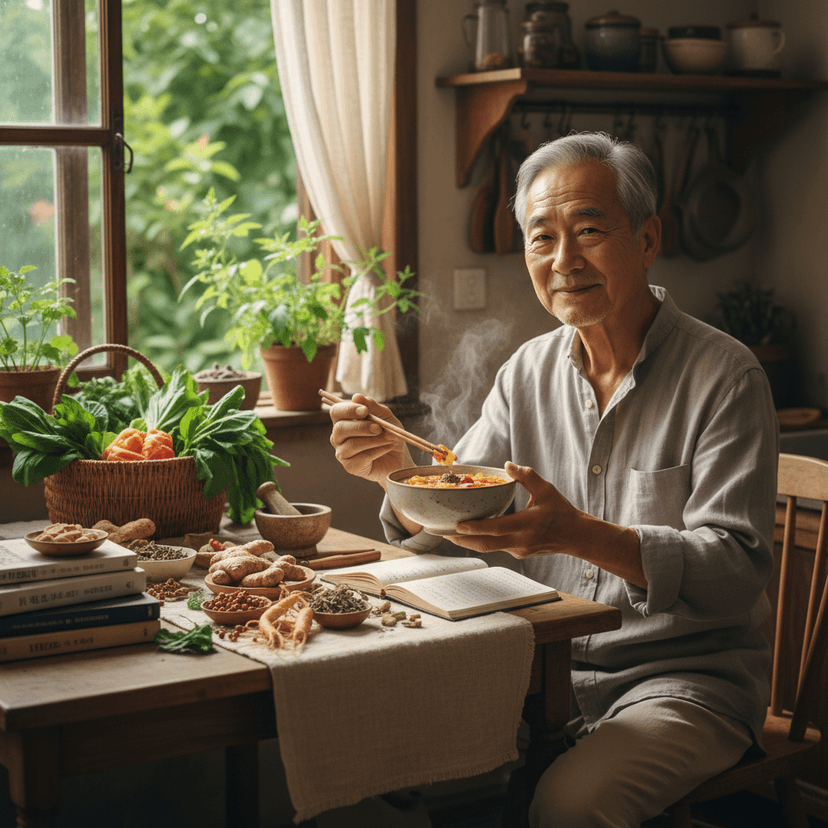
In a Chinese-American household like mine, the concept of detoxification wasn’t a marketing buzzword; it was an ingrained understanding of how the body dealt with impurities. My grandmother’s herbal remedies weren't alternative—they were simply medicine. This perspective, generations deep, is now gaining traction in scientific circles as researchers investigate ancient remedies for modern problems. I’ve always found that fascinating, this slow, deliberate bridging of two worlds.
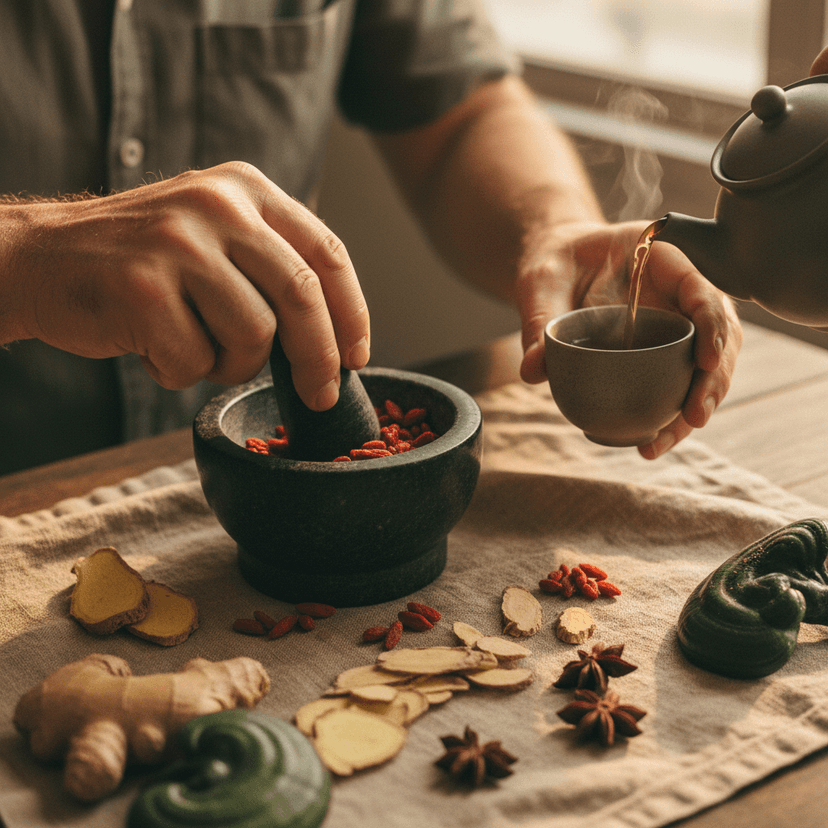
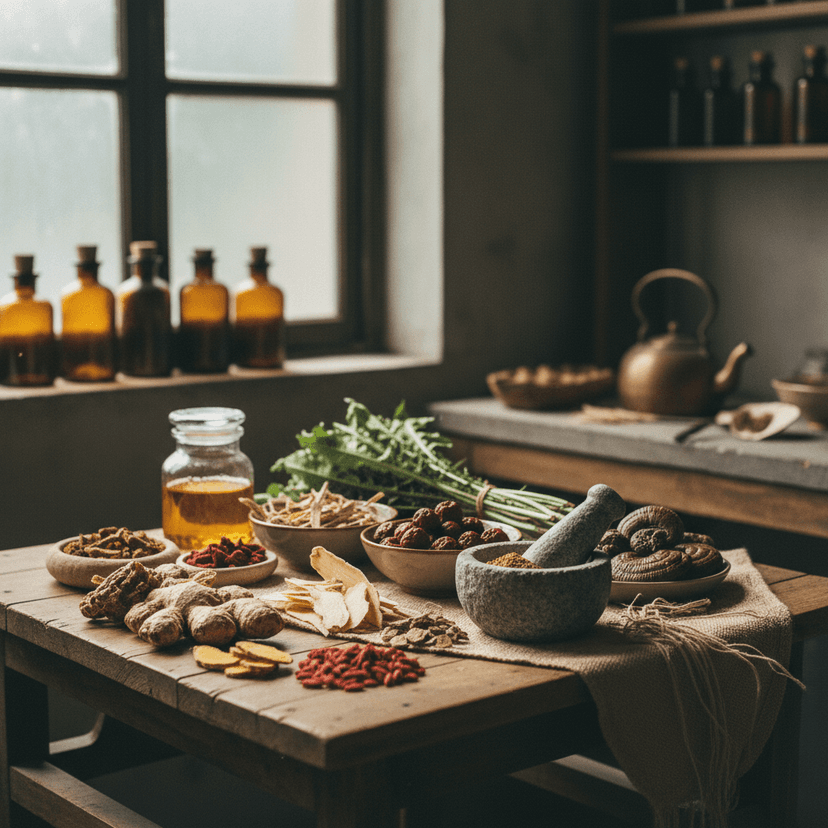
Consider Tu Fu Ling (Smilax glabra), also known as Glabrous Greenbrier Rhizome. This root is a cornerstone herb in Traditional Chinese Medicine, used for its detoxifying, dampness-resolving, and joint-benefiting properties. Its key active compounds include total flavonoids and steroidal saponins. 《本草纲目》, the encyclopedic text of Chinese materia medica, notes Tu Fu Ling as 「甘、淡,平。归肝、胃经。解毒,除湿,通利关节」— sweet, bland, neutral in nature, entering the liver and stomach meridians, effective in detoxification, dispelling dampness, and promoting joint mobility.
Modern science is beginning to unravel the mechanisms behind these traditional claims. A team from the Tianjin Institute of Pharmaceutical Research, for instance, published findings in 《中草药》 in 2022, demonstrating that the total flavonoids from Tu Fu Ling had a significant detoxifying effect on lead-poisoned mice. The high-dose flavonoid group saw a remarkable 58.89% decrease in lead content, alongside reduced liver and kidney damage. This moves beyond mere anecdote. It's about observable, quantifiable biochemical changes.
Understanding Tu Fu Ling
When we look at the specific properties of Tu Fu Ling, we see why it holds such promise:
- Key components: Total flavonoids, steroidal saponins
- Nature & Flavor: Sweet, bland, neutral
- Meridians: Liver, Stomach
- Commonly used dosage: 15-30g in decoction for therapeutic purposes
The traditional understanding that Tu Fu Ling 解毒 (resolves toxins) resonates with these modern findings, suggesting a deep, albeit historically unquantified, knowledge of its chelating-like properties.
The Uncomfortable Truth: When the Cure Becomes the Contaminant
This is where the story takes a turn. Natural detox remedies confront a stark reality: the widespread environmental contamination that makes them necessary can also taint the remedies themselves. For a decade, I’ve observed the collision of Eastern and Western health paradigms, and this particular issue presents a serious ethical challenge to the often-romanticized view of ancient medicine. It's a bitter irony.
A review in Ecotoxicology and Environmental Safety in 2022 delivered a sobering statistic: 22.05% of Traditional Chinese Medicine material (TCMM) samples investigated exceeded relevant domestic cadmium safety standards. That's a fifth of the samples. A significant problem.
One particularly striking finding comes from a 2024 study by a Chengdu University of Traditional Chinese Medicine team, published in Environmental Science and Pollution Research. They found that Chuan Xiong (Rhizoma Chuanxiong), a commonly used herb, can act as a cadmium hyperaccumulator. Its rhizome cadmium content reached as high as 17.75 mg/kg in some samples, far exceeding safety limits.
This phenomenon is exacerbated by soil acidification, particularly prevalent in areas like the Qinghai-Tibet Plateau, identified as having the highest cadmium pollution levels in Chinese herbal medicines between 2000 and 2004.
A 2023 study led by Wu Xingze (武行则) and colleagues, published in 《数理医药学杂志》, analyzed 216 batches of Chinese materia medica from Guizhou Province. Their findings revealed potential risks for children consuming certain herbs like Di Long (earthworm) and Jiang Can (silkworm cocoon), even at maximum adult dosages, suggesting a pervasive problem. This isn't just about adults; it's about vulnerable populations.
This is a real concern. It poses a serious ethical challenge for practitioners and a safety issue for patients. If the very herbs intended to detoxify the body inadvertently introduce more heavy metals, then the fundamental premise of healing is undermined. This is the kind of problem that demands more than simple solutions. It demands rigor.
Finding a Responsible Way Forward
Discussions around heavy metal detoxification often devolve. On one side, Western medicine dismisses alternatives. On the other, some wellness communities embrace unverified “detoxes.” This binary view, however, misses the point. For me, the real question isn't which approach is right, but how we responsibly integrate the strengths of both. Can we do better?
I’ve observed practitioners like Dr. Tong Ding from the College of Traditional Chinese Medicine at Jilin Agricultural University, whose work focuses on the scientific validation of herbal remedies. Their meticulous approach to studying compounds like those in Tu Fu Ling provides a bridge. It’s about understanding the specific phytochemicals, their mechanisms of action, and their interactions, rather than simply relying on historical precedent. It’s science, applied to tradition.
For anyone concerned about cadmium exposure, the first actionable step is precise diagnosis. Request a heavy metal panel from your doctor. This provides objective data, a baseline. Then, if considering herbal interventions, seek out qualified practitioners who are not only knowledgeable in TCM diagnostics but also acutely aware of modern contamination issues. The biggest mistake I see people make with herbal supplements? They treat them like vitamins — pop a pill and forget about it.
These are potent substances, and their sourcing matters profoundly. Really.
It means asking pointed questions. What are the sourcing practices for their herbs? Are they tested for heavy metals? Are those lab reports available? This is not an attack on tradition; it’s a necessary evolution of responsible practice in an increasingly polluted world. The wisdom of 《神农本草经》, which speaks of Gan Cao (licorice) mastering 五脏六腑寒热邪气 (cold and hot evil qi of the five zang and six fu organs) and strengthening sinews and bones, implicitly trusted in a pristine environment.
That trust must now be earned through modern rigor. No shortcuts.
Beyond the Headlines: Cultivating an Integrated Future
The story of cadmium, from Pierre’s baguettes to the shelves of Chinese medicine cabinets, is a microcosm of a larger challenge. It forces us to confront an uncomfortable truth: our environment is changing, and so too must our approach to health. Advocating for one system over another simply isn't enough. What's needed is an intelligent synthesis, a willingness to scrutinize, and a commitment to safety, regardless of origin. Dr.
Hui Sun's team at Sichuan University, for instance, focuses on the environmental science aspect, ensuring that the very soil where medicinal plants grow is safe and uncontaminated. This is where the work truly gets done.
For Pierre, the journey was long. It involved a conventional chelation protocol, carefully managed, followed by a personalized regimen of dietary adjustments and specific herbal formulations from a TCM practitioner who sourced meticulously tested herbs. His fatigue slowly receded. His numbers improved. The answer lay in combining multiple approaches thoughtfully. It demonstrated the strength of asking not either/or, but how can we combine.
This is the complex, often messy, terrain of modern health: where ancient texts meet molecular biology, where global supply chains intersect with personal well-being. The challenge of cadmium—and all environmental toxins—isn’t just about finding a cure. It’s about reimagining wellness itself, not as an isolated state, but as a dynamic interplay between our bodies, our environment, and the evolving wisdom we bring to bear on both. It’s a constant negotiation.
References
- Zhongguo Zhong Yao Za Zhi (Chinese Journal of Traditional Chinese Medicine) — Natural medicines offer significant potential for treating cadmium poisoning (2018)
- Ecotoxicology and Environmental Safety — Heavy metal contamination in Traditional Chinese Medicine materials (2022)
- 天津药物研究院团队,《中草药》— 土茯苓总黄酮对铅中毒小鼠的解毒作用研究 (2022)
- 武行则等,《数理医药学杂志》— 贵州省中药饮片重金属含量检测 (2023)
- 《本草纲目》
- 《神农本草经》