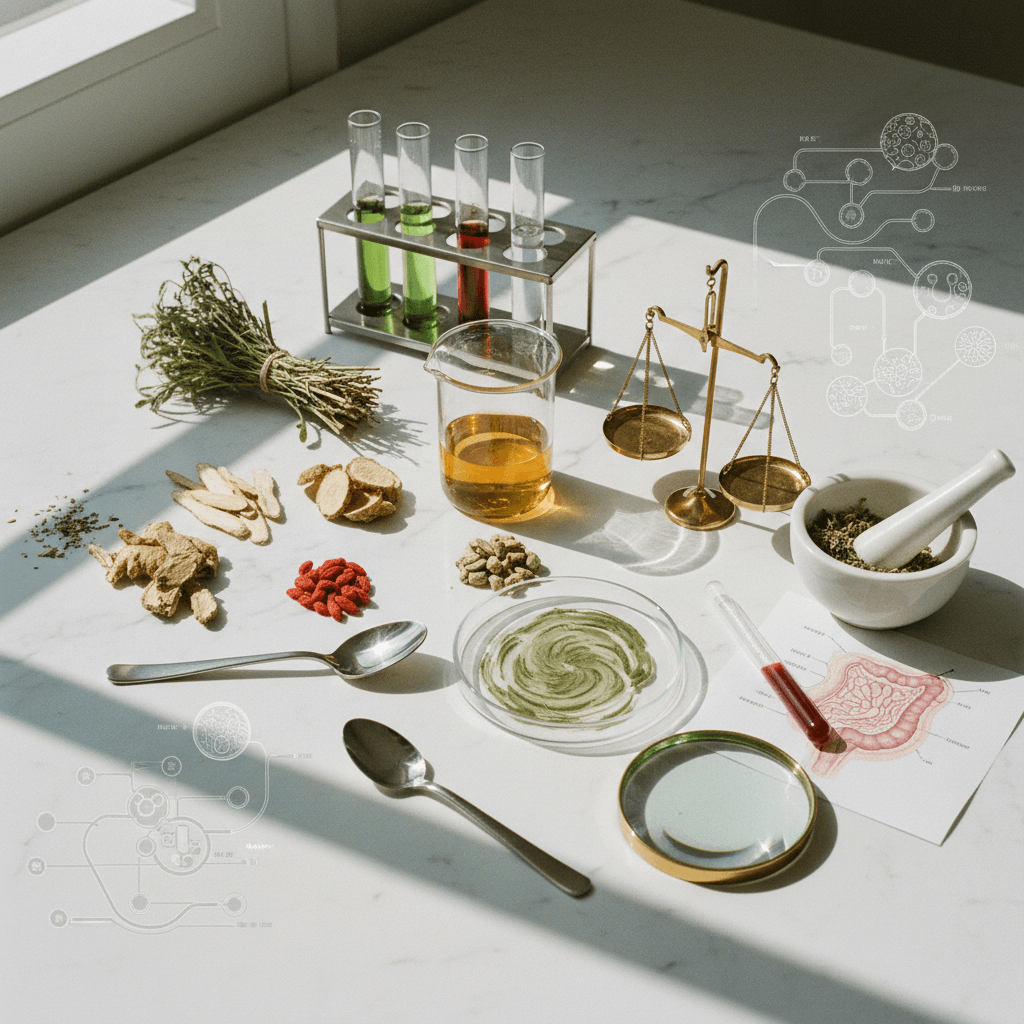
Hey everyone! It's Maya Chen, and I've been fascinated lately by how modern science is catching up to ancient wisdom, especially when it comes to our gut. Recent research, like the work of Chen ZY, Li HR, and colleagues in Tradit. Med. Res. (2025), highlights how Traditional Chinese Medicines (TCMs) positively modulate the gut microbiome across various disease systems.
What this research really points to is a core adjustment for the entire system, not just the simple addition of a few good bacteria.
For too long, the conversation around gut health has felt like a battle — good bacteria versus bad bacteria, a constant search for the perfect probiotic strain. Perhaps we've been looking at it from a limited angle. What if the real strength isn't just what's in your gut, but how well your body nurtures its entire internal balance? It's a question I often ponder.
Growing up in a household where herbal traditions were part of daily life, I learned early on that health isn't about isolated parts. It’s a symphony. TCM provides a deep, holistic map to understanding this internal environment, one that feels so relevant as we explore microbiome science today. So, what does this 'internal balance' really mean in the TCM way?
1. Your Internal Balance: More Than Just Bugs
In Western medicine, our focus often lands on specific microbial species within the gut. We get excited about a certain strain of Lactobacillus or Bifidobacterium, or we worry about an overgrowth of Candida. That's valuable information, no doubt.
But TCM provides a broader lens: the idea of the internal balance, where the soil matters as much as the seeds.
It's a different way of seeing the same problem.
For TCM, the digestive system is governed primarily by the Spleen (which encompasses the pancreas and digestive functions, not just the anatomical organ) and the Stomach. These are more than just physical organs; they're energetic systems responsible for transforming food into Qi (life force) and Blood.
When your Spleen Qi is strong, your digestion is efficient, and your body can extract nutrients effectively. But when it's weak, you might experience bloating, fatigue, or loose stools. It's a bit like a farmer tending their land: you can scatter the finest seeds, but if the soil isn't rich and well-prepared, those plants won't truly flourish.
This difference in perspective is noticeable. Western approaches might focus on identifying specific bacterial imbalances and introducing targeted probiotics. TCM, however, seeks to restore the overall harmony of the Spleen and Stomach, ensuring the body has the fundamental capacity to digest, absorb, and transform. Clinical literature commonly describes how this rebalancing act can lead to a healthier, more diverse microbiome — a compelling connection between ancient and modern ideas.
2. The Wisdom of Warmth: Why Your Gut Prefers a Cozy Meal
You might find this piece of advice goes against some popular wellness trends: your gut thrives on warmth. Consistently consuming cold or raw foods, from a TCM perspective, is like asking your digestive system to work overtime, often weakening your Spleen Qi. It's an energy drain.
The Spleen in TCM is often referred to as needing a 'warm stove' to function optimally. Cold foods require the body to expend extra energy to warm them up to body temperature before digestion can even properly begin. This can be particularly taxing for those with Spleen Qi Deficiency – a common pattern characterized by fatigue, bloating after meals, and a tendency towards loose stools.
When the Spleen is struggling, the entire digestive process slows down, creating an environment where less beneficial bacteria might flourish.
The classical text, 《本草纲目》 (Compendium of Materia Medica), famously states: '脾胃者,仓廪之官,五味出焉' (The Spleen and Stomach are the officials of the granary, from which the five flavors emerge). This emphasizes their central role in processing and distributing the essence of food. If this 'granary' is cold and damp, how can it properly 'store' and 'transform'?
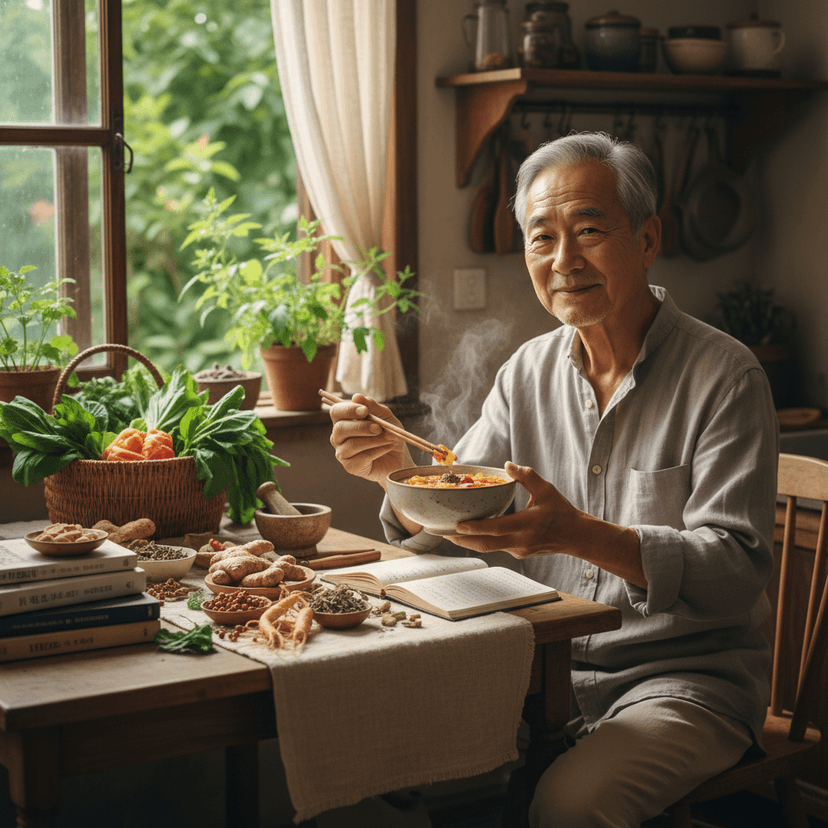
Think about it: a warm, cooked meal is already partially 'digested' by the cooking process, making it easier for your body to break down and absorb. This gentle approach supports your digestive fire, allowing your gut microbes to thrive in a balanced, hospitable environment. My grandmother, bless her heart, always insisted on warm breakfast porridge, a tradition I've come to deeply appreciate as my understanding of TCM has grown.
3. Beyond Probiotics: Herbs as Inner Gardeners
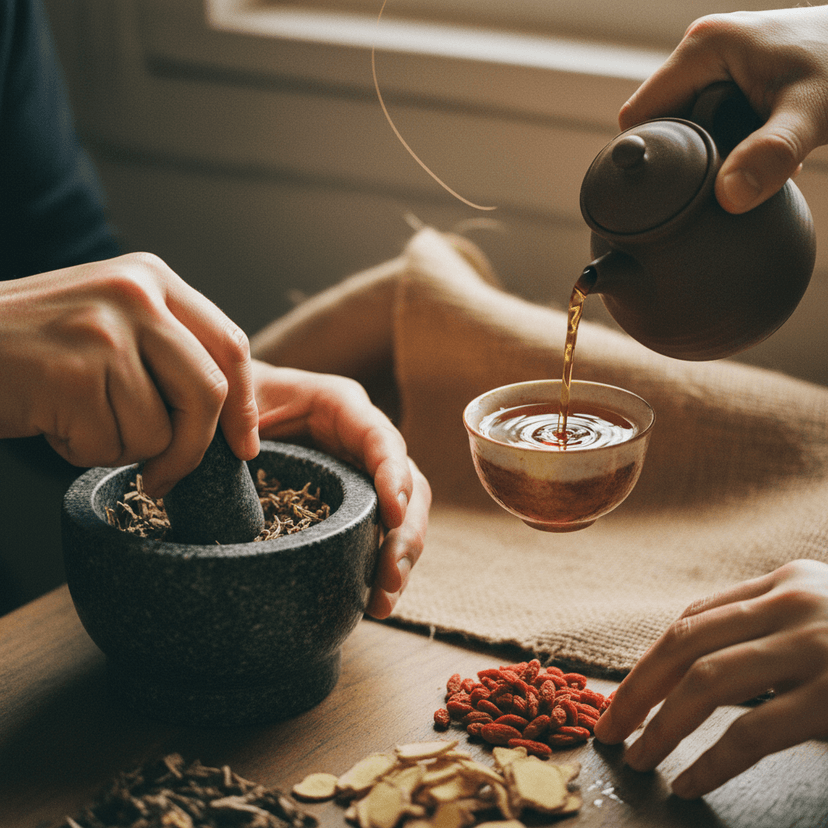
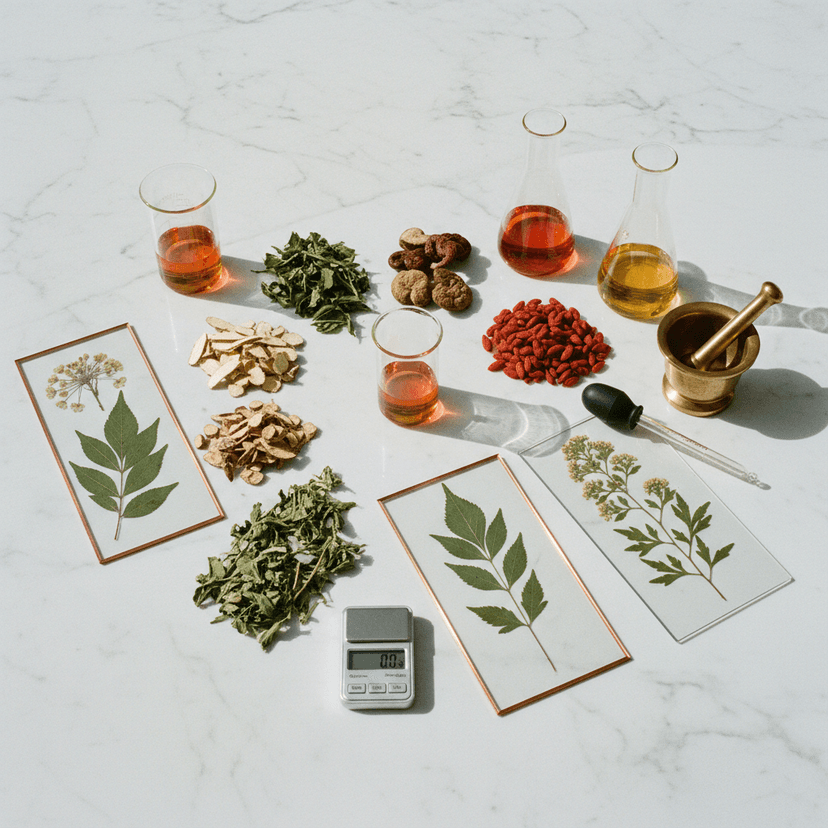
While many of us reach for probiotic supplements, TCM offers a different path: herbal medicine. These herbs aren't merely 'natural antibiotics' or 'super prebiotics.' Instead, many TCM herbs are considered deep-acting modulators, working to re-educate the gut's internal environment rather than simply introducing new species. They create the right conditions for beneficial bacteria already present to flourish, and for less desirable ones to diminish naturally.
Research by Chen ZY, Li HR, Xu GW, and Zhang XZ in Tradit. Med. Res. (2025) specifically explored how Traditional Chinese Medicines positively modulate the gut microbiome. They found that 54 TCMs tested in rodents and 30 in human trials showed positive results, with 19 TCMs regulating key gut species like Akkermansia, Bacteroides, Fusobacterium, Faecalibacterium, and E. coli. This multi-targeted effect is compelling.
Let's look at a common herb like Shan Yao (Dioscorea opposita), also known as Chinese Yam. It's a tonifying herb used in Traditional Chinese Medicine for strengthening the Spleen, Stomach, Lung, and Kidney. It's often used for digestive weakness, fatigue, and diarrhea. Its key active compounds include saponins, mucilage, and diosgenin.
Dosage: 9-30g, often cooked as part of a meal or decocted in formulas.
Nature & Flavor: Neutral, sweet.
Meridians: Spleen, Stomach, Lung, Kidney.
Shan Yao strengthens digestive function primarily by tonifying Spleen Qi and nourishing Stomach Yin, helping the body to better process food and absorb nutrients, which in turn creates a more balanced internal environment for gut microbes. It works by building up the body's inherent capacity for balance, rather than directly targeting 'bad' bacteria. What a different way of thinking about wellness!
4. The Gut-Brain-Body Axis: It's Not Just a Metaphor, It's Qi
The idea that our gut and brain are intimately connected has been a huge topic in health news lately. We hear about the gut-brain axis, how stress impacts digestion, and how gut health influences mood. For TCM, this connection has always been fundamental. The concept of Qi — the vital life force — links everything. It makes so much sense, doesn't it?
In TCM, emotions are directly tied to organ systems. For example, worry and overthinking can weaken the Spleen, leading to digestive issues. Frustration and anger can cause Liver Qi stagnation, which often manifests as irritability, acid reflux, or irregular bowel movements. We're talking about a physiological impact, not just a psychological one.
It's true that the concept of 'Qi' can feel abstract to those accustomed to biochemical pathways, and many of TCM's mechanisms are still being explored by Western science, but the observed connections are compelling.
Modern research is increasingly validating these ancient observations. Luo Y, Che Y, Guo Y, Song Y, Zhao Y, and Xu Y, in their 2024 work in Front Pharmacol., described how TCMs effectively regulate the gastrointestinal system by influencing the gut microbiota and the broader microbiota-gut-organ axis, including the gut-brain, gut-liver, and gut-lung axes. This impacts nutrient absorption, metabolism, and immune function. What an elegant way to describe the interconnectedness that TCM has always understood!
So, when we talk about gut health, we can't ignore the daily stressors and emotional currents flowing through us. A busy work season, relationship challenges, or even the general anxiety of current global events (like those we've all felt over the past few years) can directly impact your digestion. It's a call to nurture your emotional well-being as much as your dietary one.
5. Acupuncture: A Silent Conversation with Your Inner Garden
Acupuncture, a foundational practice of TCM, might seem far removed from the microscopic world of the gut microbiome. Yet, its subtle effects on the body's energetic pathways – the meridians – can have a direct impact on digestive health. I remember a friend, Sarah, who struggled for years with persistent, uncomfortable bloating. She had tried every diet and supplement, but nothing seemed to stick. What struck me was her constant low-level stress.
When she began acupuncture, her digestive comfort improved noticeably, almost as if her body finally exhaled.
How does this work? From a TCM perspective, acupuncture helps to regulate the flow of Qi, harmonize the organ systems, and calm the nervous system. When Qi flows smoothly, and the Spleen and Stomach are balanced, digestion improves. Clinical literature describes how acupuncture can reduce inflammation and improve gut motility. It helps the body find its natural rhythm again. That’s a powerful idea.
A systematic review and meta-analysis by Bae S-J, et al., published in Am J Chin Med. (2024), provides compelling evidence. This detailed review, which included 3 clinical studies and 20 preclinical studies, found that acupuncture treatment can modify specific phyla and genera of gut microbiota. Specifically, it was observed to increase beneficial bacteria like Firmicutes, Lactobacillus, and Ruminococcus, while decreasing Bacteroidetes.
The effects varied by disease model, but the overall trend pointed to a positive modulation of the gut's microscopic inhabitants. It's a silent conversation that yields powerful results.
6. Resetting Your Internal Balance: Beyond Quick Fixes
Many people turn to TCM for complex, chronic gut issues like SIBO, IBS, or persistent bloating, especially when conventional treatments haven't provided lasting relief. TCM's multi-targeted approach shines in these situations. It focuses on restoring overall internal balance, which is often a more sustainable solution, instead of just suppressing symptoms.
For instance, in the context of obesity, which often involves significant gut dysbiosis, TCM offers a broad, multi-faceted strategy. Li D, Tang W, Wang Y, Gao Q, Zhang H, Zhang Y, and their team published findings in Front. Endocrinol. (Lausanne) (2023), showing that TCM effectively controls gut microbiota in a multi-targeted manner to combat obesity. This involves restoring flora homeostasis, repairing intestinal barriers, regulating energy metabolism, inhibiting fat accumulation, and reducing inflammation.
The approach is a systemic intervention, rather than a singular attack on fat cells or a single bacterial imbalance.
This deep lens means addressing your individual constitution, your emotional state, your lifestyle habits, and yes, your diet. It means understanding that the remedies for someone with Damp-Heat in their gut (think inflammation, sticky stools) will be very different from someone with Spleen Qi Deficiency (fatigue, bloating, loose stools). There's no one-size-fits-all formula, and that's the beauty and the challenge.
So, how can you integrate these principles into your daily routine? Start small. Try eating a warm breakfast, like oatmeal or congee, for a week and note any changes in your digestion or energy. Make a habit of sipping warm water or herbal tea throughout the day instead of ice-cold drinks. Pay attention to how different foods make you feel. Notice the connection between your stress levels and your digestion.
You don't need to become a TCM expert overnight, but simply cultivating a quiet curiosity about your body's internal balance can be a significant first step. Perhaps the real question isn't which probiotics to take, but how we can listen to our body's ancient wisdom and nurture the thriving environment within.
References
- Chen ZY, Li HR, Xu GW, Zhang XZ. Tradit. Med. Res. 2025. Traditional Chinese Medicines (TCMs) positively modulate the gut microbiome and associated phenotypes.
- Bae S-J, et al. Am J Chin Med. 2024. Acupuncture treatment can modify specific phyla and genera of gut microbiota.
- Li D, Tang W, Wang Y, Gao Q, Zhang H, Zhang Y, et al. Front. Endocrinol. (Lausanne). 2023. TCM effectively controls gut microbiota in a multi-targeted manner to combat obesity.
- Luo Y, Che Y, Guo Y, Song Y, Zhao Y, Xu Y. Front Pharmacol. 2024. TCMs effectively regulate the gastrointestinal system by influencing the gut microbiota and the microbiota-gut-organ axis.
- 《本草纲目》 (Compendium of Materia Medica)
- 沈俊希等,《中国实验方剂学杂志》