Many of my patients arrive feeling utterly defeated, often after years of struggling with stubborn weight, fluctuating blood sugar, and a chronic energy drain. They’ve tried countless diets and exercise regimens, only to find themselves stuck in a frustrating cycle, with a significant portion of American adults currently displaying at least one marker of metabolic dysfunction. What if I told you that the conventional approach to metabolic health often overlooks a foundational element: your body’s unique energetic blueprint?
As an integrative medicine physician, trained in both Beijing University of Chinese Medicine and a US integrative medicine residency, I've spent 15 years witnessing a profound truth: lasting metabolic harmony extends beyond counting calories or macros. It's about understanding how your body’s vital life force, Qi, flows—or doesn't. And how the intricate dance of your organ systems, as understood in Traditional Chinese Medicine (TCM), directly impacts your blood sugar, weight, and energy.
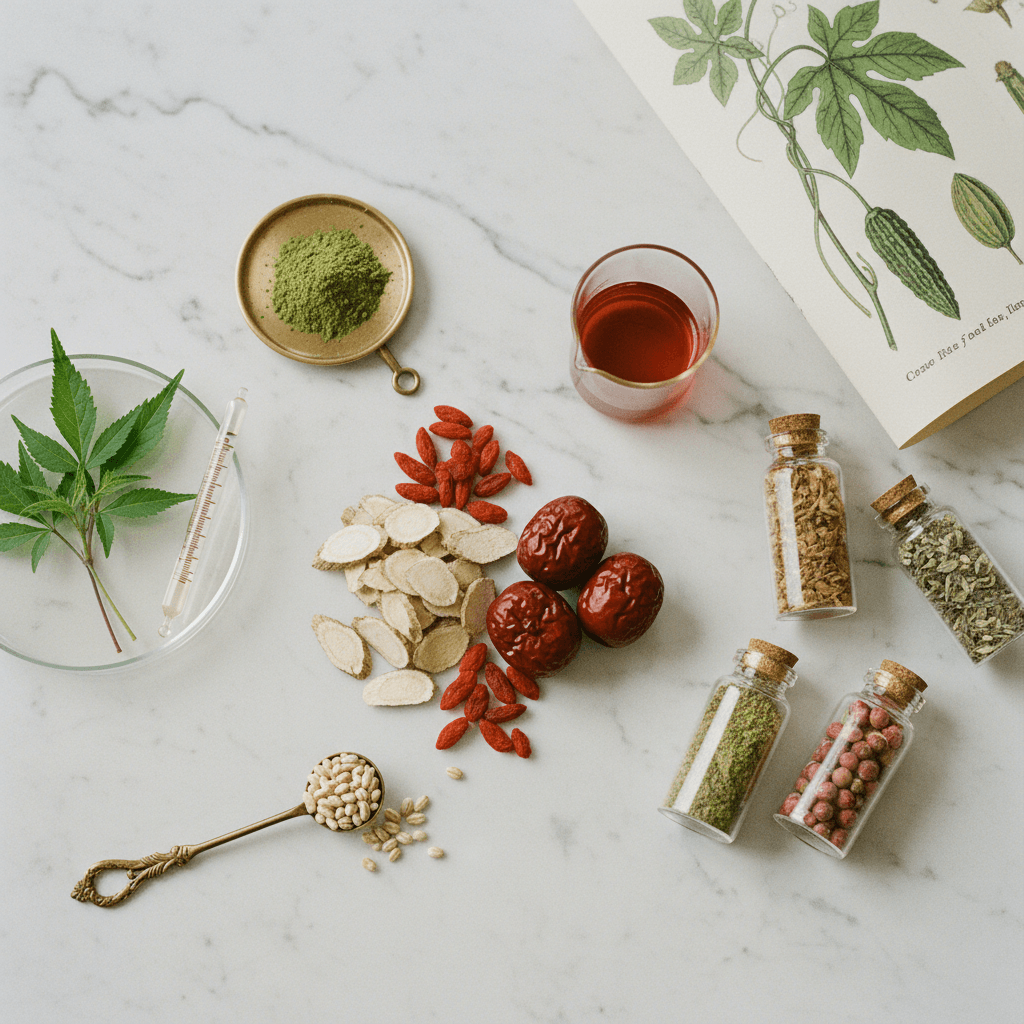
Huang Qi (Astragalus membranaceus), for instance, is a widely recognized Qi-tonifying herb used in Traditional Chinese Medicine for bolstering vitality, strengthening the Spleen, and supporting the Wei Qi (defensive energy). Its key active compounds include polysaccharides, saponins, and flavonoids, which modern research suggests may contribute to its immune-modulating and blood sugar-regulating effects.
This ancient understanding of Qi, Meridians, and the Five Elements offers a detailed approach for observing and influencing your body’s internal environment, often predicting imbalances long before Western labs confirm them.
Beyond Symptoms: The TCM View of Metabolic Imbalance
Western medicine often compartmentalizes: high blood sugar is diabetes, excess weight is obesity, and fatigue? Well, that's just fatigue. TCM, however, connects these. It sees them as interconnected threads in a larger, complex system.
Consider it like tending a garden.
When your plants are wilting, you don't just spray the leaves, right? You check the soil, the roots, the water, the sunlight. You assess the entire ecosystem.
That’s how we approach your body in TCM.
From a TCM perspective, metabolic dysfunction—what we often see as elevated blood glucose, stubborn fat, and low energy—is frequently rooted in imbalances of the Spleen, Liver, and Kidney systems. The Spleen, in TCM, is more than an organ; it's the central hub for digestion and transformation, extracting Gu Qi (food Qi) from what you eat and distributing it.
If your Spleen Qi is weak, your body can’t properly process food, leading to a buildup of Dampness and Phlegm—think of it as internal sludge—which directly contributes to weight gain, sluggishness, and insulin resistance.
This isn't some abstract concept. Helene Langevin, MD, Director of the NIH’s National Center for Complementary and Integrative Health (NCCIH), has highlighted the intricate connections between connective tissue, inflammation, and energy flow—a modern echo of TCM’s meridian theory. What TCM calls Dampness might very well be the chronic low-grade inflammation and cellular congestion that functional medicine practitioners like myself observe in patients struggling with metabolic syndrome.
Research Spotlight: TCM's Impact on Metabolic Health
For those who appreciate the data, the scientific evidence supporting TCM’s role in metabolic health is rapidly growing. A comprehensive systematic review by Li et al. (2020) in BMJ Open Diabetes Research & Care analyzed 16 randomized controlled trials. They found that TCM interventions were more efficacious than placebo in reducing BMI (by an average of 1.01 kg/m²) and waist circumference (by 1.65 cm), suggesting TCM as an ideal alternative therapy for Metabolic Syndrome management.
These are not minor adjustments; these are clinically meaningful changes that can profoundly impact a patient's health trajectory.
Another meta-analysis published by Wang et al. (2024) in Frontiers, encompassing 58 randomized trials and over 7,300 participants, demonstrated significant improvements in key diabetes markers. Patients receiving TCM interventions saw their fasting glucose improve by an average of 0.53 mmol/L, HbA1c by 0.40%, and insulin resistance (HOMA-IR) by 0.90. These are robust findings from large-scale studies, not just anecdotes. They underscore that TCM is an effective intervention for real physiological change.
The clinical picture is clear: TCM provides a powerful, evidence-informed pathway to improving metabolic markers, complementing Western approaches by addressing systemic imbalances.
Step 1: Uncover Your Unique Metabolic Blueprint Through Syndrome Differentiation
The biggest mistake I see people make with 'wellness advice'? They try a one-size-fits-all solution. In TCM, there's no single diabetes diet or weight loss herb. Instead, we use syndrome differentiation—a personalized diagnostic process that identifies the specific pattern of imbalance unique to your body.
For example, someone with Spleen Qi Deficiency might experience fatigue, bloating, loose stools, and slow metabolism. Their body isn't efficiently transforming food into Qi and blood. Another person might have Liver Qi Stagnation, leading to irritability, emotional eating, and abdominal distension, all of which disrupt metabolic rhythm. And then there's Kidney Yin Deficiency, often seen in Type 2 Diabetes, characterized by thirst, night sweats, and a feeling of internal heat, indicating a deeper energetic depletion.
What to do: Seek out a qualified TCM practitioner who can perform a thorough diagnosis, including tongue and pulse examination. They'll ask detailed questions about your energy levels, digestion, emotions, sleep, and even your body temperature. This process takes about 60-90 minutes for an initial consultation.
Case in point: Ms. Lin, a 48-year-old patient with PCOS, struggled with irregular cycles, weight gain, and persistent fatigue. Western tests showed insulin resistance. Her TCM diagnosis, however, revealed a pattern of Spleen Qi Deficiency with Phlegm-Dampness. Instead of merely managing symptoms, our focus became strengthening her Spleen and resolving dampness. Within three months, her energy improved, cycles became more regular, and she lost 8 pounds, all by addressing the root energetic imbalance.
Your metabolic health isn't a generic problem; it's a personalized puzzle. Syndrome differentiation provides the map to solve it.
Step 2: Nourish Your Spleen Qi with Mindful, Warm Eating
The Spleen is your body's 'inner stove.' It needs warmth and easily digestible fuel to function optimally. This is why the popular Chinamaxxing trend on TikTok — advocating warm water, cooked foods, and keeping feet warm — applies ancient wisdom in a practical way. Cold, raw foods and icy drinks literally dampen your digestive fire, making your Spleen work harder and leading to more Dampness.
What to do: Embrace warm, cooked foods. Start your day with warm oatmeal or congee. Prioritize steamed vegetables over raw salads, especially in colder months. Incorporate foods that support Spleen Qi, such as root vegetables, squash, lean proteins, and whole grains. Avoid processed foods, excessive dairy, and sugary drinks, which are notorious for generating Dampness. This dietary shift should be a gradual, sustainable change over several weeks.
A quick example: Instead of a cold yogurt parfait, try a warm rice porridge (congee) with ginger and lean chicken for breakfast. This simple swap can significantly reduce the digestive burden on your Spleen Qi, setting a better metabolic tone for the day.
Your Spleen Qi is the engine of your metabolism. Keep it warm and well-fueled, and your body will thank you with stable energy and better weight management.
Step 3: Targeted Herbal Formulas for Metabolic Support
TCM herbal medicine focuses on synergistic formulas, not isolated compounds. Think of it like an orchestra, where each herb plays a specific role, harmonizing to address the root imbalance. My patient, Mr. David, a 55-year-old with Type 2 Diabetes, initially scoffed at herbal medicine. His HbA1c was stubbornly high, even with medication.
After his TCM diagnosis of Spleen and Kidney Yin Deficiency with Damp-Heat, we incorporated a personalized herbal formula alongside his Western medication. Current research, such as that by Zhu Yongjiang et al., explores the 脾胰同治 (Pí Yí Tóng Zhì - Spleen-Pancreas Co-treatment) theory, suggesting that classic formulas can help modulate blood glucose fluctuations and improve insulin sensitivity. This doesn't replace Western drugs; it enhances their efficacy and addresses underlying patterns.
What to do: Consult your TCM practitioner for a custom herbal prescription. Common herbs for metabolic support include Huang Qi (Astragalus), Shan Yao (Chinese Yam), and Ge Gen (Kudzu Root). Shan Yao, for instance, is noted in the 《本草纲目》 (Běn Cǎo Gāng Mù - Compendium of Materia Medica) for 益肾气,健脾,止泄痢,化痰涎 (benefiting kidney qi, strengthening the spleen, stopping diarrhea, transforming phlegm). This highlights its multi-target action on digestion and fluid metabolism.
Huang Qi, though historically used for skin conditions as per 《神农本草经》 (Shén Nóng Běn Cǎo Jīng), is now recognized for its modern pharmacological effects on insulin sensitivity and lipid modulation.
If your practitioner recommends a formula like Bao He Wan (Preserve Harmony Pill) for digestive stagnation that contributes to metabolic issues, remember its contraindications: do not take it if you are pregnant (due to hawthorn) or have a gluten allergy (it contains wheat and barley sprouts). Always disclose all medications to avoid potential drug-herb interactions. This step is a long-term commitment, typically spanning 3-6 months for noticeable, sustained effects.
Herbal formulas are powerful allies, but they demand personalization, professional guidance, and respect for their nuanced actions and contraindications.
Step 4: Moving Your Qi and Calming Your Spirit
Stress isn't just a mental state. It's a powerful physiological disruptor. Chronic stress leads to elevated cortisol, which directly impacts blood sugar regulation and promotes central fat accumulation. From a TCM perspective, stress causes Liver Qi Stagnation—blocking the smooth flow of energy throughout your body, like a dam on a river. This stagnation can then 'overact' on the Spleen, further impairing digestion and metabolism.
What to do: Integrate gentle movement and mindfulness practices into your daily routine. Tai Chi and Qigong are perfect examples, cultivating Qi flow and calming the nervous system. Even a 15-minute walk after meals can aid digestion and blood sugar control. Practices like acupuncture, championed by experts like Brent Bauer, MD, at the Mayo Clinic, have shown promise in managing chronic pain and stress, indirectly supporting metabolic health by reducing inflammation and regulating hormonal responses.
For Ms. Chen, a busy executive with fluctuating blood sugar and anxiety, simply committing to 20 minutes of outdoor Qigong each morning proved truly beneficial. Her blood sugar stabilized, and her sense of calm deepened. This isn't a quick fix. It's a lifestyle shift, one that yields sustained results over weeks to months.
A calm mind and flowing Qi are non-negotiable for stable blood sugar and sustained energy. Movement is medicine, and stillness is healing.
Common Pitfalls: What NOT to Do on Your TCM Metabolic Journey
It can be confusing to find your way in the world of integrative health. The biggest mistake I see people make? Treating TCM like another quick-fix diet or a supplement regimen. This is about building a deeper relationship with your body.
Do not self-diagnose or self-prescribe herbs. TCM is a complex diagnostic system; misinterpreting your patterns can worsen your condition. For example, blindly taking Huang Qi without understanding your specific imbalance could exacerbate a Yin Deficiency pattern, leading to more heat symptoms. Similarly, relying solely on popular cooling foods to detox might further weaken your Spleen Qi, creating more Dampness rather than resolving it. This approach misses the core principle of balance.
Another common pitfall: expecting immediate, dramatic results. TCM works with your body's innate healing capacity, which takes time. It's not a pharmaceutical quick-fix, nor should it be. Consistent, gentle shifts yield profound, lasting transformation. Be patient with yourself and the process.
The real question isn't whether TCM can fix your metabolism, but whether you're willing to re-learn your body's ancient language. Are we merely treating symptoms, or are we truly seeking to restore the metabolic intelligence that makes us thrive?
Your First 24 Hours: A Mini-Framework for Metabolic Harmony
Ready to begin tending your metabolic garden? Here are three actionable steps you can take in the next day to start harmonizing your blood sugar, weight, and energy:
- Start Warm (5 minutes): Upon waking, drink a glass of warm water or herbal tea (ginger or chrysanthemum are excellent choices for Spleen Qi). Avoid anything cold.
- Mindful Movement (10-15 minutes): Take a gentle walk after one of your meals. Focus on your breath and how your body feels, not just the distance. This aids digestion and moves Liver Qi.
- Cooked Comfort (Your next meal): Choose a warm, cooked meal that's easy to digest. Think a simple soup, steamed vegetables with lean protein, or a hearty stew. Notice how your body feels afterward compared to a raw salad.
References
- Li et al. – Traditional Chinese Medicine for Metabolic Syndrome Management: A Systematic Review and Meta-Analysis of Randomized Controlled Trials, 2020
- Liu et al. – Chinese herbal medicines for people with type 2 diabetes mellitus, 2018
- 《本草纲目》
- 《神农本草经》
- Andrew Weil, University of Arizona
- Brent Bauer, Mayo Clinic
- Helene Langevin, NIH NCCIH