A significant percentage of the global population grapples with metabolic syndrome, a cluster of conditions including high blood pressure, high blood sugar, excess body fat around the waist, and abnormal cholesterol levels. But when we look at this modern health challenge, I sometimes wonder if our conventional understanding misses a crucial piece of the puzzle – a fundamental truth about our body's internal state that Traditional Chinese Medicine (TCM) has observed for millennia?
I remember the comforting, slightly bitter aroma of a long-simmered herbal decoction filling our kitchen when I was growing up, a daily ritual that spoke to a deeper understanding of health. Our family didn’t just focus on symptoms; we looked at patterns, at how the body’s various systems interacted. This ancient wisdom offers a different lens through which to view metabolic health – a shift from simply managing numbers to cultivating a truly balanced metabolism.
Beyond Symptoms: The TCM View of Metabolic Imbalance
In Western medicine, metabolic syndrome is diagnosed by meeting at least three out of five criteria: elevated waist circumference, high triglycerides, low HDL cholesterol, high blood pressure, and high fasting glucose. These are clear, measurable indicators. But TCM asks a different question: What underlying imbalances create these conditions in the first place?
It’s not just about what's wrong, but why it's wrong for you.
This personalized approach is foundational to TCM.
When addressing 'high blood sugar,' a TCM practitioner doesn't use a one-size-fits-all approach. Instead, they first identify your unique pattern of disharmony.
A crucial insight from TCM literature highlights this personalization. A systematic review and meta-analysis published in the Journal of Traditional Chinese Medical Sciences (2020) by researchers like Cui and colleagues found that Phlegm-dampness and Qi-deficiency were the main constitution types in patients with metabolic syndrome, accounting for 29% and 18% of MetS patients respectively. This suggests specific internal states are more prone to these metabolic challenges.
Understanding Phlegm-Dampness and Qi-Deficiency
These concepts might seem abstract at first. So, let’s take a moment to understand them. Phlegm-Dampness in TCM refers to an accumulation of pathological fluids and sticky substances in the body, often linked to a compromised digestive system—specifically the Spleen's function of transforming and transporting fluids. Imagine a soggy, slow-moving swamp inside your body; that's the energetic picture of dampness.
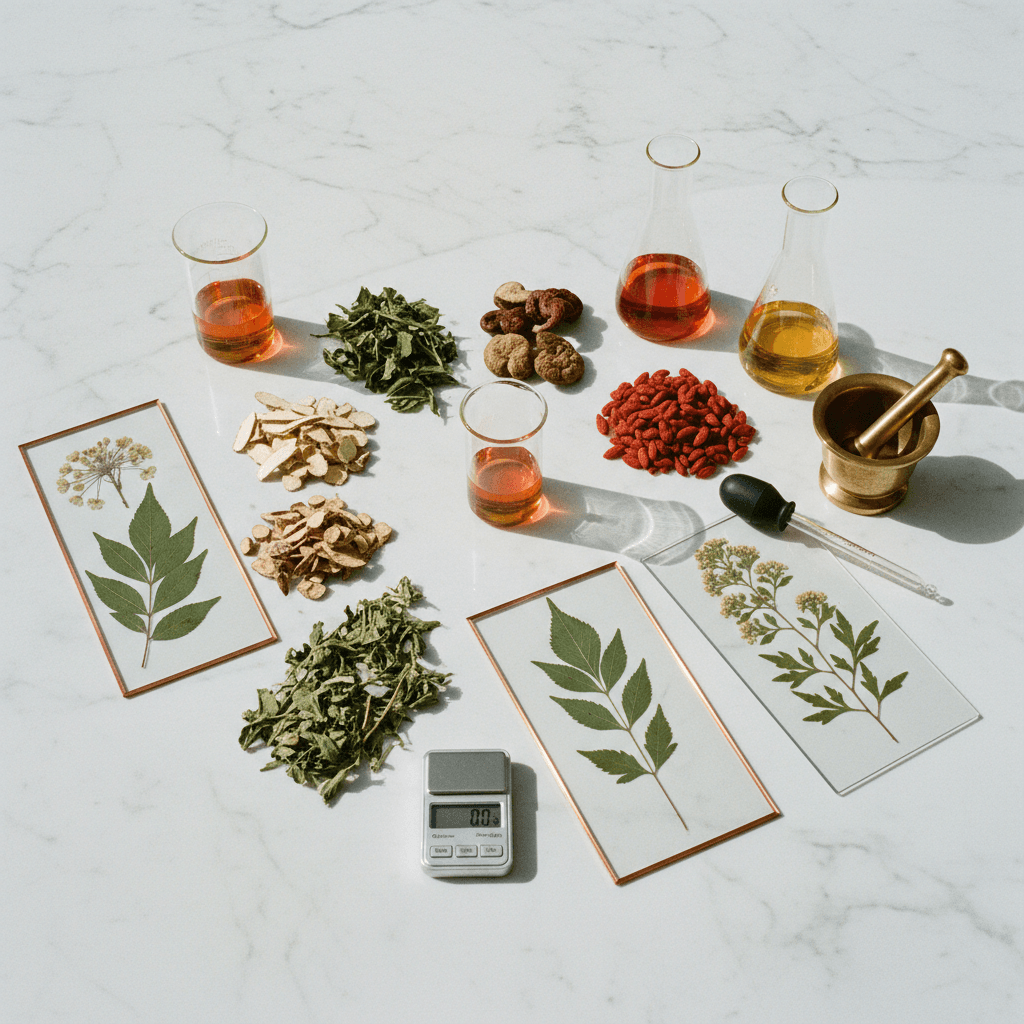
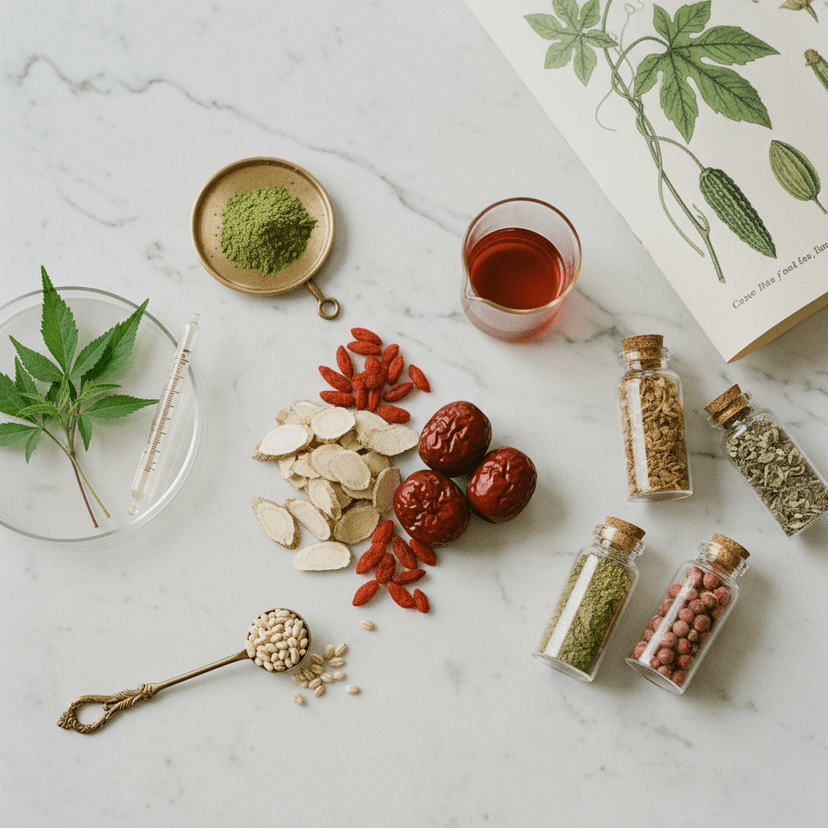
Huang Qi (Astragalus membranaceus), also known as Milk-Vetch Root, is a tonifying herb used in Traditional Chinese Medicine for strengthening Qi and enhancing immunity. Its key active compounds include polysaccharides, flavonoids, and saponins. These compounds are thought to contribute to its observed effects on metabolism and energy.
This excess dampness can manifest as feeling heavy, sluggish, having a thick tongue coating, and of course, contributing to weight gain and fluid retention. From a Western perspective, this might align with aspects of inflammation, impaired lymphatic drainage, or even an unhealthy gut microbiome. The classical text, 《神农本草经》 (Shennong Ben Cao Jing), notes the herb茯苓 (Fuling), or Poria mushroom, as beneficial for draining dampness and promoting urination—a clear link to fluid metabolism that has been recognized for centuries.
Then there’s Qi-Deficiency, which describes a lack of vital energy needed for bodily functions. Think of Qi as your internal engine’s fuel and spark. When it’s deficient, everything slows down: digestion, metabolism, even your motivation. This can look like fatigue, shortness of breath, a weak voice, and a tendency to gain weight easily. Clinically, a lower metabolic rate or mitochondrial dysfunction might be seen as analogous.
TCM practitioners commonly observe that these two patterns—Phlegm-Dampness and Qi-Deficiency—often go hand-in-hand, creating a vicious cycle where a weak Spleen (Qi-Deficiency) leads to dampness accumulation, which further impedes Qi circulation.
Ancient Wisdom Meets Modern Science: Evidence for TCM's Impact
It’s fascinating to see how modern research is beginning to validate the observations made by TCM practitioners for thousands of years. While the language might be different, the outcomes are becoming increasingly clear.
A comprehensive meta-analysis published in Evid Based Complement Alternat Med. in 2020 reviewed a substantial body of evidence on TCM for metabolic syndrome. Researchers concluded that TCM might be beneficial in improving body weight, regulating glucose and lipid metabolisms, and could be an ideal alternative therapy for MetS management. Specifically, they noted that TCM was more efficacious than placebo in reducing BMI (across 1123 participants, with a relative risk reduction of −1.
01) and decreased waist circumference (across 851 participants, with a relative risk reduction of −1.65).
While weight loss is often a key part of this journey, the real goal is a holistic rebalancing that touches several core aspects of metabolic health. It's about coaxing your entire system back into a better rhythm. Another review in Frontiers in Pharmacology (2022) highlighted that TCM preparations showed good clinical efficacy and safety for overweight/obesity, reducing BMI, weight, waist circumference, total cholesterol, triglycerides, and fasting blood glucose. The aggregated data showed a mean reduction in BMI of −1.
16 and weight reduction of −2.53 kg, pointing to tangible improvements across multiple metabolic markers.
These findings are encouraging, suggesting that TCM's gradual approach can guide the body back towards a more balanced state.
The Spleen's Central Role in Balanced Metabolism
In TCM, the Spleen (capitalized to distinguish it from the anatomical organ) is a central system for metabolic health. It's not just about digestion; it's the master of transformation and transportation, responsible for extracting Gu Qi (food Qi) from what we eat and drink, converting it into usable energy, and distributing it throughout the body. The Spleen also manages fluid metabolism, preventing the accumulation of dampness.
When the Spleen Qi is weak, this whole process falters. Food isn't properly digested, leading to a build-up of what TCM calls dampness. Fluids aren't circulated efficiently, creating more dampness. It’s a cascading effect. Think of it like a sluggish water filter—if it’s not working well, impurities build up, and the clean water flow slows to a trickle.
This perspective helps us understand why focusing on gut health and digestive strength is so paramount in TCM for reversing metabolic syndrome. For TCM, it's less about strict calorie counting and more about how effectively your body can actually process what you give it.
The formula 苓桂术甘汤 (Ling Gui Zhu Gan Tang), mentioned in the 《伤寒论》 (Shang Han Lun), is a classic example of addressing water metabolism issues through strengthening Spleen Yang and transforming dampness, showcasing a deep understanding of these connections centuries ago.
Dampness-eliminating Chinese herbal medicine (CHM), when combined with lifestyle interventions, has been shown to improve various metabolic markers. Research in Frontiers in Pharmacology (2026) consolidated data from 122 randomized controlled trials (n=11,252 participants) and found that this combination improved fasting plasma glucose, diastolic blood pressure, and BMI. As an adjunct to pharmacotherapy, it even enhanced reductions in FPG, 2hPG, SBP, and DBP. This suggests a notable synergy.
Crafting Your Path to a Balanced Metabolism: Actionable Steps
So, what does this all mean for you? It means that even if you’re currently facing metabolic challenges, there’s a powerful, personalized framework in TCM to help you. The goal isn't just symptom suppression; it’s about restoring your body's innate ability to find balance.
Here are some actionable ways to begin cultivating a balanced metabolism, rooted in TCM principles:
Nourish Your Spleen with Intentional Eating
This is often the first and most accessible step. TCM emphasizes warm, cooked, easy-to-digest foods to support Spleen Qi. Think about swapping cold smoothies for warm grain porridges, or raw salads for gently steamed vegetables. Focus on whole grains, lean proteins, and a variety of colorful vegetables. My grandmother always said, “The stomach prefers warmth, like a gentle fire under a simmering pot.” It really stuck with me.
Avoid overly processed foods, excessive sugar, and dairy, which can contribute to dampness.
Chew your food thoroughly. Eat slowly. Honestly, it's something I have to remind myself to do, even after years of hearing it, but these simple acts can dramatically improve digestion and nutrient absorption, easing the burden on your Spleen.
Integrate Gentle Movement
While intense exercise has its place, TCM often champions gentler, consistent movements like Qigong or Tai Chi. These practices help circulate Qi and blood, reduce stagnation, and support the body’s natural detoxification pathways. Even a daily walk can make a significant difference. It doesn't have to be a grueling workout; consistency is what matters for moving dampness and boosting Qi.
Prioritize Rest and Stress Management
Chronic stress and poor sleep deplete Qi and can lead to Liver Qi stagnation, which further impacts digestion and metabolism. Creating a relaxing bedtime routine, practicing mindfulness, or even just taking short breaks throughout your day to breathe deeply can be wonderfully restorative. These aren't just feel-good activities; they're foundational to a balanced metabolism.
Consider Herbal Support
While I am a writer with a deep personal interest in TCM, not a licensed practitioner, traditional usage suggests that specific herbal formulas can be immensely helpful. Herbs like Fuling (Poria) and Bai Zhu (Atractylodes macrocephala) are often used to strengthen the Spleen and resolve dampness. However, the precise combination and dosage require the guidance of a qualified TCM practitioner who can diagnose your specific pattern. The biggest mistake I see people make with herbal supplements?
They treat them like vitamins — pop a pill and forget about it. That's not how TCM works; it's about a tailored approach.
I can’t tell you exactly which herbs would be right for your unique constitution or how they might interact with existing medications—that's beyond my scope and expertise. For herbal support, the guidance of a trained practitioner is essential. Their wisdom really makes all the difference.
The Messy Reality of Healing
Healing is rarely linear. It’s messy. It’s personal. There will be days when you feel fantastic, and days when you feel like you’re taking two steps back. That’s okay. The beauty of the TCM approach to a balanced metabolism is its patience and its adaptability. It’s not about finding a magic bullet, but about fostering a deeper, more attuned relationship with your body.
It asks us to shift from a mindset of fighting disease to one of cultivating wellness. And in that shift, there's noticeable power. Maybe the real question isn't just how TCM can help us find a balanced metabolism, but whether we've been thinking about our metabolic health through entirely the wrong lens all along.
References
- Evid Based Complement Alternat Med., 2020: Efficacy and Safety of Traditional Chinese Medicine for Metabolic Syndrome
- Front Pharmacol., 2022: Efficacy and Safety of Chinese Herbal Medicine for Overweight/Obesity
- Journal of Traditional Chinese Medical Sciences, 2020: Association between metabolic syndrome and body constitution of traditional Chinese medicine
- Front Pharmacol., 2026: Dampness-Eliminating Chinese Herbal Medicine for Metabolic Syndrome
- 神农本草经 (Shennong Ben Cao Jing)
- 伤寒杂病论 (Shang Han Za Bing Lun)
- 盛小萌等,《辽宁中医药大学学报》