甘草 · Gan Cao
Radix Glycyrrhizae
Often called the 'elder statesman' of Traditional Chinese Medicine, Gan Cao (Licorice Root) is revered for its remarkable ability to harmonize herbal formulas and address a spectrum of health concerns. Discover its ancient wisdom and modern scientific validation.
1.5-14g; Large dosage to 30g; Tincture 1-4ml
For a standard decoction, combine 1.5-14g of dried Gan Cao slices with 2-3 cups of water in a non-metallic pot. Bring to a boil, then reduce heat and simmer for 15-20 minutes. Strain and drink warm. For a stronger effect or larger dosages (up to 30g), simmer for 30-45 minutes.
Dried Gan Cao can be ground into a fine powder. A typical dose might be 1-3g, taken 2-3 times daily, mixed into warm water or a smoothie. Always ensure the powder is from a reputable source for purity and potency.
As an alcohol extract, Gan Cao tincture offers a convenient way to consume the herb. Follow the manufacturer's specific dosing instructions, but typically 1-4ml (20-80 drops) can be taken 1-3 times daily. Tinctures are potent, so start with a lower dose.
For a standard decoction, combine 1.5-14g of dried Gan Cao slices with 2-3 cups of water in a non-metallic pot. Bring to a boil, then reduce heat and simmer for 15-20 minutes. Strain and drink warm. For a stronger effect or larger dosages (up to 30g), simmer for 30-45 minutes.
Dried Gan Cao can be ground into a fine powder. A typical dose might be 1-3g, taken 2-3 times daily, mixed into warm water or a smoothie. Always ensure the powder is from a reputable source for purity and potency.
As an alcohol extract, Gan Cao tincture offers a convenient way to consume the herb. Follow the manufacturer's specific dosing instructions, but typically 1-4ml (20-80 drops) can be taken 1-3 times daily. Tinctures are potent, so start with a lower dose.
Modern research increasingly validates Gan Cao's traditional uses, identifying active compounds like glycyrrhizin and chalcone A responsible for its anti-inflammatory, antiviral, anticancer, and metabolic regulatory effects. Studies have explored its role in enhancing chemotherapy, managing neurological and digestive issues, and its harmonizing influence on other herbs.
Moderate — Some clinical studies
Modern research increasingly validates Gan Cao's traditional uses, identifying active compounds like glycyrrhizin and chalcone A responsible for its anti-inflammatory, antiviral, anticancer, and metabolic regulatory effects. Studies have explored its role in enhancing chemotherapy, managing neurological and digestive issues, and its harmonizing influence on other herbs.
Moderate — Some clinical studies
Licorice may potentiate toxicity (24).
Licorice may increase the risk of hypokalemia (17) (18).
Licorice may increase insulin sensitivity (38) . Clinical relevance is not known.
Licorice may increase the metabolism and clearance of warfarin (19). Clinical relevance is not known.
Licorice greatly reduced the oral bioavailability of cyclosporine by activating P-gp and CYP3A4 (46). Clinical relevance is not known.
Licorice increased cortisol availability in patients with Addison’s disease in the hours following oral administration of cortisone acetate (47).
Avoid
Licorice may potentiate toxicity (24).
Licorice may increase the risk of hypokalemia (17) (18).
Licorice may increase insulin sensitivity (38) . Clinical relevance is not known.
Licorice may increase the metabolism and clearance of warfarin (19). Clinical relevance is not known.
Licorice greatly reduced the oral bioavailability of cyclosporine by activating P-gp and CYP3A4 (46). Clinical relevance is not known.
Licorice increased cortisol availability in patients with Addison’s disease in the hours following oral administration of cortisone acetate (47).
Avoid
Imagine an ancient marketplace, bustling with the aromas of exotic spices and healing herbs. Amidst the vibrant tapestry of traditional remedies, one root stood out, not for its dramatic flair, but for its quiet, profound influence. It was the 'elder statesman,' the wise diplomat, smoothing rough edges and bringing balance to every concoction. This is Gan Cao, or Licorice Root, an herb so fundamental to Traditional Chinese Medicine (TCM) that it's said to appear in 'nine out of ten formulas.'
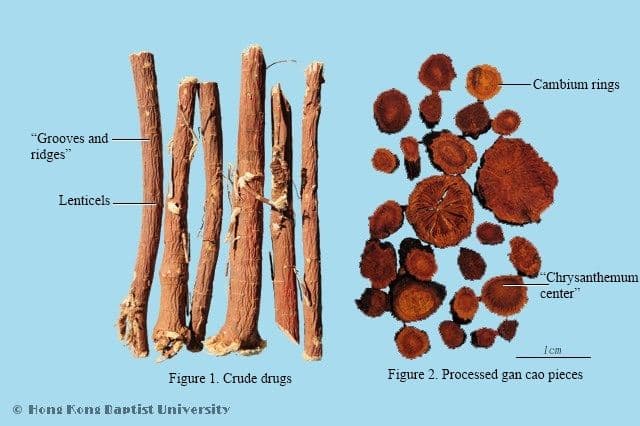
Gan Cao (Radix Glycyrrhizae), also known as Licorice Root or Ural Licorice Root, is a foundational herb used in TCM for its harmonizing properties and wide range of applications, from soothing coughs to supporting digestion. My journey through both Beijing University of Chinese Medicine and a US integrative medicine residency showed me time and again how its ancient wisdom aligns remarkably with modern scientific understanding.
As an integrative medicine physician, I've seen firsthand how this sweet root bridges the gap between traditional wisdom and contemporary health science. It's a testament to the enduring power of nature, a principle recognized by the earliest herbalists.
The Shennong Ben Cao Jing, one of the oldest texts on Chinese materia medica, listed Gan Cao as a 'superior herb,' noting its ability to 'govern the cold and heat evil qi in the five viscera and six bowels, strengthen sinews and bones, grow muscles, and multiply energy.' Imagine that: ancient sages describing effects we now link to anti-inflammatory and adaptogenic pathways. It's truly fascinating.
What Makes Gan Cao So Special?
In the language of TCM, Gan Cao is celebrated for its unique nature and broad energetic reach. Raw Gan Cao is considered neutral, while its honey-fried form (Zhi Gan Cao) becomes warm. Its flavor is distinctly sweet, a taste associated with tonifying and harmonizing. This sweetness, in TCM, translates to nourishing and moistening qualities, making it a soothing agent for various bodily systems.
What truly sets Gan Cao apart is its remarkable affinity for many of the body's energetic pathways, or meridians. It primarily targets the Heart, Lung, Spleen, and Stomach meridians, but its influence extends to all twelve channels through its connection to the Yang Wei channel, which integrates and coordinates the body's Yang energy. This broad reach is key to its role as a 'harmonizer' and 'guiding' herb.
Think of it as a master conductor in an orchestra, ensuring every instrument plays in tune and at the right volume.
One patient, let's call her Sarah, came to me with chronic fatigue and digestive upset. She was taking a complex herbal formula, but it felt a bit 'rough' on her stomach. By adding a small amount of Gan Cao to her regimen, not only did her digestive discomfort subside, but she also reported feeling a smoother, more sustained energy.
This is Gan Cao’s harmonizing and guiding function in action—it doesn't just treat symptoms, it helps the body integrate and respond better to other therapies, making them more palatable and effective. The Ben Cao Gang Mu beautifully captures this, stating Gan Cao 'harmonizes all medicines, and moderates their strong actions,' truly underscoring its unique pharmacological diplomacy.
Top Benefits: Bridging Ancient Wisdom and Modern Wellness
For Digestive Harmony & Spleen Support
Many of us experience digestive discomfort – bloating, indigestion, or the gnawing pain of a spasm. In TCM, Gan Cao is a star player for 'tonifying the Spleen and augmenting Qi' (energy). The Spleen in TCM governs digestion and nutrient absorption, and when it's weak, fatigue and digestive issues arise. Gan Cao’s sweet nature is inherently nourishing to the Spleen.
It also has a powerful ability to 'moderate spasms and alleviate pain,' which is why it's often used for conditions like irritable bowel syndrome or acid reflux. Modern research supports these actions, with studies showing its active compounds can soothe gut inflammation and even protect the stomach lining. For example, Du H. and Xiao Y.
from The First Affiliated Hospital of Zhejiang Chinese Medical University (2025) note the significant clinical efficacy of formulas containing Gan Cao in digestive system diseases, highlighting its multi-target regulation including inhibiting inflammatory factors.
For Respiratory Comfort & Cough Relief
That persistent cough or nagging sore throat can be debilitating. Gan Cao is a time-honored remedy for the lungs, known to 'moisten Lungs, resolve phlegm, and stop coughing.' Its soothing, sweet properties help to calm irritated mucous membranes and thin phlegm, making it easier to expel. I often recommend it to patients experiencing dry, hacking coughs or thick, sticky phlegm.
Research by Tian Yiran and colleagues (2024) highlighted that Glycyrrhiza chalcone A, a component of Gan Cao, exhibits anti-inflammatory effects by inhibiting the NF-κB signaling pathway, directly relevant to calming respiratory inflammation.
For Stress, Spasms & Pain Management
Beyond its harmonizing role, Gan Cao offers direct relief for discomfort. Its ability to 'moderate spasms and alleviate pain' makes it invaluable for various types of muscular tension, cramps, and even certain types of nerve pain. This action is well-documented; Du H. and Xiao Y. (2025) specifically discuss Shaoyao Gancao Decoction (a formula featuring Gan Cao) in managing neurological diseases and pain, attributing its efficacy to regulating calcium ion channels and directly relaxing smooth muscles.
This isn't just a traditional observation; it's a mechanism we can trace to specific physiological pathways.
For Enhanced Herbal Synergy & Detoxification
This is where Gan Cao truly shines as the 'elder statesman.' Its 'harmonizing and guiding function' is profound. It can temper the harshness of other herbs, guide them to specific areas of the body, and even reduce their potential toxicity. Maoyuan Jiang and his team (Journal of Ethnopharmacology, 2020) explicitly describe Gan Cao as an 'essential herbal medicine' in TCM, emphasizing its role in reducing toxicity and increasing the efficacy of other herbs through chemical interactions and pharmacological effects.
Moreover, Gan Cao possesses 'antidote properties' and 'clears heat and relieves fire toxicity,' making it a valuable adjunct in detoxification protocols, from environmental exposures to mitigating drug side effects.
What the Science Says: Modern Validation for an Ancient Root
The scientific community has increasingly turned its attention to Gan Cao, unraveling the molecular mechanisms behind its traditional uses. Researchers are identifying specific active compounds, such as glycyrrhizin, glycyrrhetinic acid, and various chalcones (like glycyrrhiza chalcone A), that orchestrate its diverse pharmacological actions.
For example, studies have illuminated its potent anti-inflammatory effects. Researchers like Tian Yiran and colleagues (2024) have demonstrated that glycyrrhiza chalcone A actively inhibits the NF-κB signaling pathway, a central player in inflammatory responses. This mechanism is key to its benefits in respiratory conditions and pain management.
On a broader scale, Tang ZH, Li T, Tong YG, and their team at the State Key Laboratory of Quality Research in Chinese Medicine, University of Macau (2015), published findings indicating that licorice compounds exhibit anticancer properties. They found these compounds inhibit proliferation, induce cell cycle arrest and apoptosis, suppress metastasis, and can even sensitize cancer cells to conventional chemotherapy or radiotherapy, remarkably enhancing anticancer effects while reducing side effects.
Beyond inflammation and oncology, Gan Cao is being explored for its metabolic benefits. Liu Xiaodan and colleagues (2024) investigated Gan Cao extracts for metabolic-associated fatty liver disease, finding that compounds like glycyrrhizin and glycyrrhiza chalcone A help regulate lipid and glucose metabolism and improve gut microbiota. This research points to its potential in addressing complex modern health challenges.
Even the way Gan Cao is prepared matters: Zhang Yulong and his team (2022) at Shanghai University of Traditional Chinese Medicine found that honey-frying (Zhi Gan Cao) alters the ratio of chemical components, specifically increasing flavonoid content 1.8-fold, enhancing its antiarrhythmic effects.
It's important to remember that much of this research, while promising, is still in its early stages for human clinical application. We distinguish between traditional use, which has millennia of empirical evidence, and clinically studied effects, which require rigorous trials. However, the convergence of traditional wisdom and scientific discovery is incredibly exciting.
How to Use Gan Cao: Practical Guidance
Incorporating Gan Cao into your wellness routine requires careful consideration of its form and dosage. It's often used in decoctions (herbal teas), powders, or tinctures, and the choice depends on your specific needs and the advice of your practitioner.
Decoction/Tea: This is the most traditional method. For general support, steep 1.5-14g of dried Gan Cao slices in 2-3 cups of hot water for 15-20 minutes. For a more potent effect, such as for persistent coughs or severe digestive upset, a larger dosage up to 30g might be simmered for 30-45 minutes. Always use a non-metallic pot to avoid chemical reactions. This form allows the extraction of a wide range of compounds and is easily absorbed.
Powder: For convenience, Gan Cao can be found in powdered form. A typical dose might be 1-3g, mixed into warm water or a smoothie, taken 2-3 times daily. Ensure the powder is from a certified organic and reputable supplier to guarantee purity and avoid contaminants.
Tincture/Extract: Tinctures are potent liquid extracts. The general dosage for a Gan Cao tincture is 1-4ml, taken 1-3 times daily, or as directed by a healthcare professional. These are concentrated forms, so it's wise to start with a lower dose to assess your body's response.
Remember, the specific dosage will depend on your individual constitution, the condition being addressed, and whether you are using raw Gan Cao or honey-fried Gan Cao (Zhi Gan Cao), which have slightly different energetic properties and applications. Always seek guidance from a qualified practitioner to tailor the dosage and form to your unique needs.
Safety & Who Should Avoid Gan Cao
While Gan Cao is a widely used and generally safe herb when taken appropriately, it is crucial to be aware of its contraindications and potential side effects. Its active compound, glycyrrhizin, can have significant physiological effects, especially at higher doses or with prolonged use.
Contraindications:
Individuals with hypertension (high blood pressure), edema (fluid retention), or hyperglycemic conditions (like diabetes) should avoid Gan Cao. It is also contraindicated for those with osteoporosis, Excess Dampness with nausea, vomiting, or abdominal fullness, and for those who frequently drink wine. If you have general Excess secretions, it may not be suitable.
Dosage Concerns: Large doses, specifically over 35 grams during a one-week period, can lead to a sodium/potassium imbalance in the blood, potentially causing edema and heart palpitations. This is a serious consideration and underscores the importance of precise dosing under professional guidance.
Pregnancy: The regular consumption of licorice while pregnant is associated with negative effects on pregnancy outcomes and child development, particularly when the intake level is over 500 mg of glycyrrhizin per week. Avoidance is warranted during pregnancy.
Drug Interactions: Gan Cao can interact with several medications, including diuretics (which can exacerbate potassium loss), corticosteroids (potentiating their effects), and blood pressure medications. Always consult your physician or pharmacist before combining Gan Cao with any prescription drugs to prevent adverse interactions.
My advice is always to approach herbal medicine with respect and informed caution. These powerful plants can offer immense benefits, but understanding their full profile – including potential risks – is paramount for safe and effective use. Never self-prescribe, especially if you have existing health conditions or are on medication.
A Harmonious Path Forward
Gan Cao stands as a remarkable bridge, connecting the ancient wisdom of herbal traditions with the rigorous insights of modern science. It reminds us that balance is often the key to true healing – not just in our bodies, but in how we approach our understanding of wellness.
As research continues to unfold, revealing more of its intricate mechanisms, I believe Gan Cao will remain a cornerstone in integrative health, gently guiding us towards a more harmonious and resilient state of being.
Its enduring presence in formulas for thousands of years isn't just tradition; it's a testament to its effectiveness. For me, it symbolizes the gentle, persistent power of nature to restore equilibrium, a lesson we can all carry into our daily lives.
Imagine an ancient marketplace, bustling with the aromas of exotic spices and healing herbs. Amidst the vibrant tapestry of traditional remedies, one root stood out, not for its dramatic flair, but for its quiet, profound influence. It was the 'elder statesman,' the wise diplomat, smoothing rough edges and bringing balance to every concoction. This is Gan Cao, or Licorice Root, an herb so fundamental to Traditional Chinese Medicine (TCM) that it's said to appear in 'nine out of ten formulas.'
Gan Cao (Radix Glycyrrhizae), also known as Licorice Root or Ural Licorice Root, is a foundational herb used in TCM for its harmonizing properties and wide range of applications, from soothing coughs to supporting digestion. My journey through both Beijing University of Chinese Medicine and a US integrative medicine residency showed me time and again how its ancient wisdom aligns remarkably with modern scientific understanding.
As an integrative medicine physician, I've seen firsthand how this sweet root bridges the gap between traditional wisdom and contemporary health science. It's a testament to the enduring power of nature, a principle recognized by the earliest herbalists.
The Shennong Ben Cao Jing, one of the oldest texts on Chinese materia medica, listed Gan Cao as a 'superior herb,' noting its ability to 'govern the cold and heat evil qi in the five viscera and six bowels, strengthen sinews and bones, grow muscles, and multiply energy.' Imagine that: ancient sages describing effects we now link to anti-inflammatory and adaptogenic pathways. It's truly fascinating.
What Makes Gan Cao So Special?
In the language of TCM, Gan Cao is celebrated for its unique nature and broad energetic reach. Raw Gan Cao is considered neutral, while its honey-fried form (Zhi Gan Cao) becomes warm. Its flavor is distinctly sweet, a taste associated with tonifying and harmonizing. This sweetness, in TCM, translates to nourishing and moistening qualities, making it a soothing agent for various bodily systems.
What truly sets Gan Cao apart is its remarkable affinity for many of the body's energetic pathways, or meridians. It primarily targets the Heart, Lung, Spleen, and Stomach meridians, but its influence extends to all twelve channels through its connection to the Yang Wei channel, which integrates and coordinates the body's Yang energy. This broad reach is key to its role as a 'harmonizer' and 'guiding' herb.
Think of it as a master conductor in an orchestra, ensuring every instrument plays in tune and at the right volume.
One patient, let's call her Sarah, came to me with chronic fatigue and digestive upset. She was taking a complex herbal formula, but it felt a bit 'rough' on her stomach. By adding a small amount of Gan Cao to her regimen, not only did her digestive discomfort subside, but she also reported feeling a smoother, more sustained energy.
This is Gan Cao’s harmonizing and guiding function in action—it doesn't just treat symptoms, it helps the body integrate and respond better to other therapies, making them more palatable and effective. The Ben Cao Gang Mu beautifully captures this, stating Gan Cao 'harmonizes all medicines, and moderates their strong actions,' truly underscoring its unique pharmacological diplomacy.
Top Benefits: Bridging Ancient Wisdom and Modern Wellness
For Digestive Harmony & Spleen Support
Many of us experience digestive discomfort – bloating, indigestion, or the gnawing pain of a spasm. In TCM, Gan Cao is a star player for 'tonifying the Spleen and augmenting Qi' (energy). The Spleen in TCM governs digestion and nutrient absorption, and when it's weak, fatigue and digestive issues arise. Gan Cao’s sweet nature is inherently nourishing to the Spleen.
It also has a powerful ability to 'moderate spasms and alleviate pain,' which is why it's often used for conditions like irritable bowel syndrome or acid reflux. Modern research supports these actions, with studies showing its active compounds can soothe gut inflammation and even protect the stomach lining. For example, Du H. and Xiao Y.
from The First Affiliated Hospital of Zhejiang Chinese Medical University (2025) note the significant clinical efficacy of formulas containing Gan Cao in digestive system diseases, highlighting its multi-target regulation including inhibiting inflammatory factors.
For Respiratory Comfort & Cough Relief
That persistent cough or nagging sore throat can be debilitating. Gan Cao is a time-honored remedy for the lungs, known to 'moisten Lungs, resolve phlegm, and stop coughing.' Its soothing, sweet properties help to calm irritated mucous membranes and thin phlegm, making it easier to expel. I often recommend it to patients experiencing dry, hacking coughs or thick, sticky phlegm.
Research by Tian Yiran and colleagues (2024) highlighted that Glycyrrhiza chalcone A, a component of Gan Cao, exhibits anti-inflammatory effects by inhibiting the NF-κB signaling pathway, directly relevant to calming respiratory inflammation.
For Stress, Spasms & Pain Management
Beyond its harmonizing role, Gan Cao offers direct relief for discomfort. Its ability to 'moderate spasms and alleviate pain' makes it invaluable for various types of muscular tension, cramps, and even certain types of nerve pain. This action is well-documented; Du H. and Xiao Y. (2025) specifically discuss Shaoyao Gancao Decoction (a formula featuring Gan Cao) in managing neurological diseases and pain, attributing its efficacy to regulating calcium ion channels and directly relaxing smooth muscles.
This isn't just a traditional observation; it's a mechanism we can trace to specific physiological pathways.
For Enhanced Herbal Synergy & Detoxification
This is where Gan Cao truly shines as the 'elder statesman.' Its 'harmonizing and guiding function' is profound. It can temper the harshness of other herbs, guide them to specific areas of the body, and even reduce their potential toxicity. Maoyuan Jiang and his team (Journal of Ethnopharmacology, 2020) explicitly describe Gan Cao as an 'essential herbal medicine' in TCM, emphasizing its role in reducing toxicity and increasing the efficacy of other herbs through chemical interactions and pharmacological effects.
Moreover, Gan Cao possesses 'antidote properties' and 'clears heat and relieves fire toxicity,' making it a valuable adjunct in detoxification protocols, from environmental exposures to mitigating drug side effects.
What the Science Says: Modern Validation for an Ancient Root
The scientific community has increasingly turned its attention to Gan Cao, unraveling the molecular mechanisms behind its traditional uses. Researchers are identifying specific active compounds, such as glycyrrhizin, glycyrrhetinic acid, and various chalcones (like glycyrrhiza chalcone A), that orchestrate its diverse pharmacological actions.
For example, studies have illuminated its potent anti-inflammatory effects. Researchers like Tian Yiran and colleagues (2024) have demonstrated that glycyrrhiza chalcone A actively inhibits the NF-κB signaling pathway, a central player in inflammatory responses. This mechanism is key to its benefits in respiratory conditions and pain management.
On a broader scale, Tang ZH, Li T, Tong YG, and their team at the State Key Laboratory of Quality Research in Chinese Medicine, University of Macau (2015), published findings indicating that licorice compounds exhibit anticancer properties. They found these compounds inhibit proliferation, induce cell cycle arrest and apoptosis, suppress metastasis, and can even sensitize cancer cells to conventional chemotherapy or radiotherapy, remarkably enhancing anticancer effects while reducing side effects.
Beyond inflammation and oncology, Gan Cao is being explored for its metabolic benefits. Liu Xiaodan and colleagues (2024) investigated Gan Cao extracts for metabolic-associated fatty liver disease, finding that compounds like glycyrrhizin and glycyrrhiza chalcone A help regulate lipid and glucose metabolism and improve gut microbiota. This research points to its potential in addressing complex modern health challenges.
Even the way Gan Cao is prepared matters: Zhang Yulong and his team (2022) at Shanghai University of Traditional Chinese Medicine found that honey-frying (Zhi Gan Cao) alters the ratio of chemical components, specifically increasing flavonoid content 1.8-fold, enhancing its antiarrhythmic effects.
It's important to remember that much of this research, while promising, is still in its early stages for human clinical application. We distinguish between traditional use, which has millennia of empirical evidence, and clinically studied effects, which require rigorous trials. However, the convergence of traditional wisdom and scientific discovery is incredibly exciting.
How to Use Gan Cao: Practical Guidance
Incorporating Gan Cao into your wellness routine requires careful consideration of its form and dosage. It's often used in decoctions (herbal teas), powders, or tinctures, and the choice depends on your specific needs and the advice of your practitioner.
Decoction/Tea: This is the most traditional method. For general support, steep 1.5-14g of dried Gan Cao slices in 2-3 cups of hot water for 15-20 minutes. For a more potent effect, such as for persistent coughs or severe digestive upset, a larger dosage up to 30g might be simmered for 30-45 minutes. Always use a non-metallic pot to avoid chemical reactions. This form allows the extraction of a wide range of compounds and is easily absorbed.
Powder: For convenience, Gan Cao can be found in powdered form. A typical dose might be 1-3g, mixed into warm water or a smoothie, taken 2-3 times daily. Ensure the powder is from a certified organic and reputable supplier to guarantee purity and avoid contaminants.
Tincture/Extract: Tinctures are potent liquid extracts. The general dosage for a Gan Cao tincture is 1-4ml, taken 1-3 times daily, or as directed by a healthcare professional. These are concentrated forms, so it's wise to start with a lower dose to assess your body's response.
Remember, the specific dosage will depend on your individual constitution, the condition being addressed, and whether you are using raw Gan Cao or honey-fried Gan Cao (Zhi Gan Cao), which have slightly different energetic properties and applications. Always seek guidance from a qualified practitioner to tailor the dosage and form to your unique needs.
Safety & Who Should Avoid Gan Cao
While Gan Cao is a widely used and generally safe herb when taken appropriately, it is crucial to be aware of its contraindications and potential side effects. Its active compound, glycyrrhizin, can have significant physiological effects, especially at higher doses or with prolonged use.
Contraindications:
Individuals with hypertension (high blood pressure), edema (fluid retention), or hyperglycemic conditions (like diabetes) should avoid Gan Cao. It is also contraindicated for those with osteoporosis, Excess Dampness with nausea, vomiting, or abdominal fullness, and for those who frequently drink wine. If you have general Excess secretions, it may not be suitable.
Dosage Concerns: Large doses, specifically over 35 grams during a one-week period, can lead to a sodium/potassium imbalance in the blood, potentially causing edema and heart palpitations. This is a serious consideration and underscores the importance of precise dosing under professional guidance.
Pregnancy: The regular consumption of licorice while pregnant is associated with negative effects on pregnancy outcomes and child development, particularly when the intake level is over 500 mg of glycyrrhizin per week. Avoidance is warranted during pregnancy.
Drug Interactions: Gan Cao can interact with several medications, including diuretics (which can exacerbate potassium loss), corticosteroids (potentiating their effects), and blood pressure medications. Always consult your physician or pharmacist before combining Gan Cao with any prescription drugs to prevent adverse interactions.
My advice is always to approach herbal medicine with respect and informed caution. These powerful plants can offer immense benefits, but understanding their full profile – including potential risks – is paramount for safe and effective use. Never self-prescribe, especially if you have existing health conditions or are on medication.
A Harmonious Path Forward
Gan Cao stands as a remarkable bridge, connecting the ancient wisdom of herbal traditions with the rigorous insights of modern science. It reminds us that balance is often the key to true healing – not just in our bodies, but in how we approach our understanding of wellness.
As research continues to unfold, revealing more of its intricate mechanisms, I believe Gan Cao will remain a cornerstone in integrative health, gently guiding us towards a more harmonious and resilient state of being.
Its enduring presence in formulas for thousands of years isn't just tradition; it's a testament to its effectiveness. For me, it symbolizes the gentle, persistent power of nature to restore equilibrium, a lesson we can all carry into our daily lives.
This information is for educational purposes only and is not intended as medical advice. Always consult a qualified healthcare practitioner before using any herbal remedy.
Pre-administration of licorice juice reduced the efficacy of metformin, in a rat model (58). The clinical relevance has yet to be determined.