TCM Parent's Guide: Children's Immunity & Cold Season | Demisunshine
My Son's Endless Colds Taught Me Everything About Wei Qi
I used to believe Western medicine was the only answer for my son’s constant colds. It was a humbling, deeply uncomfortable truth that his repeated infections, despite the best conventional care, proved me utterly wrong. This personal journey revealed the profound wisdom of TCM for building tru
Sarah LinMarch 18, 202611 min read
Quick Answer
Traditional Chinese Medicine offers a holistic approach to children's immunity, focusing on strengthening the body's intrinsic protective energy (Wei Qi) rather than merely fighting symptoms. By understanding your child's constitution and incorporating practices like specific herbs, dietary adjustments, and Tui Na massage, parents can build a robust internal defense system that naturally resists colds and recurrent infections, moving beyond a cycle of symptom management.
Key Takeaways
Wei Qi, your child's protective energy, is the first line of defense against colds, nurtured by a robust Spleen system and mindful protection from external 'wind-cold' pathogens.
Traditional Chinese Medicine offers targeted preventative strategies, such as the Yupingfeng formula and individualized dietary adjustments, proven to significantly reduce the frequency of recurrent respiratory infections in children.
Integrating consistent home practices, including specific pediatric Tui Na massage techniques and a diet rich in warming, easily digestible foods, can dramatically strengthen your child's inherent resilience and reduce antibiotic reliance.
My palms are sweating as I tell you this, even now. Two years ago, I would have confidently — arrogantly, perhaps — told you that for acute infections, especially in children, Western medicine was the only reliable answer. I was a licensed clinician, after all, trained in both systems, but my initial bias was undeniable. Then my own son started kindergarten. The sniffles, the coughs, the fevers – they just never stopped. One cold rolled into another.
Three courses of antibiotics in a single winter. My heart ached every time he had to miss school, every time he looked so worn out.
I was baffled. Frustrated. I was doing everything right by conventional standards, yet my child was constantly sick. It felt like a personal failure, a deep, unsettling inadequacy as both a doctor and a mother. I found myself measuring herbs with shaking hands, wondering if I was grasping at straws. It was a crisis of confidence, a moment where my scientific certainty completely unraveled.
So I went back to the data. Not just the shiny new Western trials I’d been trained on, but the ancient texts, the systematic reviews coming out of Beijing, the multi-center trials comparing herbal formulas to pharmaceutical drugs. And what I found didn't just change my approach to pediatric immunity; it cracked open my entire understanding of health itself.
I realized I was asking the wrong question. It wasn't How do I stop my child from getting sick? The deeper question, the one that truly shifted things, was, How do I cultivate a resilient internal environment in my child that naturally resists illness? This isn't about avoiding every germ; it's about building an inner fortress.
The Unsung Hero: Wei Qi—Your Child's Invisible Shield
In Traditional Chinese Medicine, your child’s immune system isn’t just a collection of cells; it’s an energetic force called Wei Qi (pronounced way chee), or protective Qi.
Imagine it as an invisible, dynamic shield circulating just beneath the skin.
This shield guards the body against external pathogens—things like cold, wind, and viruses. When Wei Qi is strong, it's a solid perimeter fence; weak Wei Qi means invaders find an easy entry.
This concept challenged my Western-trained mind, which focused solely on germ theory. But as I watched my son improve under TCM care, I saw the validity. We weren't just treating symptoms; we were reinforcing his exterior — making his body less hospitable to those invaders in the first place.
Myth Busting: More Germs Don't Always Equal Stronger Immunity
There's a pervasive wellness narrative that says, Let kids get dirty! Let them be exposed! It builds immunity! And while there's a kernel of truth there for healthy, robust systems—that exposure can stimulate adaptive immunity—it falls apart when a child's internal foundation is already weak. For a child with consistently deficient Wei Qi, constant exposure isn't strengthening; it’s simply overwhelming. It's like sending a soldier with no armor repeatedly into battle.
TCM shifts the focus. It’s not about how many germs your child encounters; it’s about their ability to resist those germs. A powerful finding by researchers like Professor Kunling Shen and Professor Rong Ma (2022) at Beijing University of Chinese Medicine showed that Yupingfeng (YPF), a classic TCM formula, was as effective as allopathic pidotimod in treating recurrent respiratory tract infections (RRTIs) in children. It wasn't about wiping out germs. It was about fortifying the host.
Step 1: Understand Your Child's Energetic Blueprint – The Body Constitution
Just like adults, children have unique body constitutions, or Zhi in Chinese. This isn’t a fixed label but a dynamic pattern of energy. It explains why one child gets a runny nose from an autumn breeze, and another gets a sore throat.
Research by Wang Y.L. et al. (2024) in Chinese Journal of Integrated Traditional and Western Pediatrics explicitly linked certain constitutions—specifically Qi Deficiency and Yin Deficiency —to a higher incidence of recurrent respiratory infections. In 193 cases of RRTIs, 38.2% were Qi deficient and 25.6% were Yin deficient.
Recognizing your child's constitution is the first step toward personalized prevention. This insight hit me hard. My son, always a little pale, not a big eater, quick to tire—classic Qi Deficiency.
Do This: Observe, Don't Just Diagnose
Spend a week observing your child: Are they often tired, even after a full night’s sleep (Qi deficient)? Do they run warm, have dry lips, or get restless at night (Yin deficient)? Are they easily startled or prone to allergies (Special constitution)? This takes about 5-10 minutes a day of mindful attention.
Not That: Relying on Generic Advice
Don't assume what works for one child's immunity will work for another. A 'cooling' diet might be great for a child with a 'hot' constitution but disastrous for a Qi deficient child.
Step 2: Fortify from Within – Nurturing Spleen Qi
Here's a non-obvious insight that surprised even my Western-trained brain: In TCM, the Spleen system (which encompasses much more than the anatomical spleen) is the primary engine for creating Qi and Blood from the food your child eats. And this Qi directly feeds their Wei Qi. A weak Spleen means weak Wei Qi. Period.
This is why diet is paramount. Imagine trying to run a car on water — that’s what feeding a child with weak Spleen Qi sugary, cold, or processed foods is like. It's not just bad for them; it actively dampens their internal immune-building capacity.
Do This: Warm, Cooked, and Gentle Foods
Focus on easily digestible foods. Think congee, steamed vegetables, warming soups, and cooked grains. Avoid cold drinks, raw foods (especially in winter), excessive dairy, and sugary snacks that create Dampness and bog down the Spleen. This is a daily, ongoing practice, not a quick fix.
For my son, switching from cold milk to warm almond milk, and adding ginger and dates to his breakfast oatmeal, made a noticeable difference. It sounds simple, but the cumulative effect is profound.
Not That: Overloading the Digestive System
Don't push food if your child isn't hungry. A child’s digestive system is delicate. Overfeeding, especially with heavy, rich foods, will exhaust their Spleen Qi, making them more vulnerable. Listen to their bodies, not just the clock.
Step 3: Targeted Herbal Support – The Yupingfeng Story
Specific TCM formulas really shine here. For children prone to recurrent colds, a formula like Yupingfeng San (Jade Windscreen Powder) offers significant improvement. It’s designed specifically to consolidate the exterior and strengthen Wei Qi.
The 2022 study by Prof. Shen and Prof. Ma highlighted Yupingfeng's efficacy. Imagine: a natural formula performing as well as an allopathic drug in preventing recurrent respiratory infections in children. This wasn't a small trial, either—a significant multicenter study that really put it to the test. And a systematic review in 2023 from Dongzhimen Hospital, Beijing University of Chinese Medicine, confirmed that TCM is effective and safe for common colds, noting antiviral, anti-inflammatory, and immune-regulating properties of its ingredients.
It’s not magic; it's sophisticated pharmacology.
The core herb in Yupingfeng is Huang Qi (Astragalus membranaceus), which deserves special attention.
Key Herb Spotlight: Huang Qi
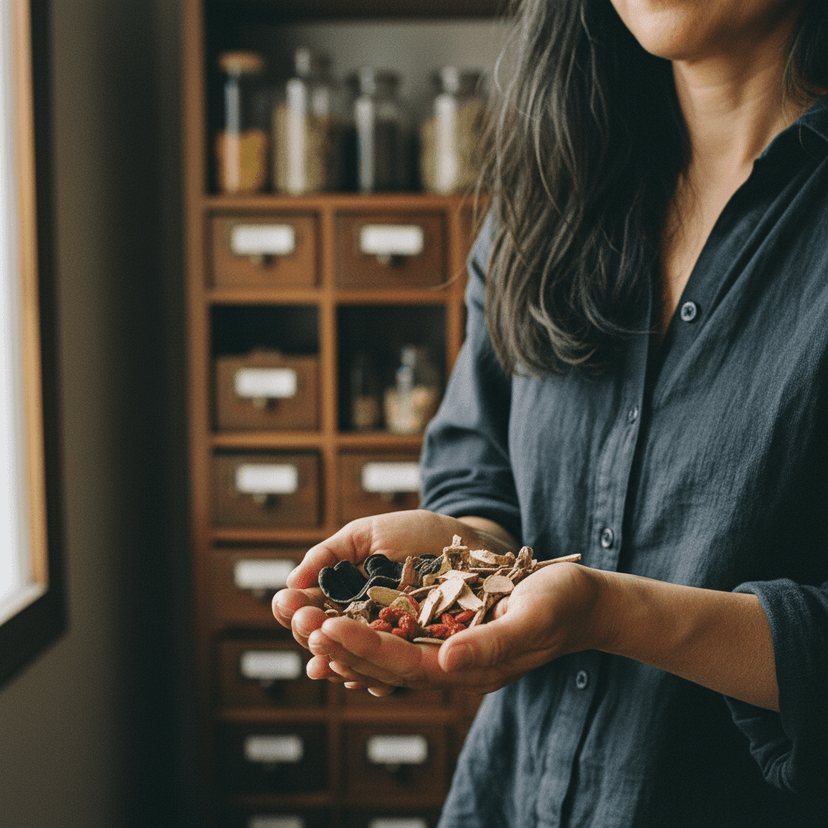
Huang Qi (Astragalus membranaceus), also known as Milk Vetch Root, is a fundamental tonic herb in Traditional Chinese Medicine used primarily for strengthening Wei Qi (protective energy), invigorating Spleen Qi, and consolidating the exterior to prevent illness. Its key active compounds include polysaccharides, flavonoids, and saponins.
Huang Qi strengthens immunity primarily by boosting the production of Wei Qi and fortifying the body's protective exterior, making it less susceptible to external pathogens like cold and wind. The classic text 《本草纲目》 (Bencao Gangmu) describes Huang Qi as sweet and slightly warm, entering the Lung and Spleen meridians, where it replenishes Qi and secures the exterior. Combined with Bai Zhu (White Atractylodes Rhizome) and Fang Feng (Siler Root), it creates a powerful synergy, enhancing overall vitality and resilience.
A study by Duan Z. et al. (2022) found that TCM health management — including formulas often featuring Huang Qi — could decrease the annual average cold frequency for Qi-deficient children from 6.2 times to just 1.4 times — a 76.5% reduction in colds. That's not just a statistic; that's real-world impact for countless families.
The recommended daily dosage of Huang Qi for children varies significantly by age, weight, and the specific condition being treated, but typically ranges from 3-9g in decoction for younger children, under strict professional guidance.
Dosage: Typically 3-9g for children (in decoction or granules), adjusted by practitioner. Duration is key for preventative formulas—often weeks to months during cold season. Consult a licensed practitioner.
Nature & Flavor: Sweet, slightly warm.
Meridians: Lung, Spleen.
Safety: Generally safe, but should always be prescribed by a qualified TCM practitioner, especially for children. Not recommended during acute fever or in cases of excessive heat.
Do This: Seek Personalized Herbal Formulas
Consult a licensed TCM practitioner for a formula tailored to your child's specific constitution and current health. This is not a one-size-fits-all approach. This usually involves a consultation every 2-4 weeks during the initial phase.
Not That: Self-Prescribing Herbs
Herbs are powerful medicine. What's beneficial for one child can be detrimental for another if the underlying pattern is misidentified. Please, please don't just grab a bottle of Huang Qi from the health food store without professional guidance.
This is one of my favorite tools for parents—it’s accessible, effective, and deeply bonding. Pediatric Tui Na is a specific form of massage that uses gentle strokes and presses on acupoints and meridians to stimulate a child’s natural healing abilities. It’s like acupuncture without needles.
For my son, a few minutes of Tui Na before bed became a ritual. It wasn't just about the physical benefits; it was about connection, presence, and allowing me to do something tangible for his health. This is a skill you can learn and use daily.
Do This: Learn Simple Immune-Boosting Tui Na
Focus on these key areas for 5-10 minutes daily:
Rubbing the Fei Jing (Lung Meridian) on the thumb side of the forearm: Use a gentle pushing motion from the wrist towards the elbow, about 100-300 times.
Massaging Zusanli (ST36): Located four finger-widths below the kneecap, just outside the shin bone. Gently press and rub for 1-2 minutes on each leg. This point is a powerhouse for Spleen and Stomach Qi.
Rolling Ni Ji (Spinal Pinching): Gently pinch and roll the skin along both sides of the spine from the lower back up to the neck, 3-5 times. This invigorates overall Qi and strengthens immunity.
Not That: Forceful Massage or Ignoring Discomfort
A child's body is delicate. Use light, consistent pressure. If your child shows discomfort or resists, stop. Tui Na should be a pleasant, soothing experience. Never force it.
Step 5: Protect from the Elements – Guarding the Wind Attack
In TCM, Wind is considered a primary external pathogen, often carrying Cold or Heat into the body through superficial openings—especially the back of the neck and upper back. Your Wei Qi shield is most vulnerable here.
It sounds almost quaint in our modern, climate-controlled world, but protecting your child from drafts, sudden temperature changes, and exposure to wind—especially after sweating—is fundamental to preventing colds. This wisdom comes from an ancient understanding of how our bodies interact with the environment.
Do This: Strategic Layering and Warmth
Ensure your child's neck, upper back, and abdomen are well covered, especially when going outdoors or in air-conditioned spaces. A scarf, even a light one, can make a huge difference. Dress them in layers that can be easily added or removed. This simple habit takes seconds but offers protection all day.
Not That: Overheating or Under-dressing
Avoid both extremes. Overheating can cause sweating, which then makes them more vulnerable to wind-cold once the sweat cools. Under-dressing leaves them exposed. The goal is balance and comfort.
Common Mistakes: The 'Quick Fix' Trap
The biggest mistake I see parents make, myself included initially, is looking for a magic bullet—a single herb, a single food, a single solution. Immune building in TCM is a marathon, not a sprint. It’s about consistent, gentle cultivation, not aggressive intervention. It’s about the daily choices that gradually, imperceptibly, build resilience.
Another common pitfall? Treating TCM like Western medicine: Oh, my child has a cough, so I need this specific herb. Nope. In TCM, we look at the pattern of the cough—is it dry, productive, worse at night, accompanied by chills or fever? The same symptom can have wildly different underlying patterns, requiring different treatments.
For example, 《神农本草经》 (Shennong Bencao Jing) mentions Wu Wei Zi (Schisandra Berry) for coughs and shortness of breath, but it's specifically for Lung Qi deficiency and chronic cough, not an acute, inflammatory cough with thick yellow phlegm.
Remember, TCM isn’t about replacing Western medicine; it’s about complementing it. It’s about building a foundation of health so strong that acute interventions become less frequent and more effective when needed. Always consult with both your pediatrician and a licensed TCM practitioner.
My son is now much healthier. He still gets a sniffle now and then, because he’s a kid, but the relentless cycle of illness and antibiotics? That’s largely behind us. I’m not saying it’s perfect, and my therapist still says I’m a mess—but a mess who’s learned a profoundly important lesson.
Maybe the real question isn't which herbs to take, or which cold medicine to give—but whether we've been thinking about wellness through entirely the wrong lens. We're not just fighting illness; we're cultivating life.
Your First 24 Hours: A Mini-Plan for Building Resilience
Observe your child's constitution: Spend 10 minutes today noting their energy levels, typical body temperature, sleep patterns, and any digestive tendencies. This will inform your personalized approach.
Cook a warming meal: Prepare a simple, cooked meal. Think congee with a touch of ginger, or a nourishing chicken soup. Avoid anything cold or raw for at least one meal. This takes 30-60 minutes.
Introduce pediatric Tui Na: Before bed, spend 5-10 minutes gently performing the Feijing rub and Zusanli massage on your child. Make it a soothing ritual.
Mindful dressing: Before sending your child out or into a colder room, take 30 seconds to ensure their neck and upper back are covered. A light scarf or an extra layer can make all the difference.
These aren't grand gestures. They're tiny acts of courage, consistency, and connection. They're how we start to rewrite the story of childhood illness, one resilient little body at a time.
References
Shen, K. & Ma, R. (2022) — Efficacy and Safety of Yupingfeng Granule in the Treatment of Recurrent Respiratory Tract Infections in Children: A Multicenter, Randomized, Double-Blind, Parallel-Group, Positive-Controlled, Non-Inferiority Trial
Frontiers (2022) — Traditional Chinese Medicine in the Treatment of COVID-19 in Children: A Scoping Review
Contributing Writer at Demisunshine. Sarah brings a research-trained eye to TCM. She has spent years reading clinical literature on herbal formulas — patient enough to spot the difference between a strong finding and a fragile one — and her pieces explain that distinction the way you'd talk it through with a friend over tea.
Get TCM Wellness Tips
Weekly articles on herbal remedies, nutrition, and holistic health — delivered to your inbox.