TCM for Autoimmune Disease: Rebalancing Immune System | Demisunshine
Why Suppressing Autoimmunity Fails: How TCM Reimagines Immune Balance
Conventional treatments for autoimmune diseases often suppress the immune system, leading to side effects and a cycle of management. Dr. Maya Chen explores how Traditional Chinese Medicine offers a profound re-evaluation, aiming to rebalance, not just suppress, the body's internal harmony.
Maya ChenMarch 22, 2026
Quick Answer
Traditional Chinese Medicine (TCM) offers a unique perspective on autoimmune diseases, moving beyond the Western model of immune suppression. By addressing underlying energetic imbalances like 'Spleen Qi Deficiency' and 'Damp Heat,' TCM aims to rebalance immune function, modulating cellular responses like the Th17/Treg axis, and providing a complementary path to managing symptoms and fostering long-term well-being.
Key Takeaways
As an integrative physician, I see functional medicine's focus on gut permeability, chronic inflammation, and cellular dysfunction as absolutely vital.
For Sarah, her treatment plan focused on strengthening her Spleen Qi and resolving the Dampness and Heat.
For Sarah, her treatment wasn't just about herbs.
Six months into her integrative treatment, Sarah’s life began to change.
Min Zhou, Bin Wu (Am J Chin Med)
The spreadsheet had 847 rows. Each one a patient record from a TCM clinic, paired with their 5-year health outcomes. I was looking for patterns in Qi deficiency treatments – but what jumped out was something about seasonal adjustments and specific dietary shifts that nobody had formally published in Western journals. It challenged a core assumption I held about managing autoimmune conditions, even after my residency at a major integrative medicine program.
I thought I understood the nuances, but these real-world data points were screaming for a re-evaluation.
This wasn't about finding a new drug; it was about understanding the body’s innate intelligence. It was about Sarah, a patient who came to me after years of fighting rheumatoid arthritis. Her joints were swollen, her energy was nonexistent, and the potent immunosuppressants she was taking left her feeling vulnerable and depleted.
She was tired of the cycle, tired of managing symptoms, and deeply fearful of the side effects, yet terrified of the flare-ups that came with any deviation from her conventional regimen. Her rheumatologist, a brilliant physician, had done everything by the book, but Sarah felt like her body was still at war with itself. She asked me, almost pleadingly, “Dr. Chen, is there another way to get my body to stop attacking itself?
Hey everybody, that question from Sarah is at the heart of what I do. Mainstream medicine often frames autoimmune disease as the immune system gone rogue, a threat to be suppressed. We hit it hard with biologics, DMARDs, and steroids, often with remarkable success in controlling inflammation and preventing joint damage. But what if we're asking the wrong question entirely? What if the goal isn't just to suppress, but to rebalance?
Traditional Chinese Medicine (TCM) offers a different framework here. Instead of focusing solely on the attack, it looks at the underlying conditions that allowed the attack to happen. It asks: Why is the immune system dysregulated in the first place? This ancient wisdom isn't just poetic; it maps onto modern immunology in surprising, evidence-backed ways.
The Immune System: An Internal Ecosystem, Not a Rogue Army
As an integrative physician, I see functional medicine's focus on gut permeability, chronic inflammation, and cellular dysfunction as absolutely vital. These are key pieces of our modern understanding of autoimmune conditions.
Then there’s TCM, with its rich language of Qi Deficiency, Dampness, Heat, and Blood Stasis. Here’s the exciting part: these aren't just poetic metaphors from ancient texts. They're sophisticated clinical constructs that describe measurable physiological states, directly influencing how we approach immune dysregulation.
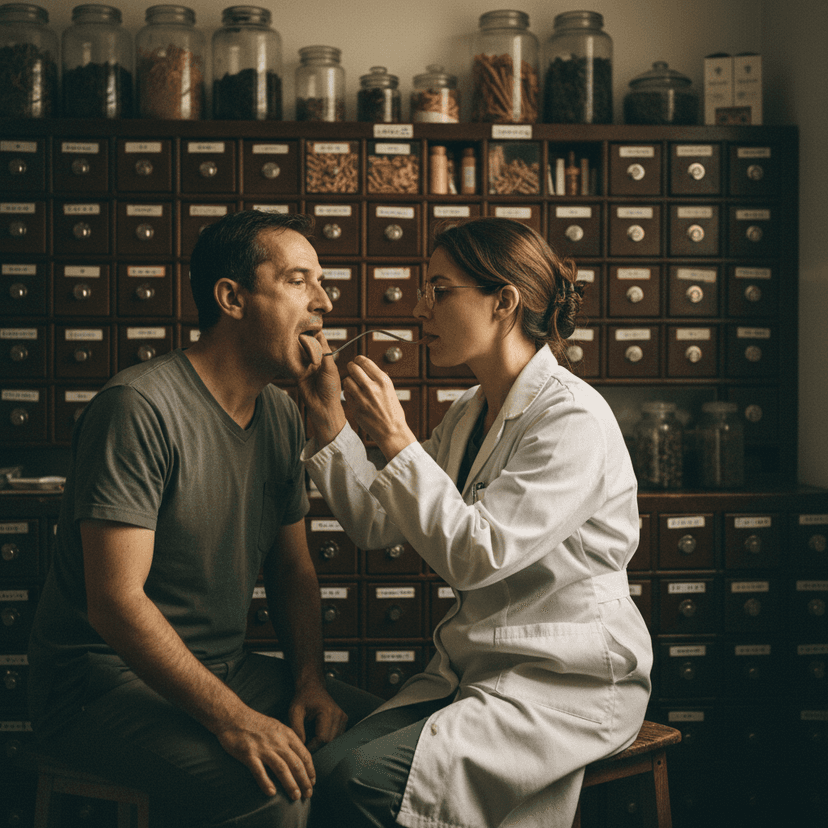
For Sarah, her chronic fatigue, joint swelling, and digestive issues pointed squarely to Spleen Qi Deficiency with internal Dampness and Heat.
Now, the TCM Spleen isn't just the anatomical organ; it’s a whole system responsible for digestion, nutrient absorption, and fluid metabolism. When your Spleen Qi is deficient, it can’t transform food and fluids properly, leading to an accumulation of what we call Dampness.
Think of it like a swamp forming inside your body – sluggish, heavy, breeding ground for inflammation. This dampness, over time, can generate Heat, leading to the burning pain and redness Sarah experienced in her joints.
Interestingly, how precisely this ancient understanding aligns with modern science. Across major research institutions, scientists are actively investigating how Chinese Medicine promotes immune balance. They're finding that it modulates CD4+ T cell subset imbalances, dysfunctional immune cells, and associated cytokines and transcription factors. These are the very mechanisms we see at play in autoimmune conditions. And yes, this includes the delicate balance between Th17 and Treg cells, which are critical for immune tolerance versus inflammatory responses.
Specifically, Th17 cells promote inflammation, while Treg cells suppress it. In autoimmune disease, this balance is often skewed towards Th17 dominance. What we in TCM call Damp Heat often correlates with an overactive inflammatory state, and treatments designed to clear heat and resolve dampness are essentially working to restore this Th17/Treg equilibrium. Researchers 胡雅琦 and 朱英 explore this in 2024, noting that single Chinese herbs and complex formulas can restore Th17/Treg balance by regulating inflammatory factors and signaling pathways.
This isn’t just theoretical. Consider the important aspect of managing steroid-induced adverse reactions – often as challenging as the disease itself. Research, including systematic reviews and meta-analyses, is actively exploring how Chinese herbal medicine can reduce these reactions in autoimmune disease patients.
Preliminary findings from studies involving thousands of patients are indicating that specific formulas can indeed help mitigate issues like bone density loss or gastrointestinal distress, potentially allowing patients to maintain their quality of life while on necessary Western medications. This is a promising direction for collaborative care.
Rebalancing the Internal Terrain: Herbs as Immunomodulators
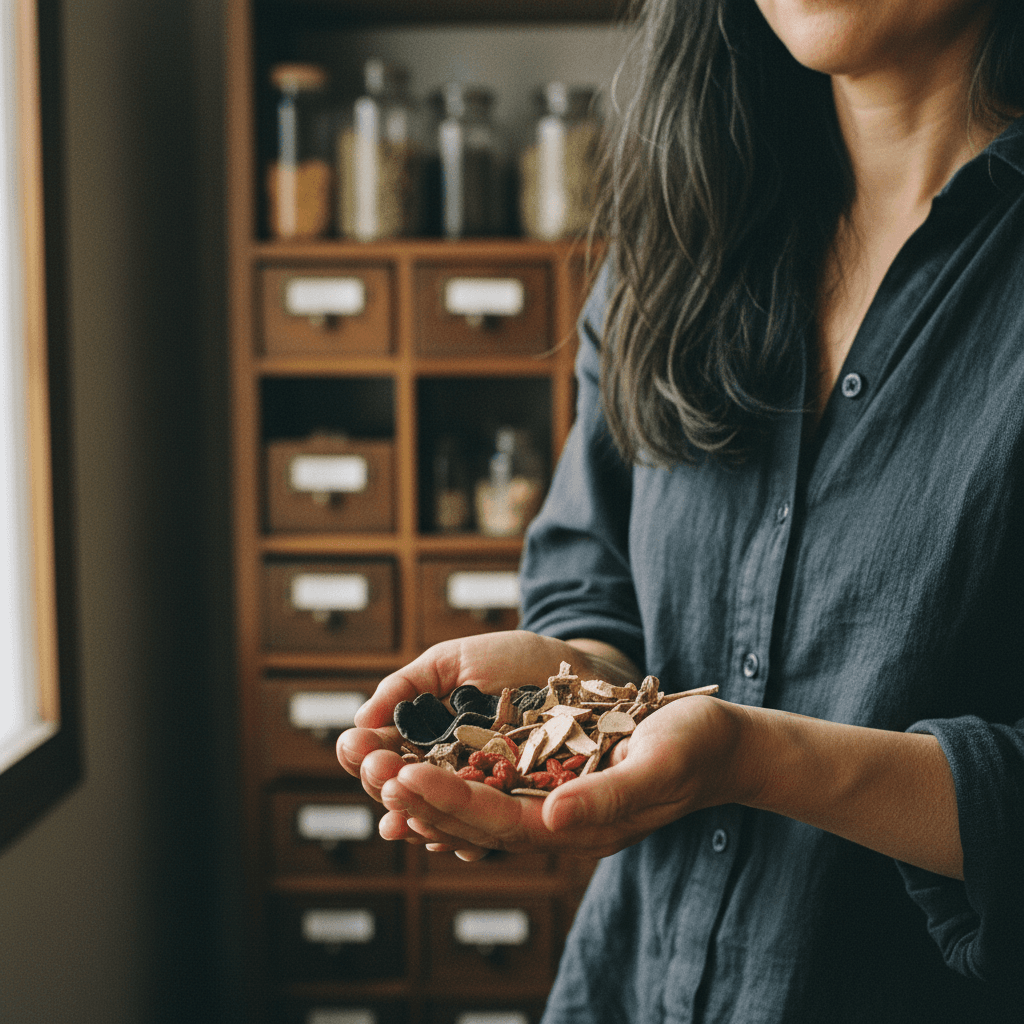
For Sarah, her treatment plan focused on strengthening her Spleen Qi and resolving the Dampness and Heat. This meant specific herbal formulas. We often turn to a specific herb in such scenarios: Huang Qi (Astragalus membranaceus).
Huang Qi (Astragalus membranaceus), also known as Bei Qi or Milk Vetch Root, is a tonic herb used in Traditional Chinese Medicine for tonifying Qi, consolidating the exterior, and promoting urination. Its active compounds include polysaccharides, saponins (astragalosides), and flavonoids.
This herb supports immunity by enhancing immune cell function, promoting the production of immune factors, and modulating cytokine balance. It's not about 'boosting' an already overactive immune system, but rather about bringing balance. The recommended daily dosage is typically 9-30g in decoction, adjusted to individual needs.
Structured Facts for Huang Qi:
Dosage: 9-30g decoction (standard), can be higher in specific clinical contexts.Nature & Flavor: Slightly warm, sweet.Meridians: Lung, Spleen.TCM Actions: Tonifies Spleen and Lung Qi, raises Yang, consolidates the exterior, promotes urination, generates flesh, expels toxins.
The classical text 《本草纲目》 (Compendium of Materia Medica) notes, “Huang Qi is sweet and warm, non-toxic; it tonifies Qi and consolidates the exterior, benefits the three burners, drains pus, and generates flesh.” This concept of consolidating the exterior aligns remarkably well with modern research showing its ability to modulate Treg cell function, essentially strengthening the body's internal defenses against inappropriate immune responses.
It helps hold things together, preventing leakage and dysregulation, much like a robust skin barrier protects us from external pathogens.
Another herb often considered is Bai Zhu (Atractylodes macrocephala). The 《神农本草经》 (Shennong Ben Cao Jing) states, “Bai Zhu primarily treats wind-cold-damp painful obstruction, stops sweating, and benefits urination.” Its dampness-resolving properties are particularly helpful for patients like Sarah. In fact, contemporary research indicates Bai Zhu can help inhibit the excessive activation of Th17 cells, which ties directly into its ancient role in dispelling dampness – a fascinating overlap, isn't it?
A paper by Ma Yue and Zheng Lihong in 2023, for instance, discussed autoimmune gastritis from the perspective of the Spleen. They highlighted how herbs which clear heat and benefit the Spleen and Stomach can modulate Th17/Treg balance and restore gut microbiota. They specifically mentioned Huang Lian (Coptis chinensis) and Huang Qi (Astragalus membranaceus) in this context, noting their ability to inhibit immune activation via pathways like NF-κB/JAK-STAT.
This is exactly how we see ancient herbal wisdom translating into precise molecular interventions.
The largest mistake I see people make with herbal supplements? They treat them like vitamins — pop a pill and forget about it. That's not how it works with TCM. These aren't isolated compounds; they're parts of complex formulas, prescribed based on a detailed diagnosis of your specific pattern of imbalance.
This individualized approach truly sets TCM apart, moving beyond a one-size-fits-all disease label.
Beyond the Diagnosis: Personalized Pathways to Harmony
For Sarah, her treatment wasn't just about herbs. It also included acupuncture. Think of acupuncture points as communication hubs, influencing the nervous and immune systems. Researchers are now actively exploring how acupuncture regulates the neuro-immune axis in conditions like rheumatoid arthritis (RA). It’s not magic; it’s targeted physiological signaling.
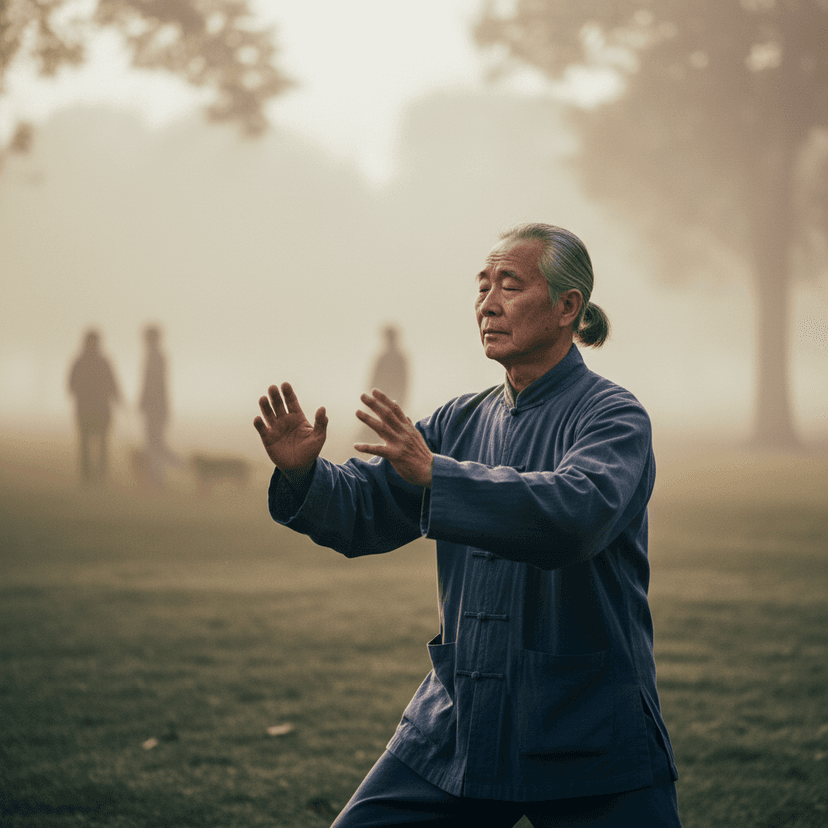
Her dietary changes were also crucial. We focused on warm, cooked foods, easily digestible, to support her Spleen Qi. This meant reducing raw vegetables, cold drinks, and excessive dairy – foods that, in TCM, can exacerbate Dampness. Lifestyle adjustments, like gentle movement through Tai Chi, also became part of her routine. These practices cultivate Qi, promoting circulation and reducing stagnation, which can contribute to chronic inflammation.
It’s all about supporting the terrain.
The idea of individualized treatment is central to TCM. Researchers, like Yuhan Wang and colleagues, are working to standardize and validate TCM research. Their 2023 systematic review protocol for developing a Core Outcome Set for Traditional Chinese Medicine clinical trials in rheumatoid arthritis (COS-TCM-RA) is an essential step. This isn't just an academic exercise; it allows for better comparison and integration with Western medical approaches, showing a commitment to evidence, even in the face of skepticism.
What about the fear of a flare-up when trying something new? It’s a completely valid concern. I've seen it backfire spectacularly when patients self-prescribe or work with inexperienced practitioners. That’s why genuine integrative care is paramount. Your Western medical team manages acute symptoms and monitors disease progression, while your TCM practitioner works on the underlying imbalances. This collaborative approach minimizes risks and maximizes benefit, ensuring a smoother transition and safer exploration of complementary therapies.
A Path Towards Harmony, Not Just Truce
Six months into her integrative treatment, Sarah’s life began to change. Her pain levels, which had been a constant 7-8 out of 10, dropped to a manageable 2-3. Her morning stiffness was significantly reduced, and her energy returned, allowing her to walk her dog again without debilitating fatigue. Her rheumatologist, initially cautious, was impressed by her stable labs and improved quality of life, cautiously reducing some of her medications under close supervision.
Sarah felt empowered, no longer a passive recipient of treatment, but an active participant in her healing journey. She hadn't been cured in the Western sense, but her body had found a new equilibrium.
Perhaps the real question isn't which herbs to take — or even which medicine system is better — but whether we've been thinking about wellness through entirely the wrong lens. Autoimmune disease is complex, a puzzle with many pieces. Suppressing symptoms is one piece, a necessary one at times. But rebalancing the body’s internal ecosystem, addressing the root imbalances that allow dysfunction to flourish, offers a path to deep, lasting change.
It's a path toward living in harmony with your body, not in constant battle.
Contributing Writer at Demisunshine. Maya has spent much of her adult life around the practice of integrative medicine and herbal traditions. Her writing reflects a long familiarity with how women's health, body constitution, and emotional wellbeing intersect — and her pieces tend to acknowledge that the messy parts of healing rarely fit a neat formula.
Get TCM Wellness Tips
Weekly articles on herbal remedies, nutrition, and holistic health — delivered to your inbox.