推拿 · Tui Na
Tui Na is a traditional Chinese medical massage, a cornerstone of Traditional Chinese Medicine (TCM) alongside acupuncture, herbal medicine, and Qigong. It involves a variety of manual techniques applied to the body's meridians and acupoints to promote healing and restore balance.
Tui Na (推拿), literally meaning "push and grasp," is an ancient form of therapeutic massage deeply rooted in Traditional Chinese Medicine (TCM). It is one of the oldest known systems of bodywork, with a history spanning over 2,000 years. This hands-on therapy aims to restore health and balance within the body.
As a core component of TCM, Tui Na works alongside acupuncture, herbal medicine, and Qigong. It applies specific manual techniques to the body's surface, focusing on meridians, acupoints, and muscle groups. The goal is to regulate the flow of Qi (life energy) and blood, promoting the body's natural healing processes.
Tui Na operates on the fundamental TCM principle that health depends on the balanced and free flow of Qi and blood throughout the body's meridian system. When this flow is disrupted or blocked, pain, illness, and dysfunction can arise. Tui Na seeks to clear these blockages.
Practitioners use diagnostic methods similar to those in acupuncture, including pulse and tongue diagnosis, to identify patterns of imbalance. The treatment then targets these specific imbalances, aiming to harmonize Yin and Yang, disperse stagnation, and strengthen deficient areas.
Tui Na employs a wide array of manual techniques, often categorized into pushing, grasping, kneading, rolling, rubbing, pressing, and vibrating. These techniques vary in pressure, speed, and depth, tailored to the individual's condition and the specific area being treated.
Beyond basic hand movements, Tui Na may incorporate joint manipulation, stretching, and traction. Practitioners might also use external aids like herbal liniments, compresses, or heat therapy to enhance the therapeutic effects, promoting deeper tissue penetration and circulation.
Tui Na is widely recognized for its effectiveness in treating musculoskeletal conditions, such as back pain, neck stiffness, shoulder pain, sciatica, and joint problems. It can alleviate muscle spasms, reduce inflammation, and improve range of motion.
Its applications extend beyond physical pain. Tui Na is also used for internal medicine conditions like digestive disorders, headaches, insomnia, and stress-related issues. It can boost the immune system and promote overall well-being by balancing the body's energetic systems.
A typical Tui Na session begins with a consultation to assess the client's health history and current symptoms. The practitioner will then perform a physical examination, often including palpation of affected areas and meridian pathways.
Clients usually remain clothed in loose, comfortable attire. The practitioner applies techniques directly to the skin or through clothing, using hands, fingers, elbows, and forearms. Sessions typically last from 30 to 60 minutes, depending on the condition being treated.
The benefits of Tui Na include pain relief, improved circulation, reduced stress, enhanced flexibility, and accelerated healing from injuries. It offers a non-invasive approach to health, often serving as a complementary therapy to other medical treatments.
While generally safe, it's important to seek a qualified and experienced Tui Na practitioner. Certain conditions, such as acute infectious diseases, severe osteoporosis, or open wounds, may contraindicate Tui Na. Always consult with a healthcare provider before starting new treatments.
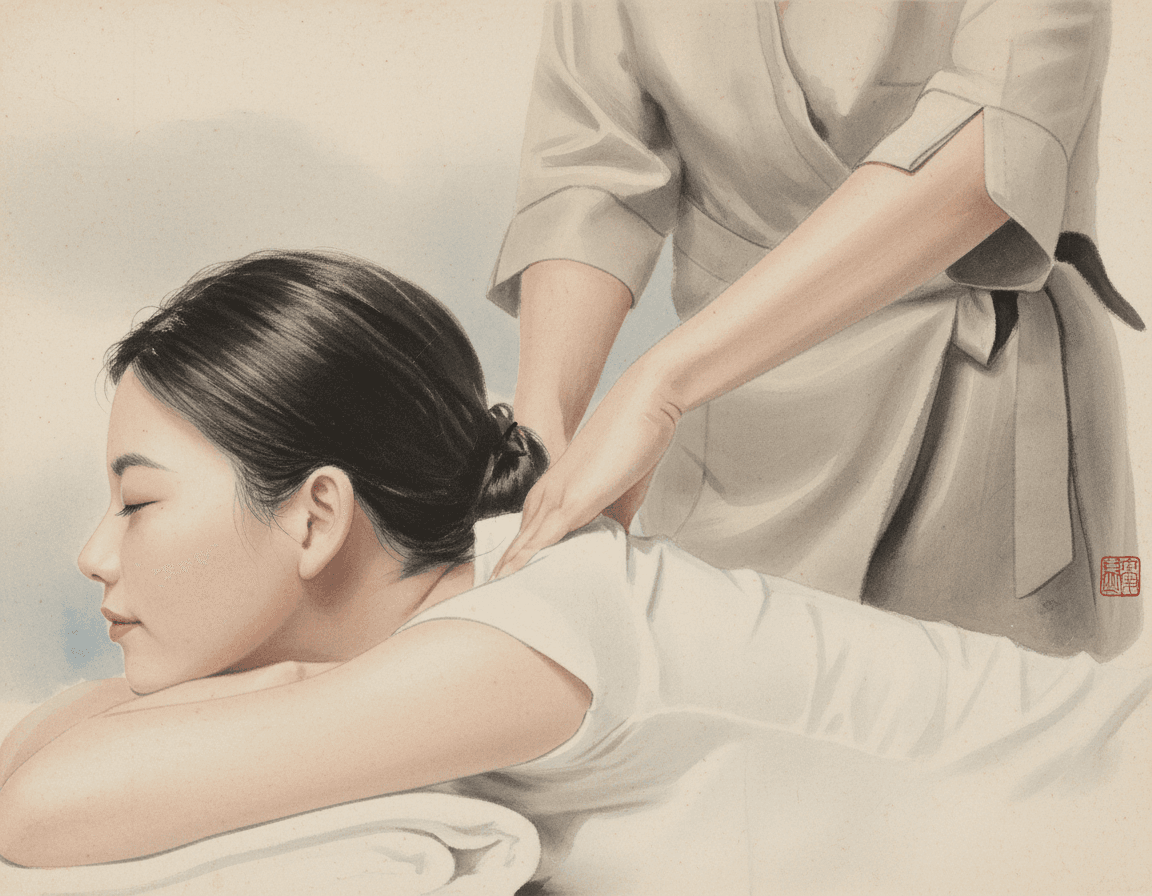
Tui Na (推拿), literally meaning "push and grasp," is an ancient form of therapeutic massage deeply rooted in Traditional Chinese Medicine (TCM). It is one of the oldest known systems of bodywork, with a history spanning over 2,000 years. This hands-on therapy aims to restore health and balance within the body.
As a core component of TCM, Tui Na works alongside acupuncture, herbal medicine, and Qigong. It applies specific manual techniques to the body's surface, focusing on meridians, acupoints, and muscle groups. The goal is to regulate the flow of Qi (life energy) and blood, promoting the body's natural healing processes.
Tui Na operates on the fundamental TCM principle that health depends on the balanced and free flow of Qi and blood throughout the body's meridian system. When this flow is disrupted or blocked, pain, illness, and dysfunction can arise. Tui Na seeks to clear these blockages.
Practitioners use diagnostic methods similar to those in acupuncture, including pulse and tongue diagnosis, to identify patterns of imbalance. The treatment then targets these specific imbalances, aiming to harmonize Yin and Yang, disperse stagnation, and strengthen deficient areas.
Tui Na employs a wide array of manual techniques, often categorized into pushing, grasping, kneading, rolling, rubbing, pressing, and vibrating. These techniques vary in pressure, speed, and depth, tailored to the individual's condition and the specific area being treated.
Beyond basic hand movements, Tui Na may incorporate joint manipulation, stretching, and traction. Practitioners might also use external aids like herbal liniments, compresses, or heat therapy to enhance the therapeutic effects, promoting deeper tissue penetration and circulation.
Tui Na is widely recognized for its effectiveness in treating musculoskeletal conditions, such as back pain, neck stiffness, shoulder pain, sciatica, and joint problems. It can alleviate muscle spasms, reduce inflammation, and improve range of motion.
Its applications extend beyond physical pain. Tui Na is also used for internal medicine conditions like digestive disorders, headaches, insomnia, and stress-related issues. It can boost the immune system and promote overall well-being by balancing the body's energetic systems.
A typical Tui Na session begins with a consultation to assess the client's health history and current symptoms. The practitioner will then perform a physical examination, often including palpation of affected areas and meridian pathways.
Clients usually remain clothed in loose, comfortable attire. The practitioner applies techniques directly to the skin or through clothing, using hands, fingers, elbows, and forearms. Sessions typically last from 30 to 60 minutes, depending on the condition being treated.
The benefits of Tui Na include pain relief, improved circulation, reduced stress, enhanced flexibility, and accelerated healing from injuries. It offers a non-invasive approach to health, often serving as a complementary therapy to other medical treatments.
While generally safe, it's important to seek a qualified and experienced Tui Na practitioner. Certain conditions, such as acute infectious diseases, severe osteoporosis, or open wounds, may contraindicate Tui Na. Always consult with a healthcare provider before starting new treatments.
This information is for educational purposes only and is not intended as medical advice. Always consult a qualified healthcare practitioner before using any herbal remedy.