My father, a TCM practitioner, once told me about a patient, Mr. Chen, who came to him with a grocery bag full of supplements: turmeric, magnesium, adaptogens, probiotics, a whole damn pharmacy. Mr. Chen swore by them, but his fatigue worsened, his digestion was a mess, and he couldn't shake off persistent headaches. He was convinced he just needed more of the right stuff.
What if I told you that bag of bottles in your cupboard, promising vitality and peak performance, is probably doing you more harm than good? What if the path to lasting wellness isn't about adding more, but understanding your unique body from within?
Traditional Chinese Medicine (TCM), encompassing practices like acupuncture, herbal medicine, and dietary therapy, is a holistic medical system used for diagnosing and treating imbalances in the body. Its core principles revolve around Qi, Blood, Yin, Yang, and the Five Elements, aiming to restore harmony and promote self-healing. This approach radically differs from the scattergun tactics of modern supplementation.
The Grand Illusion of 'More Is Better'
You've been sold a lie. A glossy, expensive lie wrapped in promises of instant energy and bulletproof immunity. The popular view champions a vitamin-driven approach: if you feel tired, take B12. Gut issues? Probiotics. Can't sleep? Magnesium. You’re treating symptoms, not the root, and frankly, it's a colossal waste of time and money.
This mentality, the idea that every ache or imbalance can be 'fixed' by popping another pill, has led to what I call Supplement Overload Syndrome. It's a dizzying cycle where you chase the latest trendy ingredient, piling on more and more, often without any real understanding of what your body actually needs. The industry, of course, loves it.
Your Expensive Pee Is Proof It’s Not Working
Why is this approach wrong? Because your body isn't a simple input-output machine. It's a complex, interconnected ecosystem. Flooding it with isolated nutrients, often in megadoses, can throw off delicate balances. Remember Mr. Chen? His problem wasn't a lack of turmeric; it was a deeply ingrained pattern of Liver Qi Stagnation and Spleen Qi Deficiency. No amount of isolated curcumin would fix that.
Many of these supplements are poorly absorbed. You take a high dose, your body doesn't know what to do with the excess, and you literally flush expensive nutrients down the toilet. The risk of abuse of vitamin supplements is real, particularly with fat-soluble vitamins (A, E, D, C) which can accumulate and become toxic, as a 2014 review highlighted in PubMed. You’re not just wasting money; you're actively creating potential health risks.
The Science Says: Your Body Is Not a Generic Blueprint
This isn't ancient wisdom talking; it's backed by modern science grappling with the very challenge TCM has mastered for millennia: individuality. A 2023 study from PMC discussed reconciling individualized Traditional Chinese Medicine (TCM) treatment with the standardized protocols of randomized controlled trials (RCTs). They found that while 188 experimental studies employ randomized designs in TCM research, the power lies in personalized diagnosis. You aren't a statistic from a large-scale trial. You're you.
The research is catching up. A study on N-of-1 trials (individualized trials) found that for stable bronchiectasis patients, individualized herbal decoction was statistically superior to standard decoction in improving symptom scores, sputum volume, and CAT scores. Group data from that study showed individualized decoction improved symptom scores significantly (2.13 ± 0.58 vs 2.30 ± 0.65, P = 0.002). This isn't just 'feeling good'; this is measurable improvement tailored to the individual.
In China, researchers like Wang Qiyue and colleagues in 2024 explored wet obstruction of the middle jiao syndrome, demonstrating how improper herbal combinations significantly lowered immune regulation. Their experiment showed that rats given an incorrectly formulated blend experienced a 19.7% decline in thymus index, while the right combination boosted it by 14.3%. Your body isn't an assembly line; it's a custom-built supercar.
You can't just throw any random part in there and expect it to run right. You need a mechanic who understands the engine, not just a parts salesman.
Your 'Pattern' Is Not a Google Search
So, what replaces your supplement free-for-all? Bian Zheng Lun Zhi – Pattern Identification and Treatment. That's the bedrock of TCM.
The core idea? Your symptoms are just smoke signals from a deeper energetic pattern, one unique to you. It shifts with seasons, stress, diet, and age. This is what I call the Inner Blueprint Decode method.
When you step into my clinic, I don't ask what supplements you're taking. I look at your tongue. I feel your pulse in six different positions. I ask about your sleep, your digestion, your energy fluctuations throughout the day, your emotional state.
From this, we build a comprehensive picture of your specific 'body constitution' and the current 'syndrome differentiation' — not just a symptom list.
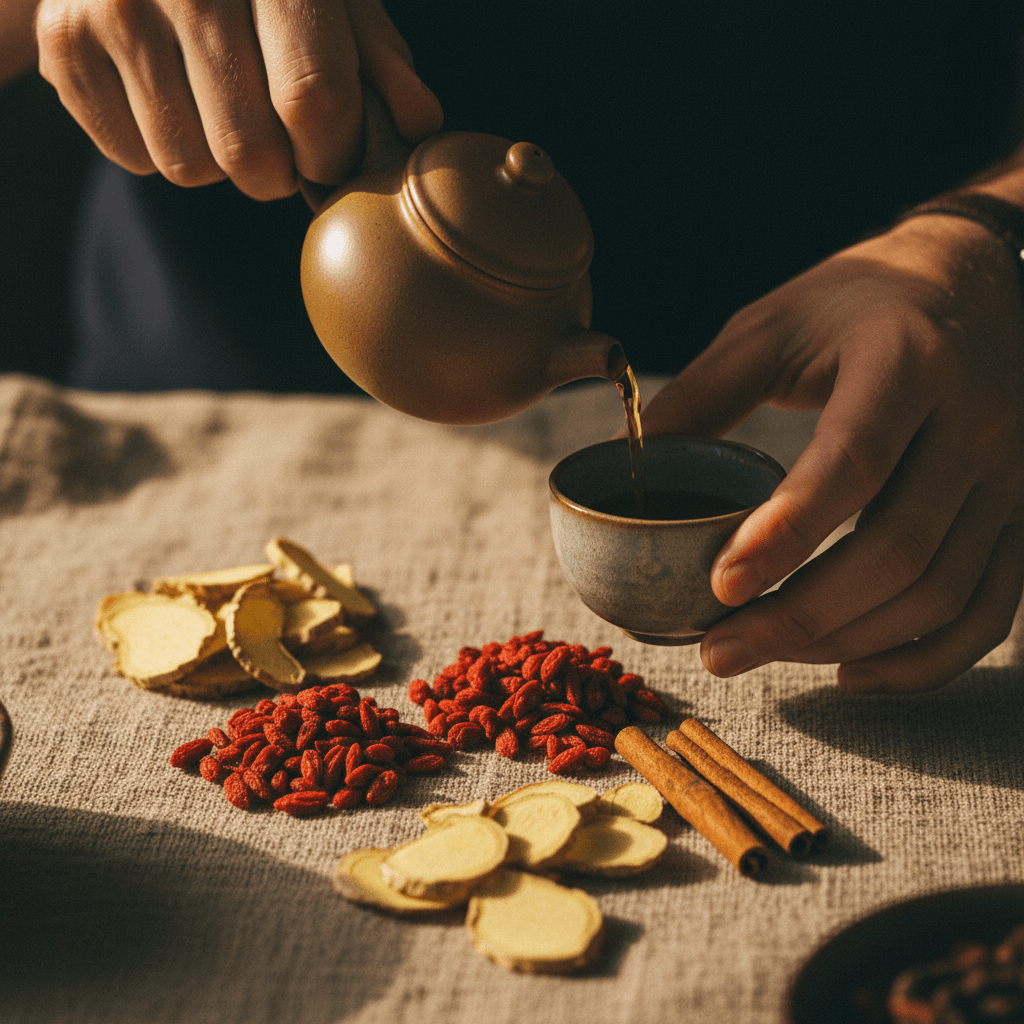
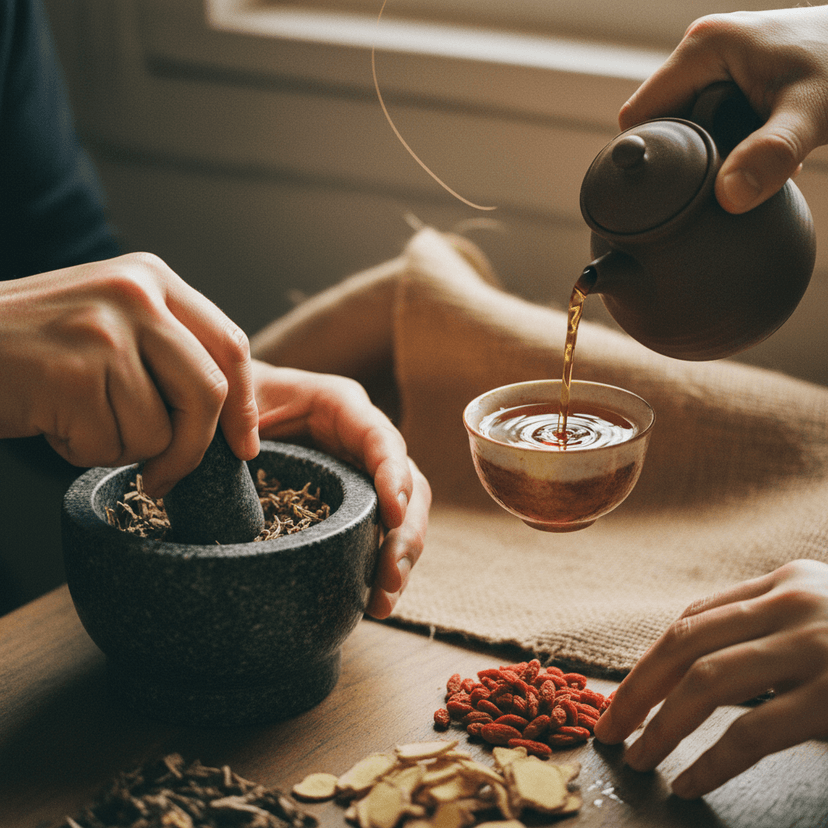
This personalized diagnosis guides everything. If you have Qi Deficiency, we're not just throwing vitamin C at it. We're looking at your Spleen and Lung Qi, perhaps prescribing a blend of herbs like Astragalus and Ginseng, adjusting your diet to include warming, easily digestible foods, and recommending specific movement practices to build energy. It's a symphony, not a solo act.
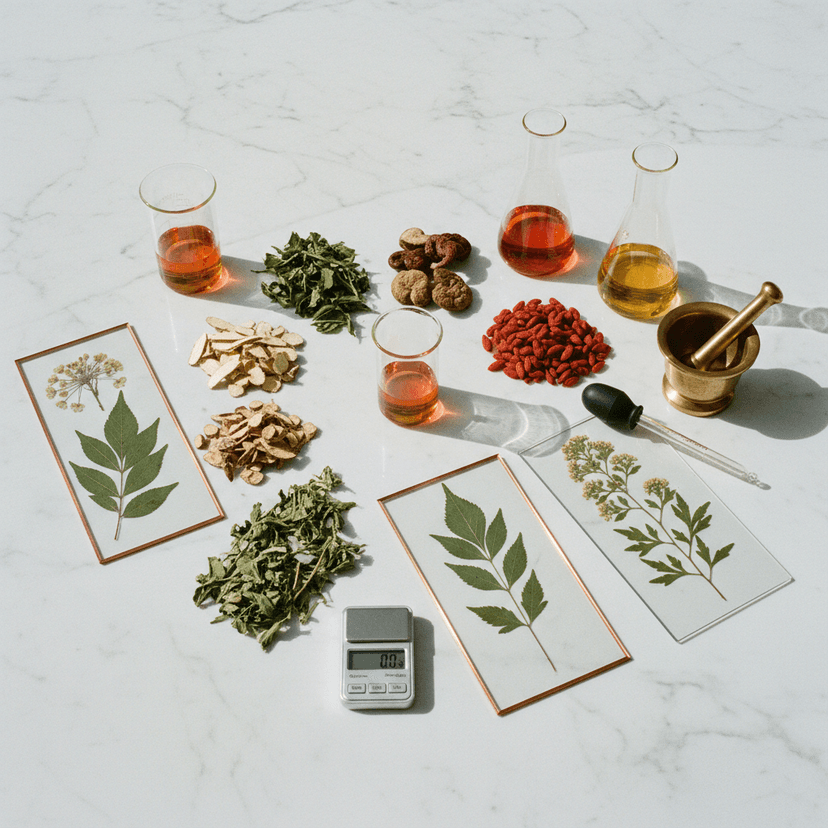
The wisdom of classical texts like 《神农本草经》 (Shennong Ben Cao Jing) and 《本草纲目》 (Compendium of Materia Medica) isn't about single-herb magic. It's about intricate 配伍 (pèi wǔ) — the strategic combination of herbs to enhance synergy and mitigate side effects.
I call these Symphony Formulas. Each herb plays a specific role, working in concert to create a powerful, balanced effect.
This isn't theory. A 2024 analysis by Li Tianjiao and others meticulously mapped the 'Gardenia pairing patterns in the Treatise on Cold Damage and Miscellaneous Diseases'. They revealed six paradigms, like combining cold and warm, or clearing and nourishing.
The data is brutally specific: Gardenia dosage was stable at 12.6-19.5g in 10 classic formulas, and paired with fermented soybean (Douchi) in 78% of cases. That isn't guesswork; it's a system built on millennia of observation and refinement.
Yes, You Still Have to Do the Work
Now, for the part some of you won't like: TCM isn't a quick fix either. It demands active participation. It asks you to observe your body, understand its signals, and make consistent lifestyle adjustments. This isn't about finding the perfect pill; it's about cultivating a deeper relationship with your own physiology.
I had a patient, Sarah, who came to me with chronic migraines. We identified a Liver Fire pattern, prescribed herbs, and she saw massive improvement. But she kept eating fiery, processed foods and staying up late. Guess what? The migraines came back. The herbs opened the door, but she refused to walk through it.
You can't just down a biotic-supplement and ignore a diet of fried food and late nights. You think you're getting healthier, but you're just piling more crap on top of existing imbalances. It's like putting premium gas in a car with a rusted engine. What's the fucking point?
Consider the concept of Seasonal Living and Wellness (Si Ji Yang Sheng). It's about aligning your diet and activity with the 24 Solar Terms (Er Shi Si Jie Qi), adjusting to the inherent energetic shifts of nature. You change your diet, your sleep, your exercise — not just your supplement stack. This holistic view is where sustainable health transformation begins.
The Skeptic's Point: What About Modern Validation?
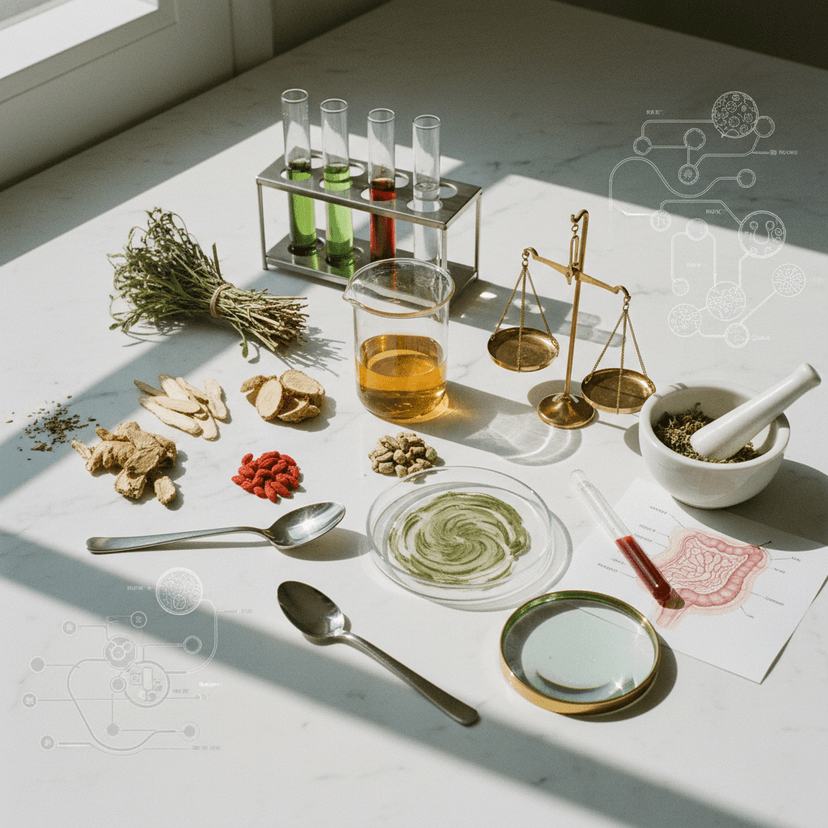
Some might argue that TCM lacks the rigorous, double-blind, placebo-controlled trials of Western medicine. And to an extent, a TCM skeptic has a valid point here: replicating personalized interventions in standardized research designs remains a challenge. The complexity of herbal formulations, with their dozens of active compounds, makes isolating effects difficult.
But the tides are turning. Researchers like Xing Zi and collaborators (2024) are studying 'supramolecular systems' to understand exactly how mineral drugs like Long Gu (fossilized bone) interact with other herbs like Chai Hu (Bupleurum).
Their findings were specific: they detected 37 chemical components involved. They found that Long Gu and Chai Hu formed supramolecular structures that increased dissolution by a significant 23-45%.
This isn't folklore. This is sophisticated chemistry happening within ancient formulas. The mechanisms are complex, but the effects? Real.
The science is confirming what practitioners like my father have observed for decades: precise combinations, individualized to your unique energetic blueprint, yield profound results. Generic pills cannot replicate this.
Stop Chasing and Start Cultivating
Before you even think about throwing out your supplement stash, here's a gut check. Try this 2-minute Mirror Diagnosis. Go to a mirror in natural light, stick out your tongue. Is it pale and swollen with teeth marks along the edges? That's often a sign of Spleen Qi deficiency. Is it bright red with a thick yellow coat? Excess heat. This isn't a full diagnosis, understand? But it's your first damn step in learning the language your body speaks.
It's about paying attention, not popping pills.
And if that tongue shows teeth marks – a sign of Spleen Qi deficiency and stagnant energy – try this: The 5-Minute De-Stagnation Break. Right now, stand up. Stretch your arms overhead, reach for the ceiling like you're trying to grab something. Take 10 deep, audible breaths, really pushing the air out. Do this three times today. You're not fixing the root yet, you're just moving the damn energy. Get it moving.
Beyond the tongue, try this: 'The 24-Hour Lifestyle Audit'. For one day, change nothing. Just observe. When do you feel an energy slump? What meal leaves you bloated and sluggish? Note it all down. This isn't about fixing things yet; it's about becoming a detective in your own body. It's about observing your pattern, not some generic symptom list from Dr. Google.
You're probably thinking, "So, what do I do? Throw out all my supplements?" Maybe. But more importantly, you need to reframe your entire approach to wellness. Stop blindly adding, and start precisely balancing.
Find a qualified TCM practitioner. Get a proper diagnosis. Understand your body's unique language of Qi, Blood, Yin, and Yang. Then, and only then, consider targeted herbal support, dietary adjustments, and lifestyle changes that address your Inner Blueprint. You'll likely find you need far less, and what you do take, actually works.
The irony of seeking health in a thousand bottles is that lasting wellness isn't found in what you add to your life, but in what you understand about yourself.
References
- Challenges in Traditional Chinese Medicine Clinical Trials: How to Balance Personalized Treatment and Standardized Research? - PMC
- Investigation into the Individualized Treatment of Traditional Chinese Medicine through a Series of N-of-1 Trials - PMC
- The risk of abuse of vitamin supplements - PubMed
- 李天骄等,《辽宁中医药大学学报》 (Li Tianjiao et al., Journal of Liaoning University of Traditional Chinese Medicine)
- 《本草纲目》 (Compendium of Materia Medica)
- 《神农本草经》 (Shennong Ben Cao Jing)