Frozen Shoulder at 50: TCM's Root Cause Approach | Demisunshine
Frozen Shoulder at 50: What I Got Wrong About Pain and TCM's Deeper Answers
My journey with frozen shoulder at 50 challenged everything I thought I knew about pain. I used to dismiss 'energetic imbalances'—until my own body forced me to look beyond the mechanics and discover how Traditional Chinese Medicine treats the root cause, not just the symptoms.
Sarah LinMarch 18, 20269 min read
Quick Answer
Frozen shoulder at 50, often understood as a mechanical issue in Western medicine, is understood by Traditional Chinese Medicine as a symptom of deeper energetic imbalances like Qi and Blood stagnation. TCM treatments, including acupuncture and specific herbal formulas, aim to address these root causes, not just the pain, by restoring proper flow and nourishing the body's essential substances, often leading to improved mobility and lasting relief.
Key Takeaways
Frozen shoulder, often affecting those around age 50, is viewed in TCM as more than just a mechanical joint issue; it’s a manifestation of underlying energetic imbalances like Qi and Blood stagnation, sometimes coupled with external cold or internal deficiencies.
TCM treatments for frozen shoulder, including acupuncture, moxibustion, and herbal medicine (like Compound Danshen tablets), target the root cause, aiming to invigorate blood, unblock meridians, and nourish deficient organ systems, leading to significant improvements in pain and range of motion.
Integrating TCM with Western medicine offers a powerful, synergistic approach to frozen shoulder. While Western methods manage acute symptoms, TCM focuses on holistic healing and preventing recurrence by addressing systemic imbalances.
Self-care in TCM for frozen shoulder involves gentle movement (like Dao Yin), mindful stress management, and dietary adjustments to support the body's natural healing processes and balance energetic flows, though professional guidance is always essential.
A few years ago, I would have dismissed 'energetic imbalances' as a vague, unscientific concept. I was confident that musculoskeletal pain, like my own debilitating frozen shoulder, was purely a mechanical problem—a tight joint capsule, inflammation, maybe some tendinopathy. Then, my left shoulder decided to lock up on my 50th birthday, and everything I thought I knew about chronic pain began to unravel.
It was an unwelcome milestone, a relentless, throbbing companion that stole my sleep and made even reaching for a coffee cup an act of painful defiance.
My palms are sweating a little even now, just thinking about that period. I was a physician, dual-licensed in Western and Traditional Chinese Medicine, and yet I felt utterly helpless. My Western training offered steroid injections, physical therapy with excruciating stretches, or, eventually, surgery. I tried the injections. They offered fleeting relief, a cruel tease before the stiffness clamped down harder. The physical therapy? It felt like I was battling my own body, forcing it into submission.
I remember one session where the tears just streamed down my face, not just from the sharp pain, but from a deeper frustration—a sense of betrayal by my own expertise.
The common narrative is that frozen shoulder—or adhesive capsulitis, as we call it in Western medicine—just happens, especially around 50. It’s a slow creep of pain, then stiffness, then a gradual thaw. The wait and see approach is still very common, sometimes taking years to resolve. But what if waiting isn't the only option? What if there's a different way to understand what's happening in the body, one that could actually shorten that agonizing timeline and prevent recurrence?
This question began to gnaw at me, leading me back to my TCM texts, not as a clinician for others, but as a desperate patient myself.
The Western View: A Missing Piece of the Puzzle
From a Western perspective, frozen shoulder involves inflammation and scarring of the shoulder capsule, limiting movement. It's often idiopathic, meaning we don’t know why it starts. It’s also linked to conditions like diabetes and thyroid issues. My Western brain was focused on the joint, the tendons, the mechanics. I saw the limited range of motion. I felt the pain. I understood the physiological changes. Yet, something felt incomplete.
Conventional treatments? The research often shows mixed results, to be honest. Steroid injections can provide short-term pain relief, absolutely. A fleeting moment of calm.
But that calm? It's often a cruel tease before the pain clamps down again. They don't always change the long-term trajectory, just offer a temporary lull.
Physical therapy, while crucial, can be extremely painful. Patients—and I was certainly one of them—often feel frustrated with the slow progress, or worse, the recurrence. That feeling of hitting a wall, of just managing symptoms, it’s maddening. That's what pushed me to finally embrace my other lens, the TCM lens, for my own healing. I felt a deep need to look beyond.
My TCM Awakening: It's Not Just About the Shoulder
I remember sitting in my clinic, feeling the familiar dull ache in my shoulder, and picking up an old TCM textbook. The ancient texts speak of bi syndrome (obstruction syndrome), and for frozen shoulder, they often point to Qi and Blood stagnation, sometimes exacerbated by external invasions like Wind-Cold-Damp. But more profoundly, they linked it to deficiencies—especially of the Liver and Kidney, which govern sinews, bones, and blood.
The 《黄帝内经》 offers the deep insight that 'bone is the frame, sinew is the strong,' reminding me that the integrity of our musculoskeletal system isn't just about mechanics; it's intricately connected to deeper energetic flows and organ health. This was the cognitive shift I needed.
It was during this period that I finally understood the concept of 虚气留滞理论 (Vacuity-Qi Stagnation Theory), as explored by Zhao Bokun and colleagues (2025). This theory explains frozen shoulder as a ben xu biao shi — a condition with a root deficiency (Kidney, Liver, Qi, Blood) and a manifest excess (stagnation, pain). It's not 'frozen' simply because of inflammation; it's 'frozen' because the channels aren't being nourished, and circulation is sluggish.
Think of a river—if the source runs low (deficiency) and there are blockages downstream (stagnation), the water can't flow. That's your shoulder.
This holistic perspective was a revelation. My Western-trained mind had been asking, 'How do I unfreeze this joint capsule?' My TCM-awakened mind began to ask, 'What story is my body trying to tell me through this shoulder pain? What underlying imbalances created the conditions for this freeze?' This reframing, this better question, changed everything about my approach.
Danshen: An Ally for Flow
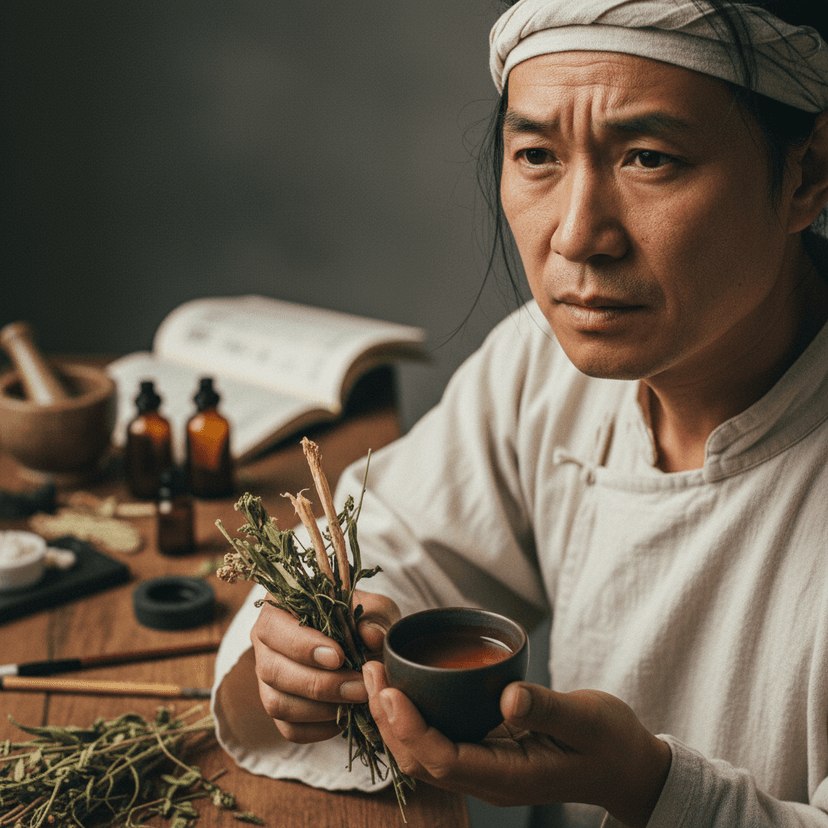
One of the first herbal allies I turned to for myself, and often recommend in practice, is Danshen (Salvia miltiorrhiza), also known as Red Sage or Chinese Salvia. It’s a perennial herb used in Traditional Chinese Medicine for invigorating blood, breaking up blood stasis, and calming the spirit. Its key active compounds include tanshinones and salvianolic acids, which have potent antioxidant and anti-inflammatory properties, and have been studied for their cardiovascular benefits.
The 《本草纲目》 records Danshen as 'activating blood, opening the Heart and Pericardium channels, treating疝痛 (hernia pain)'—a perfect historical echo of its utility in conditions like frozen shoulder where blood stasis is central to the pain and immobility. It makes perfect sense, doesn't it? If stuck blood is part of the problem, you need something to get things moving.
Here's what Danshen brings to the table:
Dosage: Typically 9-15g in decoction; for concentrated forms, follow practitioner's guidance.
Nature & Flavor: Bitter, slightly cold. This cooling aspect is helpful for inflammation.
Meridians: Heart, Pericardium, Liver. This indicates its broad action on cardiovascular health, blood circulation, and emotional regulation—all interconnected in TCM.
Indeed, recent clinical studies, like one by Yan Yan and colleagues (2024), showed that Compound Danshen tablets combined with conventional treatment significantly improved shoulder range of motion and pain scores in frozen shoulder patients. After three months, the flexion and abduction range of motion reached an impressive 169±11°, significantly better than the control group’s 146±22°.
The Tools That Actually Moved My Arm (And My Heart)
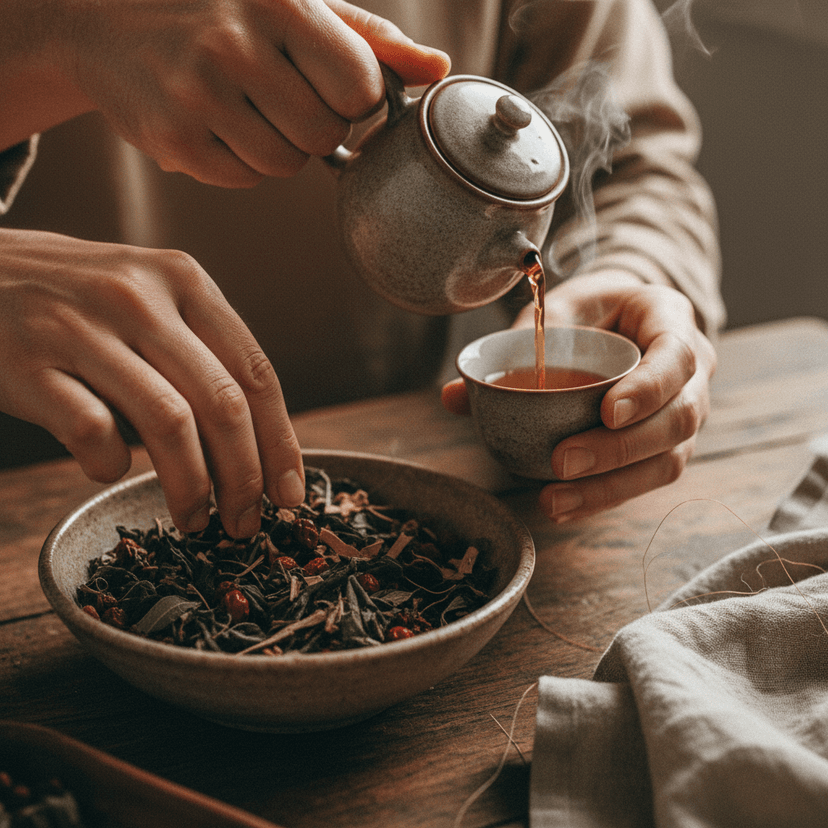
My personal path to healing involved a combination of approaches. I found significant relief with consistent acupuncture treatments. The needles weren't just addressing the local pain; they were used to stimulate specific points along the meridians to move Qi and Blood, reduce stagnation, and support my Liver and Kidney energy.
Acupuncture helps alleviate frozen shoulder pain and improve function by modulating local inflammation and stimulating nerve pathways, as evidenced by meta-analyses like the one published in Evidence-Based Complementary and Alternative Medicine in 2020, which confirmed significant pain reduction and improved shoulder function.
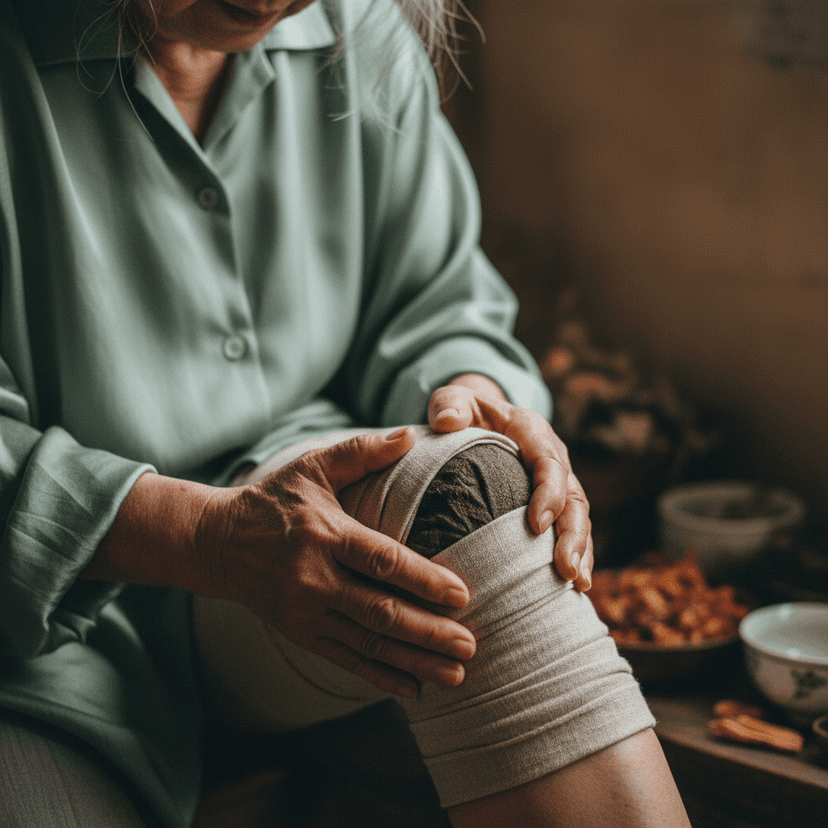
I also incorporated moxibustion—the gentle burning of mugwort over acupuncture points—to introduce warming energy, which is crucial when Cold is contributing to the stiffness. The sensation is deeply comforting, not just physically, but emotionally. It's like a warm hug for your weary shoulder. Research from Frontiers (2025) even highlights the effectiveness of joint mobilization combined with warm acupuncture-moxibustion, noting advantages in restoring shoulder function.
Another powerful modality was electroacupuncture (EA). This is where small electrical currents are passed through the needles, intensifying the stimulation. It’s not for everyone, but for me, it felt like it was genuinely waking up the stagnant areas. A 2022 systematic review and meta-analysis in Frontiers confirmed that EA can significantly improve frozen shoulder pain and function, even outperforming manual acupuncture in some measures. It really felt like it was blasting through the blockages.
Beyond the clinic, I explored Dao Yin exercises—ancient Chinese therapeutic movements akin to gentle Qigong. Zhou Pengwei and others (2024) discuss the 圆运动理论 (Circular Movement Theory), which elegantly explains how imbalances in the body's natural circular movements can lead to conditions like frozen shoulder, and how therapeutic movements can help restore balance. It's a far cry from the aggressive stretches I was doing before; this was about coaxing, not conquering.
The Hard Truth About Healing (and the Scars We Carry)
Here's the hard truth: Western medicine, with its focus on isolated symptoms, often misses the forest for the trees. It’s brilliant for acute trauma, for surgery, for identifying specific pathogens. But with chronic conditions like frozen shoulder, it can leave us feeling like broken machines, not whole beings. The deep-seated frustration many feel with conventional treatments—the endless physical therapy, the temporary relief from injections, the fear of surgery—is valid. They’re treating the branch, not the root.
And when we only treat the branch, the problem tends to re-emerge, sometimes in the same spot, sometimes elsewhere. It’s a bitter pill to swallow, especially when you’re trained in that system. My own experience forced me to confront that blind spot.
But this isn't about choosing sides. It’s about integration. What if we could use the diagnostic precision of Western medicine to identify the structural problem, and then turn to TCM for its profound ability to address the systemic imbalances that allowed the problem to take root in the first place? I continued my gentle Western physical therapy exercises, but now they were supported by a body that was actually healing from within, not just being stretched into temporary submission.
It changed the entire experience.
My own frozen shoulder, and the journeys of countless patients since, taught me a few things. Here's what I came to understand:
That dull, persistent ache? It’s often stagnation. Qi and Blood are stuck, like traffic on a freeway. TCM’s job is to be the traffic controller, easing the flow.
Your age doesn't solely mean wear and tear. In TCM, 50 is often when Kidney Jing (essence) naturally declines, which impacts bones, joints, and overall vitality. Addressing this deficiency is key. It's why Zhao Bokun and team (2025) specifically propose 补肾活血 (nourishing Kidney and activating Blood) as a core treatment principle.
Emotional stress—it's not something separate from your body. It directly impacts Liver Qi, which is responsible for the smooth flow of Qi throughout the body, including the sinews. Stress can literally freeze you up.
Beyond the Joint: My Own Thawing Process
It took time. More time than I wanted, certainly. Healing is rarely a straight line, and I had my moments of doubt, of wanting to just surrender to the Western surgical knife. But with consistent TCM treatments—acupuncture, custom herbal formulas, moxibustion—and a shift in my own mindset, I started to feel a deep change. Not just in my shoulder, but in my overall energy, my sleep, my emotional resilience.
My arm began to move again. Slowly, yes. But without that sharp, agonizing catch. I could reach over my head. I could sleep through the night. The internal sense of flow returned. It wasn't just physical therapy; it was a deep, systemic shift. The science, for me, came later—confirming what my body already knew: that promoting better circulation, reducing inflammation, and supporting my body's innate healing capacities was the genuine path to recovery.
That it wasn't just my shoulder that was frozen, but perhaps a part of my understanding of health.
For those of you wondering about self-treatment, particularly acupressure: it can offer temporary relief, but it’s crucial not to substitute it for professional care. Do this: gently massage areas of tension in your opposite arm or leg that feel related to your shoulder pain, or apply mild heat. Not that: aggressively force your frozen shoulder into painful stretches or apply deep pressure directly to the inflamed joint itself. Always listen to your body, and never push into sharp pain.
Think gentle encouragement, not brute force.
Please, if you’re grappling with frozen shoulder, consult with a licensed practitioner—ideally, one with an integrative background. What works for one person might not be right for another, as TCM treatment is highly individualized. Your specific pattern of imbalance (e.g., more Cold, more Deficiency, more Stagnation) will dictate the precise acupuncture points and herbal formulas used. Safety is paramount.
My frozen shoulder taught me a deep lesson in humility. It taught me that sometimes, the most stubborn physical ailments are whispers from deeper within. It reminded me that our bodies are not just mechanical marvels, but intricate energetic ecosystems. And sometimes, the very things we dismiss as 'unscientific' hold the keys to genuine, lasting healing.
I’m still learning. We all are. And perhaps that's the greatest gift of our human journey—the ongoing discovery, the messy, beautiful process of figuring out what it truly means to be well. My arm is fully functional now, but the experience left an indelible mark—a deep appreciation for the body's wisdom, and a fierce commitment to listening to all the ways it speaks. What might your body be trying to tell you?
Contributing Writer at Demisunshine. Sarah brings a research-trained eye to TCM. She has spent years reading clinical literature on herbal formulas — patient enough to spot the difference between a strong finding and a fragile one — and her pieces explain that distinction the way you'd talk it through with a friend over tea.
Get TCM Wellness Tips
Weekly articles on herbal remedies, nutrition, and holistic health — delivered to your inbox.