Red Sage Root
Cold (寒)丹参 · Dan Shen
Radix Salviae Miltiorrhizae
TCM Properties
Nature (四气)
Cold (寒)Flavor (五味)
Bitter (苦)
Meridian Tropism
HeartPericardiumLiver
丹参 · Dan Shen
Radix Salviae Miltiorrhizae
Dr. Maya Chen explores Dan Shen, or Red Sage Root, a cornerstone of Traditional Chinese Medicine now recognized by modern science for its profound impact on heart health and circulation.
3-15g 15-30g = large dose 30- 60g for phlebitis or when used alone
3-15g 15-30g = large dose 30- 60g for phlebitis or when used alone
For a traditional decoction, steep 3-15 grams of dried Dan Shen root slices in 2-3 cups of water. Bring to a boil, then reduce heat and simmer for 20-30 minutes. Strain and drink the liquid. For larger therapeutic doses, as for phlebitis or when used alone, your practitioner might recommend 30-60 grams, which should be simmered longer, perhaps 45-60 minutes.
Dan Shen can be taken as a fine powder. A typical dosage might range from 1-3 grams, taken 2-3 times daily, mixed with warm water or added to smoothies. This form offers convenience and can be easier to digest for some individuals. Always start with a lower dose and adjust as advised by a qualified practitioner.
Standardized extracts or capsules are a convenient way to consume Dan Shen. Follow the dosage instructions provided by the manufacturer, or as recommended by your healthcare provider. These preparations aim for consistent levels of active compounds like salvianolic acids and tanshinones, which can be beneficial for specific therapeutic goals. Be sure to source from reputable brands to ensure purity and potency.
For a traditional decoction, steep 3-15 grams of dried Dan Shen root slices in 2-3 cups of water. Bring to a boil, then reduce heat and simmer for 20-30 minutes. Strain and drink the liquid. For larger therapeutic doses, as for phlebitis or when used alone, your practitioner might recommend 30-60 grams, which should be simmered longer, perhaps 45-60 minutes.
Dan Shen can be taken as a fine powder. A typical dosage might range from 1-3 grams, taken 2-3 times daily, mixed with warm water or added to smoothies. This form offers convenience and can be easier to digest for some individuals. Always start with a lower dose and adjust as advised by a qualified practitioner.
Standardized extracts or capsules are a convenient way to consume Dan Shen. Follow the dosage instructions provided by the manufacturer, or as recommended by your healthcare provider. These preparations aim for consistent levels of active compounds like salvianolic acids and tanshinones, which can be beneficial for specific therapeutic goals. Be sure to source from reputable brands to ensure purity and potency.
Research on Dan Shen for cardiovascular health and related conditions shows promise, with several meta-analyses suggesting benefits for conditions like vascular cognitive impairment and as an adjunct to chemotherapy. However, critical reviews, such as one by Wang, Li, and Wang (2009), highlight a need for higher quality randomized controlled trials to fully substantiate its efficacy according to Western scientific standards.
Moderate — Some clinical studies
Research on Dan Shen for cardiovascular health and related conditions shows promise, with several meta-analyses suggesting benefits for conditions like vascular cognitive impairment and as an adjunct to chemotherapy. However, critical reviews, such as one by Wang, Li, and Wang (2009), highlight a need for higher quality randomized controlled trials to fully substantiate its efficacy according to Western scientific standards.
Moderate — Some clinical studies
Insufficient Data
Insufficient Data
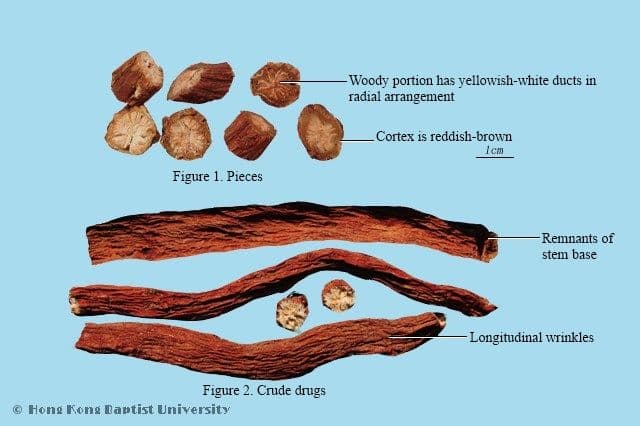
Imagine a vibrant, sun-drenched field in the heart of China, where the earth yields a root so potent, it’s been revered for millennia. This isn't just any root; it's Dan Shen, a botanical treasure whose deep reddish-purple hue hints at its profound connection to blood and vitality in Traditional Chinese Medicine (TCM). For generations, families have passed down knowledge of its power, often calling upon it when circulation faltered or the heart felt burdened.
It is deeply embedded in the cultural fabric, a quiet guardian of health.
Dan Shen (Radix Salviae Miltiorrhizae), also known as Red Sage Root or Salvia Root, is a medicinal herb used in TCM for circulatory and heart health, as well as calming the spirit. It’s one of the best-selling Chinese medicines for cardiovascular conditions, a testament to its enduring reputation.
Even ancient texts recognize its significance; the venerable 《神农本草经》 (Shennong Ben Cao Jing), a foundational text of Chinese herbalism, noted its ability to manage “心腹邪气” (heart and abdominal pathogenic qi) and to “破症除瘕” (break up accumulations and dispel masses), which we understand today as addressing blood stagnation.
As an integrative medicine physician, I've seen firsthand how understanding these ancient concepts can illuminate modern health challenges. My journey, from Beijing University of Chinese Medicine to an integrative medicine residency in the US, has been about bridging these two worlds. Dan Shen is a prime example of an herb where TCM insights align beautifully with contemporary scientific investigation, offering a more complete picture of its therapeutic potential.
In TCM, Dan Shen holds a unique and powerful position, often referred to as “女科要药” (a vital herb for women’s health) by the renowned Ming Dynasty physician Li Shizhen in his 《本草纲目》 (Compendium of Materia Medica), even proclaiming “一味丹参散,功同四物汤” (a single herb Dan Shen powder has the same efficacy as Si Wu Tang), a classic formula for nourishing and invigorating blood. This isn't hyperbole; it speaks to Dan Shen's broad and deep actions on the body.
From a TCM energetics standpoint, Dan Shen is described as slightly cold and bitter. Its bitterness helps to dry dampness and clear heat, while its slightly cold nature helps to cool excess heat in the body. The meridians it primarily enters are the Heart, Pericardium, and Liver. These meridian connections are key to understanding its therapeutic scope.
Its primary action, invigorating the Blood and dispelling Blood Stasis, is central. Think of Blood Stasis in TCM as akin to stagnant, sluggish circulation in Western terms – anything from localized pain, menstrual irregularities, or even the underlying pathology in certain cardiovascular conditions. Dan Shen acts like a gentle but effective river current, moving what's stuck.
Beyond this, it clears Heat and soothes irritability, helping to calm the restless mind, and cools the Blood and reduces abscesses, which can be relevant in inflammatory skin conditions or infections. Finally, it nourishes the Blood and calms the Spirit, which is why it’s often used for insomnia or anxiety stemming from underlying heart imbalances.
I recall a patient, a busy executive named Sarah, who came to me with persistent chest tightness, occasional sharp pains, and a feeling of being constantly on edge. Western tests showed no acute cardiac issues, but her pulse in TCM felt wiry and tight, indicating blood stasis and some internal heat. We incorporated Dan Shen into her regimen. Within weeks, the chest tightness eased, and she reported feeling a profound sense of calm she hadn't experienced in years.
This wasn't just physical; it was her Shen (spirit) settling, as the herb worked on both her physical circulation and her emotional well-being through its Heart meridian connection.
Dan Shen’s rich history and diverse actions make it a fascinating subject for both traditional practitioners and modern scientists. Its benefits span several key areas of health.
This is arguably Dan Shen's most celebrated application, both traditionally and in contemporary research. In TCM, it’s the quintessential herb for Blood Stasis patterns affecting the heart, which can manifest as chest pain, palpitations, or even numbness in the extremities. From a Western perspective, this translates to improving microcirculation, reducing platelet aggregation, and exerting antioxidant and anti-inflammatory effects. Researchers like those at The First Affiliated Hospital of Wenzhou Medical College have been actively studying its mechanisms.
For example, recent research highlighted by An Na and Meng Genduoxi (2024) indicates new progress in understanding Dan Shen's mechanisms for cardiovascular diseases, with preparations potentially reducing markers of myocardial ischemia-reperfusion injury by 30-50%.
The idea of Dan Shen supporting cognitive function might seem surprising, but it aligns with its actions on Blood and Heart meridians. Adequate blood flow to the brain is paramount for cognitive clarity, and a calm spirit contributes to mental well-being. Modern studies are indeed exploring this connection. A meta-analysis by Ai, Chen, et al.
(2021) involving 12 randomized controlled trials found that Dan Shen preparations significantly improved neurological deficit scores (NIHSS) and decreased inflammatory markers like IL-6 in patients with vascular cognitive impairment. This suggests a potential role in protecting brain tissue and enhancing cognitive function by improving cerebral blood flow and reducing inflammation.
As noted in the 《本草纲目》, Dan Shen is a cornerstone of women's health in TCM, particularly for addressing menstrual irregularities, painful periods, and conditions related to Blood Stasis in the reproductive system. While traditionally used for these indications, modern research is also looking at its broader implications.
For instance, in China, researchers like Wei Shiyan and Yang Xinming (2025) are investigating Dan Shen's role in treating pregnancy-related conditions by improving placental microcirculation and regulating coagulation-fibrinolysis balance, with clinical effectiveness exceeding 80% for conditions like recurrent miscarriage and gestational hypertension. However, it's crucial to remember that this herb is contraindicated during pregnancy due to its blood-invigorating properties, and these are specific research contexts, not general recommendations for use during pregnancy.
The scientific community's interest in Dan Shen has grown exponentially, driven by its traditional uses and promising preclinical data. The herb's primary active compounds are broadly categorized into two groups: salvianolic acids (water-soluble phenolic acids) and tanshinones (lipid-soluble diterpenoids). Research by Qu Yuan, Wang Ting, et al. (2024) indicates that water-soluble phenolic compounds account for over 60% of Dan Shen's active ingredients and contribute to its anti-inflammatory and antioxidant properties.
These compounds are believed to be responsible for Dan Shen's diverse pharmacological actions, including vasodilation, anti-platelet aggregation, anti-inflammatory, and antioxidant effects. These mechanisms align directly with its traditional use for improving circulation and addressing conditions linked to Blood Stasis.
Beyond cardiovascular and cognitive health, some fascinating research is emerging in other areas. A meta-analysis by Li, Xue, et al. (2019) from institutions like The First Affiliated Hospital of Wenzhou Medical University, reviewed 13 randomized controlled trials involving 1045 participants. They found that Dan Shen formulae, when combined with chemotherapy for cancer treatment, showed a significant improvement in response rates and survival rates (1, 3, and 5 years) compared to conventional drug treatment alone. The odds ratios were compelling: 2.
38 for response rate, 1.70 for 1-year survival, 2.78 for 3-year survival, and an impressive 8.45 for 5-year survival. This suggests an intriguing adjunctive role, though it’s crucial to understand this is an area of ongoing research and always involves conventional treatment.
However, it's vital to maintain a critical eye on the quality of research. A study by Wang, Li, and Wang (2009) examined randomized controlled trials on Dan Shen for ischemic vascular diseases published in mainland China between 1998 and 2007. Their analysis revealed that the overall quality of these studies was often poor, with only 6.7% identified as high quality.
This doesn't invalidate Dan Shen's traditional uses or the promising findings from more rigorous studies, but it underscores the ongoing need for well-designed, robust clinical trials to meet Western evidence standards. Researchers at institutions like the National Center for Complementary and Integrative Health (NCCIH), led by individuals such as Dr. Helene Langevin, consistently advocate for such rigorous scientific inquiry into traditional remedies.
Incorporating Dan Shen into your wellness routine can take several forms, depending on your needs and the guidance of your practitioner. The dosage is typically quite flexible, but always start low and adjust under professional supervision.
For general use, especially in a traditional decoction, the typical dosage of dried Dan Shen root is 3-15 grams. This is usually simmered in water to create a tea. For more pronounced therapeutic effects or when addressing conditions like phlebitis, a larger dose of 15-30 grams might be recommended. In specific cases, particularly when used alone for significant Blood Stasis or phlebitis, dosages of 30-60 grams have been used under strict clinical guidance.
When making a decoction, steep the dried slices in hot water. Bring to a boil, then reduce heat and simmer for 20-30 minutes for a standard dose. If you're using a larger quantity, extend the simmering time to 45-60 minutes to extract more of the active compounds. Strain the liquid and consume it warm. Some find the bitter taste takes getting used to, but it's part of the herb's character.
Dan Shen is also available in powdered form or as standardized extracts and capsules. Powders can be mixed into water or food. For capsules, always adhere to the manufacturer's recommended dosage unless otherwise instructed by your practitioner. The active compounds, like salvianolic acids and tanshinones, are often concentrated in these preparations, which can impact bioavailability. While some sources discuss methods to improve bioavailability, the most reliable approach is consistent use as directed by a healthcare professional.
Remember, this is not a herb to self-prescribe, especially given its potency and potential interactions. Always consult with a qualified TCM practitioner or an integrative physician before starting Dan Shen to ensure it's appropriate for your unique constitution and health conditions.
While Dan Shen offers significant therapeutic potential, its powerful actions mean it is not suitable for everyone. It is crucial to be aware of its contraindications and potential drug interactions. My priority is always patient safety, and with an herb as dynamic as Dan Shen, clear guidance is paramount.
Dan Shen is absolutely contraindicated during pregnancy due to its blood-invigorating properties, which could potentially induce contractions or cause bleeding. It is also contraindicated in early menstruation and when menstruation is blocked due to Blood Deficiency. Patients with Yin Deficiency or those with loose stools of the Deficiency type should also avoid its use. Large doses should never be prescribed for individuals with a bleeding diathesis or any pre-existing bleeding disorder, as it could exacerbate the condition.
Use extreme caution in cases with no Blood Stasis, with Qi Stage Heat, or for those with hypermenorrhea, hemoptysis (coughing up blood), or hematuria (blood in urine). Its blood-moving nature can worsen bleeding in these scenarios.
Perhaps the most critical consideration is its interaction with Western medications. Dan Shen must be used with extreme caution if you are taking anticoagulants such as heparin, warfarin (Coumadin), and enoxaparin (Lovenox), or antiplatelet drugs like aspirin, dipyridamole (Persantine), and clopidogrel (Plavix). Concurrent use may have an additive or synergistic effect, significantly increasing the risk of bleeding.
Furthermore, Dan Shen has digoxin-like immunoreactivity; concurrent use may result in falsely elevated or falsely lowered serum digoxin concentration, making it difficult to monitor digoxin levels accurately. Always disclose all medications and supplements you are taking to your healthcare provider.
Dan Shen stands as a powerful reminder of the intricate wisdom held within Traditional Chinese Medicine, a wisdom that continues to unfold under the lens of modern science. It’s not simply an herb for the heart or circulation; it's a profound example of how ancient remedies address the body's interconnected systems, influencing not just physical flow but emotional equilibrium.
As we continue to explore its mechanisms, Dan Shen encourages us to look beyond symptom management and embrace a holistic understanding of vitality, recognizing that true health emerges when all aspects of our being are in harmonious movement.
Imagine a vibrant, sun-drenched field in the heart of China, where the earth yields a root so potent, it’s been revered for millennia. This isn't just any root; it's Dan Shen, a botanical treasure whose deep reddish-purple hue hints at its profound connection to blood and vitality in Traditional Chinese Medicine (TCM). For generations, families have passed down knowledge of its power, often calling upon it when circulation faltered or the heart felt burdened.
It is deeply embedded in the cultural fabric, a quiet guardian of health.
Dan Shen (Radix Salviae Miltiorrhizae), also known as Red Sage Root or Salvia Root, is a medicinal herb used in TCM for circulatory and heart health, as well as calming the spirit. It’s one of the best-selling Chinese medicines for cardiovascular conditions, a testament to its enduring reputation.
Even ancient texts recognize its significance; the venerable 《神农本草经》 (Shennong Ben Cao Jing), a foundational text of Chinese herbalism, noted its ability to manage “心腹邪气” (heart and abdominal pathogenic qi) and to “破症除瘕” (break up accumulations and dispel masses), which we understand today as addressing blood stagnation.
As an integrative medicine physician, I've seen firsthand how understanding these ancient concepts can illuminate modern health challenges. My journey, from Beijing University of Chinese Medicine to an integrative medicine residency in the US, has been about bridging these two worlds. Dan Shen is a prime example of an herb where TCM insights align beautifully with contemporary scientific investigation, offering a more complete picture of its therapeutic potential.
In TCM, Dan Shen holds a unique and powerful position, often referred to as “女科要药” (a vital herb for women’s health) by the renowned Ming Dynasty physician Li Shizhen in his 《本草纲目》 (Compendium of Materia Medica), even proclaiming “一味丹参散,功同四物汤” (a single herb Dan Shen powder has the same efficacy as Si Wu Tang), a classic formula for nourishing and invigorating blood. This isn't hyperbole; it speaks to Dan Shen's broad and deep actions on the body.
From a TCM energetics standpoint, Dan Shen is described as slightly cold and bitter. Its bitterness helps to dry dampness and clear heat, while its slightly cold nature helps to cool excess heat in the body. The meridians it primarily enters are the Heart, Pericardium, and Liver. These meridian connections are key to understanding its therapeutic scope.
Its primary action, invigorating the Blood and dispelling Blood Stasis, is central. Think of Blood Stasis in TCM as akin to stagnant, sluggish circulation in Western terms – anything from localized pain, menstrual irregularities, or even the underlying pathology in certain cardiovascular conditions. Dan Shen acts like a gentle but effective river current, moving what's stuck.
Beyond this, it clears Heat and soothes irritability, helping to calm the restless mind, and cools the Blood and reduces abscesses, which can be relevant in inflammatory skin conditions or infections. Finally, it nourishes the Blood and calms the Spirit, which is why it’s often used for insomnia or anxiety stemming from underlying heart imbalances.
I recall a patient, a busy executive named Sarah, who came to me with persistent chest tightness, occasional sharp pains, and a feeling of being constantly on edge. Western tests showed no acute cardiac issues, but her pulse in TCM felt wiry and tight, indicating blood stasis and some internal heat. We incorporated Dan Shen into her regimen. Within weeks, the chest tightness eased, and she reported feeling a profound sense of calm she hadn't experienced in years.
This wasn't just physical; it was her Shen (spirit) settling, as the herb worked on both her physical circulation and her emotional well-being through its Heart meridian connection.
Dan Shen’s rich history and diverse actions make it a fascinating subject for both traditional practitioners and modern scientists. Its benefits span several key areas of health.
This is arguably Dan Shen's most celebrated application, both traditionally and in contemporary research. In TCM, it’s the quintessential herb for Blood Stasis patterns affecting the heart, which can manifest as chest pain, palpitations, or even numbness in the extremities. From a Western perspective, this translates to improving microcirculation, reducing platelet aggregation, and exerting antioxidant and anti-inflammatory effects. Researchers like those at The First Affiliated Hospital of Wenzhou Medical College have been actively studying its mechanisms.
For example, recent research highlighted by An Na and Meng Genduoxi (2024) indicates new progress in understanding Dan Shen's mechanisms for cardiovascular diseases, with preparations potentially reducing markers of myocardial ischemia-reperfusion injury by 30-50%.
The idea of Dan Shen supporting cognitive function might seem surprising, but it aligns with its actions on Blood and Heart meridians. Adequate blood flow to the brain is paramount for cognitive clarity, and a calm spirit contributes to mental well-being. Modern studies are indeed exploring this connection. A meta-analysis by Ai, Chen, et al.
(2021) involving 12 randomized controlled trials found that Dan Shen preparations significantly improved neurological deficit scores (NIHSS) and decreased inflammatory markers like IL-6 in patients with vascular cognitive impairment. This suggests a potential role in protecting brain tissue and enhancing cognitive function by improving cerebral blood flow and reducing inflammation.
As noted in the 《本草纲目》, Dan Shen is a cornerstone of women's health in TCM, particularly for addressing menstrual irregularities, painful periods, and conditions related to Blood Stasis in the reproductive system. While traditionally used for these indications, modern research is also looking at its broader implications.
For instance, in China, researchers like Wei Shiyan and Yang Xinming (2025) are investigating Dan Shen's role in treating pregnancy-related conditions by improving placental microcirculation and regulating coagulation-fibrinolysis balance, with clinical effectiveness exceeding 80% for conditions like recurrent miscarriage and gestational hypertension. However, it's crucial to remember that this herb is contraindicated during pregnancy due to its blood-invigorating properties, and these are specific research contexts, not general recommendations for use during pregnancy.
The scientific community's interest in Dan Shen has grown exponentially, driven by its traditional uses and promising preclinical data. The herb's primary active compounds are broadly categorized into two groups: salvianolic acids (water-soluble phenolic acids) and tanshinones (lipid-soluble diterpenoids). Research by Qu Yuan, Wang Ting, et al. (2024) indicates that water-soluble phenolic compounds account for over 60% of Dan Shen's active ingredients and contribute to its anti-inflammatory and antioxidant properties.
These compounds are believed to be responsible for Dan Shen's diverse pharmacological actions, including vasodilation, anti-platelet aggregation, anti-inflammatory, and antioxidant effects. These mechanisms align directly with its traditional use for improving circulation and addressing conditions linked to Blood Stasis.
Beyond cardiovascular and cognitive health, some fascinating research is emerging in other areas. A meta-analysis by Li, Xue, et al. (2019) from institutions like The First Affiliated Hospital of Wenzhou Medical University, reviewed 13 randomized controlled trials involving 1045 participants. They found that Dan Shen formulae, when combined with chemotherapy for cancer treatment, showed a significant improvement in response rates and survival rates (1, 3, and 5 years) compared to conventional drug treatment alone. The odds ratios were compelling: 2.
38 for response rate, 1.70 for 1-year survival, 2.78 for 3-year survival, and an impressive 8.45 for 5-year survival. This suggests an intriguing adjunctive role, though it’s crucial to understand this is an area of ongoing research and always involves conventional treatment.
However, it's vital to maintain a critical eye on the quality of research. A study by Wang, Li, and Wang (2009) examined randomized controlled trials on Dan Shen for ischemic vascular diseases published in mainland China between 1998 and 2007. Their analysis revealed that the overall quality of these studies was often poor, with only 6.7% identified as high quality.
This doesn't invalidate Dan Shen's traditional uses or the promising findings from more rigorous studies, but it underscores the ongoing need for well-designed, robust clinical trials to meet Western evidence standards. Researchers at institutions like the National Center for Complementary and Integrative Health (NCCIH), led by individuals such as Dr. Helene Langevin, consistently advocate for such rigorous scientific inquiry into traditional remedies.
Incorporating Dan Shen into your wellness routine can take several forms, depending on your needs and the guidance of your practitioner. The dosage is typically quite flexible, but always start low and adjust under professional supervision.
For general use, especially in a traditional decoction, the typical dosage of dried Dan Shen root is 3-15 grams. This is usually simmered in water to create a tea. For more pronounced therapeutic effects or when addressing conditions like phlebitis, a larger dose of 15-30 grams might be recommended. In specific cases, particularly when used alone for significant Blood Stasis or phlebitis, dosages of 30-60 grams have been used under strict clinical guidance.
When making a decoction, steep the dried slices in hot water. Bring to a boil, then reduce heat and simmer for 20-30 minutes for a standard dose. If you're using a larger quantity, extend the simmering time to 45-60 minutes to extract more of the active compounds. Strain the liquid and consume it warm. Some find the bitter taste takes getting used to, but it's part of the herb's character.
Dan Shen is also available in powdered form or as standardized extracts and capsules. Powders can be mixed into water or food. For capsules, always adhere to the manufacturer's recommended dosage unless otherwise instructed by your practitioner. The active compounds, like salvianolic acids and tanshinones, are often concentrated in these preparations, which can impact bioavailability. While some sources discuss methods to improve bioavailability, the most reliable approach is consistent use as directed by a healthcare professional.
Remember, this is not a herb to self-prescribe, especially given its potency and potential interactions. Always consult with a qualified TCM practitioner or an integrative physician before starting Dan Shen to ensure it's appropriate for your unique constitution and health conditions.
While Dan Shen offers significant therapeutic potential, its powerful actions mean it is not suitable for everyone. It is crucial to be aware of its contraindications and potential drug interactions. My priority is always patient safety, and with an herb as dynamic as Dan Shen, clear guidance is paramount.
Dan Shen is absolutely contraindicated during pregnancy due to its blood-invigorating properties, which could potentially induce contractions or cause bleeding. It is also contraindicated in early menstruation and when menstruation is blocked due to Blood Deficiency. Patients with Yin Deficiency or those with loose stools of the Deficiency type should also avoid its use. Large doses should never be prescribed for individuals with a bleeding diathesis or any pre-existing bleeding disorder, as it could exacerbate the condition.
Use extreme caution in cases with no Blood Stasis, with Qi Stage Heat, or for those with hypermenorrhea, hemoptysis (coughing up blood), or hematuria (blood in urine). Its blood-moving nature can worsen bleeding in these scenarios.
Perhaps the most critical consideration is its interaction with Western medications. Dan Shen must be used with extreme caution if you are taking anticoagulants such as heparin, warfarin (Coumadin), and enoxaparin (Lovenox), or antiplatelet drugs like aspirin, dipyridamole (Persantine), and clopidogrel (Plavix). Concurrent use may have an additive or synergistic effect, significantly increasing the risk of bleeding.
Furthermore, Dan Shen has digoxin-like immunoreactivity; concurrent use may result in falsely elevated or falsely lowered serum digoxin concentration, making it difficult to monitor digoxin levels accurately. Always disclose all medications and supplements you are taking to your healthcare provider.
Dan Shen stands as a powerful reminder of the intricate wisdom held within Traditional Chinese Medicine, a wisdom that continues to unfold under the lens of modern science. It’s not simply an herb for the heart or circulation; it's a profound example of how ancient remedies address the body's interconnected systems, influencing not just physical flow but emotional equilibrium.
As we continue to explore its mechanisms, Dan Shen encourages us to look beyond symptom management and embrace a holistic understanding of vitality, recognizing that true health emerges when all aspects of our being are in harmonious movement.
This information is for educational purposes only and is not intended as medical advice. Always consult a qualified healthcare practitioner before using any herbal remedy.