Turmeric Not Enough for Joint Pain? Explore TCM Relief | Demisunshine
Chronic Pain? Why Turmeric Isn't Enough, and What TCM Offers
My hands used to shake from chronic inflammation, even with turmeric. If you’re stuck in a health habit that isn't working, it's time to understand why one golden spice isn't a magic bullet and how Traditional Chinese Medicine offers a deeply personalized path to lasting joint pain relief.
Sarah LinMarch 17, 20269 min read
Quick Answer
Turmeric alone often falls short for chronic inflammation and joint pain because its efficacy depends on individual body patterns, according to Traditional Chinese Medicine (TCM). TCM differentiates turmeric types (like warm Jiang Huang vs. cold Yu Jin) and offers personalized, multi-target herbal formulas, acupuncture, and diet to address the root causes of pain, complementing Western medical approaches for comprehensive relief.
Key Takeaways
Turmeric is not a one-size-fits-all solution for chronic inflammation and joint pain; its efficacy depends on your individual body pattern according to TCM, distinguishing between 'warm' Jiang Huang and 'cold' Yu Jin.
Isolated curcumin extracts may lack the full spectrum of active components found in whole turmeric and may not be as effective as comprehensive TCM herbal formulas which address multiple targets and deeper root causes.
Modern research, including meta-analyses of 29 randomized controlled trials and network pharmacology studies, supports TCM's multi-target approach to arthritis, highlighting compounds like luteolin and quercetin in classic formulas.
TCM offers a personalized, holistic approach that complements Western medicine by addressing the root causes of inflammation and pain through individualized herbal prescriptions, acupuncture, diet, and lifestyle adjustments.
Always consult with a licensed healthcare practitioner before combining turmeric or any herbal remedies with Western medications, especially if you are on anticoagulants or have specific health conditions like kidney stone predisposition.
Before you read another word, answer this: what's one health habit you keep doing even though it's not working? Got it? Good. Now let's talk about why that habit is holding you back.
I’ll go first. My palms are sweating a little as I tell you this, but for years, I clung to turmeric supplements like they were a lifeline. Joint pain, chronic inflammation from an old injury that just wouldn't quit—I thought I was doing everything right. My Western medical training told me: anti-inflammatory. My integrative heart hoped: natural, gentle. So I'd swallow the capsules, sometimes twice a day, and wait. And wait.
The relief? It was… mild. Sometimes barely there. My hands would still ache after a long day in clinic.
A dull throb in my wrists. I felt like I was failing, like my body was refusing to cooperate with the very simple, golden solution everyone was raving about. That shame, that feeling of not being enough—it washes over you when you’re trying so hard and seeing so little change.
Turmeric: Not the Universal Anti-Inflammatory You Think It Is
You see it everywhere, right? Turmeric for inflammation! Golden lattes for joint pain! It’s practically a wellness religion, the instant solution for anything that aches. I fell for it, too—hard.
The idea is so simple: turmeric contains curcumin, curcumin fights inflammation, so turmeric cures all inflammation. And yeah, there’s a kernel of truth there. But honestly? It’s just a sliver of the actual story.
My own journey with persistent pain, despite my daily turmeric habit, taught me a hard truth. It wasn't that turmeric was useless—it was that I was treating it like a magic bullet for a target I hadn't properly identified. We often forget that even powerful herbs have specific energetic properties, and those properties matter.
The Reality: TCM Sees Turmeric Differently
In Traditional Chinese Medicine, what we broadly call 'turmeric' isn't just one thing. There are crucial distinctions. Let's look at two primary forms:
First, Jiang Huang (姜黄), or Turmeric Rhizome, is a warming, acrid and bitter herb used for invigorating blood, moving Qi, and alleviating pain, especially wind-damp-cold types of arthritis. Its key active compounds include curcuminoids.
Contraindications: Contraindicated for Blood Deficiency without Qi or Blood Stagnation, during pregnancy, and theoretically, high dosages (≥50 mg/kg daily) might impair fertility. Use with caution for patients taking anticoagulants (heparin, warfarin) or antiplatelet drugs (aspirin, clopidogrel) due to potential additive or synergistic effects on bleeding risk. Always consult a practitioner if pregnant or on medication.
Then there's Yu Jin (郁金), or Curcuma Tuber. This one is cold, also acrid and bitter, and primarily targets heat in the Heart, Liver, and Gallbladder meridians. It's used for clearing heat, cooling blood, and moving Qi and Blood in conditions like jaundice or mental agitation.
Dosage: 3-15g decoction; Tincture: 2-5ml
Nature & Flavor: Cold, Acrid, Bitter
Meridians: Heart, Lung, Liver, Gallbladder
Actions: Invigorates Blood, dispels Blood Stasis, regulates Qi flow, alleviates pain; Clears Heat and cools Blood; Clears Heart and opens Orifices; Benefits Gallbladder and reduces jaundice.
Contraindications: Contraindicated for distention and obstruction with Qi Deficiency, no Qi or Blood Stasis, or Yin Deficiency from blood loss. Use with caution during pregnancy.
Notice the difference? One is warming, one is cooling. If your chronic pain is aggravated by cold, Jiang Huang might help. If it’s accompanied by heat signs—red, swollen, hot joints—the cooling Yu Jin might be more appropriate, or even contraindicated entirely if you have cold-type pain. 《本草纲目》 mentions 姜黄 (Jiang Huang) for 风痹臂痛 (wind-damp arm pain), directly linking its use to specific patterns.
This is why just taking a generic turmeric supplement, without understanding your body's unique pattern of imbalance, can feel like throwing darts in the dark. You might be using a warming herb on a heat condition, or vice versa, effectively canceling out any benefit or even making things worse.
More Curcumin Doesn't Always Mean More Relief
Oh, the supplement aisle. It’s a battlefield of high potency! and enhanced bioavailability!—especially when it comes to turmeric. The narrative goes: curcumin is the active ingredient, so isolate it, concentrate it, add piperine, and you’ve got a strong anti-inflammatory option. And for some conditions, absolutely, targeted curcumin extracts can be powerful. A systematic review and meta-analysis of 29 randomized controlled trials by Wang Z, Zeng J, Li X, et al.
(2022) did find that curcumin and Curcuma longa extract improved symptoms and inflammation markers in various types of arthritis, including Ankylosing Spondylitis and Rheumatoid Arthritis. That's real data.
But here’s the rub: our bodies are complex ecosystems, not simple chemical reactions. When we extract one compound, we often lose the synergistic power of the whole plant. It's like taking the lead singer out of a band and expecting the same concert. You're missing the harmony, the rhythm section, the backup vocals—all those subtle nuances that make the whole thing work.
The Whole Herb Approach: Why Synergy Matters
From a TCM perspective, and increasingly in modern phytochemistry, the full spectrum of compounds in a whole herb can often be more effective and safer than isolated constituents. Aetherium, a respected TCM clinic, points out that isolated curcumin extracts may lack the full spectrum of active components found in whole turmeric (Aetherium, 2025). This isn't to say curcumin isn't valuable—it absolutely is.
It’s the primary bioactive substance in turmeric with anti-inflammatory properties, and can improve pain and function in people with osteoarthritis. But it's part of a larger orchestra.
Consider Curcuma longa, or common Turmeric. It's prevalent in South Asia, cultivated in tropical areas, and used as a spice and in traditional medicine systems for improving circulation and digestion.
Contraindications: Patients predisposed to kidney stone formation should consult their physicians before using turmeric supplements.
Drug interactions: Can increase risk of bleeding with anticoagulants/antiplatelets. Inhibits camptothecin-induced and mechlorethamine-induced apoptosis of breast cancer cell lines in vitro. Always consult your doctor if taking other medications.
The other piece is safety. While generally considered safe, high doses of isolated curcumin can lead to gastrointestinal issues, and there are concerns about its oxalate content for those prone to kidney stones. And as mentioned, it can interact with blood thinners. We often chase the biggest bang for our buck with supplements, when sometimes, a gentler, more holistic approach is what our body really needs. Less isn't always more, but sometimes different is more.
TCM Isn't Just Folklore—It's a Multi-Target Science
I’ve heard it countless times, even from fellow clinicians—the idea that TCM is quaint, perhaps a nice complement, but not genuinely scientific. That it's all anecdotal stories passed down through generations. And I get it. The language of Qi and Yin-Yang can feel very distant from MRIs and blood panels.
But as someone dual-licensed, my brain constantly works to bridge these two worlds. I see the elegant logic in Western diagnostics, and the equally profound wisdom in TCM’s pattern differentiation. The biggest mistake I see people make with traditional medicine? They dismiss it without looking at the evidence that is there, growing every single day.
The Evidence: A Multi-Target Approach
So I went back to the clinical data, digging into how TCM approaches inflammation and joint pain. And what I found changed everything for me. It wasn't about one hero herb; it was about a network.
Discovery #1: TCM Works for Osteoarthritis. An overview of systematic reviews by Yang M, Jiang L, Wang Q, Chen H, Xu G (2017) concluded that TCM provides potential benefits for knee osteoarthritis patients, including pain relief and functional improvement with few adverse events. They found that 88.9% of systematic reviews reported pain alleviation and 85.7% reported improved physical function with TCM.
While they noted the overall quality of evidence was often 'very low' to 'low' due to methodological flaws in primary trials, the consistent pattern of benefit is compelling.
Discovery #2: It’s About Networks, Not Single Shots. Modern network pharmacology studies are now validating what TCM practitioners have known for centuries: complex herbal formulas work on multiple targets simultaneously. For instance, classic Chinese herbal formulas for rheumatoid arthritis involve core components like quercetin and luteolin, influencing pathways like the PI3K-Akt signaling pathway (武等, 2025). It's not one compound hitting one receptor; it's a symphony of bioactive compounds orchestrating a healing response.
《中药学》教材 highlights 独活寄生汤 for 肝肾两虚,气血不足之痹证 (Bi syndrome due to liver and kidney deficiency, and insufficient Qi and blood), demonstrating this multi-faceted approach.
Discovery #3: Specific Compounds from Natural Sources Deliver Results. Take luteolin—a flavonoid found in many plants, not just turmeric. Research by 程金来等 (2026) showed that luteolin can improve hyperuricemia and gouty arthritis by inhibiting xanthine oxidase activity and regulating the Nrf2 pathway, with high doses reducing serum uric acid levels by 45.53%. This is concrete, measurable science. It's not about rejecting curcumin, but embracing the broader pharmaceutical toolkit nature provides.
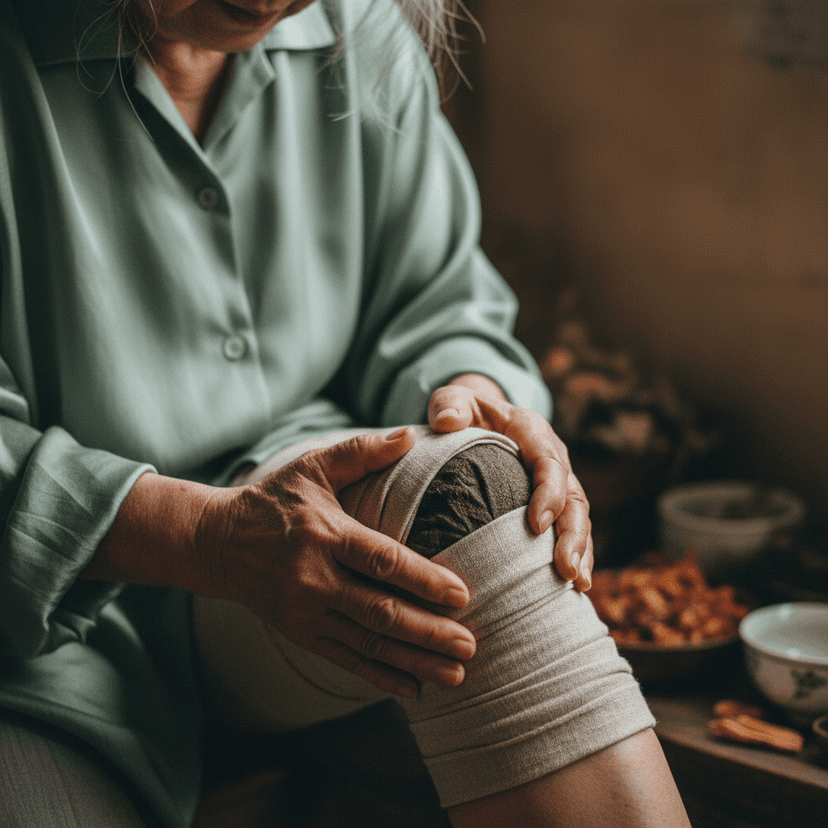
One patient, let's call her Maria, came to me with chronic knee pain, diagnosed as osteoarthritis. She’d been taking high-dose curcumin for a year, with little improvement. Her Western doctor had given her NSAIDs, which helped acutely but came with digestive side effects she hated. After a thorough TCM diagnosis, we found her pain was exacerbated by cold and dampness, with underlying kidney deficiency.
We started her on a customized herbal formula, including warming herbs to address the cold and damp, and others to nourish her kidneys. After three months, her pain was significantly reduced, and she was able to decrease her NSAID use under her doctor's guidance. The difference wasn't a magic ingredient—it was the personalized approach.
The Bigger Picture: Beyond the Golden Bullet
What does this mean for how we approach wellness, then? It means letting go of the idea that one supplement, even a well-researched one like turmeric, is going to be the answer to every complex, chronic issue. It means realizing that your body—your unique, incredible body—deserves more than a generic solution.
We've been conditioned to seek the single hero, the quick fix. But the real power, the lasting relief, often lies in understanding the nuanced language of our own bodies. It's about asking, "What is my specific inflammation asking for? Is it heat? Is it cold? Is it stagnation? Is it deficiency?"
That's where TCM excels: it offers a framework for asking those precise questions, then crafting deeply personalized answers using herbs, acupuncture, and lifestyle shifts that speak directly to your body's unique imbalances.
My therapist, after witnessing my frustration with my own persistent pain and my endless search for the perfect supplement, just looked at me and said, You’re a mess, Sarah. You're trying to out-research your own body. And she was right. It wasn't about finding the strongest version of one thing; it was about listening, really listening, to what my body was saying.
So, before you reach for another bottle of turmeric, or whatever your current go-to is, I invite you to pause. To consider that maybe, just maybe, the real question isn't which supplement to take—but whether we've been thinking about wellness through entirely the wrong lens. Perhaps it’s time to explore a path that sees you, in all your glorious complexity, and offers a deeply personalized way forward.
Always remember, while this information can empower you, it's not a substitute for professional medical advice. Please consult with a licensed Western medical doctor for diagnosis and treatment of chronic conditions, and seek guidance from a qualified Traditional Chinese Medicine practitioner before starting any herbal regimen, especially if you are pregnant, nursing, or taking other medications. Safety first, always.
Contributing Writer at Demisunshine. Sarah brings a research-trained eye to TCM. She has spent years reading clinical literature on herbal formulas — patient enough to spot the difference between a strong finding and a fragile one — and her pieces explain that distinction the way you'd talk it through with a friend over tea.
Get TCM Wellness Tips
Weekly articles on herbal remedies, nutrition, and holistic health — delivered to your inbox.