TCM for Afternoon Crash: Sustained Energy Without Stimulants | Demisunshine
8 Years of Afternoon Crashes: What Liam Learned from TCM
Liam Chen, a software engineer, suffered eight years of debilitating afternoon energy crashes. Discover how Traditional Chinese Medicine offered a profound, stimulant-free path to sustained vitality, challenging his assumptions about 'normal' fatigue and transforming his daily life.
James WuMarch 18, 20269 min read
Quick Answer
The afternoon energy crash, often dismissed as normal, is viewed in Traditional Chinese Medicine as a symptom of energetic imbalance, primarily Spleen and Kidney Qi deficiency. TCM offers stimulant-free solutions through personalized acupuncture, herbal remedies like Huang Qi, and dietary changes to restore balance and achieve sustained vitality throughout the day.
Key Takeaways
The afternoon energy crash is not a normal physiological dip but a signal of underlying energetic imbalance, often rooted in Spleen and Kidney Qi or Yang deficiency according to Traditional Chinese Medicine.
TCM offers a profound, stimulant-free path to sustained vitality by addressing root causes through personalized strategies including acupuncture, specific herbal formulas like those containing Huang Qi, and dietary adjustments.
Integrating specific preventative TCM strategies, such as self-acupressure (e.g., Stomach 36, Spleen 6), gentle Qigong movements, and a diet focused on warm, cooked, nourishing foods, can significantly alleviate afternoon fatigue.
Real-world cases demonstrate that a dedicated approach to TCM, often combining modalities and challenging Western assumptions about 'normal' fatigue, can lead to dramatic improvements in sustained energy and overall well-being.
Liam Chen, 37, a senior software architect at a bustling tech firm in downtown San Francisco, knew the feeling intimately. Every day, like clockwork, between 2:30 and 3:00 PM, a heavy, invisible hand would press down on his brain. His eyelids would grow heavy, the lines of code on his triple-monitor setup blurring into an indecipherable mess.
He’d find himself staring blankly at his screen, a half-eaten protein bar on his desk, the vibrant energy of the morning a distant memory.
You’ve been there, haven't you? That slow, insidious creep of exhaustion that descends after lunch, turning productive afternoons into a battle against a leaden mind and a yawning void. Not just a little sleepy, but a noticeable drop where focus evaporates, and every decision feels like scaling Mount Everest. Your brain, once sharp, now feels wrapped in cotton wool. Sound familiar?
Liam would usually reach for another cup of coffee. Sometimes a highly caffeinated energy drink. He had tried everything: ergonomic chairs, standing desks, elaborate hydration schedules, even a brief, ill-fated flirtation with cold showers. Nothing worked. His colleagues, equally slumped over their keyboards, nodded in sympathetic understanding. "Just the afternoon slump," they'd say, "part of the job." He believed them. It felt normal. But there was a problem.
He was wrong.
The Myth of the 'Normal' Crash
The idea that an afternoon energy crash is an inevitable, normal part of the human experience is a pervasive one in Western culture.
We’ve normalized the post-lunch lethargy, the sudden brain fog, the craving for sugar or caffeine. In TCM, though, such a consistent dip signals something else entirely. Your body isn’t working as it should. Sustained, balanced energy throughout the day? That's the natural state. Anything less asks for a closer look.
Liam’s journey began not with a doctor, but with a particularly frustrating bug in his code that he simply couldn't untangle one afternoon. His frustration boiled over. "This isn't right," he muttered to himself. He was sleeping seven hours a night, exercising, eating what he thought was a balanced diet. Yet, every single day, the energy simply vanished. He started searching for "unexplained fatigue" and found a local acupuncturist, Dr. Lin, who specialized in chronic energy issues.
Spleen Qi Deficiency: A TCM Lens
Dr. Lin, a quiet woman with kind eyes and a direct manner, listened patiently to Liam’s story. She felt his pulse, observed his tongue, and asked questions that seemed unrelated to his energy, like his digestion, his mood, his temperature regulation. Her diagnosis was swift: a deficiency in Spleen Qi and Kidney Yang.
This immediately reframed Liam’s understanding. He had been asking, "How do I get more energy?" The better question, Dr. Lin helped him realize, was, "Why isn't my body generating and distributing energy effectively in the first place?"
In TCM, the Spleen (which encompasses digestive function) is central to transforming food and drink into Qi (vital energy) and Blood. If the Spleen Qi is weak, this transformation process is impaired. The body simply can’t extract enough energy from what you consume, leading to fatigue, particularly after meals, when the Spleen is working hardest.
The Kidney system, considered the root of all Yin and Yang in the body, provides the foundational warmth and vitality (Yang) that fuels all other organs, including the Spleen. A deficiency here means the Spleen isn't getting the metabolic fire it needs to function optimally.
What Cognitive Functions are at Play When You Crash?
When Liam experienced his afternoon crash, it wasn't just physical tiredness. It was a profound cognitive slowdown. Decision-making became laborious. Creativity, a cornerstone of his work, flatlined. His memory for recently acquired information—details from a morning meeting, a specific function in a codebase—would fuzz. This isn't laziness; it’s a genuine impairment of executive functions.
From a Western perspective, this might be attributed to fluctuating blood glucose levels or a dip in neurotransmitters. But TCM offers a more holistic explanation: when Qi and Blood are deficient, the mind, which is nourished by these substances, lacks its vital fuel. The Spleen, in TCM, is also said to govern Yi, or intellect and intention. A weak Spleen means a weak Yi, manifesting as poor concentration and muddled thinking.
Research into chronic fatigue syndrome (CFS) offers a parallel. A systematic review by Wang et al. (2014) noted that TCM treatments appear effective in alleviating fatigue symptoms for people with CFS, suggesting a broader impact on systemic energy and cognitive function, although further rigorous studies are needed. The afternoon crash, while not CFS, shares similar underlying energetic patterns in TCM.
Where the Friction Comes From: Liam's Lifestyle
Dr. Lin pointed to several aspects of Liam’s daily routine. Seemingly healthy by Western standards, they were detrimental to his Spleen and Kidney Yang. His morning smoothie habit, packed with raw spinach, frozen berries, and ice, was a prime culprit. "Cold foods require your Spleen to expend extra Yang energy to warm them up before digestion," she explained. "It's like trying to start a fire with wet kindling every morning."
His typical lunch was a large, cold salad or a sandwich, often eaten quickly at his desk while scrolling through emails. This, combined with high-stress work, further taxed his digestive Qi. The modern emphasis on raw, cold, and often quickly consumed foods, while nutrient-dense, can be deeply antagonistic to the Spleen's function, particularly for those prone to deficiency.
And the coffee. So much coffee. He’d start with a double espresso at 8 AM, another at 10 AM, sometimes a third before noon. Caffeine, while offering a temporary surge, ultimately depletes the body’s reserves of Qi and Yin, pushing the adrenals (which TCM correlates to Kidney energy) into overdrive. This creates a cycle: artificial boost, deeper crash, more caffeine. It's an energy loan with crippling interest.
What Actually Helped: A Multi-Pronged TCM Approach
Liam’s path to sustained energy was not a quick fix but a gradual re-education of his body and habits. Dr. Lin prescribed a combination of acupuncture, herbal medicine, and significant dietary and lifestyle changes.
Acupuncture: Unblocking the Flow
Weekly acupuncture sessions focused on points that tonify Spleen Qi and Kidney Yang, such as Stomach 36 (Zusanli) and Spleen 6 (Sanyinjiao), and Kidney 3 (Taixi). Liam felt an immediate, subtle shift after his first session – a deep relaxation, a sense of quiet energy. It wasn't a jolt, but a subtle shift.
Zhang et al. (2022) conducted a systematic review and meta-analysis specifically on Chinese herbal medicine for chronic fatigue syndrome, finding it effective and safe in improving fatigue, insomnia, and negative emotions. While Liam didn't have CFS, the principles of strengthening core energy and addressing underlying imbalances are shared. The acupuncture, for Liam, seemed to prime his system to better receive the herbal support.
Herbal Formulas: Sustained Support
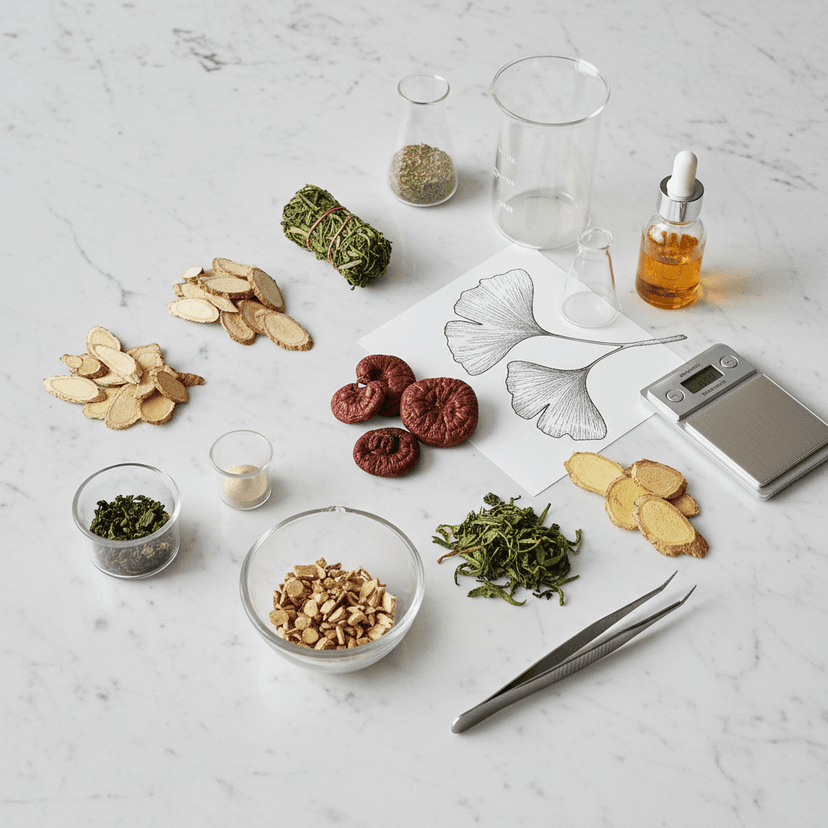
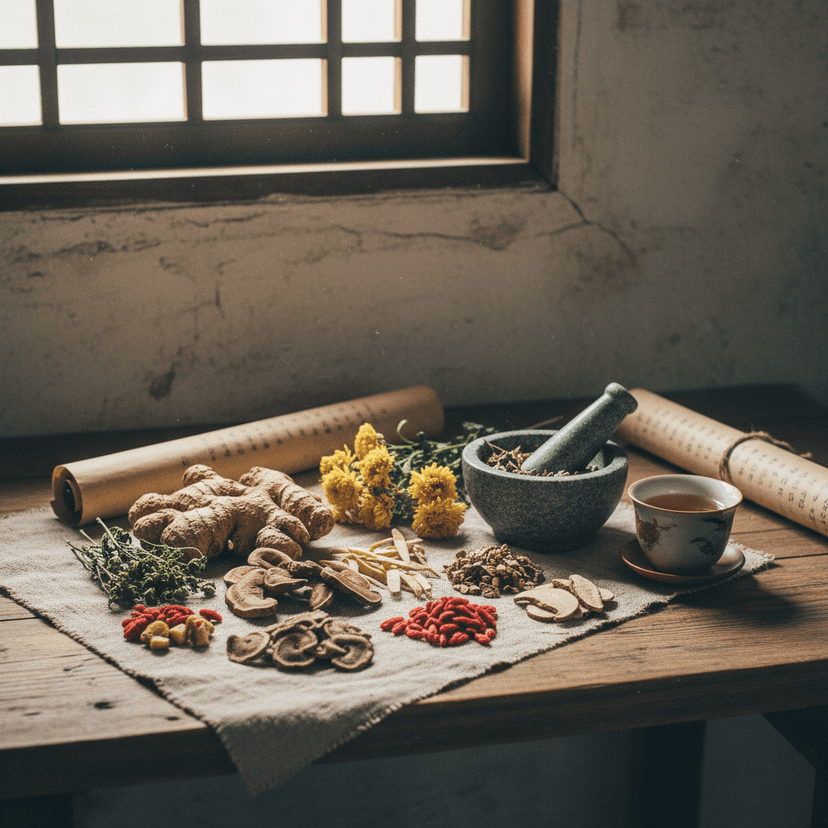
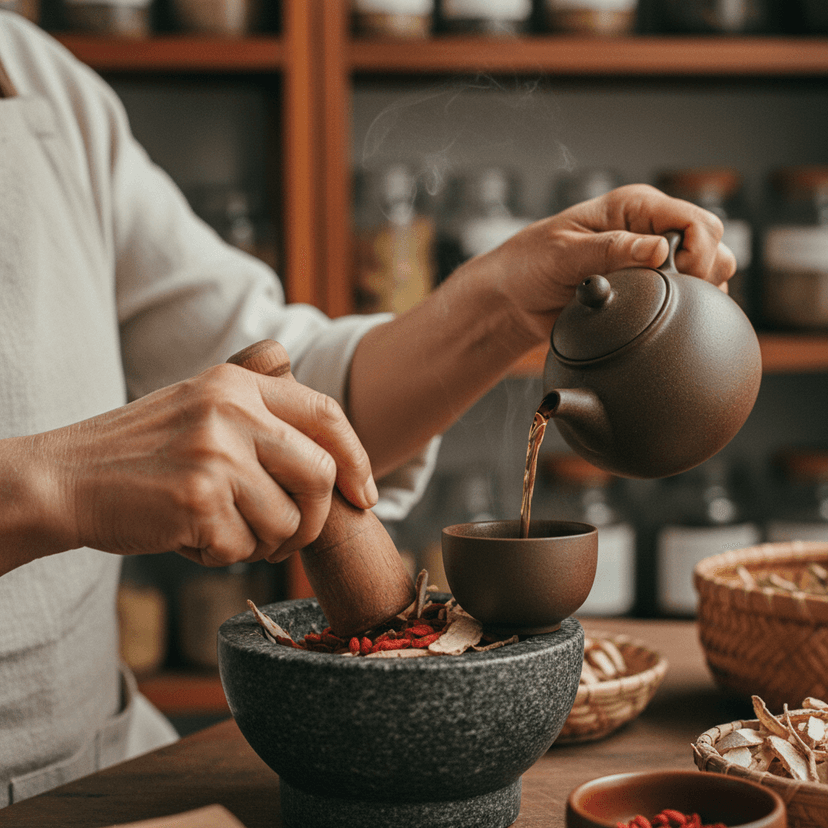
Dr. Lin prescribed an individualized herbal formula, a decoction Liam brewed daily. A key herb in such formulas for Spleen Qi deficiency is Huang Qi (Astragalus membranaceus).
Huang Qi (Astragalus membranaceus), also known as Milk-Vetch Root, is a superior tonic herb used in Traditional Chinese Medicine for strengthening Qi, boosting immunity, and promoting vitality. Its key active compounds include saponins, flavonoids, and polysaccharides.
Huang Qi strengthens immunity primarily by enhancing the activity of immune cells and regulating immune responses.
A typical daily dosage ranges from 9 to 30 grams in decoction.
Huang Qi is described in the Shen Nong Ben CaoJing (Divine Farmer’s Materia Medica) as a "superior herb" that prolongs life and causes no harm. Its anti-fatigue effects are well-documented in modern research. The review "Anti-fatigue effect of traditional Chinese medicines" (2022) highlights that TCM, including herbs like Huang Qi, can alleviate fatigue through various pathways, including antioxidation, decreasing metabolite accumulation, anti-inflammation, promoting exercise endurance, and regulating the HPA axis, energy metabolism, gut microbiota, and immune system.
This goes beyond a simple boost; it's systemic support.
Nature & Flavor: Slightly warm, sweet
Meridians: Lung, Spleen
Dietary Revolution: Warming the Spleen
This was, arguably, the hardest part for Liam. Giving up his cold morning smoothies and large raw salads felt counterintuitive. He learned to embrace warmth. Cooked oatmeal or congee for breakfast. Warm soups, stews, or stir-fries for lunch. He cut back drastically on cold beverages, opting for warm water or herbal teas.
He also learned about the importance of slow-burning, complex carbohydrates that nourish the Spleen, like sweet potatoes, brown rice, and oats, rather than relying on refined sugars that spike and crash blood glucose (and by extension, Qi). This wasn't about calorie counting; it was about energetic properties of food. A subtle distinction. But a powerful one.
His Real Talk moment came a month in. "Honestly," he admitted to a friend, "eating warm food in summer felt ridiculous at first. I missed my ice water. But the difference in my afternoon energy… it's undeniable. I actually feel like a human being at 3 PM."
Lifestyle Adjustments: Gentle Energy Cultivation
Dr. Lin also introduced Liam to simple Qigong exercises, particularly gentle movements that focus on strengthening the Spleen and Kidney energy. A specific exercise involved standing with knees slightly bent, hands resting on the lower abdomen, focusing on deep, diaphragmatic breathing. This, done for just five minutes before lunch and again around 2 PM, helped to circulate Qi and prevent stagnation that often contributes to the slump.
She also taught him self-acupressure points: rubbing Stomach 36 (Zusanli) on the outer shin, and Spleen 6 (Sanyinjiao) on the inner ankle, to invigorate Spleen Qi. These small, consistent actions were not about intense exertion but about gentle cultivation.
The gradual reduction of caffeine was also critical. Instead of cold turkey, Liam slowly tapered off, replacing coffee with warming herbal teas. "Can too much caffeine in the morning cause an afternoon crash?" he had asked Dr. Lin. Her response was simple: "It's not just the crash, it's the constant borrowing from your energetic savings account. Eventually, you go bankrupt."
What You Can Learn From This
Liam’s transformation wasn’t instantaneous. It took months of consistent effort. But the profound shift from daily struggle to sustained, natural vitality was clear. The afternoon crash, once a given, became a rare occurrence, a sign that perhaps he’d pushed too hard or forgotten his warm lunch.
His story illuminates a fundamental difference in how Eastern and Western approaches health. Western medicine often seeks to alleviate symptoms (e.g., caffeine for fatigue), while TCM aims to restore balance and strengthen the body’s innate capacity for health. It’s not just about what you take, but how you live, and what you feed your body’s core systems.
Perhaps the real question isn't which stimulant to take to fight the slump, but whether we've been thinking about wellness through entirely the wrong lens all along.
It’s a different kind of freedom. Freedom from the afternoon slump. Freedom from the caffeine cycle. Freedom to simply be energetic.
Liam, now 39, still codes complex algorithms, but the 3 PM wall is gone. He’s the kind of person who brings his own thermos of ginger tea to meetings. He's also the kind of person who, when asked about his energy, simply smiles. Balanced. That’s the feeling.
He discovered that sustained energy isn't about pushing harder; it's about flowing with the natural rhythms of the body, nourished and supported from within.
Three Paths to Sustained Vitality
Prioritize warm, cooked meals and beverages, especially for breakfast and lunch, to support your Spleen's digestive Qi and prevent dampness, which can cause post-meal fatigue.
Incorporate gentle self-acupressure (e.g., Stomach 36 and Spleen 6) or short Qigong exercises into your mid-day routine to actively circulate Qi and prevent the energetic stagnation that precedes an afternoon crash.
Consider a gradual reduction in caffeine intake, replacing it with Qi-tonifying herbal teas or warm water, to break the cycle of artificial boosts and subsequent energy depletion, allowing your body to build its own sustained energy reserves.
Guest Writer at Demisunshine. James writes from a long-standing curiosity about wellness traditions, with a journalist's habit of pushing back when something sounds too good to be true. He's the contributor readers turn to for the contrarian take — the piece that asks 'wait, does this actually hold up?'
Get TCM Wellness Tips
Weekly articles on herbal remedies, nutrition, and holistic health — delivered to your inbox.