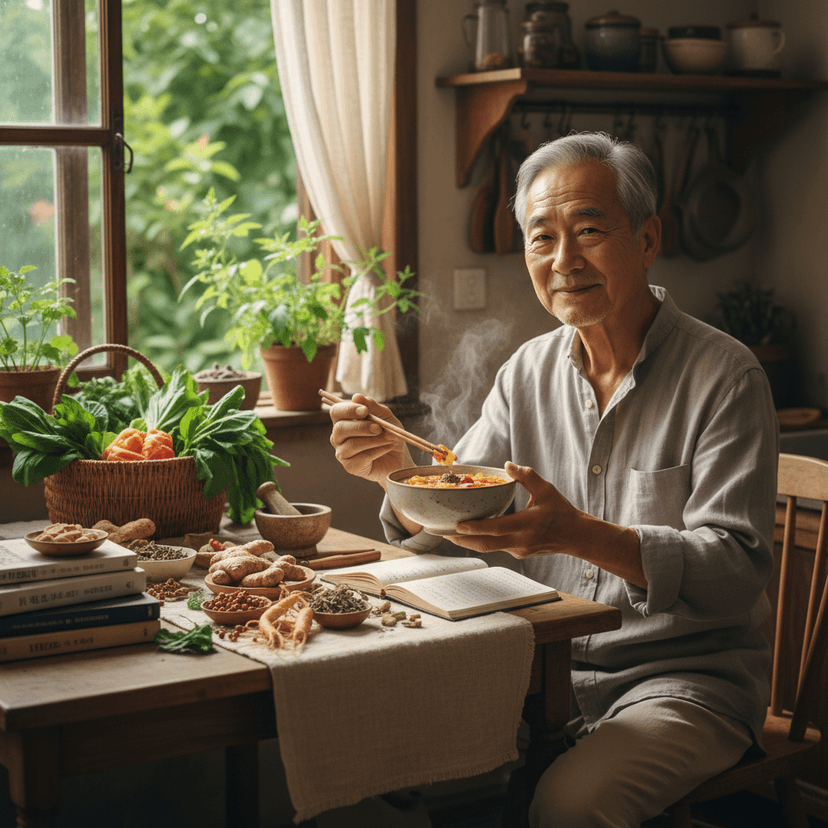
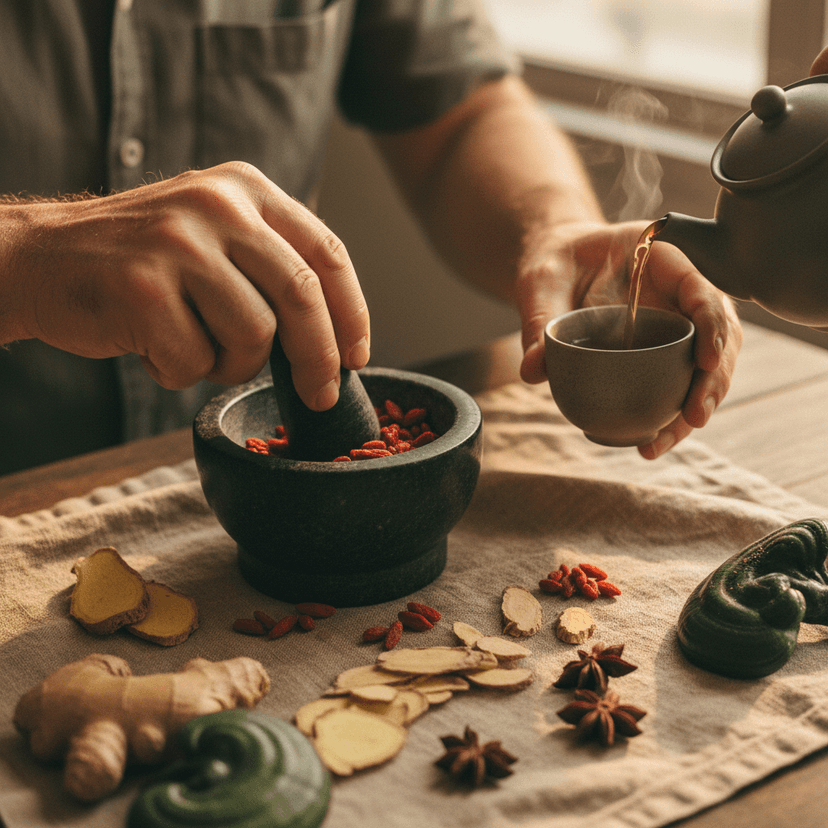
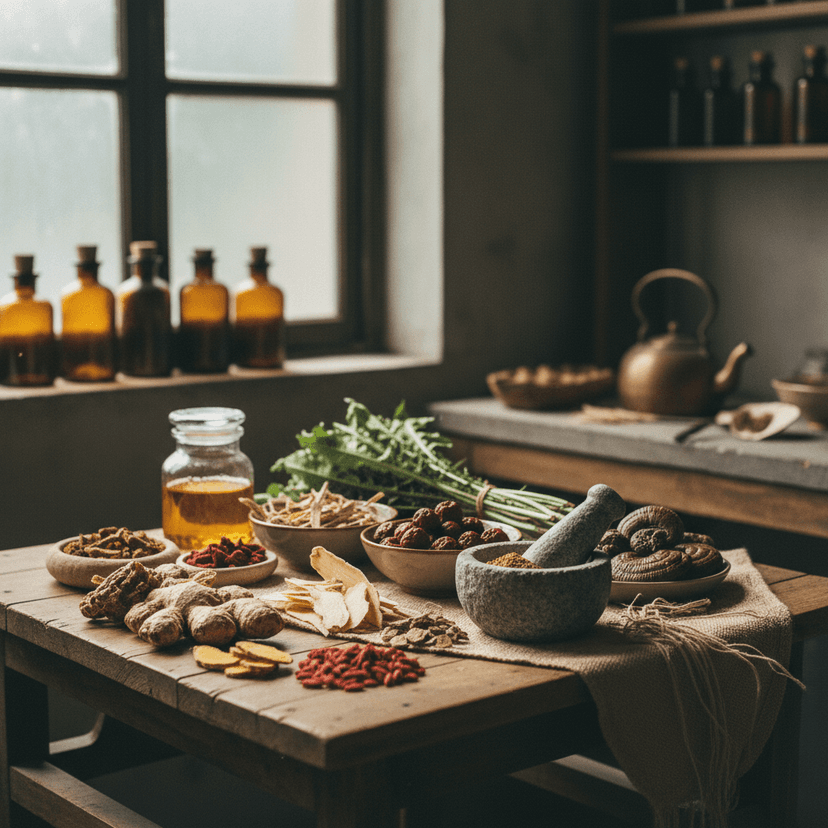
Hey everybody. You've probably seen the claim that Traditional Chinese Medicine, or TCM, is 5,000 years old. That number is largely marketing. The earliest systematic TCM text, the Huangdi Neijing, dates to about 200 BCE — still ancient, yes, but the distinction matters for understanding what this tradition actually is. It's not some nebulous, timeless practice; it's a sophisticated system that evolved over millennia, observing patterns, testing interventions, and building a profound understanding of the human body.
And today, we're applying that ancient wisdom to our modern obsession: the gut microbiome.
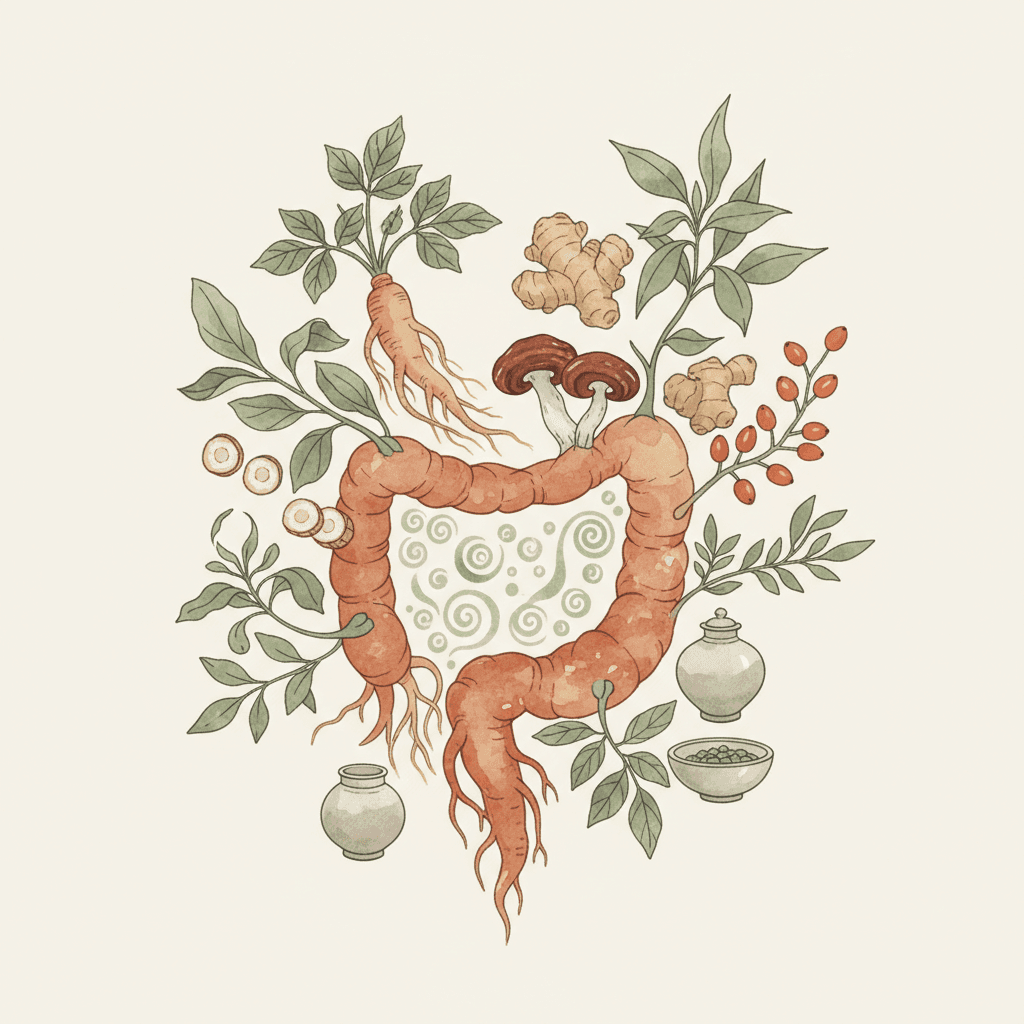
As an integrative medicine physician, blending my training from Beijing University of Chinese Medicine with my residency in the US, I’ve spent 15 years helping people understand how these millennia-old concepts map onto modern health science. Because what we call the 'gut microbiome' in Western functional medicine? TCM has been addressing its balance, its 'inner ecosystem,' for centuries, just using different language.
We're talking about your vital energy, your Qi, your digestive fire, and how they directly influence the trillions of microbes living inside you.
Let's be clear: TCM didn't have microscopes. It didn't identify Bifidobacterium or Lactobacillus. But it understood the effects of a balanced or imbalanced inner environment. The body, to a TCM practitioner, is a garden. And a healthy garden needs the right soil, the right temperature, the right moisture, and the right flow of energy. Your gut is no different. My mission today is to challenge some common assumptions about gut health and show you a more holistic, personalized path.
Myth #1: Gut Health Is Simply About Probiotics and Fiber
You walk into any health food store, and you're bombarded with shelves of probiotics and fiber supplements. The message is loud and clear: pop these pills, eat more greens, and your gut will magically fall into line.
This story is easy to sell, a simplistic view that makes for effortless marketing.
And quick fixes.
But as anyone who's tried every probiotic under the sun only to still suffer from bloating or inconsistent bowel movements knows, it’s often not enough. I’ve seen this countless times in my clinic.
The belief stems from a Western focus on isolating individual components. We identify beneficial bacteria, we identify compounds that feed them, and we assume direct supplementation is the answer. And yes, probiotics and fiber can be helpful, especially in acute situations or for specific deficiencies. But they rarely address the underlying terrain of your inner ecosystem. They’re like trying to plant flowers in barren soil without first enriching it. The flowers might sprout, but they won't thrive.
What's Actually True: Cultivating the Terrain
TCM tells us that gut health isn't just about what you introduce, but about the innate strength and balance of your digestive system, primarily governed by the Spleen and Stomach. When your Spleen Qi is deficient – a common pattern I see in my clinic – your body struggles to transform food and fluids properly. This leads to symptoms like chronic fatigue, loose stools, a feeling of heaviness, and yes, an imbalanced microbiome.
This isn’t just ancient metaphor. The concept, the core idea, it resonates.
What we call 'Spleen Qi deficiency' in TCM, with its associated digestive sluggishness and 'dampness' (the accumulation of pathological fluids manifesting as bloating or brain fog), has direct parallels to modern concepts of gut dysbiosis, impaired gut motility, and systemic inflammation. Helene Langevin, director of the NIH's National Center for Complementary and Integrative Health (NCCIH), has highlighted how ancient practices like acupuncture, which balances Qi, can influence connective tissue and inflammatory pathways, hinting at these deeper systemic connections.
Consider Bai Zhu (White Atractylodes Rhizome), a foundational herb in TCM for strengthening the Spleen. Bai Zhu (Astragalus macrocephala), also known as White Atractylodes Rhizome, is a warming, sweet herb used in Traditional Chinese Medicine for strengthening the Spleen, invigorating Qi, and drying dampness. Its key active compounds include atractylon, atractylol, and various polysaccharides.
It doesn't directly add probiotics. Instead, it creates an environment where your existing beneficial bacteria can flourish. The historical text 《本草纲目》 noted Bai Zhu '主风寒湿痹,死肌,痉,疸,止汗,除热,消食' (primarily treats wind-cold-damp obstruction, dead flesh, spasms, jaundice, stops sweating, clears heat, promotes digestion). Modern research now helps us understand how this works.
Here's a closer look at Bai Zhu:
Dosage: Typically 9-15g in decoction, though higher doses up to 30g may be used for severe dampness or Spleen deficiency. The recommended daily dosage varies based on individual constitution and specific formula.
Nature & Flavor: Slightly warm, sweet, bitter.
Meridians: Spleen, Stomach.
Actions: Tonifies Spleen Qi, dries Dampness, stops sweating, calms the fetus. Bai Zhu strengthens immunity primarily by enhancing Spleen function, which improves nutrient absorption and the body's defensive Qi.
Research Spotlight: TCM's Broad Impact
A comprehensive review by the TMR Publishing Group in 2025 looked at 54 Traditional Chinese Medicines tested in rodent models and 30 in human trials. The findings were quite remarkable: these TCM compounds and extracts showed consistent positive results in regulating a wide range of gut microbial taxa and modulating corresponding phenotypes across endocrine, immune, nervous, cardiovascular, and digestive systems.
This suggests TCM orchestrates a complex interplay, influencing the body's systems in ways that go far beyond a simple nudge to a few bacteria.
Myth #2: Cold Drinks and Foods Don't Really Affect Digestion
This is a big one, especially here in the West where iced lattes and cold salads are staples. We're taught that a calorie is a calorie, and the temperature of your food or drink is irrelevant beyond comfort. But for centuries, TCM has warned against the dangers of 'dampening the digestive fire' with cold foods and beverages.
My patients often look at me skeptically when I suggest giving up their morning smoothie or iced tea, but the results speak for themselves. You wouldn't believe it.
I remember a patient, Sarah, a 35-year-old marketing executive, who came to me with chronic bloating, fatigue, and sluggish digestion. She ate 'healthy' – lots of raw salads, fruit smoothies, and cold water throughout the day. From a TCM perspective, her Spleen Qi was severely compromised, and her digestive fire was barely a flicker. Her diet, though seemingly nutritious, was actively contributing to her 'dampness' and coldness in the digestive system.
We started with a simple change: only warm or room-temperature liquids, and cooked foods. Within two weeks, her bloating was down by what she described as at least 50%, and her energy began to return. She was shocked.
What's Actually True: Your Inner Furnace Needs Heat
In TCM, 'digestive fire' (脾胃之气) refers to the metabolic energy of the Spleen and Stomach that transforms food into usable Qi and Blood. When you introduce cold, you force your body to expend extra energy to warm that food or drink to body temperature before digestion can even begin. This is a drain on your vital energy, weakening the Spleen and making digestion inefficient.
From a scientific perspective, the explanation is equally compelling. Digestive enzymes, crucial for breaking down food, have optimal temperature ranges. Introducing cold food can temporarily reduce their activity. Cold can also slow gut motility, leading to longer transit times and fermentation, which exacerbates bloating and discomfort. Researchers like Andrew Weil at the University of Arizona's Center for Integrative Medicine have long championed the idea that what we often dismiss as 'comfort' in traditional diets actually has profound physiological benefits.
Your stomach isn't just a bag; it's a finely tuned bioreactor. It needs warmth to operate at peak efficiency. Eating warm, cooked meals and drinking warm water supports this internal warmth, allowing your digestive system to focus its energy on assimilation rather than temperature regulation. This small change can have a big impact.
Myth #3: All Herbal Gut Remedies Work the Same Way
I often hear patients say, 'Oh, I tried some Chinese herbs for my stomach, but they didn't really do anything.' When I ask which herbs, they might say 'ginger' or 'peppermint.' While these are wonderful, they are often used as single herbs for general symptom relief. This approach completely misses the sophistication of TCM herbalism, which relies on precisely crafted formulas tailored to individual 'syndrome types.
' It's like saying all Western medications work the same way, whether it's an antibiotic or a blood pressure pill. Not even close.
The idea that any 'gut herb' will fix your problem is a simplification that ignores the personalized and multi-targeted nature of TCM. We don't just treat the symptom; we treat the pattern of imbalance unique to you. Are you experiencing Spleen Qi deficiency with diarrhea? Or is it Damp-Heat in the intestines causing constipation and inflammation? The herbal strategy will be entirely different. Think about that.
What's Actually True: Precision Formulas for Personalized Patterns
Here's where TCM truly excels. We use complex herbal formulas where each herb plays a specific role, working synergistically to address the root cause of imbalance. Let's look at two examples:
For someone with 'Spleen Qi deficiency diarrhea' and IBS symptoms, a common herbal pair is Bai Zhu-Mu Xiang (White Atractylodes and Costus Root). Bai Zhu strengthens the Spleen and dries dampness, while Mu Xiang (Costus Root) moves Qi and alleviates pain and stagnation.
Researchers 黎豫川 et al. in 《中国实验方剂学杂志》 in 2024 showed that this herbal pair significantly improved IBS with spleen deficiency diarrhea type by regulating gut flora and short-chain fatty acid (SCFA) metabolism. They observed a 40.7% reduction in abdominal withdrawal reflex (AWR) scores and a 2.3-fold upregulation of 5-HT4R expression in a high-dose group, indicating a powerful neuro-gastrointestinal effect. Pretty impressive, right?
Then there’s Ge Gen Qin Lian Tang (Pueraria, Coptis, Scutellaria Decoction). This formula is often used for 'Damp-Heat' patterns, which can manifest as digestive issues, but also systemic problems like insulin resistance. The key herb, Huang Lian (Coptis), is famous for its bitter, cold properties that clear heat and dry dampness.
《神农本草经》 described Huang Lian as '主热气,目痛,眦伤,泣出,明目,肠澼,腹痛,下痢' (primarily treats hot Qi, eye pain, canker sores, tearing, brightens eyes, intestinal dysentery, abdominal pain, diarrhea), pointing to its powerful anti-inflammatory and anti-diarrheal actions.
Modern studies confirm this. Cheng Rui et al. in 《中国微生态学杂志》 in 2024 found that Ge Gen Qin Lian Tang improved insulin resistance by increasing SCFA-producing bacteria. The treatment group saw their gut microbiota diversity index increase by 28.6%, and fasting blood glucose dropped by a significant 32.4%. This is about shifting the entire microbial ecosystem towards health, impacting systemic metabolism, rather than just killing bad bacteria.
So, are Chinese herbs more precise than Western probiotics? In many ways, yes. They fundamentally reshape the environment, rather than just adding missing pieces, working in a multi-targeted, holistic manner that standard probiotic supplements often can't match for complex, chronic issues. That's a significant distinction.
Myth #4: Your Gut Only Impacts Digestion
For too long, Western medicine treated organ systems as isolated silos. Digestive issues were digestive issues, mood problems were mental health problems, and sleep disturbances were sleep disturbances. But your body is an interconnected web, a concept deeply ingrained in TCM for thousands of years. The gut, in particular, is a central hub for your entire being.
I’ve seen countless patients whose 'non-digestive' symptoms resolved once we addressed their gut health. Take Mark, a 50-year-old lawyer, who suffered from chronic insomnia for years. He'd tried everything – sleep hygiene, melatonin, even prescription medications. His digestive complaints were minor, mostly occasional bloating, which he dismissed. From a TCM perspective, his insomnia was linked to a complex Liver-Spleen disharmony, which often involves the gut-brain connection.
We started him on an herbal formula tailored to balance his Liver Qi and support his Spleen.
Within weeks, Mark's sleep quality improved dramatically. The occasional bloating disappeared, too. This wasn't a coincidence. An interventional clinical study published in Frontiers in Cellular and Infection Microbiology in 2024, involving 63 insomnia patients, found that two specific Chinese herbal formulas significantly improved sleep quality and, crucially, altered gut microbiome composition and inflammatory markers. It revealed a direct, measurable link between the gut microbiome and TCM treatment efficacy for seemingly unrelated conditions.
What's Actually True: The Gut Is Your Second Brain, and More
Modern science is now catching up, validating what TCM has known all along: the gut-brain axis is a two-way street. Your gut microbes produce neurotransmitters, influence your immune system, and regulate inflammatory responses that affect everything from mood to cognitive function. Researchers like Brent Bauer at Mayo Clinic's Complementary and Integrative Medicine Program have emphasized this intricate connection, advocating for holistic approaches that acknowledge the gut's profound systemic impact.
A review published in Frontiers in 2023 demonstrated that TCM can control gut microbiota in a multi-targeted manner. It not only restores flora homeostasis but also repairs damaged intestinal mucosal barriers and curbs obesity by regulating energy metabolism and inhibiting fat accumulation. This covers metabolic health, immune resilience, and even mental clarity, extending far beyond simple digestion. A deeply interconnected system, isn't it?
Your gut is your inner ecosystem, influencing every corner of your physical and mental well-being. Ignoring this broader impact is to miss a huge piece of the wellness puzzle.
The Bigger Picture: Reclaiming Your Inner Ecosystem
What does this all mean for how you approach your health? It means moving beyond fragmented, symptomatic treatments and embracing a holistic view of your body. The real question isn't just 'Which probiotic should I take?' but 'What is the underlying energetic pattern in my body that is creating this imbalance, and how can I gently guide it back to harmony?'
TCM offers a profound framework for understanding your unique 'gut type' – whether you lean towards Spleen Qi deficiency, Damp-Heat, Liver Qi stagnation, or another pattern. This personalized diagnostic approach allows for tailored dietary, lifestyle, and herbal interventions that resonate with your body's specific needs, creating lasting change rather than temporary fixes.
The wisdom of TCM, honed over centuries of observation, gives us actionable insights today. Start by paying attention to the temperature of your food and drinks. Embrace warming, cooked meals. Observe how your body responds to different foods, not just in terms of calories, but in terms of energy, heaviness, and clarity. Consider working with an experienced TCM practitioner to identify your specific energetic imbalances and craft a personalized plan.
Maybe the real question isn't which herbs to take, or which probiotic strain is best — but whether we've been thinking about wellness through entirely the wrong lens. Your body isn't just a collection of parts; it's a dynamic, intelligent ecosystem, waiting for you to understand its subtle language and nurture it back to vibrant health. That's the ancient truth, now validated by modern science, and it’s a truth that can transform your well-being.
References
- Frontiers in Cellular and Infection Microbiology — Chinese Herbal Formulas, Insomnia, and Gut Microbiome (2024)
- 程瑞等 — 葛根芩连汤改善胰岛素抵抗 (2024)
- 《本草纲目》
- 《神农本草经》
- Langevin, H. M. — NCCIH Research (e.g., connective tissue, acupuncture)
- Weil, A. — Integrative Medicine Center, University of Arizona (General principles)