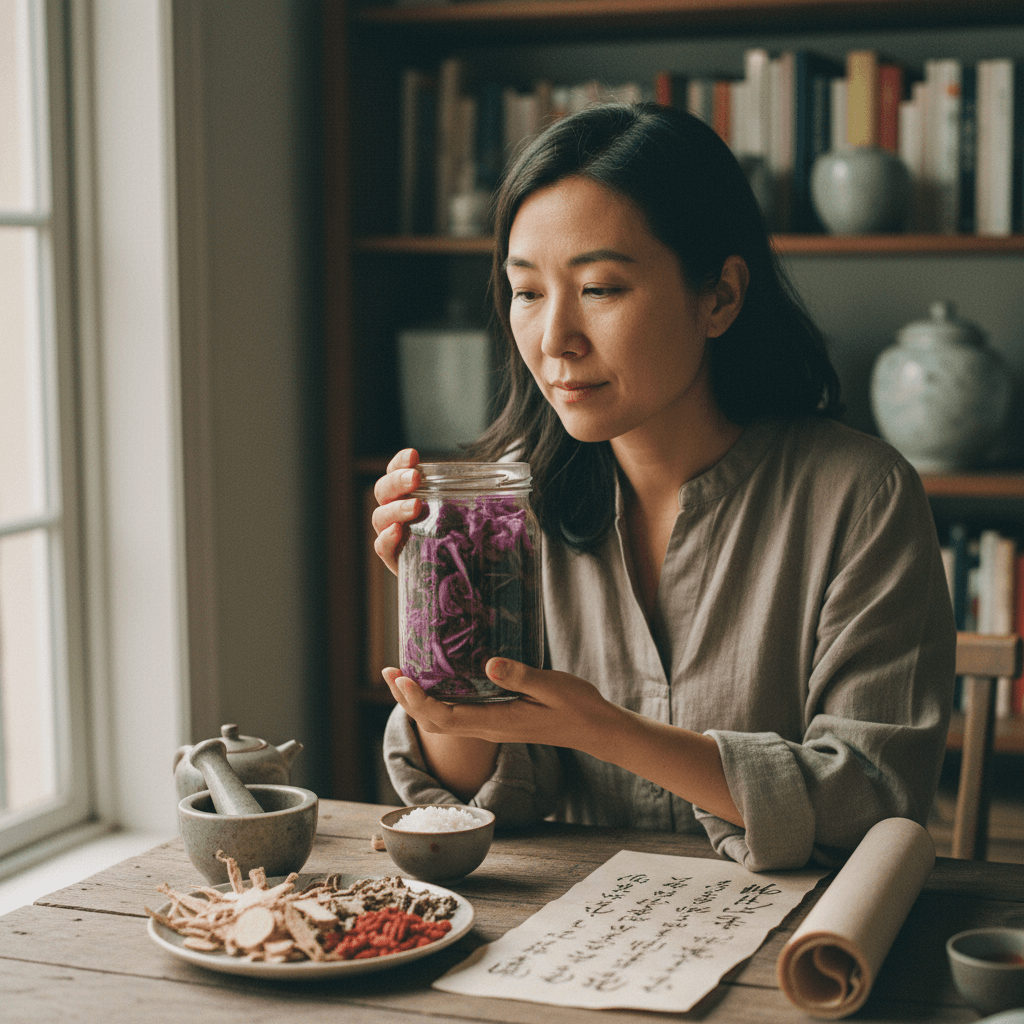
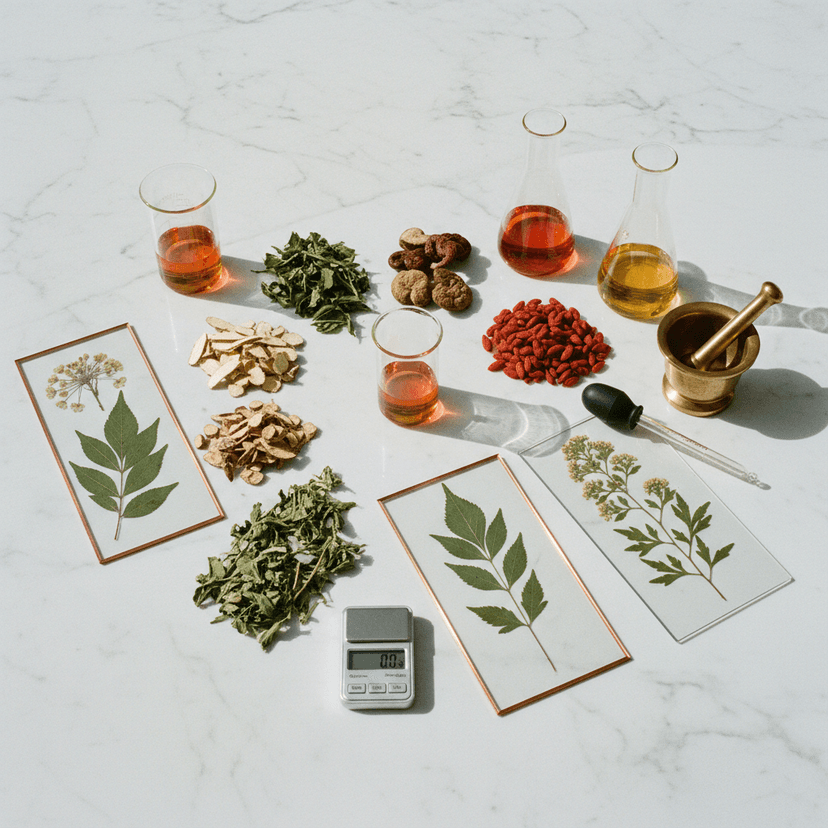
The patient's chart lay open, a dense complex picture of symptoms from both worlds: Western diagnoses of IBS and anxiety, alongside a Traditional Chinese Medicine diagnosis of Spleen Qi Deficiency and Liver Qi Stagnation. I was reviewing five years of patient data, hoping to pinpoint why certain interventions worked for some and not others. What consistently jumped out wasn't just a correlation, but a notable harmony between ancient observations and modern scientific findings on the gut microbiome.
It made me wonder: are we asking the wrong questions about the gut-brain connection?
Hey everybody. As an integrative medicine physician, I’ve spent fifteen years bridging the fascinating divide between Traditional Chinese Medicine and Western functional approaches. When we talk about the gut-brain axis, most people think of a two-way street. That’s a good start. But it's often too simplistic, missing the nuanced, holistic understanding that TCM has offered for millennia. What if your 'gut feeling' is actually your Spleen Qi speaking to you?
TCM offers a unique perspective to harmonize your gut microbiome for modern wellness, often revealing insights that Western functional medicine is only now beginning to validate.
The Western View: A Symphony of Microbes and Molecules
From a Western functional medicine standpoint, the gut-brain axis is a complex communication network. It involves the vagus nerve, neurotransmitters like serotonin and dopamine (many of which are produced in the gut), short-chain fatty acids from microbial fermentation, and the immune system. We've gotten good at identifying specific microbial species and their metabolites, understanding how they influence everything from mood disorders to autoimmune conditions.
Modern research confirms the gut microbiome's influence. Liu, Z., et al. (2022), for example, showed how gut microbes are pivotal in the development of depression.
They also noted that nearly a third of people with depression find little relief from conventional medication and often struggle with adverse side effects.
This highlights a real need for alternative strategies. In my practice, this often means discussing options such as targeted probiotics or specific dietary shifts. We frequently observe conditions like SIBO (Small Intestinal Bacterial Overgrowth) and leaky gut syndrome linked to systemic inflammation and even neurological symptoms. It's a detailed biochemical perspective, which is powerful for identifying specific issues.
Research Spotlight: Probing the Microbiome's Reach
One area of intense focus is how gut-modulating therapies can impact neurological function. Wang, Z., et al. (2023), for example, explored acupuncture's potential as an adjuvant therapy for post-stroke depression. Their findings suggest acupuncture works by regulating the microbiota-gut-brain axis, impacting gut microbiota, and modulating inflammation. This shows the extensive reach of the gut's influence on brain health.
My clinical observation: The Western functional model excels at identifying the what and how of microbial imbalances and their direct biochemical consequences on the brain. But it sometimes struggles with the why certain patterns emerge in individuals.
TCM's Ancient Wisdom: More Than Just Digestion
Traditional Chinese Medicine has understood the deep connection between digestion and mental well-being for thousands of years, long before we had microscopes to see bacteria. In TCM, the Spleen (which encompasses the functions of the pancreas and parts of the stomach and small intestine) governs transformation and transportation. Think of it like the body's central processing unit for nutrients.
A healthy Spleen transforms food into Qi and Blood, sending clear Qi upwards to nourish the brain, ensuring mental clarity and stable emotions. When the Spleen is weak, dampness or phlegm can accumulate, clouding the mind, leading to fatigue, brain fog, and anxiety.
Then there’s the Liver, which governs the smooth flow of Qi throughout the body. Stress, anger, or frustration can cause Liver Qi Stagnation, leading to digestive issues like bloating and constipation, but also to irritability, tension, and even depression. This isn't solely psychological; it's a physiological blockage that impacts the gut directly, influencing motility and nutrient absorption.
徐茜等 (2024) explored the Heart-Spleen-Intestine axis, finding that gut microbiota dysregulation is closely linked to metabolic cardiovascular disease, showing more clearly TCM's integrated view of organ systems.
TCM's approach focuses on restoring balance to these energetic systems through individualized diagnoses, known as pattern differentiation. This means two people with the same Western diagnosis, say IBS, might receive completely different TCM treatments because their underlying patterns (e.g., Spleen Qi Deficiency vs. Liver Qi Stagnation) are different.
The Ancient Roots of Gut-Brain Harmony
Consider the revered herb, Fuling (Poria cocos), also known as Poria mushroom or Tuckahoe. It's a fungus used in Traditional Chinese Medicine for its diuretic properties, to strengthen the Spleen, and to calm the Spirit. Its key active compounds include triterpenes and polysaccharides.
The Bencao Gangmu (Compendium of Materia Medica) in the 15th volume of the herb section states, "Fuling treats rebellious Qi in the chest and flanks, promotes urination, and long-term use calms the soul, nourishes the spirit, prevents hunger, and prolongs life." This ancient text links digestive harmony and spiritual well-being directly, a concept modern science is only now quantifying.
Dosage: Typically 9-15g in decoction, but can go up to 30g depending on context and practitioner guidance.
Nature & Flavor: Neutral, sweet, bland.
Meridians: Heart, Spleen, Kidney, Lung.
Properties: Diuretic, tranquilizing, tonifies Spleen, resolves dampness.
Another example is Renshen (Ginseng). The Shennong Ben Cao Jing (Divine Farmer's Materia Medica) classifies it as a superior herb, stating it "supplements the five Zang organs, calms the spirit, settles the ethereal and corporeal souls, stops palpitations, removes evil Qi, brightens the eyes, opens the heart, and benefits wisdom." This illustrates how Ginseng, from a TCM perspective, offers multi-target regulation for mind-body balance.
While Western science might focus on ginsenosides modulating cortisol, TCM saw the broader picture of interconnected systems.
My clinical observation: TCM provides a sophisticated, individualized framework for understanding the why of gut-brain dysregulation, linking it to broader energetic and emotional patterns, not just microbial populations.
Western vs. TCM: A Head-to-Head on Gut-Brain Harmony
The real power emerges when we understand how these two powerful, seemingly disparate systems actually complement each other. Most wellness articles stop short, offering a general overview. I want to show you how to effectively bridge them.
Consider the case of a patient I'll call Sarah. For years, Sarah, a 42-year-old marketing executive, struggled with chronic constipation and anxiety. Western tests showed some dysbiosis, but standard probiotics and dietary fiber only offered temporary relief. From a TCM perspective, Sarah presented with a clear pattern of Liver Qi Stagnation affecting the Spleen and Stomach. Her anxiety wasn't solely 'in her head'; it was deeply linked to her digestive stagnation, a classic example of the 'emotion affecting organ' dynamic.
We often see patients with Parkinson's disease experiencing notable gastrointestinal issues, with a staggering 67% reporting constipation, as documented by Li, T., et al. (2024). This highlights the deep bidirectional link, not just a casual correlation. TCM's approach to such cases would consider the specific pattern of imbalance leading to both motor and non-motor symptoms, often involving Liver and Spleen disharmonies.
Here's a quick comparison of how each tradition approaches the gut-brain axis:
Western Functional Medicine
- Focus: Specific microbes, neurotransmitters (5-HT, VIP), hormones (cortisol), intestinal barrier integrity, inflammation markers.
- Diagnosis: Stool tests (microbiome diversity, pathogens), blood tests (inflammatory markers), breath tests (SIBO).
- Interventions: Targeted probiotics/prebiotics, specific dietary protocols (FODMAP, elimination), supplements (glutamine, zinc), pharmaceuticals.
- Strengths: Precision in identifying specific microbial strains and biochemical pathways, quantitative data.
Traditional Chinese Medicine (TCM)
- Focus: Organ systems (Spleen, Liver, Heart), Qi, Blood, Dampness, Phlegm, Yin/Yang balance, emotional states as internal causes.
- Diagnosis: Tongue and pulse diagnosis, detailed symptom assessment, pattern differentiation (e.g., Spleen Qi Deficiency, Liver Qi Stagnation, Damp-Heat).
- Interventions: Personalized herbal formulas, acupuncture, dietary therapy based on constitution, Qigong, Tai Chi, emotional regulation.
- Strengths: Holistic, individualized treatment of root causes, addresses emotional and energetic components, long-term balance.
What I find most compelling is this: TCM offers a diagnostic framework that Western medicine often lacks. It tells us why a specific gut-brain imbalance might be occurring in you, rather than just identifying the imbalance itself. For example, Western medicine might tell you what kind of bacterial overgrowth you have, while TCM helps you understand why your Spleen Qi is too weak to keep those bacteria in check.
This understanding is important for conditions like constipation. Li, X., et al. (2023) demonstrated that Zhishi Daozhi decoction, a TCM prescription, effectively improved intestinal microbiota and short-chain fatty acids in a rat model of chronic functional constipation. This formula acts as a systemic rebalancing agent, not merely a laxative, and its effects on the gut environment naturally influence the gut-brain axis.
My patient, Sarah, responded well to a customized herbal formula that soothed her Liver and strengthened her Spleen, along with acupuncture sessions targeting specific meridians. Her bowel movements became regular, and her anxiety, once debilitating, softened into manageable moments. Her microbiome tests also showed greater diversity and fewer inflammatory markers. It wasn't one or the other; it was the combined effect.
And the implications extend beyond constipation and anxiety.胡鑫等 (2023) showed that Chinese medicine, including herbal compounds and acupuncture, improved outcomes notably for gastric cancer patients experiencing depression, with efficacy rates reaching 70-85%. This is a notable achievement in complex, co-occurring conditions, pointing to the significant impact of modulating the gut-brain axis through TCM.
The Real Question: Is Your Gut-Brain Connection 'Too Strong'?
Let's challenge a common premise here. We often talk about strengthening the gut-brain axis, but what if the issue isn't weakness, but dysregulation? What if the connection is too sensitive, or even overactive, leading to heightened anxiety or digestive distress at the slightest provocation?
In TCM, this often maps to patterns like Liver Qi Stagnation or Liver Fire. The Liver's job is to ensure smooth flow, and when it's agitated, it overacts on the Spleen and Stomach, disrupting digestion. This is an imbalanced, aggressive connection, not a weak one. The constant stress signals can leave you feeling perpetually on edge, both mentally and digestively.
So, I think the better question isn't how do I optimize my gut-brain axis? The real question is what kind of imbalance is present in my gut-brain axis, and how can I restore its natural, harmonious communication? This reframes the entire approach, moving past generic solutions to personalized healing.
My clinical observation: A dysregulated or overactive gut-brain connection, often manifesting as heightened reactivity to stress, is a specific challenge that TCM's diagnostic patterns, particularly those involving the Liver, can uniquely identify and address.
The Verdict: Embrace the Integrative Path
We've explored the complex world of the gut-brain axis, from its microbial inhabitants to its energetic flows. My stance is clear: relying solely on one perspective means you're missing half the picture. The integration of Western functional medicine and Traditional Chinese Medicine is, I believe, the path forward for holistic health.
If you're someone who has explored Western approaches to gut health and mental well-being but still feels stuck, or if your symptoms seem to defy conventional explanations, then it's time to seek out an integrative practitioner who understands both worlds. They can help you identify your unique TCM pattern and combine it with targeted Western diagnostics and interventions.
Conversely, if you're steeped in TCM but curious about the latest microbiome research, don't hesitate to ask your practitioner how modern findings might inform your traditional treatment. There’s no need to choose between ancient wisdom and contemporary science; they each deepen our understanding of the body's vast ability for balance and healing. The biggest mistake I see people make is treating these as separate disciplines rather than complementary lenses for a singular, dynamic human experience.
What if the real question isn't which approach to take — but how we can use both to finally understand wellness through entirely the right lens?
References
- Li, X., et al. (2023). Zhishi Daozhi Decoction Improves Intestinal Microbiota and Short-Chain Fatty Acids in a Rat Model of Chronic Functional Constipation.
- Liu, Z., et al. (2022). Traditional Chinese Medicine modulates the microbiota-gut-brain axis to enhance antidepressant efficacy and reduce side effects.
- Wang, Z., et al. (2023). Acupuncture Modulates the Gut Microbiota-Brain Axis in Post-Stroke Depression: A Systematic Review and Meta-Analysis.
- 胡鑫等,《中医药通报》 (2023). 中医药通过调节肠道菌群治疗胃癌伴抑郁的疗效显著.
- 《本草纲目》草部第十五卷:"茯苓,主治胸胁逆气,利小便,久服安魂养神,不饥延年."
- 《神农本草经》上品:"人参,主补五脏,安精神,定魂魄,止惊悸,除邪气,明目开心益智."
- Mo, Y., et al. (2025). Frontiers in Cellular and Infection Microbiology