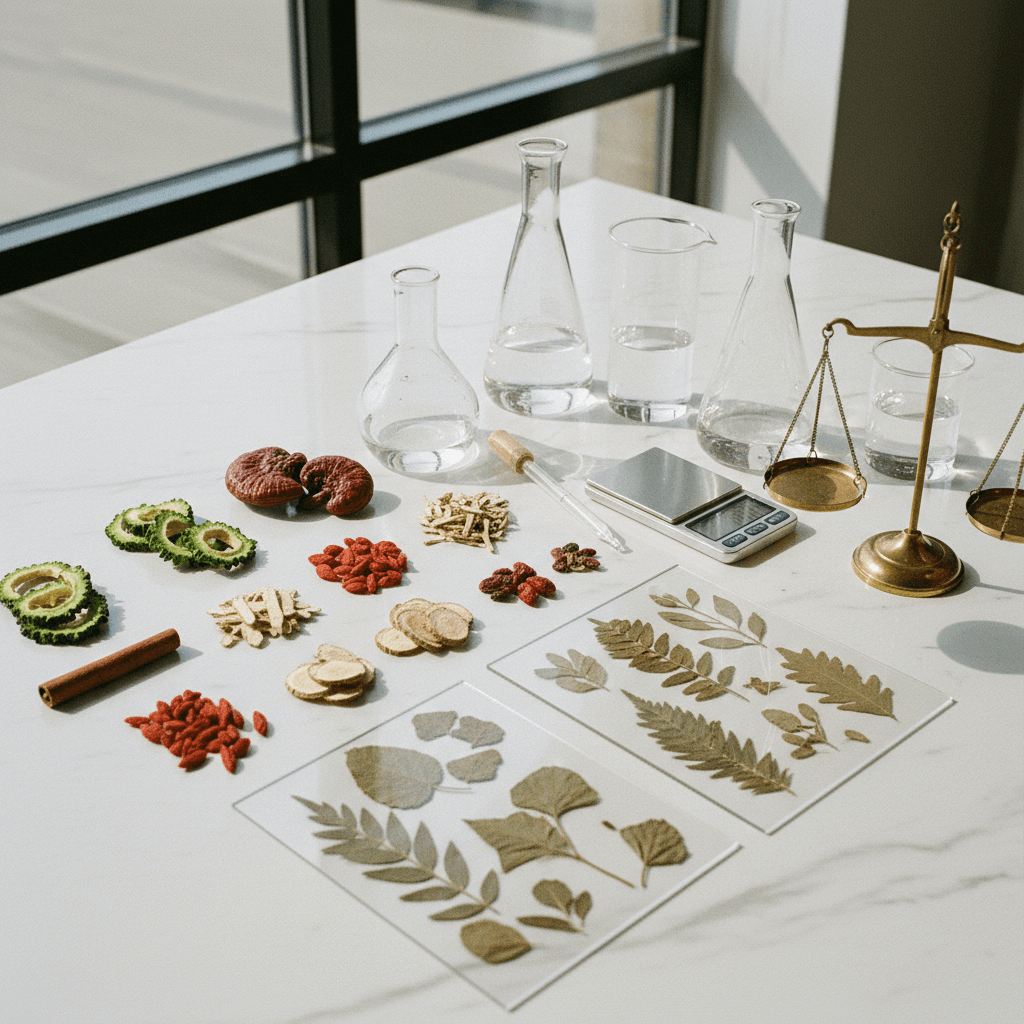
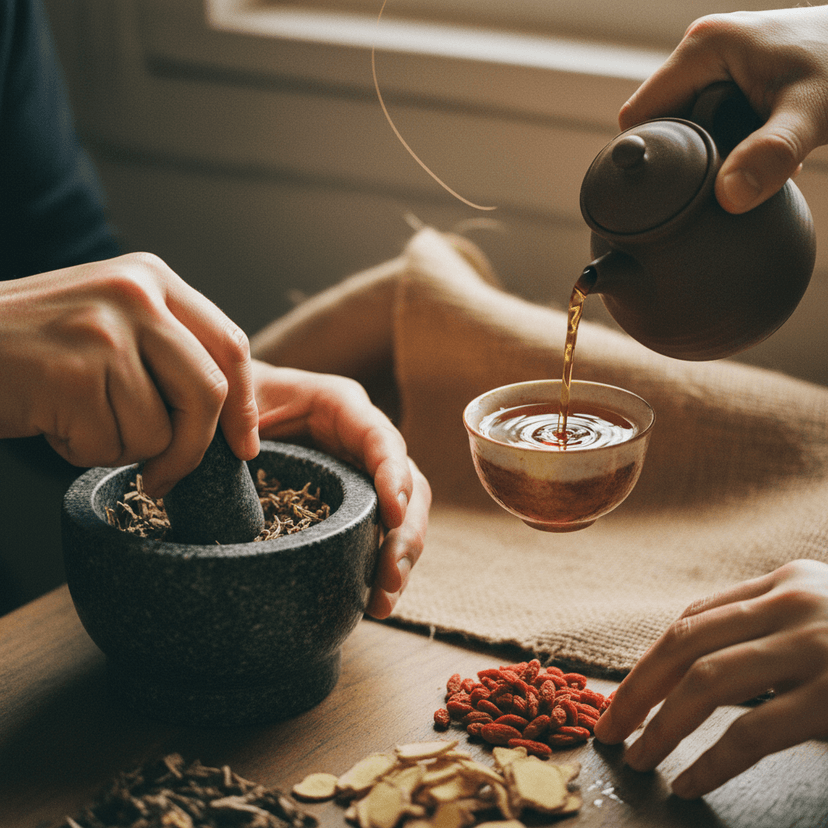
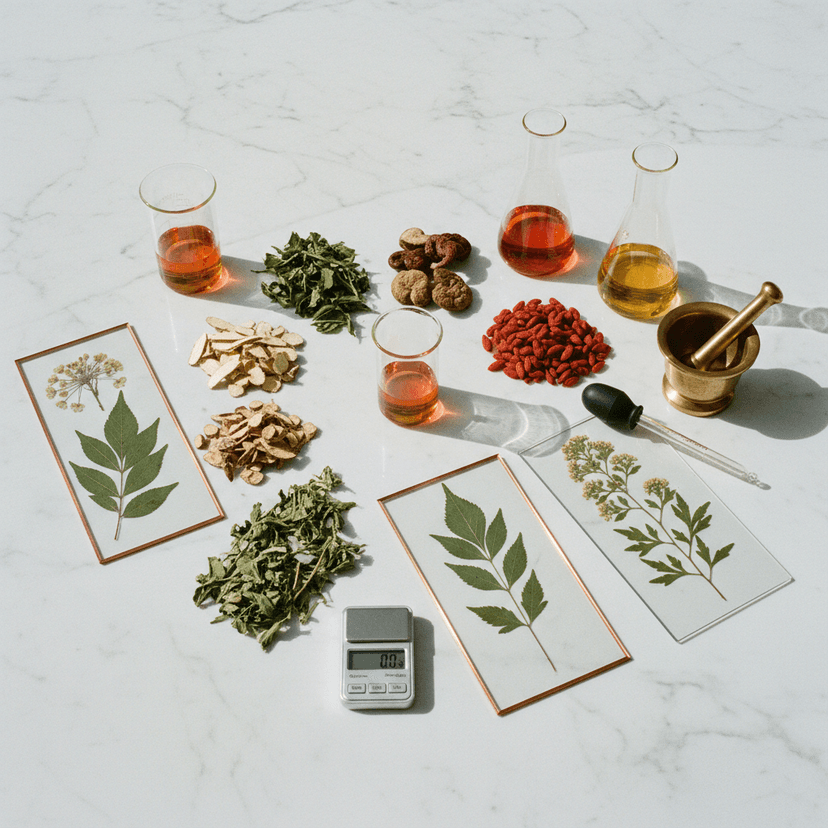
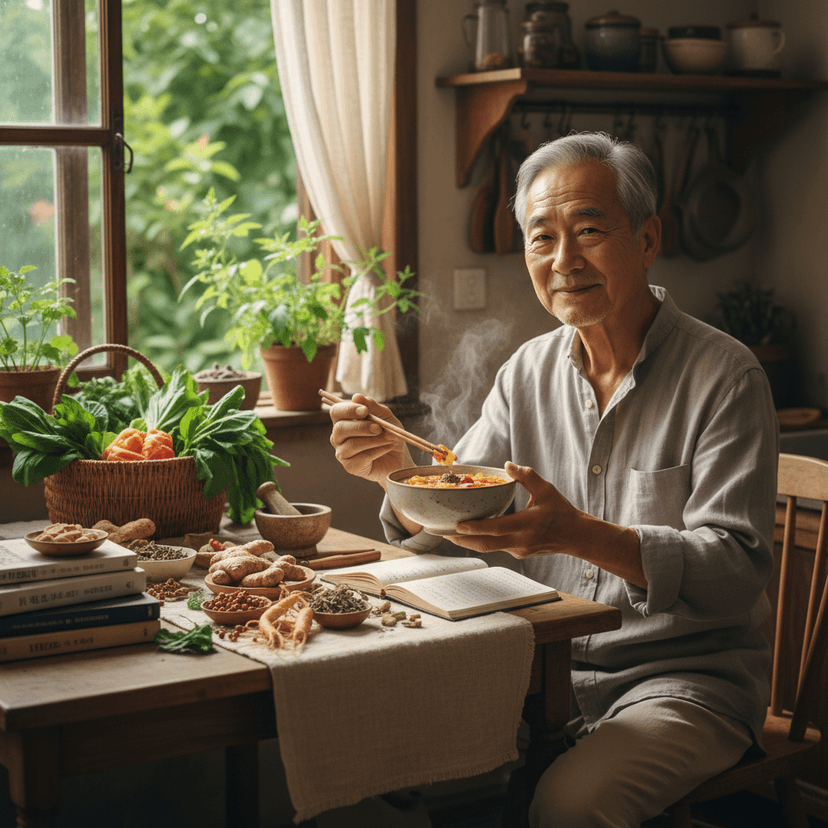
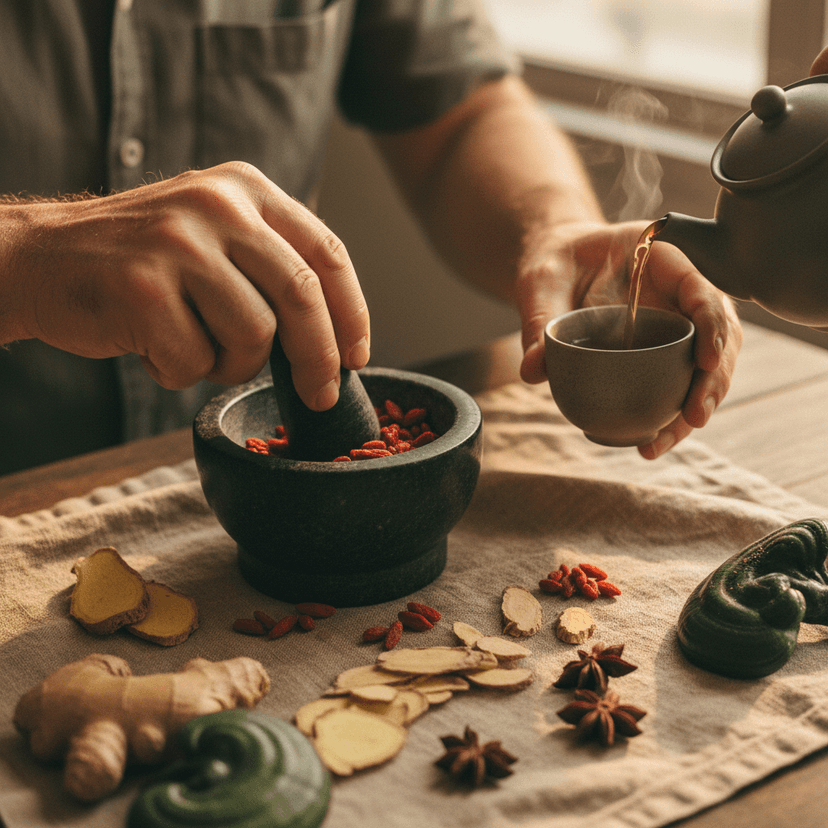
My hands are shaking as I measure these herbs. I remember the bitter scent of the formula filling my small kitchen—a smell I’d come to associate with both desperation and hope.
For years, I was that patient, staring at my glucose monitor, convinced that if I could just nail those numbers—keep them perfectly within range—I would be safe. Healthy, even. But the truth? My body was screaming at me. Fatigue that weighed me down like lead, brain fog so thick I could barely string a sentence together, and an underlying anxiety that hummed relentlessly in my chest. Yet, my A1C looked… fine.
It’s a hard truth to swallow when you’re both the doctor and the patient: Sometimes, the numbers lie. Or rather, they don't tell the whole story. What we call 'blood sugar problems' in Western medicine often goes far deeper than just insulin and glucose levels. It’s a systemic cry for help—a breakdown in the body’s fundamental ability to adapt.
My Numbers Game: The Illusion of Control
I’ve seen it countless times in my clinic, and lived it myself. Patients come in, clutching their lab reports, relief mixed with frustration.
“My fasting glucose is 100, Doctor. My A1C is 5.4. So why do I feel like I'm running on empty, always hungry, and my hands tingle all the time?”
That’s a question Western medicine, with its laser focus on specific biomarkers and organ systems, often struggles to answer comprehensively. This is where TCM steps in.
We’re so good at identifying a problem once it’s a full-blown crisis, but we often miss the subtle energetic shifts that lead there.
I remember a patient, let’s call her Maria. She was in her late forties, juggling a demanding job and two teenagers. Her glucose numbers were technically 'normal,' but she was constantly battling brain fog, intense sugar cravings, and that feeling of being wired but tired. Her Western doctor told her to watch her diet and manage stress. Useful advice, yes. But it didn’t touch the deeper current. Her body was adapting—but poorly.
Here, Traditional Chinese Medicine, or TCM, offers a different path. It asks a different question: What is the underlying pattern of imbalance that's causing this dysregulation? It's not just about the pancreas, or insulin. It’s about the whole symphony of the body, and how one instrument playing off-key can throw off the entire performance. What surprised me, even as someone well-read in both traditions, was how profoundly this shift in perspective changed everything—not just for my patients, but for me.
Let me introduce you to a foundational herb in this conversation: Huang Qi (Astragalus membranaceus), also known as Milk Vetch Root. It’s a fundamental herb in Traditional Chinese Medicine, primarily used to tonify Qi, strengthen immunity, and consolidate the Exterior. Its key active compounds include astragalosides, polysaccharides, and flavonoids. Ancient wisdom, yes, but modern science, thankfully, is catching up.
Key Facts About Huang Qi (Astragalus)
So, about this powerful herb:
Huang Qi strengthens immunity primarily by boosting defensive Qi and enhancing immune cell activity.
The recommended daily dosage typically ranges from 9-30g in decoction, though individualized dosages vary based on a practitioner's assessment.
Huang Qi is considered slightly warm and sweet in nature and primarily enters the Lung and Spleen meridians.
Its primary actions include tonifying Qi, raising Yang, strengthening the Exterior, promoting urination, expelling toxins, and promoting tissue regeneration.
Modern insights: Studies, including those cited by Li (2024) and others, indicate Huang Qi polysaccharides can improve insulin sensitivity and support nerve function in diabetic neuropathy.
The Spleen's Secret: Beyond Insulin & Glucose
In Western medicine, when we talk about blood sugar, our minds immediately go to the pancreas. Right? Insulin. Glucose. Beta cells. In TCM, however, the primary organ system involved in digestion and nutrient metabolism—and thus, central to metabolic health—is the Spleen.
Now, this isn't the anatomical spleen you learned about in biology class. This is the TCM Spleen system—a functional network responsible for transformation and transportation of food essences, governing the muscles and limbs, and holding Qi and Blood in place. When your TCM Spleen Qi is deficient, everything slows down. Digestion becomes sluggish, energy flags, and that dampness starts to accumulate, which can manifest as weight gain, edema, and yes, insulin resistance.
I went back to the clinical data, digging deeper into what TCM practitioners have known for centuries. The concept of 'Spleen-Pancreas homology' (脾胰同源) isn't just a theory. Researchers like Zhu (2025) have shown that herbal formulas based on this very principle can significantly regulate blood sugar fluctuations and even improve beta-cell function. Their clinical studies revealed an average reduction in mean amplitude of glycemic excursions (MAGE) by 2.1 mmol/L.
This is a profound shift from merely counting carbs. It means we’re not just managing the symptom; we're addressing the body’s innate ability to process and absorb nutrients. It explains why Maria, my patient, felt so awful despite 'normal' numbers—her Spleen Qi was exhausted, leading to a subtle, yet persistent, metabolic slowdown.
Another powerful herb, Ren Shen (Ginseng), also is essential here. The 《神农本草经》 extols its virtues for 'nourishing the five Zang organs, calming the spirit, and brightening the eyes,' but modern science has pinpointed its ginsenosides as key compounds that can directly improve glucose metabolism. It doesn't just give you a simple 'boost'—it subtly modulates your body's processes.
The Real 'Do This / Not That' for Metabolic Health
Balancing blood sugar? The 'Do This / Not That' isn't about rigid diets, at least not in the way you might think. It’s about cultivating awareness and working with your body.
Do This: Listen to your body’s subtle cues. Are you constantly cold? Craving sweets after every meal? Feeling heavy after eating? These are signals of Spleen Qi deficiency or damp accumulation, not just hunger or a lack of willpower. Pay attention. Journal it.
Not That: Obsess over every glucose spike or perfect macro ratio. While data is useful, an obsessive focus can create more stress, which, ironically, can further dysregulate blood sugar by impacting cortisol and, you guessed it, Spleen Qi.
The Hard Truth About True Metabolic Harmony
The hard truth is, we’ve been conditioned to outsource our health to numbers and protocols, instead of learning the language of our own bodies. We look for quick fixes, for the single pill or diet that will magically reset everything.
But true metabolic harmony isn’t a destination; it’s a dynamic balance. It requires acknowledging the intricate interplay between our physical, emotional, and energetic selves. When Maria's doctor suggested stress management, it was good advice, but it lacked the deeper context that TCM provides: stress directly impairs Spleen function, creating a vicious cycle for metabolic health.
This integrative approach doesn't dismiss Western medicine. Not at all. It means using a broader lens, integrating the best of both worlds. For instance, in cases of diabetic peripheral neuropathy, combining Western medication with specific TCM herbal formulas has shown remarkable results. Li et al. (2024) demonstrated that a formula called Yi Xiao Fang significantly improved nerve conduction velocity (NCV) by 12.3% and decreased vibration perception threshold (VPT) by 38.7%, alongside a 1.8 mmol/L reduction in fasting plasma glucose (FPG).
Another study by Wang et al. (2024) on type 2 diabetes patients with obesity showed that San Shen Jiang Xiao Jiao Nang reduced TCM symptom scores by 62.4%, improved HOMA-IR (a marker of insulin resistance) by 3.2, and even reduced BMI by 2.8 kg/m². These aren't just minor shifts; they are significant improvements in measurable health outcomes.
This leads to a crucial insight—one that often gets overlooked in the clamor for quick fixes: your body isn't broken. It’s intelligently adapting, sometimes in ways that show up as dysregulation. Our job, as clinicians and as individuals, is to understand those adaptations and gently guide the body back to a state of balance.
Reclaiming My Balance, One Herb at a Time
For me, my personal turning point came when I stopped chasing the perfect numbers and started listening to my body’s subtle whispers. My hands still shake sometimes, but now it’s from the intensity of mixing a complex herbal formula—a formula tailored precisely to my unique constitution—rather than the anxiety of a glucose reading.
It wasn't cheap. A month's supply of a good quality, customized herbal formula can run anywhere from $40 to $150, depending on the herbs and the practitioner. But the impact on my overall well-being felt priceless compared to the endless stream of diagnostic tests and the gnawing feeling that I was missing something fundamental.
I learned to support my Spleen Qi not just with specific herbs like Huang Qi and Ren Shen, but through lifestyle—warm, cooked foods, regular meal times, and carving out non-negotiable moments of quiet. Maria, too, found immense relief. Her brain fog lifted, cravings diminished, and she felt a sustained energy that had eluded her for years. Her numbers, by the way, also improved, but they were no longer the sole focus.
This journey isn't a prescription, but an invitation. An invitation to explore a deeper understanding of your own metabolic health, beyond the conventional. To ask better questions. To honor the wisdom of your body, and perhaps, the ancient wisdom that’s been waiting for us to catch up.
Always remember, while TCM offers incredible insights and tools, it's crucial to consult with a qualified, dual-licensed practitioner—someone who understands both Western diagnosis and TCM principles—before making any changes to your health regimen, especially if you're on medication. Your safety, and your journey to whole-person health, is paramount.
References
- 李伯武等,《益消方对糖尿病周围神经病变患者神经传导速度及血糖指标的影响》,北京中医药, 2024
- 朱泳江等,《基于'脾胰同源'理论的方剂对糖尿病血糖波动及β细胞功能的影响》,中国实验方剂学杂志, 2025
- 李时珍,《本草纲目》
- 佚名,《神农本草经》