TCM Spring Liver Detox: Beyond the Myths | Demisunshine
Spring 'Detox' Advice: Most People Miss What TCM Actually Means
Beyond the popular notion of a harsh 'detox,' Traditional Chinese Medicine offers a nuanced, ancient perspective on optimizing liver health in spring, a view often misunderstood by modern wellness enthusiasts. This approach isn't about deprivation, but about profound harmony.
James WuMarch 17, 20268 min read
Quick Answer
Traditional Chinese Medicine views spring as a critical season for supporting the 'Liver' system, which influences mood, digestion, and overall vitality, not just the physical organ. This approach, often mislabeled as a 'detox,' focuses on 'soothing the Liver Qi' to ensure smooth energetic flow, a concept increasingly validated by studies showing improvements in liver enzymes and emotional well-being.
Key Takeaways
TCM's 'Liver' concept extends beyond the physical organ, encompassing a system vital for emotional regulation, digestion, and the smooth flow of Qi, especially active in spring.
Spring 'detox' in TCM is not about harsh cleansing but about 'soothing the Liver' and promoting the free flow of Qi to prevent stagnation, which can manifest as irritability, fatigue, or digestive issues.
Modern research is beginning to correlate TCM liver-harmonizing strategies with measurable physiological improvements, such as reduced liver enzyme levels in NAFLD and improved mood scores in depression.
Individualized approaches are paramount in TCM; generic 'detox' protocols can be ineffective or even counterproductive if they don't match one's specific energetic pattern.
Incorporating specific foods, gentle movement, and emotional awareness are actionable steps for supporting TCM Liver health, offering benefits beyond typical Western dietary advice.
Mei Ling had always been the kind of person who meticulously planned her life, from her quarterly project deadlines as a senior architect in Shenzhen to the organic vegetables in her weekly grocery delivery. But by early March 2024, the meticulousness had curdled into a brittle anxiety. Her sleep was fractured, her temper surprisingly short, and a dull ache had settled behind her eyes, refusing to lift.
She was 42, living in a meticulously minimalist apartment in Futian, and her Western doctor, after a battery of blood tests and an MRI, had found nothing clinically amiss. “Stress,” he’d concluded, prescribing mindfulness apps and a vacation. Mei Ling, however, felt a deeper discord, a persistent, gnawing sense that something was simply… off. Her body, she knew, was trying to tell her something more profound than mere stress.
She was not alone. I’ve spoken to countless individuals like Mei Ling over the years – professionals, parents, artists – all navigating a health reality where the absence of a diagnosable disease often equates to the absence of a problem. But what if the problem wasn't a disease in the Western sense at all? What if the discomfort stemmed from a different kind of imbalance, one that Western diagnostics simply weren't designed to detect? A different lens was needed.
Her grandmother, still spry at 89 in Guangzhou, offered a different diagnosis entirely. “肝气郁结, Liver Qi Stagnation,” she’d declared over a grainy video call, before recommending a simple tea. This ancient perspective suggests a profound, often overlooked connection between the vibrant energy of spring and the health of our Liver — not just the organ, but an entire energetic system.
The Liver: A Master Planner, Not Just a Filter
In Traditional Chinese Medicine (TCM), the Liver (with a capital 'L' to denote its energetic functions, distinct from the anatomical organ) is seen as the “General” or “Master Planner.” It’s responsible for the smooth flow of Qi (life force) and blood throughout the body. When this flow is unimpeded, we experience emotional stability, smooth digestion, and physical vitality.
Think of it like a meticulous gardener tending to a complex irrigation system: if one hose gets kinked, the entire garden suffers, even if the pump itself is working perfectly.
Spring, with its characteristic winds and rapid growth, is the season associated with the Liver in TCM. It’s a time of outward expansion, of new beginnings.
If the Liver’s energetic system isn't functioning optimally – if the Qi is stuck – this natural upward and outward surge can become chaotic. The result? Irritability, frustration, headaches, digestive upset, and yes, that pervasive, inexplicable fatigue Mei Ling was experiencing. Ted J. Kaptchuk, author of The Web That Has No Weaver, has spent decades translating these intricate concepts for a Western audience, describing this very dynamic.
This idea of “Liver Qi Stagnation” isn't just an abstract metaphor. It's a clinical pattern with tangible symptoms. What we in TCM call Qi stagnation, Western science might observe as the body's subtle, early inflammation response, or a dysregulation of neurotransmitters. The real question for researchers becomes: which came first, and how do these systems intertwine?
Beyond the 'Detox' Buzzword: What TCM Really Means
The term “detox” has become a wellness industry buzzword, often conjuring images of harsh juice cleanses, restrictive diets, and unpleasant side effects. But in TCM, a spring “liver detox” is a far more nuanced affair. It’s not about purging the body of mysterious toxins in the Western sense. Instead, it’s about 疏肝 (shū gān), which translates to soothing the Liver and promoting the free and smooth flow of Qi. Gentle harmonization. That's the goal, not aggressive purification.
This is where wellness enthusiasts sometimes misunderstand. They treat TCM concepts like a checklist of symptoms and remedies, divorcing them from the underlying philosophical framework. A true TCM approach considers the individual's unique constitution and current patterns of disharmony.
The Science of Soothing: From Qi to Enzymes
For decades, this intricate system of energetic flow remained largely outside Western scientific validation. Now, a new generation of researchers is actively bridging that gap, applying rigorous methodologies to ancient wisdom. Look at the work emerging from institutions like Changchun University of Chinese Medicine and Beijing Friendship Hospital. They are actively exploring TCM interventions for conditions like Non-Alcoholic Fatty Liver Disease (NAFLD).
A systematic review and meta-analysis published in Medicine (Baltimore) in 2025, for instance, found that the TCM-based clearing heat and laxative (CHL) method significantly improved liver enzyme levels (ALT, AST, GGT) and lipid profiles in patients with NAFLD. The mean difference for ALT reduction was -8.00 U/L [95% CI (-9.43, -6.56)], a statistically significant drop. This isn't just anecdotal; it’s measurable physiological change, indicating a tangible impact on liver function (Li et al., 2025).
Another comprehensive overview, published in Frontiers in Pharmacology in 2025, synthesized findings from 37 systematic reviews and meta-analyses on TCM for NAFLD. Researchers, including those from Shanghai University of Traditional Chinese Medicine, reported consistent trends of reduced ALT levels (an average reduction of 8.2 U/L), improved metabolic parameters like triglycerides, and enhanced B-ultrasound resolution. While acknowledging methodological limitations in some underlying reviews, the sheer volume of consistent findings suggests a pattern worthy of deeper investigation (Zhang et al., 2025).
The implications extend beyond physical markers. The Liver’s connection to emotions forms a central pillar of TCM theory. When Liver Qi stagnates, feelings of anger, frustration, and depression can surface. A 2024 randomized controlled clinical trial, again published in Medicine (Baltimore), found that a method aimed at soothing Liver-Qi stagnation, supplemented with bupleuri radix-paeoniae alba radix (CH-BS), significantly reduced Hamilton Depression Scale (HAMD) scores and elevated serum 5-hydroxytryptamine (5-HT) levels in postoperative papillary thyroid carcinoma patients with concomitant depression.
The observed reduction in HAMD scores was statistically significant (P < .05), directly linking TCM’s Liver-soothing approach to improved mental well-being (Huang et al., 2024).
The Gentle Art of Spring Harmonization
So, if spring “detox” isn’t about extreme measures, what is it about? It's about aligning with the natural outward energy of the season. Creating flow.
Food as Medicine: Cultivating the Green and Sour
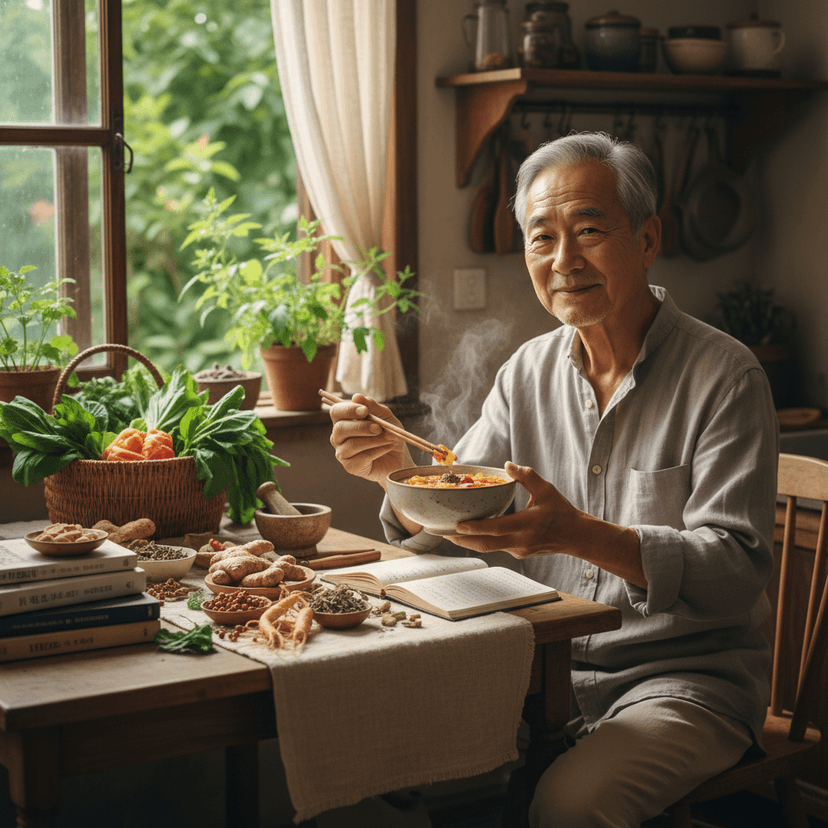
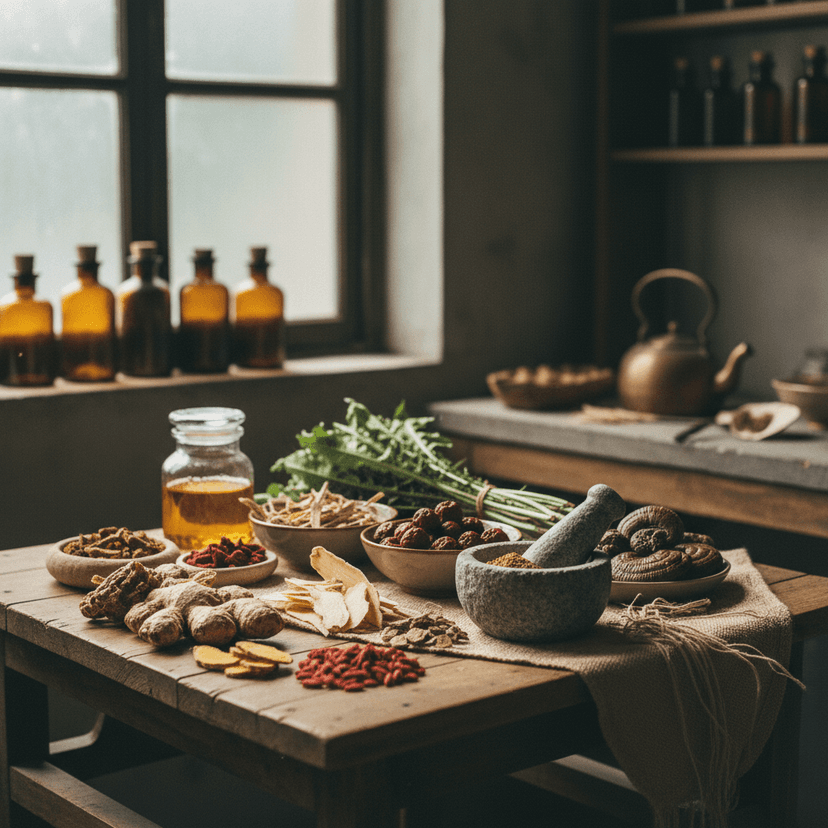
In TCM, the Liver is linked to the color green and the sour taste. Incorporating more leafy greens, sprouts, and slightly sour foods can gently support its function. That means cutting back on heavy, greasy, or overly sweet foods that can impede Qi flow. The wisdom of 《本草纲目》 (Compendium of Materia Medica) speaks to this, noting how specific foods, like pears, can clear heat or nourish yin. It underscores the precise energetic properties of what we consume.
Simple, accessible kitchen ingredients also hold surprising power. Take Cong Bai, or scallion. My grandmother would often add it to broths, especially when someone was feeling a bit rundown or fighting off a nascent cold. Not just flavor. Medicine.
Cong Bai (Bulbus Allii) Properties:
Nature & Flavor: warm, slightly warm; acrid
Meridians: lung, stomach
Dosage: 2-10g; Tincture: 2-4ml
Actions: Releases the exterior and induces sweating; Disperses Cold and unblocks Yang; Relieves toxicity and disperses clumps; Kills parasites.
Contraindications: Contraindicated for those with exterior Deficiency with profuse sweat (Tai Yang Zhong Feng). Use with caution for those with Yin Deficiency and Yang Excess. Large doses can produce gastric irritation, hemorrhoids, headache and fever. Over use can injure the beard and head hair and cause confusion due to Yin Deficiency with deficient Heat rising upward.
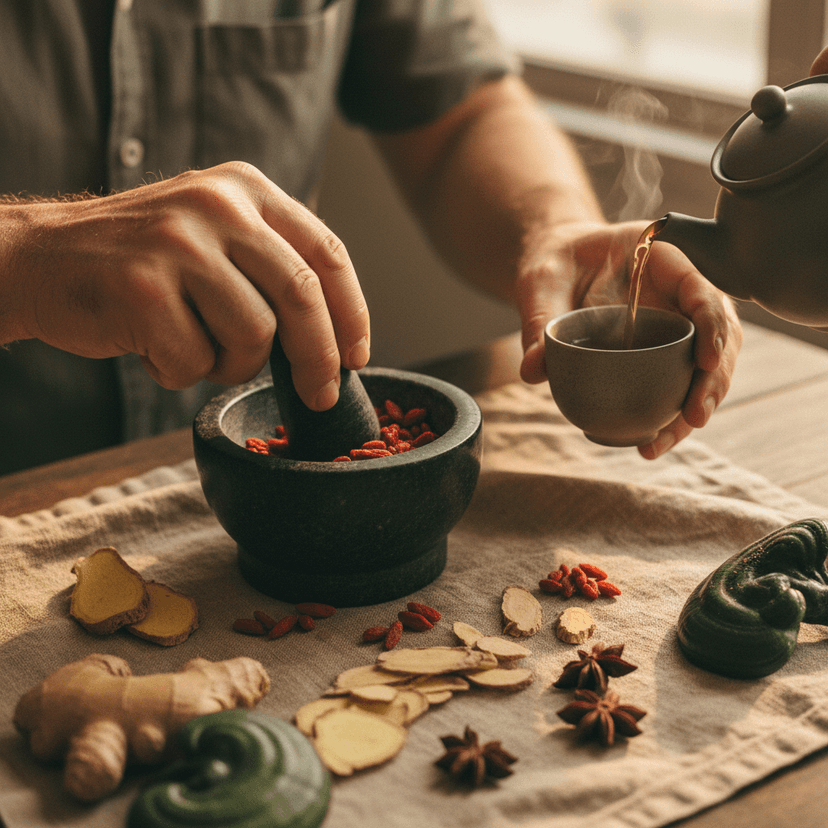
While not directly a Liver herb, its warming and dispersing properties can indirectly support overall Qi flow. For directly soothing the Liver, herbs like chrysanthemum, celebrated in 《神农本草经》 for promoting clear vision and longevity, are often used in simple teas to clear 'Liver Heat' that can arise from stagnation.
Movement and Emotional Release
The Liver loves movement. Gentle exercises—walking, stretching, Qigong—are excellent for promoting the smooth flow of Qi. Not high-intensity workouts. Consistency and grace. Emotionally, the Liver is particularly sensitive to anger and frustration. Learning to acknowledge and healthily express these emotions, rather than suppressing them, proves crucial. This isn't pop psychology; it's a centuries-old observation now gaining traction in psychoneuroimmunology discussions.
I once watched a colleague, Dr. Chen, a researcher at Shanghai University of Traditional Chinese Medicine, explain the Liver's role to a group of medical students. No complicated graphs. He used a tree. “If the tree’s roots are constricted,” he said, “its branches will wither, no matter how much water you pour on the leaves. The Liver is the root of your emotional tree.”
Real Talk: The Pitfalls of Generic Protocols
I’ve seen this backfire spectacularly. People, eager for a quick fix, latch onto generic liver detox protocols found online. They might indiscriminately use potent laxative herbs, or adhere to overly restrictive diets that don't match their body's actual needs. The result? Counterproductive: fatigue, digestive upset, even emotional instability. Why? TCM is inherently individualized.
A 'clearing heat and laxative' method might help someone with excess 'heat' and 'stagnation.' But for someone already prone to 'Yin Deficiency' or 'Qi Deficiency,' it could deplete their vital energy further—dryness, exhaustion, even more irritability. Misinterpreting these principles goes beyond minor inconvenience. It’s a fundamental misstep. The biggest mistake I see people make with herbal supplements? They treat them like vitamins. Pop a pill. Forget about it. That simply won't work.
So, how long should a TCM liver detox last? No fixed duration. It’s a process of observing, adjusting, and integrating practices into daily life.
The Unseen Symphony: A Deeper Harmony
The story of Mei Ling, with her meticulously planned life unraveling into anxiety and fatigue, isn't just about a woman seeking relief. It’s a microcosm of a larger cultural collision: Western medicine’s precise, reductionist lens meeting TCM’s holistic, pattern-based wisdom. What she needed wasn't a prescription for stress. It was a recalibration of her body’s internal rhythms, a gentle coaxing of her Liver Qi back into its smooth, expansive flow.
Mei Ling eventually found a local TCM practitioner. Someone who listened to her pulse, observed her tongue, asked about her dreams. The herbal formula wasn't a detox tea in the commercial sense. It was a carefully balanced blend designed to soothe Liver Qi and nourish blood. She started incorporating more bitter greens, taking slow walks in the park, consciously breathing through moments of frustration. Slowly, imperceptibly at first, the brittle edge softened. Her sleep deepened.
The dull ache behind her eyes receded. The anxiety didn't vanish entirely, but it became a manageable hum, not a deafening roar.
Perhaps the real question isn’t which herbs to take, or what foods to eliminate. Perhaps we've been asking the wrong questions about wellness entirely. Maybe the secret to thriving in spring, and indeed, in life, lies not in harsh interventions but in understanding the subtle, unseen symphony of our own bodies. And learning to play along.
Guest Writer at Demisunshine. James writes from a long-standing curiosity about wellness traditions, with a journalist's habit of pushing back when something sounds too good to be true. He's the contributor readers turn to for the contrarian take — the piece that asks 'wait, does this actually hold up?'
Get TCM Wellness Tips
Weekly articles on herbal remedies, nutrition, and holistic health — delivered to your inbox.