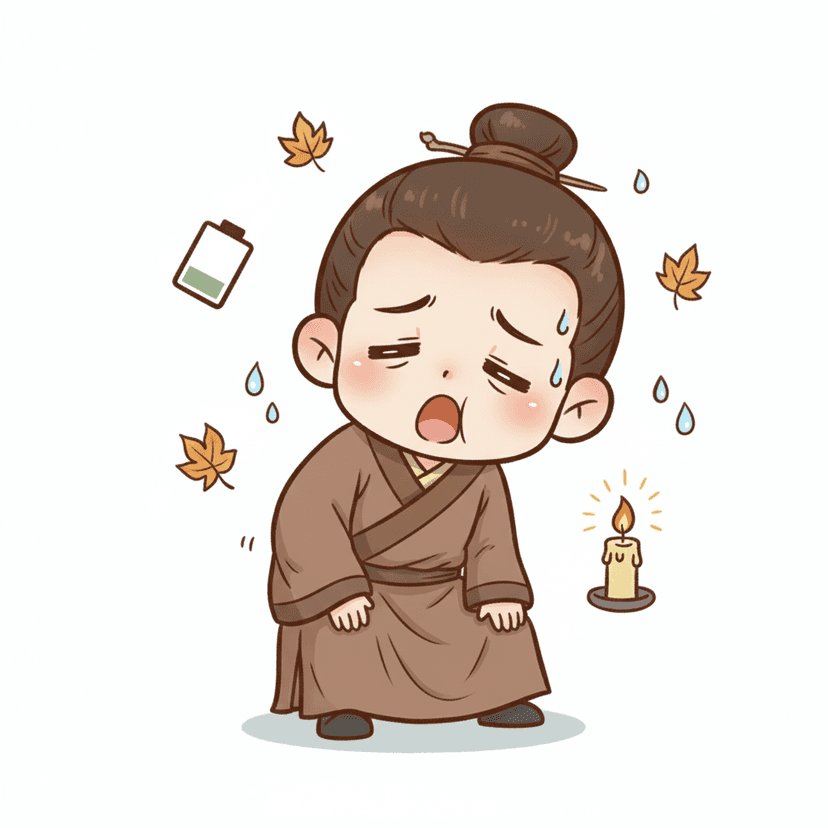
Hauptmerkmale
Leicht erschöpft
Kurzatmigkeit
Leise, schwache Stimme
Neigt zum Schwitzen bei minimaler Aktivität
Blasser Teint
Weicher Stuhl
Häufige Symptome
- •Häufige Erkältungen und Grippe
- •Schlechter Appetit
- •Blähungen nach dem Essen
- •Schwindel beim Aufstehen
- •Muskelschwäche
- •Verzögerte Wundheilung
Ernährungsempfehlungen
✓Warme, gekochte Speisen bevorzugen
✓Qi-tonisierende Lebensmittel einbeziehen: Reis, Haferflocken, Süßkartoffel, Hühnerfleisch
✓Kleine, häufige Mahlzeiten statt großer Portionen
✓Warmes Wasser und Kräutertees trinken
✓Rohe Salate und kalte Getränke vermeiden
Zu vermeidende Lebensmittel
✗Rohe Lebensmittel
✗Kalte Getränke
✗Bittere Melone
✗Übermäßig scharfe Speisen
Lebensstil-Tipps
Sanfte Bewegung: Gehen, Tai Chi, Yoga
Überanstrengung vermeiden
7–9 Stunden Schlaf pro Nacht
Langes Sprechen oder Singen vermeiden
Tiefe Bauchatmung praktizieren
Empfohlene Kräuter
Saisonale Empfehlungen
Frühling und Herbst sind herausfordernd. Die Wärme des Sommers ist hilfreich. Im Winter vor Kälte schützen.
Expertenmeinung
In der Traditionellen Chinesischen Medizin (TCM) bezeichnet Qi-Mangel (气虚质) einen Zustand, in dem die vitale Energie des Körpers, das Qi, unzureichend ist. Diese Konstitution ist häufig durch Erschöpfung, Kurzatmigkeit und eine leise Stimme gekennzeichnet. Die primären betroffenen Organe sind Milz und Lunge, die für die Erzeugung und Verteilung von Qi im gesamten Körper verantwortlich sind. Das grundlegende Ungleichgewicht beim Qi-Mangel ist ein Mangel an ausreichend Energie zur Unterstützung normaler physiologischer Funktionen, was zu Schwäche und verminderter Widerstandskraft führt.
In der westlichen Medizin kann Qi-Mangel mit Erkrankungen wie dem Chronischen Müdigkeitssyndrom, Anämie und geschwächter Immunfunktion korrelieren. Neuere Forschungen haben gezeigt, dass Personen mit Qi-Mangel häufig niedrigere Spiegel zirkulierender Zytokine und eine reduzierte Immunzellaktivität aufweisen, was auf einen Zusammenhang zwischen Qi-Mangel und Immunsystemdysfunktion hindeutet. Darüber hinaus haben Studien ergeben, dass Qi-Mangel mit verminderter körperlicher Ausdauer und erhöhtem oxidativem Stress verbunden ist, was zu chronischer Erschöpfung und anderen systemischen Problemen beitragen kann.
Klinisch gesehen umfasst der beste Behandlungsansatz bei Qi-Mangel eine Kombination aus pflanzlicher Medizin, Ernährungsanpassungen und Lebensstiländerungen. Pflanzliche Formeln wie Bu Zhong Yi Qi Tang (Dekokt zur Stärkung der Mitte und Förderung des Qi) sind bei der Qi-Tonisierung hochwirksam. Die Ernährung sollte sich auf leicht verdauliche, nährstoffreiche Lebensmittel wie magere Proteine, Vollkornprodukte und Wurzelgemüse konzentrieren. Regelmäßiges, sanftes Training wie Tai Chi oder Gehen kann ebenfalls dazu beitragen, den Qi-Fluss zu verbessern. Häufige Fehler, die vermieden werden sollten, sind Überanstrengung, die Qi weiter erschöpfen kann, sowie der Verzehr kalter oder roher Speisen, die die Milzfunktion beeinträchtigen können.
Häufig gestellte Fragen
Wie wird Qi-Mangel in der TCM diagnostiziert?
Qi-Mangel wird durch eine Kombination aus Pulsdiagnose, Zungenuntersuchung und Symptombewertung diagnostiziert. Häufige Zeichen sind ein schwacher Puls, eine blasse Zunge, Erschöpfung und Kurzatmigkeit. Ein TCM-Praktiker berücksichtigt außerdem das allgemeine Energieniveau und die Verdauungsfunktion des Patienten.
Welche Lebensmittel sollte ich zu mir nehmen, um Qi-Mangel zu verbessern?
Konzentrieren Sie sich auf wärmende, leicht verdauliche Speisen wie mageres Fleisch, Wurzelgemüse und Vollkornprodukte. Lebensmittel, die reich an B-Vitaminen und Eisen sind, wie Spinat und mageres Rindfleisch, können ebenfalls helfen. Vermeiden Sie kalte, rohe und verarbeitete Speisen, die die Milz belasten und Qi weiter erschöpfen können.
Welche Übungen sind für Menschen mit Qi-Mangel am besten geeignet?
Sanfte Übungen wie Tai Chi, Qi Gong und Gehen sind ideal. Diese Aktivitäten verbessern den Qi-Fluss, ohne den Körper zu überanstrengen. Hochintensives Training sollte vermieden werden, da es Qi erschöpfen und die Symptome verschlimmern kann.
Welche pflanzlichen Heilmittel sind bei Qi-Mangel wirksam?
Pflanzliche Formeln wie Bu Zhong Yi Qi Tang (Dekokt zur Stärkung der Mitte und Förderung des Qi) und Dang Shen (Codonopsis) sind hochwirksam. Diese Kräuter helfen, Qi zu tonisieren, die Verdauung zu verbessern und das allgemeine Energieniveau zu steigern. Konsultieren Sie einen TCM-Praktiker für individuelle Empfehlungen.
Welche Lebensstiländerungen können helfen, Qi-Mangel zu bewältigen?
Priorisieren Sie Ruhe und Stressmanagement. Sorgen Sie für ausreichend Schlaf, praktizieren Sie Entspannungstechniken wie Meditation und halten Sie eine regelmäßige Routine ein. Vermeiden Sie Überarbeitung und übermäßige körperliche Aktivität, die Qi weiter erschöpfen können.
Gibt es saisonale Überlegungen bei der Behandlung von Qi-Mangel?
Ja, Qi-Mangel kann sich bei kaltem, feuchtem Wetter verschlimmern. Konzentrieren Sie sich in diesen Jahreszeiten auf wärmende Lebensmittel und Aktivitäten. In den wärmeren Monaten ist eine ausgewogene Ernährung und moderates Training wichtig, um die Qi-Produktion zu unterstützen.
Wie verhält sich Qi-Mangel zu westlichen medizinischen Erkrankungen?
Qi-Mangel kann mit Erkrankungen wie dem Chronischen Müdigkeitssyndrom, Anämie und geschwächter Immunfunktion korrelieren. Er geht häufig mit verminderter körperlicher Ausdauer und erhöhter Infektionsanfälligkeit einher.
Wie lange dauert es, bis sich bei Qi-Mangel Verbesserungen zeigen?
Die Verbesserung kann variieren, aber die meisten Menschen bemerken nach wenigen Wochen bis wenigen Monaten konsequenter Behandlung Veränderungen. Geduld und Beharrlichkeit sind wichtig, da der Aufbau von Qi ein schrittweiser Prozess ist.
Was sind häufige Missverständnisse über Qi-Mangel?
Ein häufiges Missverständnis ist, dass Qi-Mangel nur ältere Menschen betrifft. Er kann in jedem Alter auftreten und wird häufig durch Lebensstilfaktoren wie schlechte Ernährung und Stress verschlimmert. Ein weiteres Missverständnis ist, dass er sich mit einem einzigen Mittel schnell beheben lässt.
Wann sollte ich bei Qi-Mangel professionelle Hilfe suchen?
Suchen Sie professionelle Hilfe, wenn die Symptome trotz Selbstfürsorge anhalten, oder wenn Sie unter schwerer Erschöpfung, häufigen Infektionen oder erheblichem Gewichtsverlust leiden. Ein TCM-Praktiker kann einen individuellen Behandlungsplan erstellen und Ihren Fortschritt überwachen.
Denken Sie, das könnte Ihr Typ sein?
Diese Informationen dienen nur zu Bildungszwecken. Die Konstitutionsbewertung sollte von einem qualifizierten TCM-Praktiker durchgeführt werden.