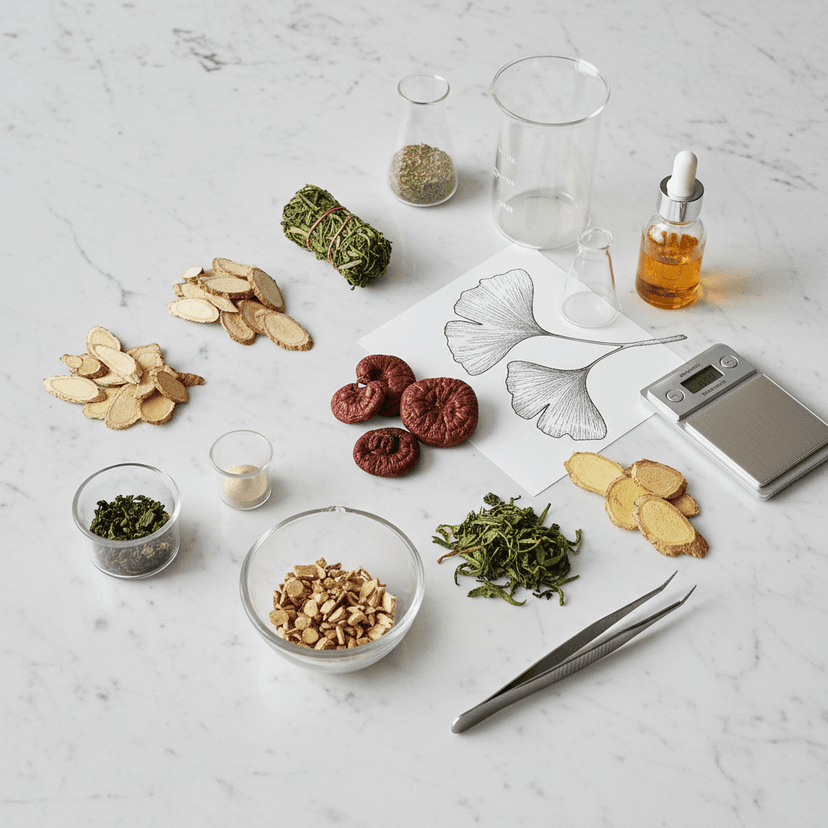
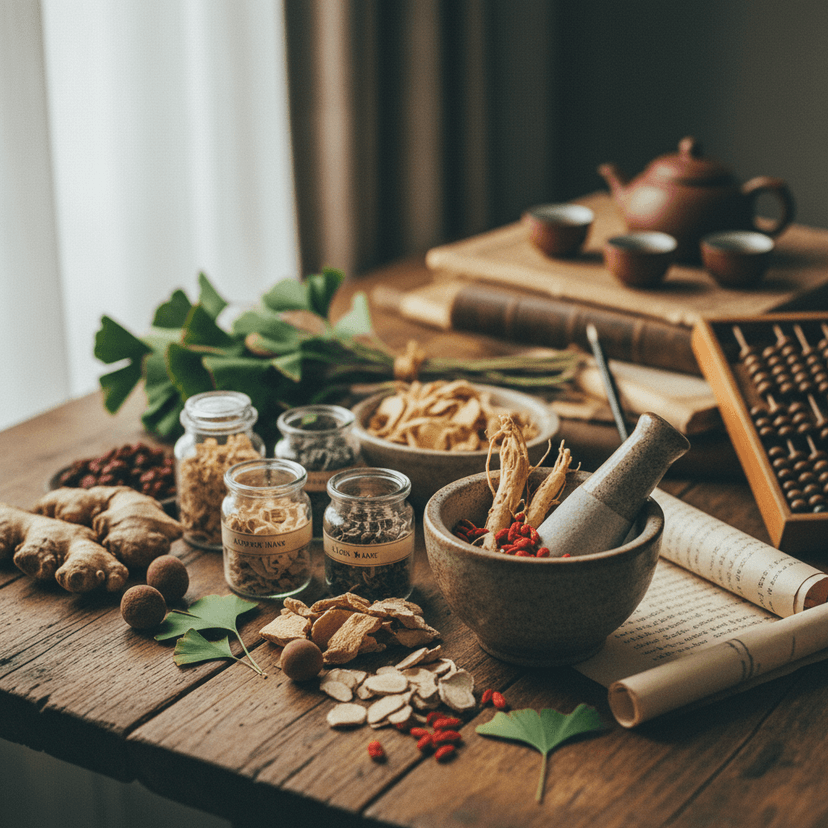
让我向您介绍中医药在影响心智清晰度方面的深远盟友之一。Shu Di Huang (拉丁学名:Rehmannia glutinosa preparata),又称熟地黄,是一种在中医药中主要用于滋养血和阴的补益药材,尤其针对肾和肝。其主要活性成分包括梓醇、地黄素和多种环烯醚萜苷。
它常用于治疗头晕、记忆力差和疲劳等症状,尤其当这些症状根源于中医所称的肾精不足时。
“痰蒙心窍”——心智的“脏窗户”
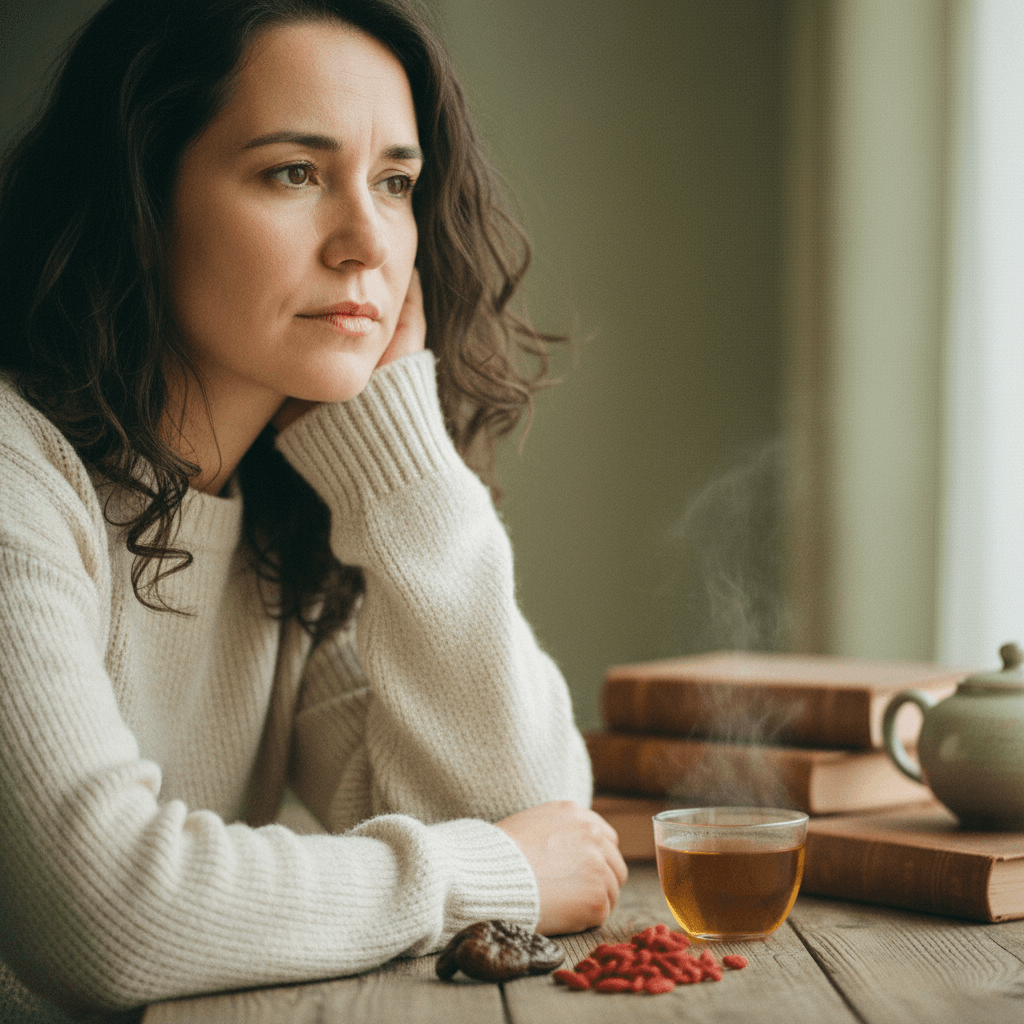
Sarah's case, like many experiences of persistent brain fog, often pointed to a TCM pattern we call 'Phlegm Misting the Mind' (痰湿蒙窍). Now, before you picture phlegm like what you cough up, understand that in TCM, 'Phlegm' is a much broader concept.
Beyond acupuncture, Chinese herbal medicine offers a profound depth of personalized treatment. As I mentioned, Sarah's pattern involved Spleen Qi deficiency and Phlegm, but also an underlying weakness in her Kidney system. In TCM, the Kidneys are considered the root of life, storing Essence (精, Jing) which produces marrow—and the brain is considered the 'Sea of Marrow.' This concept, 'Kidney governing marrow and brain' (肾生髓通脑), articulated in texts like the Su Wen, directly links Kidney health to cognitive function.
当 shèn jīng 不足时,大脑缺乏滋养,导致记忆力下降、注意力不集中以及整体认知能力下降。
这一概念并不仅限于古代哲学。现代研究,例如李新宁等人于2023年探讨的,研究了如何通过补 shèn,采用 Bu Shen Fa (补肾法) 等方法来治疗认知障碍。他们系统回顾了经典方剂的临床证据,例如 You Gui Wan (右归丸) 用于 shèn yáng xū,以及 Zuo Gui Wan (左归丸) 用于 shèn yīn xū。
我的方法涉及精心挑选的草药,以健壮 Sarah 的 pí,化 tán,并滋养她的 shèn jīng。
像郝志华和孟天威(2025)这样的研究人员甚至利用数据挖掘揭示了轻度认知障碍的核心中药模式,识别出高频中药,如 Shu Di Huang(我刚刚定义过的)、Huang Qi (Astragalus) 和 Shan Zhu Yu (Cornus officinalis)。他们的分析指出 Shu Di Huang 和 Shan Zhu Yu 的核心组合,在82%的相关方剂中共同出现。这种传统知识的巨大体量,如今正通过现代荟萃分析得到验证,这非常有启发性。
Contributing Writer at Demisunshine. Maya has spent much of her adult life around the practice of integrative medicine and herbal traditions. Her writing reflects a long familiarity with how women's health, body constitution, and emotional wellbeing intersect — and her pieces tend to acknowledge that the messy parts of healing rarely fit a neat formula.