Consider this: Global sales for statins reached an estimated $20 billion in 2023. Yet, according to the CDC, nearly one in three US adults currently grapples with high LDL cholesterol. The numbers don't quite add up, do they? They suggest we're often managing symptoms, but perhaps missing a deeper conversation about true metabolic health.
I’m Dr. Maya Chen, and in my 15 years as an integrative medicine physician, bridging Traditional Chinese Medicine (TCM) and Western functional approaches, I’ve seen this disconnect play out repeatedly in my clinic. We're so focused on the numbers—the fasting glucose, the LDL, the systolic pressure—that we often overlook the underlying energetic patterns that TCM has understood for millennia.
As modern medicine grapples with ever-shifting definitions of 'normal' for blood sugar, cholesterol, and blood pressure, TCM offers a timeless, holistic framework. Understanding your body's unique energetic blueprint, identifying imbalances, and providing a personalized, proactive path to metabolic harmony—often long before conventional markers even sound a clear alarm—is what it involves. It's a different lens, and I find it a critical one.
When 'Normal' Still Felt Wrong: The Qi Deficiency Story
I remember a patient, let's call him Mark, a 52-year-old executive. He came to me utterly exhausted. His Western labs were, by all accounts, 'normal.' Blood sugar? Fine. Cholesterol? Within range. Blood pressure? A bit high, but not alarm-bell high. Yet, Mark felt like he was dragging himself through quicksand every day.
His doctor had offered him caffeine advice and told him to 'watch his diet,' but it didn't feel like a real solution. He knew there had to be more.
In TCM, Mark's symptoms painted a clear picture: Spleen Qi Deficiency. The Spleen, in TCM, isn't just an organ; it's a whole system responsible for transforming food into Qi (vital energy) and Blood, and for managing dampness. When weak, your body struggles to convert nutrients efficiently, leading to fatigue, cravings, and a feeling of 'heaviness.' This often manifests as subtle blood sugar dysregulation, even before it shows up on a standard fasting glucose test.
It's like your internal engine is sputtering, not quite misfiring yet, but certainly not running optimally.
For Mark, we focused on strengthening his Spleen Qi. A foundational herb for this is Huang Qi.
Meet Huang Qi: The Spleen's Best Friend
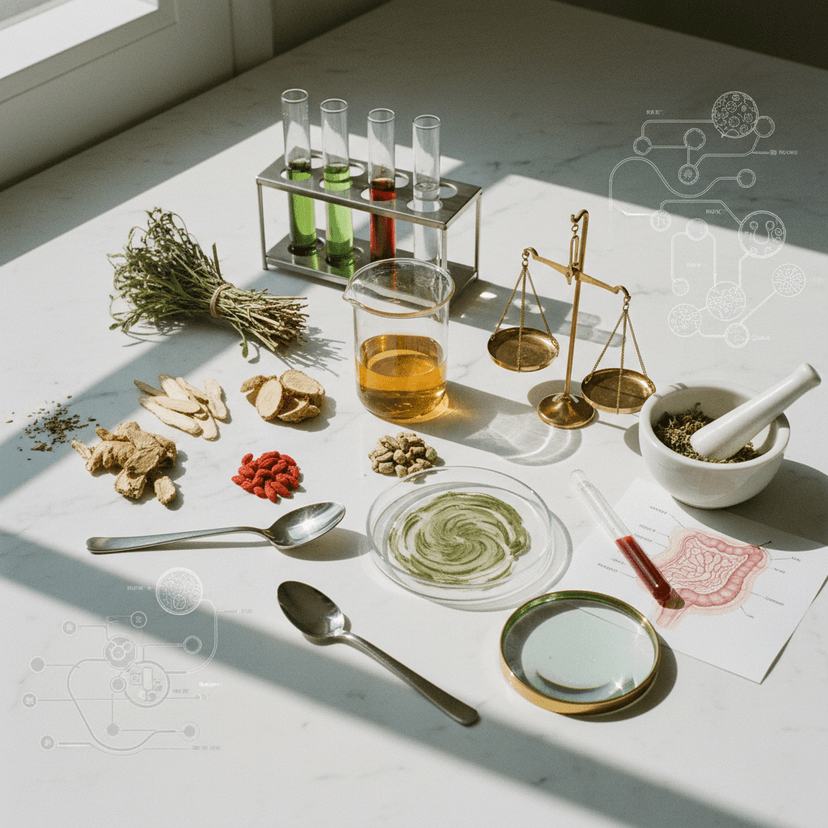
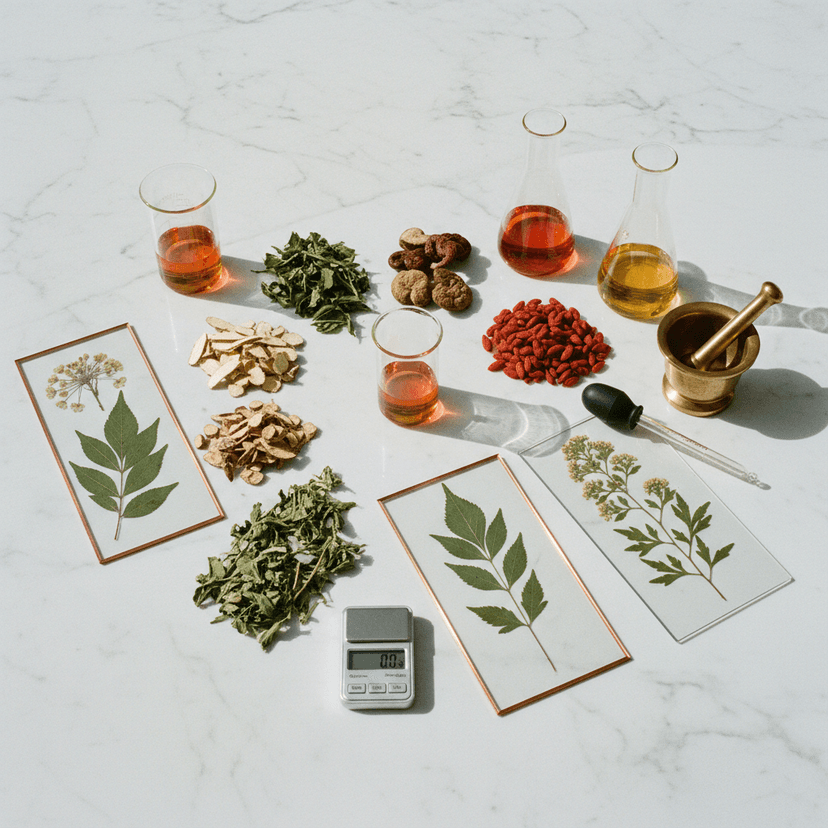
Huang Qi (Astragalus membranaceus), also known as Milkvetch Root, is a strengthening herb used in Traditional Chinese Medicine for boosting Qi, fortifying the Spleen, and securing the exterior. Its key active compounds include polysaccharides, triterpenoid saponins (astragalosides), and flavonoids.
This powerful root is often prescribed for chronic fatigue, frequent colds, and metabolic imbalances rooted in a weak Spleen.
Huang Qi offers several key aspects:
Dosage: Typically 9-30g in a decoction.
Nature & Flavor: Slightly warm, sweet.
Meridians: Lung, Spleen.
Primary Uses: Replenishes Qi, raises Yang, strengthens the Spleen, benefits Wei Qi (defensive Qi), promotes urination, reduces edema. Huang Qi bolsters the body's fundamental energy, essential for healthy metabolism.
Contraindications: Acute infections, Yin Deficiency with Heat signs, exterior excess conditions. Always use under practitioner guidance.
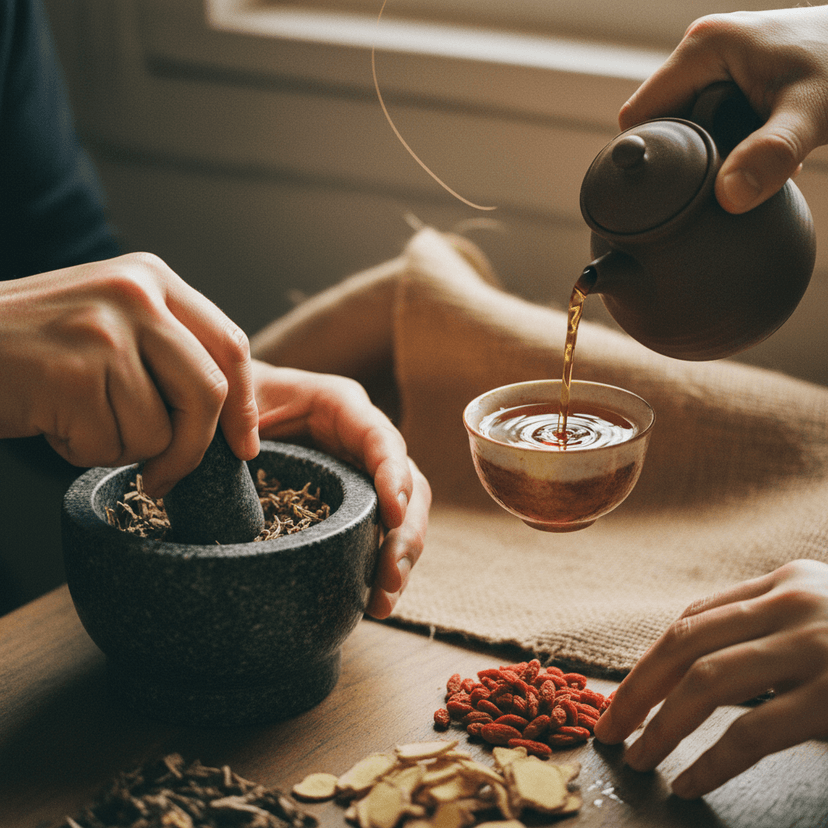
The venerable Bencao Gangmu (Compendium of Materia Medica) describes Huang Qi as 'sweet and warm, supplementing Qi and lifting Yang, solidifying the exterior and stopping sweat, promoting urination and reducing swelling.' This ancient text helps us explore Huang Qi's role in modulating what we now understand as energy and fluid metabolism. When combined with herbs like Danshen (Salvia miltiorrhiza), which moves Blood and resolves stagnation, it creates a powerful synergy.
This 'Qi-boosting and Blood-activating' strategy directly addresses the underlying mechanisms of modern metabolic issues, improving microcirculation and potentially reducing insulin resistance. This aligns with principles for Qi-Yin dual deficiency with blood stasis type diabetes treatment.
Research Spotlight: Dampness and Metabolic Gains
What Mark experienced, and what Huang Qi helps address, is an imbalance that modern science is beginning to validate. A systematic review and meta-analysis published in Medicine (Baltimore) in 2018, examining 122 randomized controlled trials involving over 11,000 participants, found that dampness-eliminating Chinese herbal medicine, when used as an adjunct to pharmacotherapy, significantly enhanced reductions in fasting plasma glucose, 2-hour postprandial glucose, systolic blood pressure, and diastolic blood pressure in metabolic conditions.
This confirms what we've known in TCM for centuries: addressing 'dampness'—which often correlates to fluid retention, sluggish metabolism, and inflammation in Western terms—can have profound systemic effects.
Clinical Takeaway: If you're experiencing fatigue, cravings, or subtle digestive issues despite 'normal' labs, consider Spleen Qi deficiency. Supporting your Spleen with appropriate herbs and diet can proactively rebalance your energy metabolism and stabilize blood sugar before it becomes a diagnosable issue.
Cholesterol: More Than Just a Number
I often see patients like Sarah, a busy working mother in her late 40s. She was diligent about her diet, exercised regularly, but her cholesterol numbers kept creeping up. Her doctor wanted to put her on a statin, and she felt defeated. 'I'm doing everything right, Dr. Chen,' she told me, 'why isn't it working?'
In Western medicine, cholesterol is seen primarily through the lens of lipid panels: LDL, HDL, triglycerides. The goal is to lower the 'bad' and raise the 'good.' It's a numbers game.
For Sarah, her chronic stress, irregular eating habits, and tendency towards worry pointed to Liver Qi Stagnation and the accumulation of Dampness and Phlegm. Think of Dampness and Phlegm as sticky, turbid substances that obstruct Qi and Blood flow. They can be compared to the sludge that builds up in pipes, hindering efficient function. The Liver, in TCM, is responsible for the smooth flow of Qi throughout the body, including digestion and emotional regulation.
When Liver Qi stagnates, it can impede the Spleen's function, leading to more dampness and affecting fat metabolism.
Here's a quick comparison of how these two systems often approach the same issue:
Western Approach to High Cholesterol: Quantifies lipid levels (LDL, HDL, triglycerides), uses statins to reduce cholesterol production, and employs dietary restrictions to lower intake. It's largely symptomatic management based on biochemical markers.
TCM Approach to High Cholesterol: Identifies underlying patterns like Spleen Qi Deficiency, Damp-Phlegm accumulation, or Liver Qi Stagnation. Treatment targets the root imbalance through personalized herbal formulas, dietary modifications (reducing damp-forming foods), and acupuncture to restore harmonious Qi flow and optimize digestive and metabolic functions. This is a systemic, whole-person approach.
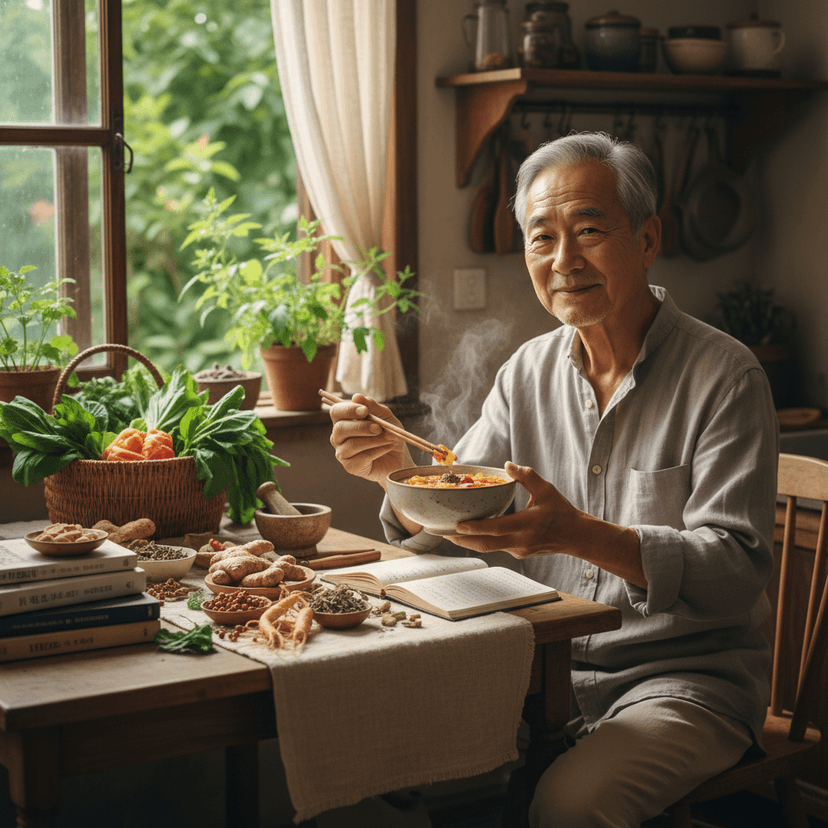
For Sarah, we focused on soothing her Liver Qi and resolving Dampness. This involved specific herbal formulas to move Liver Qi and herbs known for their damp-resolving qualities. We also incorporated dietary changes, not just calorie counting, but focusing on warm, cooked, easy-to-digest foods and reducing rich, greasy, and excessively cold items that contribute to dampness. One plant gaining popularity, often discussed for its anecdotal cholesterol-lowering effects, is Cholesterol Spinach (Gynura nepalensis).
Cholesterol Spinach, native to Nepal and related to Okinawan spinach, is a hardy, fast-growing plant. While anecdotal evidence in places like Hawaii suggests cholesterol-lowering effects, preliminary laboratory studies indicate some compounds derived from this plant may have cardioprotective properties. I always caution immunocompromised patients when consuming raw vegetables due to possible contamination. Always cook it thoroughly if there are any concerns.
Research Spotlight: TCM's Lipid-Lowering Power
My clinical observations are supported by a growing body of evidence. A 2020 review of randomized controlled trials on the efficacy and safety of TCM for metabolic syndrome found TCM showed significant efficacy in improving glucose and lipid metabolism, decreasing total cholesterol (TC), triglycerides (TG), LDL-cholesterol, and increasing HDL-cholesterol. It also helped with body weight reduction, suggesting its potential as an alternative or complementary therapy.
Another systematic review and network meta-analysis published in Frontiers in Pharmacology in 2021 examined 27 studies with 2,227 patients. It revealed that traditional Chinese patent medicines like Jinqi and Shenqi, when combined with lifestyle modification, significantly reduced triglycerides and total cholesterol, and increased HDL-C in patients with prediabetes. This indicates TCM’s ability to influence lipid profiles positively, beyond just dietary fats.
Clinical Takeaway: If you're struggling with cholesterol despite conventional efforts, look beyond the numbers. Consider if Liver Qi stagnation, Dampness, or Phlegm accumulation might be at play. A personalized TCM approach can address these root causes, offering a different pathway to lipid balance.
The Raging Fire: Understanding Blood Pressure
High blood pressure, or hypertension, is often a silent killer. My patient, David, a seemingly calm engineer, was surprised when his routine check-up revealed persistently elevated blood pressure. He didn’t feel stressed, or so he thought. He practiced mindfulness, ate well, and got enough sleep. Yet, the numbers were unyielding.
In TCM, high blood pressure is rarely a standalone issue. It’s often a symptom of deeper imbalances, most commonly Liver Yang Rising, a condition where the Liver's energy, which should flow smoothly, becomes constrained and overheats, rising upwards like a flare. This can be exacerbated by Kidney Yin Deficiency—a depletion of the body's cooling, nourishing fluids that normally keep Liver Yang in check. Think of it like a car engine: the Liver is the accelerator, the Kidneys are the coolant.
If the coolant is low, the engine overheats, and pressure builds.
The venerable Shennong Ben Cao Jing speaks of Ren Shen (Ginseng) for 'supplementing the five zang organs and calming the spirit,' and Di Huang (Rehmannia) for 'nourishing blood and qi, dispelling heat.' Together, this Ren Shen-Di Huang pair shows how TCM addresses interconnected systems to regulate both blood sugar and pressure, not just isolated symptoms.
This aligns with the principle of tonifying Qi and Yin while activating blood and promoting diuresis, a method used to improve blood glucose levels and complications in Type 2 Diabetes, as studied by researchers like Lv Renhe and colleagues in 2024, who observed a decrease in fasting plasma glucose by 1.2 mmol/L and HbA1c by 0.8% with this approach.
For David, our strategy involved nourishing Kidney Yin and calming Liver Yang. This included specific herbal formulas and acupuncture, which is well-documented to help regulate the nervous system and reduce sympathetic overdrive—a direct parallel to calming Liver Yang. We also addressed his emotional patterns, teaching him practices to release tension rather than suppress it. Our approach was holistic, acknowledging the interconnectedness of his mind, emotions, and physical body.
Research Spotlight: Beyond the Numbers
While the 2020 review on TCM for metabolic syndrome noted that TCM's effect on blood pressure wasn't as notable compared to Western medicine when used in isolation for established hypertension, its power often lies in addressing the underlying imbalances that lead to high pressure.
For instance, researchers like Li Bowu and colleagues in 2024 investigated the Yixiao Formula and found it could improve nerve conduction velocity in diabetic peripheral neuropathy patients and lower blood lipids, showing effects beyond just blood pressure. Wang Lulu and team (2024) also showed that Sanshen Jiangxiao Capsule combined with metformin significantly improved insulin resistance in obese diabetic patients, reducing HOMA-IR by 1.3 and BMI by 0.9 kg/m².
These studies illustrate how TCM targets the systemic issues that contribute to metabolic dysfunction, including blood pressure.
Clinical Takeaway: If you're managing blood pressure, especially with underlying stress, anxiety, or internal heat, consider exploring Kidney Yin deficiency or Liver Yang Rising patterns. TCM offers strategies to cool inflammation, nourish vital fluids, and harmonize emotional flow, often complementing conventional treatments effectively.
The Real Question Isn't 'What's Normal?'
The biggest mistake I see people make with their metabolic health? Chasing numbers. They check blood sugar, cholesterol, pressure, and if it's 'normal' according to a lab range, they breathe a sigh of relief and ignore how they actually feel. But as Mark, Sarah, and David taught me, those numbers are often lagging indicators.
The real question isn't whether your numbers are within range. It's whether your body is in balance.
Is your Qi flowing smoothly? Is your Spleen transforming nutrients efficiently? Is your Liver harmonized, and your Kidneys providing ample Yin and Yang? These deeper currents dictate your health, often showing signs of imbalance long before a Western blood test flags a problem.
This integrative approach, championed by figures like Dr. Andrew Weil at the University of Arizona and Dr. Brent Bauer at Mayo Clinic, isn't about choosing one medicine over another.
It's about combining the diagnostic precision of Western science with the holistic wisdom of TCM to create a comprehensive picture of your health.
So, what does this mean for you? Next time you look at your lab results, pause. Ask yourself: How do I feel, really? Am I energized? Do I digest food easily? Do I sleep well? Is my mind clear? These subjective experiences are potent diagnostic tools in TCM, guiding us to address imbalances at their root.
When I began my path, first in Beijing and then in the US, I sometimes felt the pull to dismiss one tradition for the other. It felt like a competition. But after all these years, I know that's not the answer. The real magic happens in the synthesis, in understanding that a high cholesterol number isn't just a number; it might be your body telling you about sluggish digestion, unresolved stress, or a deeper imbalance. And addressing that deeper story?
That's where lasting health starts.
It’s a continuous process, not a final destination. And sometimes, the most profound insights come from simply listening—to our patients, to the ancient texts, and most importantly, to our own bodies. What I'm still learning, every single day, is just how much wisdom our bodies hold, if only we take the time to hear it.
References
- Efficacy and safety of Chinese herbal medicine for metabolic syndrome: A systematic review and meta-analysis of randomized controlled trials
- 吕仁和等,《中国临床案例库》 — 益气养阴、活血利水法治疗2型糖尿病临床观察
- 李伯武等,《北京中医药》 — 益消方对糖尿病周围神经病变患者神经传导速度及血脂的影响
- Bensky, D., Clavey, S., & Stöger, E. — Chinese Herbal Medicine: Materia Medica, 3rd Ed.