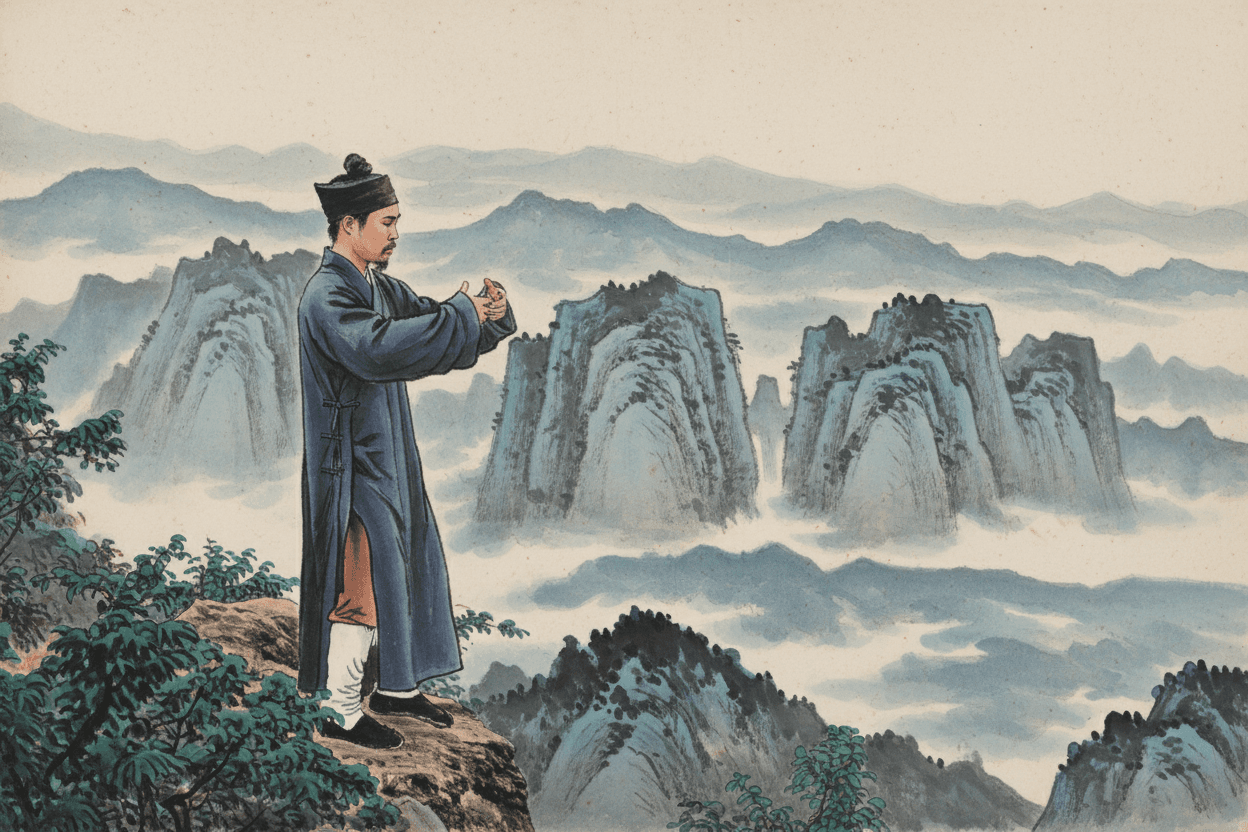
站樁 · Zhan Zhuang
Zhan Zhuang,意為“站如樁”,是一種根植於傳統中醫 (TCM) 和氣功 (Qigong) 的基礎站樁冥想練習。它涉及長時間保持特定姿勢,以培養內氣 (Qi),改善健康,並發展心神寧靜。
Zhan Zhuang (站樁), literally "standing like a post," is an ancient and profound standing meditation practice originating from Traditional Chinese Medicine (TCM) and Qigong. It involves holding specific, seemingly static postures for extended periods. This practice is not merely about standing still; it is a dynamic internal exercise.
The core aim of Zhan Zhuang is to cultivate and circulate internal energy, known as Qi (氣). Practitioners focus on correct body alignment, deep relaxation, and mental stillness. It serves as a foundational practice for various internal martial arts and a powerful method for enhancing overall health and well-being.
The origins of Zhan Zhuang can be traced back thousands of years in China, deeply intertwined with Daoist meditative practices and early forms of Qigong. It was initially developed as a method for health preservation, spiritual cultivation, and building internal strength for martial arts.
Over centuries, various schools and masters refined Zhan Zhuang, integrating it into systems like Taijiquan, Xingyiquan, and particularly Yiquan. Its principles emphasize the development of "internal power" (Nei Jin) and a profound connection between mind, body, and breath, evolving into the sophisticated practice known today.
The essence of Zhan Zhuang lies in achieving a state of "song" (松), meaning deep relaxation and looseness, while maintaining structural integrity. Key principles include proper alignment, sinking the weight, and maintaining an empty yet alert mind. The body should feel rooted, like a tree.
Common initial postures often mimic "holding a tree" (抱樹樁) or "holding a ball" (抱球) in front of the chest. These postures are designed to open joints, relax muscles, and facilitate the smooth flow of Qi. The focus is on internal sensation rather than external movement.
From a TCM viewpoint, Zhan Zhuang is highly effective in balancing Yin and Yang energies within the body. It strengthens the "root" by engaging the legs and lower dantian, improving circulation throughout the meridians. This enhanced Qi flow nourishes organs and tissues.
Regular practice helps to correct postural imbalances, strengthen bones and tendons, and improve overall physical resilience. Mentally, it calms the Shen (spirit), reduces stress, and cultivates a profound sense of inner peace and mental clarity. It is considered a powerful preventative and restorative health practice.
To start Zhan Zhuang, find a quiet, comfortable space. Begin with a basic posture, such as "holding a tree," ensuring your feet are shoulder-width apart, knees slightly bent, and spine elongated. Relax your shoulders and arms, imagining you are gently embracing a large ball.
Focus on natural, deep breathing and cultivating a sense of relaxation throughout your body. Start with short durations, perhaps 5-10 minutes, and gradually increase your time as you become more comfortable. Listen to your body and avoid forcing any position or sensation.
Consistency is more important than duration; daily short sessions are better than infrequent long ones. Be patient with yourself, as internal changes take time. It is common to experience shaking, warmth, or tingling sensations as Qi begins to flow.
Avoid rigidness or excessive tension; the goal is relaxed strength. While self-study is possible, seeking guidance from an experienced Zhan Zhuang or Qigong instructor is highly recommended. They can provide crucial feedback on posture and internal awareness, ensuring proper and safe development.
Zhan Zhuang (站樁), literally "standing like a post," is an ancient and profound standing meditation practice originating from Traditional Chinese Medicine (TCM) and Qigong. It involves holding specific, seemingly static postures for extended periods. This practice is not merely about standing still; it is a dynamic internal exercise.
The core aim of Zhan Zhuang is to cultivate and circulate internal energy, known as Qi (氣). Practitioners focus on correct body alignment, deep relaxation, and mental stillness. It serves as a foundational practice for various internal martial arts and a powerful method for enhancing overall health and well-being.
The origins of Zhan Zhuang can be traced back thousands of years in China, deeply intertwined with Daoist meditative practices and early forms of Qigong. It was initially developed as a method for health preservation, spiritual cultivation, and building internal strength for martial arts.
Over centuries, various schools and masters refined Zhan Zhuang, integrating it into systems like Taijiquan, Xingyiquan, and particularly Yiquan. Its principles emphasize the development of "internal power" (Nei Jin) and a profound connection between mind, body, and breath, evolving into the sophisticated practice known today.
The essence of Zhan Zhuang lies in achieving a state of "song" (松), meaning deep relaxation and looseness, while maintaining structural integrity. Key principles include proper alignment, sinking the weight, and maintaining an empty yet alert mind. The body should feel rooted, like a tree.
Common initial postures often mimic "holding a tree" (抱樹樁) or "holding a ball" (抱球) in front of the chest. These postures are designed to open joints, relax muscles, and facilitate the smooth flow of Qi. The focus is on internal sensation rather than external movement.
From a TCM viewpoint, Zhan Zhuang is highly effective in balancing Yin and Yang energies within the body. It strengthens the "root" by engaging the legs and lower dantian, improving circulation throughout the meridians. This enhanced Qi flow nourishes organs and tissues.
Regular practice helps to correct postural imbalances, strengthen bones and tendons, and improve overall physical resilience. Mentally, it calms the Shen (spirit), reduces stress, and cultivates a profound sense of inner peace and mental clarity. It is considered a powerful preventative and restorative health practice.
To start Zhan Zhuang, find a quiet, comfortable space. Begin with a basic posture, such as "holding a tree," ensuring your feet are shoulder-width apart, knees slightly bent, and spine elongated. Relax your shoulders and arms, imagining you are gently embracing a large ball.
Focus on natural, deep breathing and cultivating a sense of relaxation throughout your body. Start with short durations, perhaps 5-10 minutes, and gradually increase your time as you become more comfortable. Listen to your body and avoid forcing any position or sensation.
Consistency is more important than duration; daily short sessions are better than infrequent long ones. Be patient with yourself, as internal changes take time. It is common to experience shaking, warmth, or tingling sensations as Qi begins to flow.
Avoid rigidness or excessive tension; the goal is relaxed strength. While self-study is possible, seeking guidance from an experienced Zhan Zhuang or Qigong instructor is highly recommended. They can provide crucial feedback on posture and internal awareness, ensuring proper and safe development.
本資訊僅供教育目的,不構成醫療建議。使用任何草藥前,請務必諮詢合格的醫療從業人員。