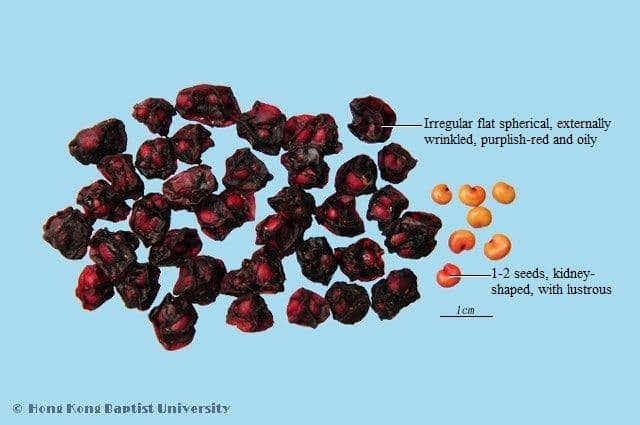
五味子
溫五味子 · Wu Wei Zi
Fructus Schisandrae
探索五味子(Schisandra fruit)這一獨特適應原的古老智慧與現代科學。因其具備'五味'特性,該草藥被尊崇為能增強抗壓能力、護肝健腦、提升整體生命力的珍品。
中醫屬性
四氣
溫五味
酸甘辛苦鹹
歸經
心腎肺
五味子 · Wu Wei Zi
Fructus Schisandrae
探索五味子(Schisandra fruit)這一獨特適應原的古老智慧與現代科學。因其具備'五味'特性,該草藥被尊崇為能增強抗壓能力、護肝健腦、提升整體生命力的珍品。
1.5-9g; Tincture 2-4ml (1-2ml for chronic cough; 6-9g as tonic)
1.5-9g; Tincture 2-4ml (1-2ml for chronic cough; 6-9g as tonic)
Simmer 1.5-9g of dried Schisandra berries in 2-3 cups of water for 20-30 minutes. Strain and drink the liquid. For a more tonic effect, use the higher end of the dosage range. You can also combine it with other herbs.
Mix 1/2 to 1 teaspoon (approximately 1.5-3g) of Schisandra powder into water, juice, or a smoothie once or twice daily. Start with a lower dose to assess tolerance, as the taste can be quite complex due to its five flavors.
Follow the product's specific instructions, but a general guideline is 2-4ml of tincture daily, typically divided into 2-3 doses. For chronic cough support, some practitioners suggest 1-2ml. Measure carefully with a dropper.
Take as directed by the manufacturer, usually 1-2 capsules (often standardized extracts) once or twice daily with food. Always check the concentration and recommended serving size on the label.
Simmer 1.5-9g of dried Schisandra berries in 2-3 cups of water for 20-30 minutes. Strain and drink the liquid. For a more tonic effect, use the higher end of the dosage range. You can also combine it with other herbs.
Mix 1/2 to 1 teaspoon (approximately 1.5-3g) of Schisandra powder into water, juice, or a smoothie once or twice daily. Start with a lower dose to assess tolerance, as the taste can be quite complex due to its five flavors.
Follow the product's specific instructions, but a general guideline is 2-4ml of tincture daily, typically divided into 2-3 doses. For chronic cough support, some practitioners suggest 1-2ml. Measure carefully with a dropper.
Take as directed by the manufacturer, usually 1-2 capsules (often standardized extracts) once or twice daily with food. Always check the concentration and recommended serving size on the label.
The Western scientific evidence for Schisandra's benefits is largely derived from extensive preclinical animal studies and in vitro research, with limited but emerging human clinical trials, particularly outside of older, less accessible Russian research. Its traditional use as an adaptogen and for organ support is well-established.
初步 — 體外/動物實驗
The Western scientific evidence for Schisandra's benefits is largely derived from extensive preclinical animal studies and in vitro research, with limited but emerging human clinical trials, particularly outside of older, less accessible Russian research. Its traditional use as an adaptogen and for organ support is well-established.
初步 — 體外/動物實驗
In vitro studies suggest that lignans isolated from schisandra can inhibit CYP3A4 and CYP3A5 enzymes (41). Animal studies suggest schisandra inhibits CYP3A4 and CYP1A2 and can affect the intracellular concentration of drugs metabolized by these enzymes. Long-term use can also induce CYP3A4 activity (33) (34). Clinical relevance has yet to be determined.
Lab and human studies suggest schisandra can inhibit P-gp activity and may interfere with the metabolism of certain drugs (35) (36).
In liver transplant patients, schisandra increased blood levels of tacrolimus, an immunosuppressant (24).
數據不足
In vitro studies suggest that lignans isolated from schisandra can inhibit CYP3A4 and CYP3A5 enzymes (41). Animal studies suggest schisandra inhibits CYP3A4 and CYP1A2 and can affect the intracellular concentration of drugs metabolized by these enzymes. Long-term use can also induce CYP3A4 activity (33) (34). Clinical relevance has yet to be determined.
Lab and human studies suggest schisandra can inhibit P-gp activity and may interfere with the metabolism of certain drugs (35) (36).
In liver transplant patients, schisandra increased blood levels of tacrolimus, an immunosuppressant (24).
數據不足
想象咬下一顆漿果,瞬間嚐到酸、甘、辛、苦、鹹五味——這就是五味子(Schisandra fruit,又名北五味子、中華五味子)的獨特體驗。作為中醫強效適應原,它以其全面增強生命力、安神護髒的功效被沿用千年。
幾個世紀以來,這種神奇的'五味果'在亞洲文化中備受尊崇,不僅因其獨特風味,更因其對整體健康的深遠影響。
在我的臨床實踐中,當患者因長期壓力導致睡眠障礙、精力不濟或思維混沌時,我常推薦五味子。這座連線古老智慧與現代需求的植物橋樑,以其整體性抗壓方案展現出驚人價值。
中醫將草藥按性味歸經分類。五味子性溫,罕見地兼具五味:酸入肝、甘入脾、辛入肺、苦入心、鹹入腎,這種特性使其能同時作用於心、腎、肺經。
如酸味具收斂之性關聯肝臟,甘味滋養脾臟,辛味宣發肺氣,苦味清心火,鹹味固腎精。
《神農本草經》將其列為'上品',稱其能'益氣、咳逆上氣、勞傷羸瘦、補不足',精準概括了其基礎補益作用。
我常向患者解釋:這種五味特性使五味子成為卓越的適應原——如同身體應激反應的智慧開關,幫助適應工作高壓或季節變遷,不興奮也不抑制,唯求平衡。
核心功效:貫通古今的養生智慧
現代研究支援該觀點:2020年克利夫蘭醫學中心文章指出,五味子可能改善成人焦慮症狀,透過調節皮質醇等應激激素幫助恢復平衡。
護肝解毒
健腦益智
中醫'安神'功效對應現代腦力提升。雖臨床研究有限,但適應原特性本身可透過減輕壓力性疲勞來增強腦力韌性。俄羅斯傳統醫學早有用其提升專注力的記載。
《本草綱目》載其'補腎固精',對馬拉松運動員患者的治療案例顯示,該藥能顯著改善運動後疲勞恢復,增強持久力。
科學機制解析
使用指南
• 煎湯:每日1.5-9克乾果,文火煎20-30分鐘(滋補用6-9克)
• 酊劑:每日2-4毫升
• 膠囊/粉劑:按產品說明,通常每日1.5-3克
禁忌症包括:外感未清、實熱證(面赤高熱)、初起咳疹、胃食管反流及妊娠哺乳期。
特別注意:其木脂素抑制CYP1A2/3A4/3A5酶,可能升高辛伐他汀、環孢素、華法林等藥物血藥濃度。與5-HT/GABA/膽鹼能系統藥物聯用需謹慎。
結語
五味子這座古今智慧的橋樑提醒我們:平衡是動態的藝術。它不掩蓋症狀,而是喚醒身體內在的調節能力。正如我對患者強調的——每種風味,每次挑戰,都是邁向全面健康的階梯。
1. 2025年動物研究系統評價(Frontiers in Pharmacology)
2. 2020年克利夫蘭醫學中心焦慮研究
3. 《本草綱目》
4. 《神農本草經》
5. 《藥物評價研究》
This is a traditional and effective method. For a standard tea, steep 1.5-3g of dried berries in hot water for 15-20 minutes. For a stronger decoction, which extracts more of the active compounds, simmer 3-9g of berries in 2-3 cups of water for 20-30 minutes. Strain the liquid and drink it warm. This dosage range (1.5-9g) is quite broad because the application varies; 6-9g is often used for a more tonic effect, while 1.5-3g might suffice for daily adaptogenic support.
Liquid extracts or tinctures offer a convenient way to consume Wu Wei Zi. A typical dosage is 2-4ml per day. For specific concerns like chronic cough, a smaller dose of 1-2ml might be suggested. Always follow the specific instructions on the product label and use a dropper for accurate measurement.
Many prefer the simplicity of capsules or adding powders to smoothies. If using a powder, blend 1/2 to 1 teaspoon (approximately 1.5-3g) into your favorite beverage. For capsules, adhere to the manufacturer's recommended dosage, which is usually based on standardized extracts for consistent potency.
While Wu Wei Zi is a powerful herb, it is not for everyone. As an integrative physician, I cannot overstate the importance of understanding contraindications and potential drug interactions. This section is critical for your safety.
You should avoid Wu Wei Zi if you have:
Uncleared External Pathogens: This means if you have an acute cold, flu, or infection where the pathogen has not yet been expelled from the body. Its astringent nature could trap the pathogen, worsening symptoms.
Excess Internal Heat Conditions: If you experience symptoms like a flushed face, high fever, severe irritability, or red tongue with a yellow coating, this herb's warm nature could exacerbate these signs of excess heat.
Early-Stage Coughs or Rashes: Similar to external pathogens, its astringent quality can hinder the body's natural process of expelling irritants, potentially prolonging the condition.
Heartburn or Acid Reflux: Wu Wei Zi may cause heartburn in some individuals. If you have a history of acid reflux, use with caution or avoid.
Pregnancy and Breastfeeding: It is contraindicated during pregnancy and while breastfeeding due to insufficient safety data. Always prioritize the health of mother and baby.
This is where professional guidance becomes indispensable. Wu Wei Zi's lignans can inhibit CYP1A2, 3A4, and 3A5 enzymes in the liver. These enzymes are crucial for metabolizing a vast number of prescription medications. This means Wu Wei Zi could potentially increase the concentration of drugs like certain statins (e.g., simvastatin), immunosuppressants (e.g., cyclosporine), calcium channel blockers, blood thinners (e.g., warfarin), and certain antidepressants or anti-anxiety medications.
This could lead to elevated drug levels, increasing the risk of side effects or toxicity.
Furthermore, its effects are amplified by serotonergic receptor antagonists and reduced by serotonergic agonists, GAB(A) and cholinergic receptor antagonists. This complex interaction suggests it can influence various neurotransmitter systems. If you are on any prescription medication, especially those for chronic conditions, you must consult your doctor or a pharmacist experienced in herbal medicine before taking Wu Wei Zi.
Wu Wei Zi, the enigmatic five-flavor berry, stands as a testament to the enduring wisdom of Traditional Chinese Medicine and the growing validation of modern science. It reminds us that balance is not a static state but a dynamic process—a dance between internal and external forces. This powerful adaptogen doesn't simply mask symptoms; it invites your body to recalibrate, to find its inherent resilience in the face of life’s demands.
As I guide my patients through their wellness journeys, Wu Wei Zi serves as a beautiful example of how ancient remedies, understood through a contemporary lens, can offer profound support. It’s a journey toward harmony, where every flavor—and every challenge—contributes to a richer, more balanced existence.
想象咬下一顆漿果,瞬間嚐到酸、甘、辛、苦、鹹五味——這就是五味子(Schisandra fruit,又名北五味子、中華五味子)的獨特體驗。作為中醫強效適應原,它以其全面增強生命力、安神護髒的功效被沿用千年。
幾個世紀以來,這種神奇的'五味果'在亞洲文化中備受尊崇,不僅因其獨特風味,更因其對整體健康的深遠影響。
在我的臨床實踐中,當患者因長期壓力導致睡眠障礙、精力不濟或思維混沌時,我常推薦五味子。這座連線古老智慧與現代需求的植物橋樑,以其整體性抗壓方案展現出驚人價值。
中醫將草藥按性味歸經分類。五味子性溫,罕見地兼具五味:酸入肝、甘入脾、辛入肺、苦入心、鹹入腎,這種特性使其能同時作用於心、腎、肺經。
如酸味具收斂之性關聯肝臟,甘味滋養脾臟,辛味宣發肺氣,苦味清心火,鹹味固腎精。
《神農本草經》將其列為'上品',稱其能'益氣、咳逆上氣、勞傷羸瘦、補不足',精準概括了其基礎補益作用。
我常向患者解釋:這種五味特性使五味子成為卓越的適應原——如同身體應激反應的智慧開關,幫助適應工作高壓或季節變遷,不興奮也不抑制,唯求平衡。
核心功效:貫通古今的養生智慧
現代研究支援該觀點:2020年克利夫蘭醫學中心文章指出,五味子可能改善成人焦慮症狀,透過調節皮質醇等應激激素幫助恢復平衡。
護肝解毒
健腦益智
中醫'安神'功效對應現代腦力提升。雖臨床研究有限,但適應原特性本身可透過減輕壓力性疲勞來增強腦力韌性。俄羅斯傳統醫學早有用其提升專注力的記載。
《本草綱目》載其'補腎固精',對馬拉松運動員患者的治療案例顯示,該藥能顯著改善運動後疲勞恢復,增強持久力。
科學機制解析
使用指南
• 煎湯:每日1.5-9克乾果,文火煎20-30分鐘(滋補用6-9克)
• 酊劑:每日2-4毫升
• 膠囊/粉劑:按產品說明,通常每日1.5-3克
禁忌症包括:外感未清、實熱證(面赤高熱)、初起咳疹、胃食管反流及妊娠哺乳期。
特別注意:其木脂素抑制CYP1A2/3A4/3A5酶,可能升高辛伐他汀、環孢素、華法林等藥物血藥濃度。與5-HT/GABA/膽鹼能系統藥物聯用需謹慎。
結語
五味子這座古今智慧的橋樑提醒我們:平衡是動態的藝術。它不掩蓋症狀,而是喚醒身體內在的調節能力。正如我對患者強調的——每種風味,每次挑戰,都是邁向全面健康的階梯。
1. 2025年動物研究系統評價(Frontiers in Pharmacology)
2. 2020年克利夫蘭醫學中心焦慮研究
3. 《本草綱目》
4. 《神農本草經》
5. 《藥物評價研究》
This is a traditional and effective method. For a standard tea, steep 1.5-3g of dried berries in hot water for 15-20 minutes. For a stronger decoction, which extracts more of the active compounds, simmer 3-9g of berries in 2-3 cups of water for 20-30 minutes. Strain the liquid and drink it warm. This dosage range (1.5-9g) is quite broad because the application varies; 6-9g is often used for a more tonic effect, while 1.5-3g might suffice for daily adaptogenic support.
Liquid extracts or tinctures offer a convenient way to consume Wu Wei Zi. A typical dosage is 2-4ml per day. For specific concerns like chronic cough, a smaller dose of 1-2ml might be suggested. Always follow the specific instructions on the product label and use a dropper for accurate measurement.
Many prefer the simplicity of capsules or adding powders to smoothies. If using a powder, blend 1/2 to 1 teaspoon (approximately 1.5-3g) into your favorite beverage. For capsules, adhere to the manufacturer's recommended dosage, which is usually based on standardized extracts for consistent potency.
While Wu Wei Zi is a powerful herb, it is not for everyone. As an integrative physician, I cannot overstate the importance of understanding contraindications and potential drug interactions. This section is critical for your safety.
You should avoid Wu Wei Zi if you have:
Uncleared External Pathogens: This means if you have an acute cold, flu, or infection where the pathogen has not yet been expelled from the body. Its astringent nature could trap the pathogen, worsening symptoms.
Excess Internal Heat Conditions: If you experience symptoms like a flushed face, high fever, severe irritability, or red tongue with a yellow coating, this herb's warm nature could exacerbate these signs of excess heat.
Early-Stage Coughs or Rashes: Similar to external pathogens, its astringent quality can hinder the body's natural process of expelling irritants, potentially prolonging the condition.
Heartburn or Acid Reflux: Wu Wei Zi may cause heartburn in some individuals. If you have a history of acid reflux, use with caution or avoid.
Pregnancy and Breastfeeding: It is contraindicated during pregnancy and while breastfeeding due to insufficient safety data. Always prioritize the health of mother and baby.
This is where professional guidance becomes indispensable. Wu Wei Zi's lignans can inhibit CYP1A2, 3A4, and 3A5 enzymes in the liver. These enzymes are crucial for metabolizing a vast number of prescription medications. This means Wu Wei Zi could potentially increase the concentration of drugs like certain statins (e.g., simvastatin), immunosuppressants (e.g., cyclosporine), calcium channel blockers, blood thinners (e.g., warfarin), and certain antidepressants or anti-anxiety medications.
This could lead to elevated drug levels, increasing the risk of side effects or toxicity.
Furthermore, its effects are amplified by serotonergic receptor antagonists and reduced by serotonergic agonists, GAB(A) and cholinergic receptor antagonists. This complex interaction suggests it can influence various neurotransmitter systems. If you are on any prescription medication, especially those for chronic conditions, you must consult your doctor or a pharmacist experienced in herbal medicine before taking Wu Wei Zi.
Wu Wei Zi, the enigmatic five-flavor berry, stands as a testament to the enduring wisdom of Traditional Chinese Medicine and the growing validation of modern science. It reminds us that balance is not a static state but a dynamic process—a dance between internal and external forces. This powerful adaptogen doesn't simply mask symptoms; it invites your body to recalibrate, to find its inherent resilience in the face of life’s demands.
As I guide my patients through their wellness journeys, Wu Wei Zi serves as a beautiful example of how ancient remedies, understood through a contemporary lens, can offer profound support. It’s a journey toward harmony, where every flavor—and every challenge—contributes to a richer, more balanced existence.
本資訊僅供教育目的,不構成醫療建議。使用任何草藥前,請務必諮詢合格的醫療從業人員。